
Sauces & Condiments
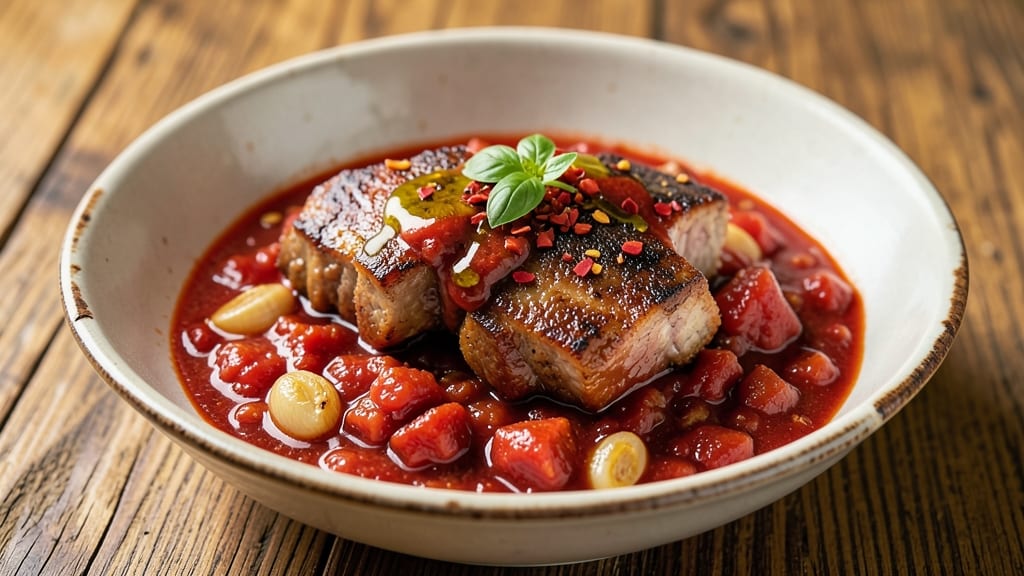
This arrabbiata meat sauce recipe delivers the bold, spicy-sweet fire of a classic Roman trattoria—perfectly balanced heat that clings to every forkful of pasta. 🔥 The secret lies in slow-browning chunky pork (or Italian sausage) until deeply caramelized, then deglazing with white wine to unlock layers of umami before simmering with tomatoes, garlic, and chili flakes until thick and intense.
What sets this sauce apart is the technique: high heat for the meat creates a rich, meaty foundation, while simmering low and slow develops that signature tangy depth. The chili flakes add heat without overpowering, and fresh basil at the end brightens the acidity.
This isn't just a sauce—it's a flavor explosion that transforms simple pasta into a restaurant-worthy meal.
By the time you twirl that first forkful, you'll taste perfectly seared pork chunks melting into a sauce that's both spicy and sweet, with just the right balance of acidity from the tomatoes.
The sauce clings to al dente pasta like it was made for it, and the aroma alone will have everyone asking for seconds. Serve with crispy garlic bread to soak up every last drop.
This recipe delivers on the promise of authentic Italian flavor without compromising simplicity—just a handful of ingredients and a few hours of hands-off simmering. The result is a sauce so rich and complex, it'll make you forget about jarred versions forever. Let's get cooking!
Ingredients for arrabbiata meat sauce
Bold flavors start with these essential ingredients for authentic arrabbiata sauce perfection.
| Ingredient | Amount | Notes |
|---|---|---|
| Chunky Pork Shoulder 🥩 | 1 ½ lb | Cut into 1-inch cubes, trimmed of fat |
| Italian Tomato Paste 🍅 | 2 tbsp | San Marzano preferred for sweetness |
| San Marzano Crushed Tomatoes 🍅 | 28 oz | High-quality canned tomatoes |
| Dry White Wine 🍷 | ½ cup | Pinot Grigio or Sauvignon Blanc |
| Garlic Cloves 🧄 | 6 cloves | Minced, fresh preferred |
| Red Chili Flakes 🌶️ | 1 ½ tbsp | Adjust for heat preference |
| Extra-Virgin Olive Oil 🫒 | ¼ cup | For searing pork |
| Fresh Basil Leaves 🌿 | ⅓ cup | Chopped, for finishing |
| Salt 🧂 | 1 ½ tsp | Diamond Crystal kosher |
| Ground Black Pepper 🌶️ | ½ tsp | Freshly ground preferred |
| Italian Seasoning 🌿 | 1 tsp | For depth of flavor |
| Lemon Juice 🍋 | 1 tbsp | Freshly squeezed |
| Freshly Grated Parmesan Cheese 🧀 | ¼ cup | For serving |
The pork shoulder is non-negotiable here—chunky, fatty cuts render down beautifully for that rich, meaty base. Look for bone-in pieces at your butcher shop if available, or grab pre-cut pork shoulder from the meat counter. Trader Joe's often carries excellent quality at a good price, and their pre-cubed pork is a time-saver. If you're using Italian sausage instead, opt for mild or spicy sweet or fennel-flavored varieties—Calabrese or Italian sausage from the deli section works perfectly. The key is to trim excess fat to avoid greasy sauce, but leave some for flavor.
No white wine? Dry chicken broth with a splash of apple cider vinegar mimics the acidity perfectly. Fresh garlic is ideal, but if you must use powder, reduce to half the amount—it lacks the depth. The chili flakes can be swapped for crushed red pepper, but adjust carefully as brands vary in heat intensity. San Marzano tomatoes are worth seeking out—they're sweeter and less acidic than standard canned tomatoes. For the tomato paste, Rao's or Barilla are reliable brands, but any quality paste will work. The basil should be added at the very end—fresh is non-negotiable for that bright, aromatic finish.
This sauce tastes even better the next day as flavors meld. Store in an airtight container in the fridge for up to 5 days, or freeze for 3 months in portion-sized containers. For quick reheating, add a splash of water or broth to prevent thickening. I always make double batches—one for dinner and one for lunches the following week. The sauce freezes beautifully and maintains its vibrant color and heat when properly stored.
Why You'll Love This Recipe
- No-Fuss Weeknight Win: I swear by this sauce when I’m too tired to fuss—just brown the pork shoulder in one pan, deglaze with white wine, and let the tomatoes do their magic. The garlic and paste build flavor while I’m chopping veggies for the side.
- Spicy-Sweet Magic: That first bite of tender pork in a sauce where the San Marzano tomatoes sing and the chili flakes add just enough kick? It’s the kind of balance that makes you reach for seconds without thinking. The wine cuts through the richness perfectly.
- Leftovers That Don’t Suck: Between us, most meat sauces turn into a sad, watery mess after day two. Not this one. The pork stays juicy, the sauce thickens beautifully, and it’s even better reheated—ideal for freezing too. I make a double batch every time.
- Budget-Friendly Crowd-Pleaser: Pork shoulder is cheap, but it feels special here. The tomato paste and wine elevate it without breaking the bank, and it stretches to feed four for dinner or two for lunch the next day. My kids don’t even complain about the garlic. (Yes, even on a Tuesday night.)
Step-by-step instructions for arrabbiata meat sauce
Here's how to build a bold, perfectly balanced arrabbiata with tender pork and vibrant spice.
🔥 Step 1: Sear the Pork for Deep Flavor
Heat the 0.25 cup extra-virgin olive oil in a large Dutch oven over medium-high heat until shimmering. Add the 1.5 lb chunky pork shoulder in a single layer and sear undisturbed for 3-4 minutes until golden brown on one side. Flip and repeat for the other side, working in batches if needed to avoid crowding.
This searing step creates the Maillard reaction that forms the sauce's rich foundation. You'll know it's ready when the pork releases easily from the pan and develops a deep caramelization. Don't rush this—patience here ensures maximum flavor extraction. Once all pork is browned, transfer it to a plate and set aside.
🍳 Step 2: Build the Spicy Tomato Base
Reduce heat to medium and add the 2 tbsp Italian tomato paste, stirring constantly for 1-2 minutes until it darkens slightly and coats the bottom of the pan. This creates a flavorful crust that won't dissolve in the sauce. Immediately add the 6 cloves minced garlic and 1.5 tbsp red chili flakes, cooking for 30 seconds until fragrant.
Here's where the heat comes alive. The chili flakes should be visibly sizzling but not burning—if they darken too quickly, reduce heat to low. Pour in the 0.5 cup dry white wine and scrape up any browned bits from the bottom with a wooden spoon. Let the wine simmer for 2 minutes until reduced by half, intensifying the flavors.
🥘 Step 3: Simmer the Sauce to Perfection
Add the 28 oz San Marzano crushed tomatoes, 1.5 tsp salt, 0.5 tsp ground black pepper, and 1 tsp Italian seasoning. Return the pork to the pot, spooning some of the sauce over the meat to coat it. Bring to a gentle simmer, then reduce heat to low and cover partially.
Simmer for 1 hour to 1 hour 15 minutes until the pork is fork-tender and the sauce has thickened slightly. Stir occasionally, adding 2-3 tablespoons water if the sauce becomes too thick. The pork should pull apart easily when pierced with a fork, and the sauce should coat the back of a spoon with a glossy sheen.
🍽️ Step 4: Finish with Bright Acid and Fresh Herbs
Remove the pork from the sauce and transfer it to a cutting board. Stir the 1 tbsp lemon juice into the sauce and simmer for 2 minutes to brighten the flavors. The acidity cuts through the richness and enhances the tomato's natural sweetness. Return the pork to the sauce and stir to combine.
Taste and adjust seasoning—you might need a pinch more salt or chili flakes to achieve the perfect balance of heat and acidity. Stir in the 0.33 cup chopped fresh basil leaves just before serving to maintain their vibrant color and fresh aroma. Ladle the arrabbiata over your choice of pasta or serve with crusty bread for dipping.
⏰ Step 5: Rest and Serve with Parmesan
Let the sauce rest for 10 minutes before serving. This allows the flavors to meld completely and the sauce to reach its ideal consistency. The pork will continue to absorb some of the sauce, so don't worry if it seems slightly thin after resting.
Serve immediately with 0.25 cup freshly grated Parmesan cheese sprinkled on top. The cheese adds a salty contrast to the spicy, tangy sauce and completes the dish. Each bite should deliver tender pork, vibrant tomato flavor, and a perfect balance of heat and acidity—this is true arrabbiata perfection.
Pro Tips For Making Arrabbiata Meat Sauce
- SEAR THE PORK HARD: Don’t treat this like a gentle simmer—blast that pork shoulder in a screaming-hot pan with 1 tablespoon of oil until every side is deep brown, not just pink. I used to rush this, and the sauce ended up tasting bland. The crust locks in flavor, so take your time and resist the urge to stir constantly.
- DEGLAZE WITH WINE IMMEDIATELY: As soon as you remove the pork, pour in that dry white wine right away while the pan’s still hot—this lifts all the browned bits (fond) that make arrabbiata sing. Let it bubble for 2 full minutes before adding anything else, or you’ll miss half the flavor.
- TOAST THE TOMATO PASTE: Cook the tomato paste in the empty pan for 3-4 minutes until it darkens slightly and smells like caramelized sugar. This step deepens the sauce’s complexity—skip it, and you’ll just be tasting raw tomato powder. (Yes, even if you’re impatient like me.)
- SIMMER LOW AND LONG: After adding the crushed tomatoes, reduce heat to the lowest setting and let the sauce bubble gently for at least 45 minutes. The pork needs time to break down, and the acidity mellows out if you rush it. I learned this the hard way—burnt edges and tough meat are not your friends.
Regional styles of these flavors
Roman Trattoria Style
In Rome, arrabbiata is all about bold, unapologetic heat—think Calabrian chili paste (not just flakes) for that signature fiery kick. I add 1 tbsp Calabrian paste with the garlic, then simmer it for 5 minutes to mellow the raw heat while keeping the depth.
The Romans use guanciale (cured pork cheek) instead of shoulder, but if you can't find it, Italian sausage works beautifully. Serve with tonnarelli pasta (thick spaghetti) to stand up to the sauce's intensity. 🌶️
Neapolitan Simplicity
Southern Italy takes arrabbiata lighter, focusing on tomato-forward brightness with less meat. Swap the pork for sweet Italian sausage and add 1 peeled, chopped San Marzano tomato raw to the sauce at the end for fresh acidity.
Neapolitans also finish with fresh oregano instead of basil—just 1 tbsp chopped leaves—and a drizzle of extra-virgin olive oil before serving. The sauce should be slightly chunky, not smooth, to honor the rustic tradition.
Sicilian Spice Twist
Sicily cranks up the heat with crushed fennel seeds (½ tsp) toasted in the olive oil before searing the meat, adding an anise-like warmth. I also stir in 1 tsp crushed red pepper with the chili flakes for a double heat punch.
For pasta, use rigatoni to trap the sauce's bold flavors. The Sicilians often serve this with crispy fried breadcrumbs on top for texture—just toast 2 tbsp breadcrumbs in olive oil until golden and sprinkle over the dish.
Modern Fusion Adaptation
For a contemporary take, try smoked paprika (1 tsp) with the chili flakes for depth, and finish with pickled jalapeños (2 tbsp, sliced) for tangy heat. Some chefs add canned chipotle peppers in adobo (1 teaspoon, minced) for smoky complexity.
This version pairs perfectly with cacio e pepe pasta on the side—let diners mix the sauces for a custom flavor experience. The key is balancing the smokiness with the bright lemon finish.
Northern Italian Variation
Up north, arrabbiata gets a creamier twist—stir 2 tbsp heavy cream into the sauce at the end for richness. Add 1 grated carrot and 1 grated celery stalk with the garlic for subtle sweetness.
The sauce works beautifully with pappardelle pasta (wide ribbons) to catch the creamy strands. Serve with sautéed mushrooms on the side for earthy contrast. This version is milder but equally satisfying, with a velvety texture.
Vegetarian Adaptation
For a meat-free version, replace pork with 1 lb king oyster mushrooms (sliced) seared first, then add 1 cup cooked lentils for protein. Boost umami with 1 tbsp soy sauce in the wine deglaze.
The mushrooms absorb the sauce beautifully, mimicking the meaty texture. Finish with nutritional yeast (1 tbsp) for a cheesy depth. This version keeps the spicy-sweet balance while being completely plant-based. 💚
Nutrition facts
Frequently asked questions
Can I use ground beef instead of pork shoulder?
Yes, but the texture will differ slightly. Ground beef works well and cooks faster, but pork shoulder adds a richer, meatier depth to the sauce. If using beef, brown it thoroughly first and reduce the cooking time to 45-60 minutes since it won't need as long to tenderize. For best results, use 80/20 ground chuck for extra fat and flavor.
How do I adjust the heat level?
The chili flakes provide heat, but you can easily modify it. For milder sauce, reduce to 1 teaspoon of flakes. For extra spice, add ½ teaspoon crushed red pepper or 1 teaspoon Calabrian chili paste with the garlic. Always taste before serving—arrabbiata should be spicy but not overwhelming.
What's the best pasta to pair with this sauce?
Traditional arrabbiata pairs beautifully with tonnarelli (thick spaghetti) or rigatoni, which hold the sauce well. For a lighter option, try linguine. Cook pasta al dente—it should have a slight bite. Toss with the sauce just before serving to prevent mushiness.
Can I make this sauce ahead of time?
This sauce tastes even better the next day as flavors meld. Store in an airtight container in the fridge for up to 5 days or freeze for 3 months. Reheat gently on the stove with a splash of water or broth to restore thickness. The pork will continue to tenderize, so it'll be even more flavorful.
Why does my sauce look too thin?
Sauce thinning often happens when simmering uncovered or adding too much liquid. To fix it, simmer uncovered for 10-15 minutes to reduce. If still thin, mix 1 tablespoon cornstarch with 2 tablespoons water, stir into the sauce, and simmer for 2-3 minutes until thickened. Always taste—arrabbiata should coat the back of a spoon.