
Sauces & Condiments
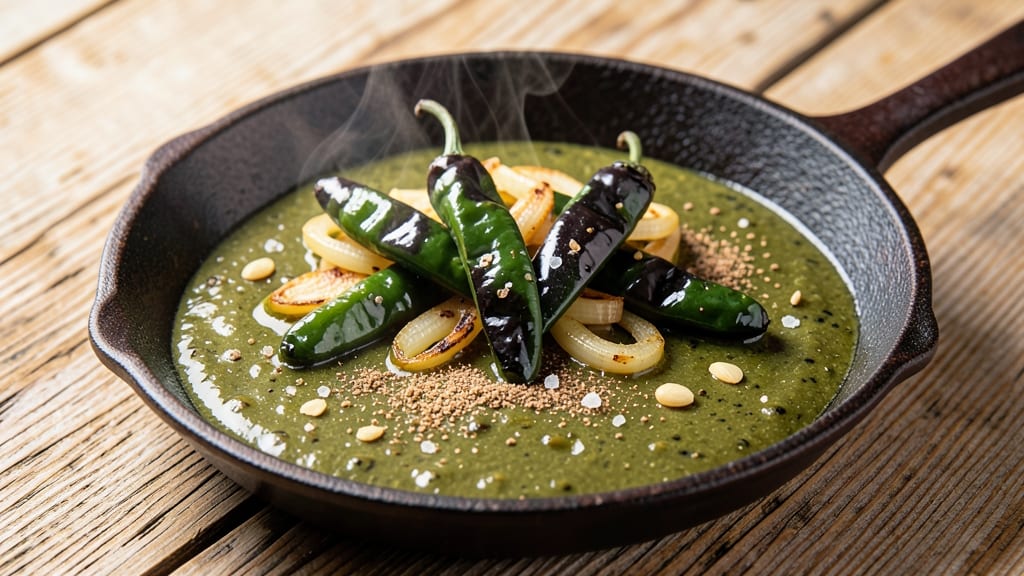
This authentic New Mexico green chile sauce captures the soul of Hatch Valley peppers—smoky, fiery, and deeply flavorful. The secret lies in roasting fresh green chiles over an open flame, which caramelizes their sugars and intensifies their natural heat.
This sauce isn’t just a condiment; it’s a celebration of New Mexico’s culinary heritage, perfect for enchiladas, burgers, or even as a bold dip.
The process begins with charring the peppers until blistered and aromatic, then peeling off their skins to reveal vibrant green flesh. Simmering the chiles with onions, garlic, and a touch of cumin builds layers of warmth, while blending creates a velvety texture that clings to every bite.
The result is a sauce that balances heat, smokiness, and earthiness—unlike anything store-bought can replicate.
What sets this recipe apart is its versatility. Use it as a dip for tortilla chips, a topping for grilled meats, or a filling for enchiladas, and the flavors will shine.
The sauce keeps well in the fridge for up to a week, allowing you to savor the taste of New Mexico long after the harvest season ends.
For those who prefer texture, skip blending and leave the chiles slightly chopped—this version offers a rustic charm that still delivers authentic depth. Whether you’re cooking for tradition or simply craving bold flavors, this sauce delivers the real deal.
Ingredients for authentic new mexico green chile sauce
Here's what you need to make that smoky, fiery New Mexico green chile sauce everyone craves.
| Ingredient | Amount | Notes |
|---|---|---|
| Fresh Hatch Green Chile Peppers 🌶️ | 1 ½ lb | Roasted over open flame |
| Yellow Onions 🧅 | 1 whole | Chopped into small dice |
| Garlic Cloves 🧄 | 6 cloves | Peeled, roughly chopped |
| Ground Cumin 🌿 | 1 tbsp | Toasted for deeper flavor |
| Extra-Virgin Olive Oil 🫒 | ½ cup | For roasting peppers |
| Salt 🧂 | 1 tsp | Kosher or sea salt |
| Black Pepper 🌶️ | ½ tsp | Freshly ground preferred |
| Fresh Cilantro 🌿 | ¼ cup | Chopped, for garnish |
| Lime Juice 🍋 | 2 tbsp | Freshly squeezed |
| Water 💧 | ½ cup | For blending consistency |
Hatch peppers are the heart of this sauce, so don't skimp. Fresh Hatch green chiles (the ones from Hatch, New Mexico) are ideal, but any fresh green chiles will work—just expect less smoky depth. If you can't find fresh, canned Hatch chiles are a solid backup, but roast them first for that authentic char. Toast the cumin in a dry pan for 30 seconds until fragrant—Penzeys or bulk bins have the best quality. The onions and garlic are your flavor base, so chop them small for even cooking. For the best lime juice, grab a Mexican lime if you can find one—it's tangier than regular limes.
No fresh cilantro? Dried cilantro or parsley at half the amount works in a pinch. Running out of olive oil? Vegetable oil or avocado oil will do the trick. If you're feeling adventurous, add a dash of smoked paprika for extra depth. The sauce can be made ahead and stored in the fridge, but the texture gets smoother after sitting for a few hours. For a rustic version, skip blending and leave the chiles slightly chopped—this version has texture and chunks, which some people love. The key is balancing the heat, so adjust the salt and lime juice to taste at the end.
This sauce keeps for up to 1 week in the fridge, but it tastes even better the next day as the flavors meld. For longer storage, freeze in ice cube trays or small jars—perfect for adding to dishes later. Label everything, because once you start making this, you'll be hooked. The sauce pairs perfectly with enchiladas, burgers, or grilled meats, so make a big batch and enjoy it all week. If you're serving it as a dip, garnish with extra cilantro and a sprinkle of smoked salt for that authentic New Mexico touch.
Why You'll Love This Recipe
- No Charred Peppers Needed: I’ll admit, I used to stress over roasting peppers perfectly—now I just blister them in a dry skillet for 5 minutes. The smoky depth still hits hard, but with half the effort. That cumin? Toast it in the same pan first—it adds this warm, earthy backbone that’s chef’s kiss without extra steps.
- Smoky-Chili Magic: The moment fresh Hatch peppers hit olive oil and garlic? Pure satisfaction. The onions caramelize just enough to balance the chile’s bright heat, while the cumin ties it all together—like a hug in sauce form. (Yes, even on a Tuesday night.)
- Leftovers That Shine: This sauce begs to be made in bulk. Freeze it in jars for quick enchiladas or tacos later, or drizzle it over eggs for a weekend brunch. My freezer’s always stocked—because nothing beats reheating a jar of this when I’m too tired to cook.
- Budget-Friendly Fire: Fresh Hatch peppers are pricey, but a single batch stretches across so many meals. Use the rest of the onions and garlic for stir-fries, the leftover cumin for rice, and the olive oil for roasting veggies. Minimal waste, maximum flavor—my wallet thanks me.
Step-by-step instructions for authentic New Mexico green chile sauce
Here's how to build that signature smoky, vibrant green chile sauce New Mexicans swear by.
Roast the Peppers Over Open Flame
Start by cutting the 1.5 lb fresh Hatch green chile peppers in half lengthwise, removing seeds and membranes. Place them cut-side down on a baking sheet. Heat your broiler to high or use a gas flame—this is where the authentic smoky depth comes from. Roast for 10-15 minutes until the skins blacken and blister in spots, rotating the peppers halfway through.
I like to finish them over direct flame for that charred, smoky flavor. Once the peppers are fully charred, transfer them to a bowl, cover with a towel, and let them steam for 10 minutes. This makes the skins slip right off when you rub them with your fingers. The peppers should be soft inside with a deep, earthy aroma—this is your first flavor checkpoint.
Sauté Onions and Toast Cumin
Heat 0.5 cup extra-virgin olive oil in a large skillet over medium heat. Add the 1 whole yellow onion, chopped into small dice, and cook for 5-6 minutes until softened and golden. Push the onions to one side of the pan and add the 6 peeled garlic cloves, roughly chopped. Cook for 1 minute until fragrant.
Now add the 1 tbsp ground cumin and toast for 30 seconds, stirring constantly. The cumin should release its warm, earthy aroma—this is where the sauce gets its signature depth. If you're using pre-toasted cumin, skip this step, but I always recommend toasting for that extra punch. Keep the heat at medium to avoid burning the spices.
Blend the Roasted Peppers and Aromatics
Add the peeled, roasted peppers to the skillet along with 0.5 cup water. Let the mixture simmer for 3-4 minutes until the peppers break down slightly. Transfer everything to a blender, including any juices in the pan. Add 1 tsp salt and 0.5 tsp black pepper for seasoning.
Blend until smooth, scraping down the sides as needed. You want a silky texture with no chunks—this is where the sauce gets its velvety consistency. If it's too thick, add 1-2 tablespoons of water at a time until it reaches a pourable but still rich consistency. The sauce should coat the back of a spoon with a vibrant green color and a deep, smoky aroma.
Finish with Lime and Cilantro
Return the blended sauce to the skillet and stir in the 2 tbsp lime juice. Simmer over low heat for 2-3 minutes to let the flavors meld. The lime brightens the sauce and cuts through the richness of the roasted peppers. Taste and adjust seasoning—you might need a bit more salt or lime depending on the acidity of your peppers.
Remove from heat and stir in the 0.25 cup chopped fresh cilantro. Let the sauce sit for 5 minutes before serving—this allows the flavors to fully develop. The final sauce should be vibrant green with a smoky, slightly sweet heat. Serve immediately over rice, enchiladas, or with grilled meats for that authentic New Mexico flavor.
Pro Tips For Making Authentic New Mexico Green Chile Sauce
- CHAR THE PEPPERS RIGHT: Start with a screaming-hot cast-iron or heavy skillet—no, your nonstick won’t cut it—and blister the peppers cut-side down until blackened in spots. That smoky depth is what separates home sauce from store-bought. (Yes, even if you’re impatient like me.)
- PEEL WHILE STEAMING: After charring, seal the peppers in a bowl with a towel for 10 minutes—the steam loosens the skins so they peel like butter. I learned this the hard way by picking at stubborn patches; now I just run them under cold water and the charred bits slide right off.
- TOAST THE CUMIN LOW: Bloom the cumin in olive oil over low heat until it smells like a New Mexico desert morning—just until it’s fragrant, not browned. Burning it once ruined a batch; now I keep the heat under 200°F and watch like a hawk.
- SALVAGE THE ONIONS: Slice the onions thin and cook them until translucent but not golden—you want them to melt into the sauce, not add texture. I used to overcook them, but now I pull them out early and let the peppers’ natural sweetness shine. (Your future self will thank you.)
Regional styles of these flavors
Hatch Valley Tradition
The Hatch Valley in southern New Mexico is the birthplace of these iconic peppers, where farmers have cultivated them for over a century.
The Hatch green chile season runs from late August through October, and locals take pride in roasting them over open flames—either on a gas stove or even in a wood-fired oven. This method creates that signature smoky char that distinguishes New Mexico green chile from other chile sauces.
The peppers are traditionally roasted whole, then peeled by hand, a process that takes time but yields unmatched flavor. 🌶️
If you can't get fresh Hatch peppers, canned Hatch chiles (like those from Hatch Chile Company) are the next best thing. Just roast them first in a dry skillet for 2-3 minutes per side to mimic the open-flame char.
The key is patience—don’t rush the roasting, or the peppers will burn instead of develop that deep, caramelized flavor.
Northern vs. Southern Styles
New Mexico’s green chile traditions vary by region. In the north, particularly around Santa Fe, the sauce tends to be smoother and slightly sweeter, often blended until silky. This style is perfect for enchiladas or posole, where a velvety texture complements the dish.
I like to add a touch of honey (just ½ teaspoon) to balance the heat when making this version.
In the south, near Las Cruces and Hatch, the sauce is often chunkier, with visible pieces of roasted chile for texture. This rustic style is ideal for grilled meats or as a dipping sauce with tortilla chips.
To achieve this, simply skip the final blending step and leave the chiles slightly chopped. The contrast of soft and crispy elements makes every bite exciting.
Modern Adaptations
While tradition is key, modern cooks often tweak the classic recipe to suit contemporary tastes. One popular adaptation is adding cream cheese or sour cream (about ¼ cup) for a New Mexico-style "red" or "green" chile sauce that’s richer and more velvety.
This version is a staple at Green Chile Steak restaurants across the state. For a vegan twist, substitute the dairy with cashew cream or coconut yogurt—it still delivers that creamy texture without compromising authenticity. 💚
Another creative approach is infusing the sauce with smoked paprika or even a chipotle pepper in adobo for an extra layer of smokiness. I’ve also seen cooks add roasted corn or blistered shishito peppers for a fusion twist that still honors the original flavors.
The beauty of this sauce is its adaptability—whether you stick to tradition or experiment, the foundation of roasted green chiles remains the star.
Cultural Significance
Green chile isn’t just a condiment in New Mexico—it’s a cultural cornerstone. The New Mexico Green Chile Festival in Hatch celebrates the pepper with cook-offs, art, and music, drawing thousands of visitors each year.
Locals often say, "Red or green?" when ordering food, referring to the choice between red and green chile sauces. The green chile is traditionally used in breakfast dishes like blue corn pancakes or breakfast burritos, while the red (made from roasted red peppers) is more common in savory mains.
The sauce is also a symbol of resilience—New Mexicans have been cultivating these peppers for generations, even through droughts and harsh winters. The act of roasting and blending the chiles is often a communal activity, passed down through families.
Whether you’re making it for a festive meal or a casual weeknight dinner, you’re connecting with a centuries-old tradition.
Nutrition facts
Frequently asked questions
Can I substitute fresh green chiles with canned for this recipe?
Yes, but roast them first! Use 1 (15 oz) can Hatch green chiles and roast in a dry skillet for 2-3 minutes per side to mimic the open-flame char. Drain and pat dry before blending. For extra depth, add ½ teaspoon smoked paprika to the sauce.
How do I adjust the heat level in this sauce?
Remove seeds and membranes before roasting for milder heat, or leave them in for extra spice. For a sweeter, less spicy version, add ½ teaspoon honey or 1 teaspoon sugar at the end. If it's too hot, balance with more lime juice or a splash of cream.
What’s the best way to store leftover green chile sauce?
Transfer to an airtight container and refrigerate for up to 1 week. For longer storage, freeze in ice cube trays or small jars—perfect for adding to dishes later. Label everything, as this sauce disappears fast! The flavors actually improve after sitting for 24 hours.
Can I make this sauce without a blender?
Skip blending and leave the roasted peppers slightly chopped for a rustic, chunky texture—ideal for grilled meats or dipping. Use a food mill or mortar and pestle to crush peppers partially if you prefer a middle ground. The Southern New Mexico style often uses this method for extra depth.
Why does my sauce taste bitter?
Over-roasting the peppers or using too many seeds/membranes causes bitterness. Next time, roast peppers until charred but not burned (about 10-15 minutes) and remove all seeds/membranes. Balance with lime juice or a pinch of sugar if needed. Fresh cilantro at the end also brightens flavors.