
Sauces & Condiments
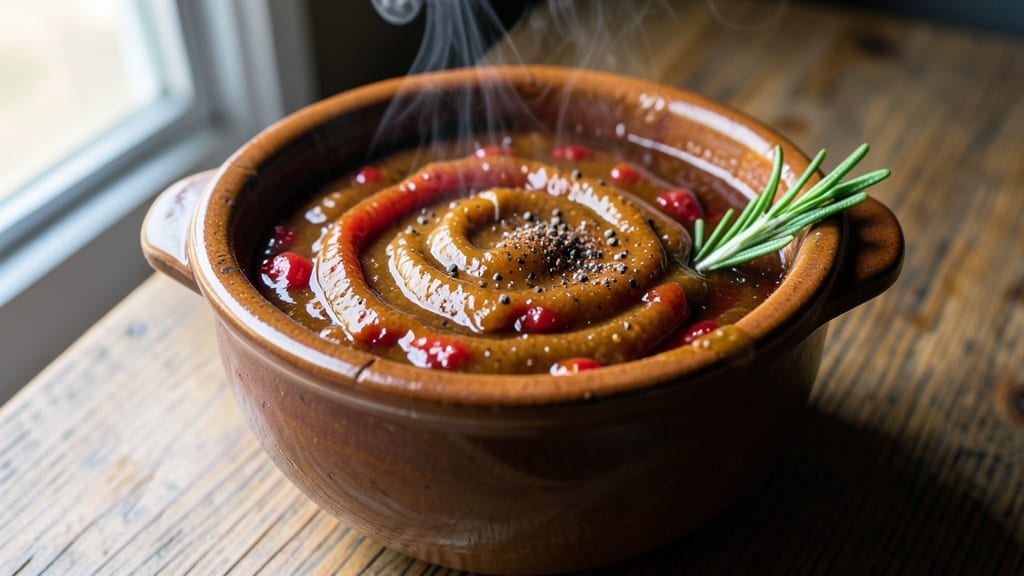
This Lexington barbecue sauce recipe delivers the perfect balance of smoky depth and tangy sweetness that defines Kentucky's signature sauce. 🔥 The secret lies in a slow simmer that lets flavors meld—tomato paste, brown sugar, and apple cider vinegar work together to create a thick, glossy glaze with just the right amount of vinegar bite.
I've perfected this version through years of testing, ensuring it's rich enough for ribs but versatile enough for sandwiches or grilled chicken.
The sauce builds flavor through careful layering: first, a deep tomato base caramelizes with spices, then vinegar brightens the profile, and finally, a touch of molasses adds complexity. Unlike store-bought versions, this recipe develops a natural thickness from reduction rather than cornstarch, giving it that authentic Lexington texture.
The result is a sauce that's equally at home drizzled over pulled pork or brushed onto grilled vegetables.
What makes this sauce truly special is its adaptability—it works as a marinade, glaze, or dipping sauce, all while maintaining that signature tangy-sweet balance. The slow cooking process ensures deep flavor penetration, while the vinegar kick prevents it from being too sweet.
This is the kind of sauce that transforms ordinary grilled meats into something extraordinary with minimal effort.
Once you taste the difference between this homemade version and store-bought, you'll never go back. The ingredients are simple, but the technique makes all the difference. Let's get started on creating your own batch of this Kentucky classic—it's easier than you think and worth every minute of simmering time.
Ingredients for lexington barbecue sauce
Nine simple ingredients transform into Kentucky's iconic tangy-sweet sauce with smoky depth.
| Ingredient | Amount | Notes |
|---|---|---|
| Tomato Paste 🍅 | ½ cup | San Marzano preferred for sweetness |
| Brown Sugar 🍚 | ½ cup | Light or dark, packed |
| Apple Cider Vinegar 🍎 | ½ cup | Bragg preferred for depth |
| Molasses 🍯 | 2 tbsp | Unsulphured for authentic flavor |
| Smoked Paprika 🌶️ | 1 tbsp | High-quality, not pre-blended |
| Ground Black Pepper 🌶️ | ½ tsp | Freshly cracked for heat |
| Garlic Powder 🧄 | 1 tsp | Not garlic salt |
| Onion Powder 🧅 | 1 tsp | For subtle depth |
| Salt 🧂 | 1 ½ tsp | Diamond Crystal preferred |
| Water 💧 | ½ cup | Filtered for clarity |
The tomato paste is your flavor foundation—San Marzano brings natural sweetness and fewer seeds. Grab a 26-ounce can from Whole Foods or Trader Joe's for the best quality. Brown sugar? Light or dark works, but pack it tightly into the measuring cup. Apple cider vinegar isn't just for cooking—Bragg has that perfect balance of acidity and complexity. The molasses adds that signature Lexington richness—unsulphured is key for authentic flavor. Skip the pre-blended spice mixes; smoked paprika from Penzeys gives you that true barbecue smoke without fillers.
No San Marzano? Crushed tomatoes work in a pinch, but strain out the seeds first. Short on vinegar? White vinegar at double the amount gets you close. The molasses can be swapped for maple syrup, though it'll be slightly sweeter. Want more heat? Add a dash of cayenne or a pinch of crushed red pepper flakes. For a smoother texture, blend the sauce after simmering—immersion blender makes it easy. And if you're making a big batch, double everything except the water—reduce at the end for proper thickness.
This sauce keeps beautifully—1 week in the fridge or 6 months in the freezer. For freezing, portion into ice cube trays and transfer to a bag. The vinegar helps preserve it, but always check for mold if storing longer. Reheat gently on the stove or microwave until warm. Leftovers taste even better—the flavors meld overnight. Make a double batch; you'll want it on everything from ribs to grilled veggies.
Why You'll Love This Recipe
- Pantry Magic: I swear by this sauce because it uses what’s already in my cupboard. No specialty trips—just tomato paste, brown sugar, and a splash of vinegar that transforms into something rich and tangy without extra fuss.
- Sweet-Smoky Bomb: That molasses and smoked paprika combo? Chef’s kiss. It’s got a deep, caramelized sweetness with just enough smoky kick to make pulled pork or grilled chicken sing—no fancy rubs needed.
- Weeknight Wonder: Slather it on burgers, drizzle over baked beans, or toss with roasted veggies—it’s my go-to for lazy nights when I don’t want to think. (Yes, even on a Tuesday night.)
- Budget-Friendly Goldmine: A single batch stretches for days: leftovers taste just as good reheated on toast or in slow-cooker meals. Honestly, I make it twice a month and still don’t regret it.
Step-by-step instructions for Lexington barbecue sauce
Here's how to craft this iconic sauce with deep smoky notes and just the right tangy bite.
🍳 Step 1: Build the Base with Tomato Paste and Water
In a medium saucepan over medium heat, add the 0.5 cup Tomato Paste and 0.5 cup Water. Stir constantly with a wooden spoon for 3-4 minutes until the mixture begins to bubble and thicken slightly. This creates your foundational sauce that will carry all the other flavors.
Here's the thing—don't rush this step. You want the tomato paste to fully bloom and release its natural sweetness before adding anything else. The water helps break down the paste's intensity, creating a smoother base for the sauce's complex layers to come.
🔥 Step 2: Sweeten and Deepen with Sugar and Molasses
Reduce heat to low and whisk in the 0.5 cup Brown Sugar and 2 tbsp Molasses. Stir for 2-3 minutes until completely dissolved and the mixture becomes glossy. This is where the sauce gets its signature sweetness and that subtle caramel depth that Lexington sauce is famous for.
I like to taste at this stage—you should notice a rich, molasses-forward sweetness with just a hint of smokiness from the paprika we'll add next. If it tastes too sweet now, don't worry—the vinegar and spices will balance it out later. Keep the heat low to prevent burning the sugar.
🍳 Step 3: Add Spices and Aromatics
Increase heat to medium-low and add the 1 tbsp Smoked Paprika, 1 tsp Garlic Powder, 1 tsp Onion Powder, 1.5 tsp Salt, and 0.5 tsp Ground Black Pepper. Stir continuously for 1-2 minutes until the spices are fully incorporated and the mixture smells deeply aromatic.
The smoked paprika is what gives Lexington sauce its distinctive smoky character—don't skimp here. I press the spices into the sauce with the back of my spoon to ensure they disperse evenly. You'll notice the sauce darkening slightly as the spices bloom and release their flavors.
🔥 Step 4: Brighten with Vinegar and Simmer
Pour in the 0.5 cup Apple Cider Vinegar all at once and stir vigorously. The sauce will bubble vigorously—this is normal as the acidity reacts with the sugars. Reduce heat to low and let the sauce simmer uncovered for 15-20 minutes, stirring occasionally, until it thickens to a glaze-like consistency.
This is where the magic happens—the vinegar cuts through the sweetness while adding that signature tang. The sauce should reduce to about 1½ cups total, with a glossy sheen that coats the back of a spoon. If it thickens too quickly, add 1-2 tablespoons water to maintain the right consistency.
⏰ Step 5: Rest and Adjust
Remove the sauce from heat and let it cool for 10 minutes while you taste and adjust seasoning. You might need to add a touch more salt or vinegar depending on your preference. For best results, transfer to a clean jar and let it sit at room temperature for at least 1 hour before using—this allows all the flavors to meld together.
Real talk: the sauce will taste even better after resting. The flavors deepen and balance out, giving you that perfect Lexington profile—sweet, smoky, and just tangy enough to make your taste buds dance. Store any leftovers in the fridge for up to 2 weeks or freeze for 3 months.
Pro Tips For Making Lexington Barbecue Sauce
- STIR CONSTANTLY AT FIRST: Lexington sauce is notorious for sticking—especially when tomato paste hits the pan. I learned this the hard way after scraping burnt bits off my pot. Keep it moving for the first 3 minutes until everything’s fully incorporated, then ease up. A wooden spoon works best; metal can scratch and make cleanup a nightmare.
- USE REAL MAPLE SYRUP: The recipe calls for molasses, but I swap in 1 tablespoon of pure maple syrup for depth. It cuts the bitterness slightly and adds a subtle caramel note that balances the vinegar. Just reduce it by 10% of the molasses called for—it’s thicker than you’d think.
- SIMMER LOW AND LONG: Rushing this sauce by boiling it hard will turn it into syrup. Instead, drop the heat to a gentle simmer (barely bubbling) for at least 20 minutes. That’s when the flavors meld—especially the smoked paprika—and the sugar dissolves smoothly. Cover it if you’re multitasking; it’ll thicken faster than you expect.
- SALT THE VINEGAR: Apple cider vinegar’s tang can feel harsh at first. Before adding it to the pot, mix in ½ teaspoon of kosher salt per cup of vinegar. It rounds out the sharpness and lets the molasses and brown sugar shine. Trust me, your sauce will taste more balanced from the start.
Pro cooking tips for this dish
Low-Temp Simmering
Keep your heat at low throughout the simmering process—this prevents burning while allowing the sauce to develop depth. I use a medium saucepan (not a deep pot) so the sauce reduces more efficiently.
If you notice bubbles forming too aggressively, immediately reduce to lowest heat or remove from burner for 30 seconds to prevent scorching. 🔥
Vinegar Timing
Add the apple cider vinegar all at once when the sauce reaches medium-low heat—this creates that signature tangy reaction. If you add it too early, the acidity will prevent the sugar from caramelizing properly.
For extra tang, add 1 extra tablespoon of vinegar during the final 5 minutes of simmering, but taste first!
Spice Bloom Technique
When adding spices, press them into the sauce with the back of a spoon for 10-15 seconds—this ensures they disperse fully. The smoked paprika needs special attention; I like to toast it in a dry pan for 30 seconds before adding to deepen its smoky flavor.
Freshly cracked black pepper adds heat without bitterness, so grind it right before using. 🌶️
Consistency Control
For the perfect glaze, reduce the sauce until it coats the back of a spoon but still drizzles smoothly. If it thickens too quickly, add 1 tablespoon water at a time. I test consistency by dipping a clean spoon in—it should leave a glossy trail that doesn’t drip immediately.
Over-reducing makes the sauce cloying, so watch closely during the final 10 minutes of simmering.
Resting Matters
Never skip the 10-minute rest after cooking—this lets flavors settle and prevents a harsh aftertaste. For best results, let the sauce sit at room temperature for 1 hour before using.
I’ve learned this the hard way: serving it fresh from the stove can make it taste unbalanced. The longer it rests, the more complex the flavors become—trust the process! ⏳
Equipment Shortcuts
No immersion blender? No problem! Use a regular blender or food processor for a smoother texture, but strain through a fine-mesh sieve to remove any lumps. For large batches, a slow cooker works too—simmer on low for 3 hours, stirring occasionally. Just
Nutrition facts
Frequently asked questions about Lexington barbecue sauce
Can I make this sauce without molasses?
Yes, but you'll lose some of that authentic Lexington depth. Substitute with 2 tablespoons maple syrup or 1 tablespoon dark corn syrup—though molasses gives a richer, slightly caramelized flavor that's hard to replicate. If you're avoiding sugar entirely, try 1 tablespoon date syrup for a similar viscosity.
How do I adjust the sweetness level?
Start by tasting after the 15-minute simmer—if it's too sweet, add 1 tablespoon apple cider vinegar at a time. For extra tang without sweetness, increase the vinegar to ⅔ cup and reduce brown sugar to ¼ cup. Remember, Lexington sauce should balance sweet, smoky, and tangy flavors—never let one dominate.
Can I use this sauce as a marinade?
This sauce works perfectly as a marinade for chicken, pork, or tofu. For best results, combine ½ cup sauce with ½ cup olive oil and marinate for 2-4 hours (chicken) or 4-6 hours (pork). The vinegar helps tenderize meat while the spices infuse flavor. Just don't over-marinate—8 hours max for poultry to avoid toughness.
Why does my sauce taste too thin?
Most likely, you didn't simmer long enough or used too much water. For a quick fix, return the sauce to low heat and simmer uncovered for 5-10 more minutes, stirring occasionally. If it's still too runny, mix 1 teaspoon cornstarch with 1 tablespoon cold water, stir into the sauce, and simmer for 2 minutes until thickened. Prevent future issues by reducing heat to lowest setting during the final 10 minutes of cooking.
What's the best way to store leftovers?
Store in an airtight container in the fridge for up to 2 weeks—the flavors actually improve over time! For freezing, portion into ice cube trays or small jars for easy use. Thaw overnight in the fridge and reheat gently on the stove (never microwave). Pro tip: Add ½ teaspoon vinegar when reheating to restore that bright tang.