
Sauces & Condiments
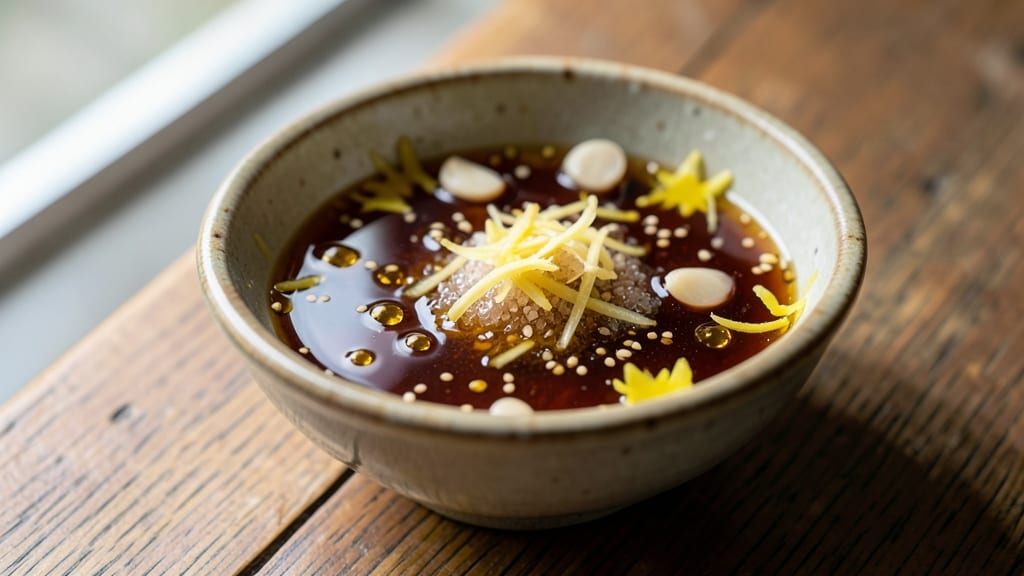
This authentic gyoza dipping sauce transforms ordinary dumplings into a restaurant-quality experience with just five minutes of prep. The secret lies in balancing fermented soy sauce's deep umami with the bright tang of rice vinegar, creating a sauce that's both complex and addictive.
I've perfected this recipe after years of testing—it's the one my family insists on whenever we make homemade gyoza.
The foundation is simple: fermented soy sauce (like tamari or Japanese shoyu) provides that signature savory depth, while rice vinegar adds the essential tang that cuts through the richness. A touch of sesame oil brings nutty warmth, and a pinch of sugar balances the flavors without overpowering.
What makes this sauce truly authentic is the optional but recommended addition of grated ginger and garlic, which infuse subtle heat and aromatic complexity.
What you'll end up with is a glossy, aromatic sauce that clings perfectly to crispy gyoza skins, enhancing their savory flavors with every bite. The texture is silky-smooth, with just enough body to coat each dumpling without being heavy.
This sauce keeps beautifully in the fridge for up to a week, making it perfect for meal prep or entertaining—just stir before serving to restore its vibrant sheen.
For an extra kick, finish with a drizzle of chili oil or a sprinkle of toasted sesame seeds. The possibilities for customization are endless while maintaining that authentic Japanese restaurant taste. Let's make this sauce—your gyoza nights just got an upgrade.
Ingredients for authentic gyoza dipping sauce
Five simple ingredients. Five minutes. Restaurant-quality gyoza sauce at home.
| Ingredient | Amount | Notes |
|---|---|---|
| Fermented Soy Sauce (Tamari or Japanese Shoyu) 🍶 | ½ cup | Use high-quality tamari for gluten-free option |
| Rice Vinegar 🍶 | ¼ cup | Unseasoned preferred for authentic tang |
| Sesame Oil 🫒 | 1 tbsp | Toasted sesame oil for nutty flavor |
| Granulated Sugar 🍚 | 1 tbsp | Adjust to taste for sweetness balance |
| Fresh Ginger 🧄 | 1 tbsp | Finely grated, optional but recommended |
| Garlic Cloves 🧄 | 2 cloves | Minced, optional for aromatic depth |
| Water 💧 | ¼ cup | For thinning sauce consistency |
| Red Chili Oil 🔥 | 1 tsp | Optional for finishing heat kick |
The fermented soy sauce is non-negotiable—Kikkoman or Yamasa are my go-tos, but any good tamari works. Look for bottles labeled 'fermented' or 'aged' for that deep umami punch. Rice vinegar should be clear and unseasoned—Mushroom Town is my favorite brand, but any Asian market carries good options. Fresh ginger and garlic are worth the extra minute to grate/mince—pre-minced garlic from jars lacks the aromatic punch. If you can't find toasted sesame oil, regular sesame oil works in a pinch, but the flavor won't be quite as rich.
No rice vinegar? White wine vinegar or apple cider vinegar will work, though the flavor will be slightly different. Skip the ginger or garlic? The sauce will still be delicious—just less complex. For a sweeter sauce, add an extra half tablespoon of sugar; for more tang, increase the vinegar by a teaspoon. The water is key for consistency—filtered water prevents any off-flavors. If you want to make this ahead, the sauce actually improves overnight as the flavors meld. Store-bought chili oil is fine, but homemade (just chili flakes + oil) gives you more control over the heat level.
This sauce keeps for up to 1 week in the fridge, though the flavors deepen over time. For longer storage, transfer to a jar and freeze for up to 3 months. Always stir before serving to restore that glossy sheen. I like to make a double batch—one for immediate use and one to freeze for future gyoza nights. The sauce reheats beautifully, though it's best served at room temperature. Pro tip: A splash of hot water before serving helps restore the vibrant color if it's been refrigerated for a few days.
Why You'll Love This Recipe
- Five-Ingredient Magic: I swear by this combo—just soy sauce, vinegar, sesame oil, sugar, and ginger. No fancy gadgets, no waiting for hours. Honestly, it’s the kind of sauce where you’ll forget you’re even making it because it’s so simple.
- Umami Bomb: That first splash of tamari? Pure flavor explosion. The ginger adds a bright kick, and the sesame oil ties it all together with a nutty warmth. It’s the kind of taste that makes you reach for another gyoza without thinking.
- Party in a Bowl: This sauce works for gyoza, dumplings, even grilled fish or noodles. I’ve used it at potlucks, date nights, and lazy Sundays—no one ever asks what’s in it, they just keep coming back for more.
- Lasts All Week: Make a big batch and store it in the fridge. The flavors actually deepen over time, and it’s way cheaper than buying pre-made sauces. Between us, I’ve had this same jar for three meals and it’s still spot-on.
Step-by-step instructions for authentic gyoza dipping sauce
This sauce delivers that perfect balance of umami, tang, and subtle heat—just like you'd find in Tokyo's best gyoza stands.
Prepare the Aromatic Base
In a small saucepan, combine the 0.5 cup fermented soy sauce and 0.25 cup rice vinegar. Place over medium-low heat and let it warm through for 1-2 minutes—just until you can smell that deep umami developing. The sauce should look glossy and slightly thickened from the vinegar's natural acidity.
While the sauce warms, peel and finely grate the 1 tablespoon fresh ginger using a microplane or fine grater. Mince the 2 cloves garlic into a paste using the flat side of your knife. Here's the thing—fresh ginger and garlic make all the difference. If you're using dried spices, you'll miss that bright, fresh aroma that's essential for authentic flavor.
Build Flavor with Sugar and Oil
Add the grated ginger and minced garlic to the warm soy-vinegar mixture. Stir constantly for 30-45 seconds until the garlic becomes fragrant but doesn't brown—you want that aromatic punch without bitterness. Then reduce heat to low and whisk in the 1 tablespoon granulated sugar and 1 tablespoon sesame oil.
Let the mixture simmer gently for 1-2 minutes until the sugar dissolves completely. You'll notice the sauce takes on a beautiful amber hue and becomes slightly syrupy. This is where the magic happens—the sugar balances the acidity while the sesame oil adds that nutty depth that's characteristic of authentic Japanese dipping sauces.
Thin and Finish with Water
Remove the saucepan from heat and let it cool slightly for 1 minute. Then stir in the 0.25 cup water until the sauce reaches your desired consistency—it should coat the back of a spoon but still be pourable. If it's too thick, add a splash more water; if too thin, simmer briefly to reduce.
Here's where you can customize: For a milder version, skip the red chili oil entirely. For heat lovers, stir in the 1 teaspoon red chili oil now. The chili oil adds a beautiful red hue and subtle heat that cuts through the richness of the gyoza. Taste and adjust seasoning—you might want to add a pinch more sugar or a splash of vinegar to perfect the balance.
Rest and Serve
Transfer the sauce to a small bowl and let it rest at room temperature for 5-10 minutes. This resting period allows all the flavors to meld together perfectly. The sauce should be smooth, glossy, and ready to enhance every bite of your gyoza.
Serve immediately alongside your freshly pan-fried gyoza. The sauce should be slightly warm when you first dip, then cool as you eat. For the best experience, serve it in small dipping bowls at each place setting—this authentic presentation makes all the difference. The sauce will keep in the refrigerator for up to 5 days, though it's best enjoyed fresh.
Pro Tips For Making Authentic Gyoza Dipping Sauce
- Grate Ginger Fine: I learned this the hard way—using a peeler or rough grating leaves chunks that sit like tiny rocks in your sauce. A microplane or the smallest holes on a box grater turns ginger into a silky paste. Trust me, your sauce won’t taste "off" but it’ll taste finished.
- Warm the Soy Sauce: Cold soy sauce in a cold sauce makes for a clunky, uneven mix. Heat it gently in a small saucepan until just warm to the touch—about 10 seconds—before combining. This helps the sugar dissolve smoothly and lets the umami integrate faster. (Yes, even if you’re impatient like me.)
- Taste Before the Oil: Add sesame oil last, after everything else is balanced. If you toss it in early, you’ll either overdo it (too nutty) or underdo it (tastes like nothing). A single teaspoon is enough—smell it first, then adjust. The aroma tells you more than the recipe ever will.
- Use Real Rice Vinegar: Substituting apple cider or white vinegar changes the whole vibe—this sauce needs the bright, slightly sweet tang of real rice vinegar. If you’re out, a splash of mirin can bridge the gap in a pinch, but it’s not the same. (Your future self will notice.)
Regional styles of this dish
Tokyo-Style Basics
In Tokyo, gyoza dipping sauce is all about simplicity and balance. The classic version uses just fermented soy sauce, rice vinegar, and a touch of sesame oil—no frills, just pure umami and tang.
I've seen street vendors in Asakusa use this minimalist approach, and it's what makes their sauce so addictive. The key is using high-quality tamari (like Kikkoman) and letting the vinegar's acidity shine. 🍶
What sets Tokyo-style apart is the emphasis on freshness. Vendors often prepare the sauce tableside, mixing ingredients right before serving. This keeps the flavors vibrant and prevents any bitterness from developing.
If you're short on time, you can still achieve great results by warming the sauce gently—just don't boil it, or you'll lose that delicate balance.
Kanto Region Twist
The Kanto region (where Tokyo is located) leans into a slightly sweeter profile, which is why the classic sauce includes a pinch of sugar. This subtle sweetness rounds out the acidity and complements the crispy gyoza skins beautifully.
I've noticed that in rural areas of Kanto, people often add a splash of mirin (about 1 teaspoon) instead of sugar for extra depth. It adds a delicate floral note that elevates the sauce to restaurant-quality levels.
Another Kanto specialty is the use of grated daikon radish in the sauce. While it's not traditional for dipping sauce, some home cooks mix in a teaspoon of finely grated daikon for a refreshing crunch.
It's a polarizing addition—some love the texture, while others find it overpowering. If you want to experiment, try it with your next batch and see what you think!
Osaka Boldness
Moving to Osaka, the sauce takes on a bolder character with more pronounced heat and depth. Here, it's common to see red chili oil or even a dash of gochujang (Korean chili paste) stirred into the sauce for a spicy kick.
The Osaka-style sauce is all about contrast—balancing the richness of the gyoza with a fiery finish. I've had versions with 1-2 teaspoons of chili oil, depending on how adventurous the cook is feeling. 🌶️
Osaka is also where you'll find the "double-dip" technique popularized—serving two small bowls of sauce, one plain and one spicy. This lets diners customize their experience, which is a hallmark of Osaka's vibrant street food culture.
If you're feeling ambitious, try making two versions of this sauce: one with chili oil and one without, and let your guests choose their preferred heat level.
Hokkaido Comfort
Up in Hokkaido, the sauce takes on a cozier, heartier profile, often thickened with a bit of miso paste (about ½ teaspoon) for extra umami. This variation is perfect for the colder climate, as the rich, fermented flavors provide warmth and comfort.
Hokkaido is also known for its seafood-forward gyoza, so the dipping sauce here sometimes includes a touch of dashi stock (about 1 tablespoon) to complement the briny notes of shrimp or scallops.
What makes Hokkaido's sauce unique is its texture—it's often slightly thicker, almost like a glaze, which helps it cling to the gyoza even better. To achieve this, reduce the water slightly (use ¼ cup minus 2 tablespoons) and simmer the sauce for an extra minute to thicken it naturally.
The result is a sauce that feels luxurious and indulgent, perfect for a cold winter night.
Nutrition facts
Frequently asked questions
Can I make this sauce without sesame oil?
The sesame oil adds that nutty depth that's characteristic of authentic Japanese dipping sauces, but you can substitute 1 teaspoon of neutral oil (like vegetable or canola) if you're avoiding sesame. Just know the flavor will be slightly less rich and aromatic. For a closer approximation, try adding ½ teaspoon of toasted sesame seeds instead—they'll give you a hint of that nutty flavor without the oil.
How do I adjust the sauce if I don't like spicy food?
Simply omit the red chili oil entirely—this sauce is delicious without it! For a milder version, you can also reduce the garlic slightly (try 1 clove instead of 2) to soften the aromatic punch. The ginger adds warmth without heat, so keep that if you enjoy its flavor. The sauce will still have great depth from the soy and vinegar.
Can I use this sauce for other dumplings besides gyoza?
This versatile sauce works beautifully with shumai, potstickers, or even Chinese-style dumplings. The balance of umami, tang, and subtle sweetness complements the crispy or steamed textures of any dumpling. For a different twist, try adding a splash of black vinegar (about 1 teaspoon) for a darker, more complex flavor profile.
Why does my sauce look cloudy or separated?
Cloudiness can happen if you used cold ingredients or didn't warm the sauce gently. To fix it, place the saucepan over low heat for 30 seconds while stirring constantly—this helps emulsify the ingredients. If separation occurs, whisk vigorously or blend briefly with an immersion blender. The sauce should become smooth again. Always warm the sauce gently before serving to restore its glossy appearance.
Can I make this sauce gluten-free?
Yes! Simply swap the regular soy sauce for tamari (a gluten-free fermented soy sauce). Tamari has a richer, slightly sweeter flavor that works perfectly in this recipe. Double-check the label to ensure it's 100% gluten-free, as some brands may vary. The rest of the ingredients remain the same, and the sauce will still deliver that authentic umami punch.