
Sauces & Condiments
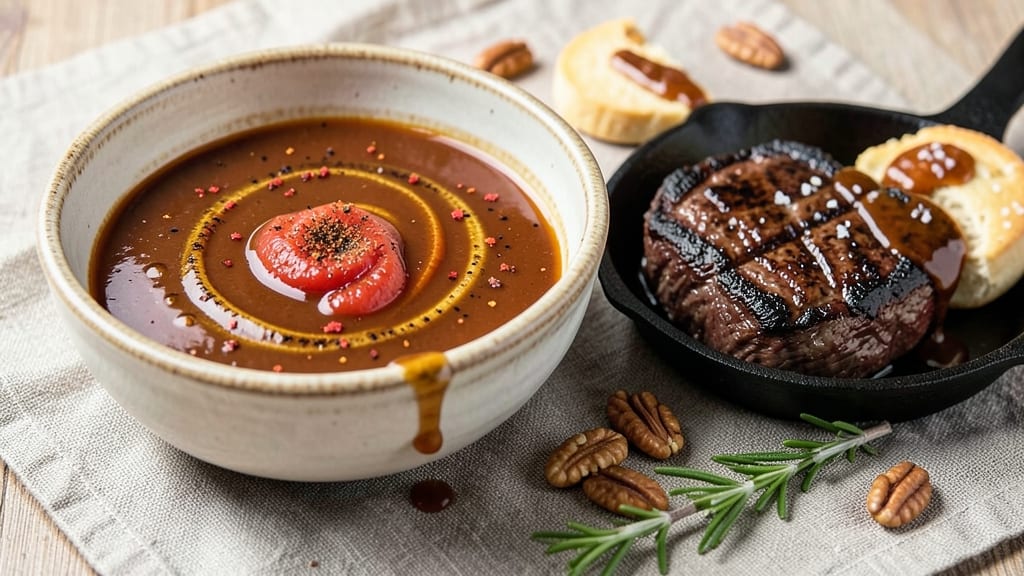
This apple cider vinegar-based BBQ sauce transforms grilled meats into finger-licking masterpieces with its perfect balance of tangy sharpness and caramelized sweetness. I developed it after years of perfecting smoky rubs, realizing that vinegar—not sugar—should anchor the flavor profile. The acidity cuts through fat while building depth, creating a sauce that clings beautifully without overpowering the meat's natural char.
What sets this recipe apart is the slow reduction technique that develops complex caramel notes without burning. We start with apple cider vinegar for its bright acidity, then build layers with brown sugar, tomato paste, and a blend of spices that includes smoked paprika and mustard powder.
The sauce thickens naturally as it simmers, creating that signature glossy glaze that makes every bite irresistible.
The result is a sauce that's versatile enough for ribs, chicken, or even roasted vegetables but always delivers that restaurant-quality depth. It keeps well in the fridge for up to two weeks, perfect for batch cooking, and reheats beautifully for leftovers.
The balance of sweet, tangy, and smoky flavors makes it a game-changer for any grill master.
Pair it with your favorite grilled proteins or use it as a marinade for extra tenderness. The secret lies in the patience of slow cooking—letting the flavors meld and develop that perfect harmony of acidity and sweetness.
Trust me, once you try this sauce, your BBQ game will never be the same.
Ingredients for apple cider vinegar based bbq sauce
The secret to this restaurant-quality BBQ sauce lies in these 10 simple ingredients.
| Ingredient | Amount | Notes |
|---|---|---|
| Apple Cider Vinegar 🍏 | 1 cup | Raw, unfiltered preferred |
| Brown Sugar 🍚 | ¾ cup | Light or dark variety |
| Tomato Paste 🍅 | ½ cup | Squeeze tube or canned |
| Smoked Paprika 🌶️ | 2 tbsp | High-quality for smokiness |
| Mustard Powder 🌶️ | 1 tbsp | Yellow or Dijon preferred |
| Garlic Powder 🧄 | 1 tbsp | Freshly ground preferred |
| Onion Powder 🧅 | 1 tbsp | For depth of flavor |
| Ground Black Pepper 🌶️ | ½ tsp | Freshly cracked preferred |
| Kosher Salt 🧂 | 1 ½ tsp | Diamond Crystal preferred |
| Extra-Virgin Olive Oil 🫒 | ¼ cup | For richness and balance |
Apple cider vinegar is the star here—Bragg or Texas Pete are my go-tos, but any raw, unfiltered brand will work. The brown sugar? Light or dark doesn't matter, but don't use powdered. For tomato paste, Trader Joe's squeeze tubes are perfect—they're convenient and last forever. Smoked paprika is non-negotiable for that signature BBQ depth. I grab mine from Penzeys when I'm feeling fancy, but the regular grocery store stuff works fine. The key is making sure it's fresh—if it smells stale, toss it. Mustard powder adds that subtle tang that makes this sauce so addictive.
No smoked paprika? Regular paprika plus a pinch of liquid smoke gets you close. Running out of tomato paste? Fresh tomato sauce works in a pinch, but you'll need about twice the amount. The garlic and onion powders can be swapped for fresh—1 clove garlic and 1 tbsp finely chopped onion equals those powders. Want more heat? Add 1/4 tsp cayenne pepper. For a sweeter sauce, bump the brown sugar to 3/4 cup plus 2 tbsp. The olive oil is optional but adds richness—avocado oil works too if you prefer a neutral flavor. And if you're worried about the vinegar being too sharp, don't be—it mellows beautifully during the slow reduction.
This sauce tastes even better the next day as the flavors meld. Store it in a clean glass jar in the fridge for up to 2 weeks. For leftovers, reheat gently on the stove—don't boil, just warm through. It freezes beautifully too, perfect for batch cooking. I always make extra because it disappears fast—great for ribs, chicken, or even drizzled over roasted veggies. The secret to that glossy finish? Simmer uncovered until it thickens just right. Trust me, patience pays off here.
Why You'll Love This Recipe
- Pantry Magic: I swear by this sauce because it’s made from things I already have—no special trips to the store. That tangy apple cider vinegar cuts through the sweetness of brown sugar while the tomato paste adds depth without extra effort.
- Smoky Tang Twist: The smoked paprika and mustard powder give it a bold, slightly spicy kick that sticks to ribs or chicken like glue. It’s sweet but never cloying, with a bright finish that makes every bite feel special.
- Weeknight Workhorse: Slather it on grilled chicken for a Tuesday dinner, toss it with baked beans for a crowd, or drizzle it over roasted veggies—it’s that adaptable. Honestly, I’ve used it for everything from pulled pork to roasted potatoes, and it never lets me down.
- Budget-Friendly Stash: A little goes a long way, and what’s left? It keeps for weeks in the fridge. I make a big batch, freeze half, and still have sauce for emergencies—because nothing beats that homemade tang when you’re in a pinch.
Step-by-step instructions for apple cider vinegar BBQ sauce
This tangy-sweet glaze comes together in minutes with bold flavors that'll transform your grilling game.
Combine Vinegar and Sugar for Initial Flavor Base
In a medium saucepan, pour in the 1 cup apple cider vinegar and bring to a gentle simmer over medium heat. Once bubbling, add the 0.75 cup brown sugar all at once and stir until completely dissolved. This creates a sweet-tart foundation that'll balance the smokiness later.
Let the mixture simmer uncovered for 5-7 minutes, stirring occasionally, until it thickens slightly and the sugar caramelizes just enough to deepen the flavor. You'll notice the aroma becomes more complex—this is where the magic begins. Keep an eye on it to prevent burning, as sugar can scorch quickly when left unattended.
Build Depth with Spices and Tomato Paste
Reduce heat to medium-low and stir in the 0.5 cup tomato paste, 2 tbsp smoked paprika, 1 tbsp mustard powder, 1 tbsp garlic powder, 1 tbsp onion powder, 0.5 tsp ground black pepper, and 1.5 tsp kosher salt. The spices will bloom immediately, filling your kitchen with that irresistible BBQ aroma.
Let the sauce simmer for 8-10 minutes, stirring frequently, until it thickens to a glossy consistency. You're looking for a sauce that coats the back of a spoon but still flows smoothly. If it thickens too quickly, add 1-2 tablespoons of water to adjust the texture. The tomato paste will give body while the spices create that signature BBQ complexity you crave.
Finish with Olive Oil for Richness
Remove the saucepan from heat and let it cool slightly for 2-3 minutes. Then stir in the 0.25 cup extra-virgin olive oil until fully incorporated. This final step adds richness that balances the acidity and sweetness, creating a sauce with perfect mouthfeel.
Taste and adjust seasoning if needed—you might want to add a pinch more salt or a splash of vinegar to perfect the balance. Let the sauce cool completely before transferring to a clean jar. The flavors will meld beautifully as it sits, resulting in a sauce that's even more delicious after a few hours. Store in the refrigerator for up to 2 weeks or freeze for longer shelf life.
Pro Tips For Making Apple Cider Vinegar Based Bbq Sauce
- Simmer Slow and Steady: That first 10 minutes on high heat might feel efficient, but you’ll end up with a sauce that’s more vinegary punch than balanced flavor. Drop the heat to medium-low after the initial mix—this lets the brown sugar caramelize properly and the tomato paste thicken without burning. I learned this the hard way after a batch tasted like overcooked syrup.
- Use Real Vinegar, Not Substitutes: Store-bought "apple cider vinegar" is fine, but if you’re using the cheap stuff, your sauce will lack depth. Look for raw, unfiltered apple cider vinegar—it’s thicker, cloudier, and packed with sediment that adds tangy complexity. Skip the "apple-flavored" vinegar; it’s just artificial junk masquerading as the real deal.
- Whisk in the Mustard Powder Wet: Dry-mixing the mustard powder into the sauce first? That’s how you get clumps that ruin the texture. Instead, dissolve it in 1-2 tablespoons of warm water or vinegar before adding it to the pot. Stir it in while the sauce simmers—this guarantees a smooth finish every time.
- Balance the Sweetness Early: Taste as you go, especially after adding the brown sugar. If it’s too sweet, add a splash more vinegar or a pinch of smoked paprika to cut through it. I was skeptical until I tried it—this keeps the sauce from tasting like dessert instead of a proper glaze. Adjust in small increments; you can’t take sweetness out later.
Essential equipment for perfect results
Saucepan Essentials
Start with a heavy-bottomed saucepan—I swear by my All-Clad stainless steel—to prevent scorching during the sugar caramelization phase. A 3-quart pan gives enough room for stirring while controlling heat distribution. Avoid nonstick pans; they can't handle the prolonged simmering without releasing harmful fumes. 🔥
Wooden Spoon
A heat-resistant wooden spoon (like Oxo Good Grips) is non-negotiable—it won’t scratch your pan and prevents scorching better than metal. The slightly rough surface also helps scrape up any caramelized bits clinging to the bottom. I’ve ruined a few batches using metal spoons that left streaks of burnt sugar.
Fine-Mesh Strainer
If you prefer a smoother sauce without visible tomato paste specks, strain it through a fine-mesh sieve after simmering. I use a Hudson stainless steel strainer—it’s durable and won’t clog with thickened sauce. This step is optional but elevates the sauce’s restaurant-quality appearance. 💫
Digital Thermometer
For precision, a thermometer ensures your sauce reaches the ideal 205–210°F range for perfect thickness. My go-to is the Thermoworks Thermapen ONE—it’s fast and accurate. If you don’t have one, watch for the sauce to coat the back of a spoon without dripping excessively.
Glass Jars for Storage
Store your finished sauce in amber glass jars (like Ball Mason jars) to preserve freshness and block light, which can degrade flavors over time. The wide mouth makes pouring easy, and they stack neatly in your fridge.
Label with the date—this sauce tastes best within 2 weeks of making it.
Nutrition facts
Frequently asked questions
Can I substitute apple cider vinegar with white vinegar?
While white vinegar will work in a pinch, it lacks the fruity depth and complexity that apple cider vinegar brings. The natural sweetness and subtle apple notes in apple cider vinegar create a more balanced sauce with richer flavor. If you must substitute, use a 1:1 ratio but be prepared for a slightly sharper, less nuanced taste.
How do I adjust the sweetness level for different meats?
For pork ribs, use the full 3/4 cup brown sugar for that classic caramelized sweetness. For chicken or fish, reduce to 1/2 cup to prevent overpowering the delicate flavors. Vegetarians? Try 1/3 cup sugar and add 1 tbsp maple syrup for extra depth. Always taste as you go—adjust in 1 tbsp increments.
Why did my sauce turn out too thin?
This usually happens when the sauce didn't simmer long enough or the heat wasn't low enough. For thicker results, simmer uncovered for 15-20 minutes total and stir occasionally to prevent skin formation. If it's still too thin, mix 1 tbsp cornstarch with 1 tbsp water, stir into the sauce, and simmer for 2-3 more minutes until thickened.
Can I make this sauce in a slow cooker?
Combine all ingredients in your slow cooker and cook on LOW for 3-4 hours, stirring occasionally. The slow cooking enhances the caramelization naturally. For a quicker version, use HIGH for 1.5-2 hours. Just watch the moisture level—you may need to reduce the vinegar slightly if your slow cooker tends to make sauces watery.
What's the best way to use leftover sauce?
Leftover sauce makes an amazing marinade—coat your meat and let it sit for 2-4 hours before grilling. It also works as a dipping sauce for fries or veggie sticks. For extra flavor, add 1 tbsp of the sauce to your next batch—it deepens the complexity. Just