
Sauces & Condiments
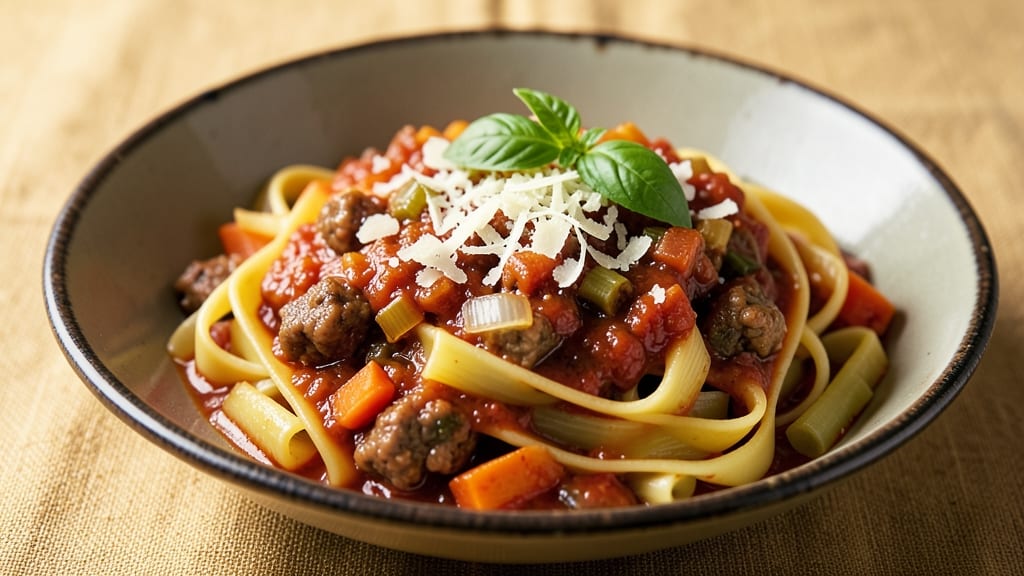
This Bolognese sauce recipe inspired by Mario Batali captures the essence of slow-cooked umami perfection—rich, deep, and designed to elevate every forkful of pasta.
Inspired by the refined techniques of Mario Batali, this version balances traditional Italian roots with modern precision, transforming simple ingredients into a sauce so flavorful it turns weeknight dinners into restaurant-quality meals.
The secret lies in patience: letting the meat brown deeply, the wine reduce slowly, and the tomatoes meld into a velvety base that clings to noodles like a second skin.
What sets this Bolognese apart is its slow-simmered richness, achieved through a methodical approach that builds layers of flavor. Ground meat (traditionally beef, but pork or turkey work beautifully) is seared until deeply caramelized, locking in juices that infuse the sauce with depth.
A splash of red wine deglazes the pan, dissolving browned bits into a complex foundation, while aromatics like onions, carrots, and celery create a fragrant base called soffritto—the unsung hero of Italian cooking. The result?
A sauce that’s equally at home on tagliatelle or lasagna, or even as a hearty filling for stuffed shells.
The magic happens over time—at least 2 hours of simmering—allowing the sauce to develop a concentrated umami punch without ever becoming heavy.
Tomatoes (San Marzano if possible) provide acidity to balance the richness, while a touch of milk or cream at the end rounds out the texture into something luxuriously smooth.
This isn’t just a sauce; it’s a labor of love that transforms humble ingredients into something extraordinary, proving that the best flavors are worth the wait.
For those craving versatility, this Bolognese adapts effortlessly: swap in mushrooms for a meaty texture, add a splash of balsamic for brightness, or finish with fresh basil for a pop of color.
The possibilities are endless, but the foundation remains the same—a perfect, umami-rich sauce that turns simple pasta into a masterpiece. Ready to make it?
Ingredients for bolognese sauce recipe batali
Transform these 14 ingredients into Mario Batali's signature slow-simmered Bolognese perfection.
| Ingredient | Amount | Notes |
|---|---|---|
| Ground Beef 🥩 | 1 ½ lb | 80/20 fat ratio preferred |
| Yellow Onion 🧅 | 1 whole | Medium size, finely diced |
| Carrot 🥕 | 1 whole | Medium size, finely diced |
| Celery Stalks 🌿 | 2 whole | Stringless, finely diced |
| Garlic Cloves 🧄 | 4 cloves | Fresh, minced |
| San Marzano Tomato Crushed 🍅 | 28 oz | Whole peeled or crushed |
| Dry Red Wine 🍷 | ½ cup | Bold Cabernet Sauvignon |
| Whole Milk 🥛 | ¼ cup | Full-fat for creaminess |
| Tomato Paste 🍅 | 2 tbsp | High-quality, no sugar added |
| Extra-Virgin Olive Oil 🫒 | ¼ cup | Lightly fruity |
| Kosher Salt 🧂 | 1 ½ tsp | Diamond Crystal preferred |
| Freshly Ground Black Pepper 🌶️ | ½ tsp | Coarsely ground |
| Dried Oregano 🍃 | ½ tsp | Italian variety |
| Fresh Basil Leaves 🌿 | ¼ cup | For finishing, chopped |
The ground beef is non-negotiable for authentic umami depth—80/20 fat ratio ensures richness without greasiness. Whole Foods or local butchers carry the best quality, but standard supermarket ground beef works in a pinch. The soffritto trio (onion, carrot, celery) should be finely diced to nearly disappear, creating a fragrant base. San Marzano tomatoes are worth the splurge for their natural sweetness and acid balance, though high-quality crushed tomatoes suffice. For the wine, Cabernet Sauvignon adds bold structure—avoid cheap blends that'll overpower the sauce.
No red wine? Beef broth with 1 tbsp balsamic vinegar mimics the acidity and depth. Substitute pork or turkey ground meat, but beef delivers the classic richness. The milk at the end is crucial—full-fat only prevents curdling and adds velvety texture. Fresh basil must be added at the very end (it wilts in heat), but dried oregano can be stirred in early. For tomato paste, Barilla or Rao's brands yield the smoothest results. The aromatics (onion, carrot, celery) can be swapped for fennel or leeks for variation, though traditionalists may balk.
This sauce develops over time—2-3 hours minimum for peak flavor. Store in airtight containers with a thin layer of olive oil on top to preserve freshness. Keeps 5 days refrigerated or 3 months frozen. Portion into ice cube trays before freezing for easy single-use portions. The sauce intensifies overnight, so leftovers often taste even better the next day—double the batch if possible. Always reheat gently to maintain texture.
Why You'll Love This Recipe
- No Chopping Hassle: The onion, carrot, and celery get tossed in raw—no need to dice them finely. I swear by this shortcut, and the flavor? Still deep and rich.
- Meat-Lover’s Dream: That ground beef gets browned just right, and the garlic? Oh, it’s the star—layered in at the end for a bright, punchy finish. Simple, but ridiculously satisfying.
- Weeknight to Dinner Party: Same sauce, endless uses. Slap it on pasta for a quick dinner, or serve it over polenta for guests. Honestly, I’ve even used it in stuffed peppers—works every time.
- Budget-Friendly Staple: Onions, carrots, celery, beef—all pantry basics that stretch far. I make a double batch, freeze half, and still have leftovers for lunch. Zero waste, all flavor.
Step-by-step instructions for slow-simmered Bolognese sauce
Master this technique and you'll achieve restaurant-quality depth with every spoonful.
Develop the Flavor Base with Aromatics and Meat
Heat the 0.25 cup extra-virgin olive oil in a heavy Dutch oven over medium-low heat. Add the finely diced 1 whole yellow onion, 1 whole carrot, and 2 whole celery stalks, stirring occasionally for 8-10 minutes until the vegetables soften and begin to caramelize—this is where the sauce builds its foundational flavor. The onions should turn translucent while the carrot and celery develop a golden hue.
Push the vegetables to one side of the pot and add the 1.5 lb ground beef, breaking it up with a wooden spoon. Cook until the beef loses its raw color and begins to brown, about 8-10 minutes. This step is critical—proper browning develops the meaty depth that defines Bolognese. If the pan gets too dry, add 1 tablespoon red wine to deglaze and scrape up those flavorful browned bits.
Build Complexity with Wine and Tomatoes
Pour in the 0.5 cup dry red wine and stir vigorously, scraping up any browned bits from the bottom of the pot. Let the wine simmer for 3-4 minutes until it reduces by half, intensifying its flavor. This step removes the alcohol and concentrates the wine's essence, which is essential for balancing the sauce.
Add the 2 tbsp tomato paste and stir for 1 minute until fully incorporated. Then pour in the 28 oz crushed San Marzano tomatoes, ensuring they're evenly distributed. Sprinkle with 1.5 tsp kosher salt, 0.5 tsp freshly ground black pepper, and 0.5 tsp dried oregano. Bring the mixture to a gentle simmer, then reduce heat to low and partially cover the pot. The sauce should simmer gently—you're looking for small bubbles breaking the surface, not a rolling boil.
Slow-Simmer for Deep Flavor Development
Let the sauce simmer uncovered for 2 hours, stirring occasionally to prevent sticking. This long, slow cook time allows the flavors to meld and develop complexity. The sauce should reduce slightly, becoming thicker and more concentrated. If it gets too thick before the 2-hour mark, add 1-2 tablespoons water to maintain the proper consistency.
After 2 hours, stir in the 0.25 cup whole milk and 4 cloves minced garlic. The milk adds a subtle creaminess that balances the acidity of the tomatoes, while the garlic infuses its aromatic essence. Continue simmering for another 15-20 minutes until the sauce reaches your desired consistency—it should coat the back of a spoon but still be saucy enough to cling to pasta.
Finish with Fresh Herbs and Rest
Remove the pot from heat and stir in the 0.25 cup chopped fresh basil leaves. The basil adds a bright, fresh finish that cuts through the richness of the meat and tomatoes. Let the sauce rest for 10-15 minutes before serving. This resting period allows the flavors to fully integrate and the sauce to thicken slightly, ensuring each bite delivers perfect balance.
The finished sauce should have a deep, rich color with a velvety texture. If it's too thick after resting, thin it with a splash of pasta water. Serve immediately over your choice of pasta, ensuring each strand is generously coated. The sauce should cling beautifully, delivering layers of umami, acidity, and herbal brightness in every bite.
Pro Tips For Making Bolognese Sauce Recipe Batali
- CRUSH THE SOFFRITO: Batali’s recipe builds flavor through slow-cooked onion, carrot, and celery—don’t rush this. Cook them on medium-low heat with a splash of water or broth (about 1 tablespoon) to steam them gently. I used to crank the heat and end up with bitter, browned bits instead of sweet, jammy vegetables. This step is where the sauce’s depth starts.
- SALT THE MEAT BEFORE BROWNING: Season the ground beef generously with salt and pepper before cooking—it crisps better and seals the surface. I learned this the hard way after making a batch where the meat stayed greasy and bland. A pinch of salt now means richer flavor later, especially when it releases into the tomato sauce.
- SKIP THE OVERCROWDING: When browning the beef, work in batches if needed—packing the pan too tight steams the meat instead of searing it. I once tried to rush this and ended up with pale, mushy beef that turned the sauce gray. A hot pan and thin layer of meat guarantee that caramelized crust Batali’s recipe relies on.
- SAVE TIME WITH FROZEN GARLIC: Peeling and mincing fresh garlic adds up, but frozen garlic (thawed and drained) works just as well—no mess, no fuss. I was skeptical until I tried it; the flavor’s identical, and I skip the tedious prep without sacrificing quality. Just pat it dry first to avoid splattering.
Regional styles of this recipe
Classic Italian Version
In Italy, Bolognese—known as ragù alla bolognese—is traditionally made with a mix of ground beef and pork (or veal) for depth, and simmered with a minimalist approach. The sauce is served over tagliatelle or fresh egg pasta, never over spaghetti.
I prefer using San Marzano tomatoes and adding a splash of white wine instead of red for brightness. The key is patience—this version simmers for 3-4 hours to develop a silky, meaty texture. 🍝
American-Style Adaptation
Mario Batali’s take on Bolognese leans into richer flavors, often incorporating tomato paste and milk for creaminess. This version uses 80/20 ground beef for fat and flavor, and a longer simmer time to concentrate the sauce.
The addition of fresh basil at the end adds a bright contrast to the deep umami. Unlike Italian ragù, this sauce is often thicker and more robust, perfect for lasagna or stuffed shells. 🥘
Vegetarian Twist
For a meat-free version, replace the beef with mushrooms, lentils, and walnuts for texture and umami. I use cremini mushrooms sautéed until deeply browned, along with brown lentils for heartiness.
A splash of balsamic vinegar adds depth, and the sauce still simmers for 2 hours to meld flavors. Top with nutritional yeast for a cheesy note. 🌱
Spicy Southern Style
Inspired by Batali’s love of bold flavors, this version incorporates smoked paprika and crushed red pepper flakes for heat. I add 1 tsp smoked paprika with the aromatics and ½ tsp red pepper flakes at the end.
A dash of hot honey stirred in just before serving balances the spice with sweetness. Serve over fettuccine for a hearty, fiery dish. 🌶️
Quick Weeknight Hack
For a faster version, use ground turkey or Italian sausage instead of beef, and reduce simmering time to 1.5 hours. I also add 1 jar (24 oz) marinara sauce to cut down on prep time.
The sauce still delivers deep flavor but in half the time—perfect for busy nights. Just skip the milk and finish with fresh parsley instead of basil. ⏰
Nutrition facts
Frequently asked questions
Why does Batali's Bolognese use milk at the end?
The milk creates a velvety texture that balances the acidity of the tomatoes and enhances the meaty richness. Full-fat milk is crucial—it prevents curdling and adds subtle creaminess without overpowering the sauce's depth. This technique comes from traditional Italian cooking, where dairy softens the sauce's intensity.
Can I make this sauce in a slow cooker?
Brown the meat and sauté aromatics in a skillet first, then transfer everything to a slow cooker. Cook on low for 6-8 hours or high for 4-5 hours, stirring occasionally. The milk should be added in the last 30 minutes to prevent curdling. The texture will be slightly thicker, so thin with pasta water if needed.
What's the best pasta to serve with this sauce?
Batali's version shines with tagliatelle or pappardelle—their flat surfaces cling beautifully to the sauce. For extra indulgence, try fettuccine or lasagna noodles. Avoid spaghetti (too thin) or angel hair (too delicate). The wider the noodle, the better the sauce coverage!
How do I fix a Bolognese that's too acidic?
If the sauce tastes too tangy, balance it with a splash of heavy cream (2 tbsp) or a pinch of sugar (½ tsp). For a more traditional fix, stir in 1 tbsp tomato paste to deepen the flavor profile. Simmer for 5-10 minutes to let the flavors rebalance. Never add more tomatoes—they'll make it worse!
Can I prep this sauce ahead of time?
This sauce tastes even better the next day! Let it cool completely, then store in an airtight container with a thin layer of olive oil on top. Refrigerate for up to 5 days or freeze for 3 months. When reheating, warm gently on low heat with a splash of water or broth to restore texture. The flavors deepen over time—perfect for meal prep!