
Sauces & Condiments
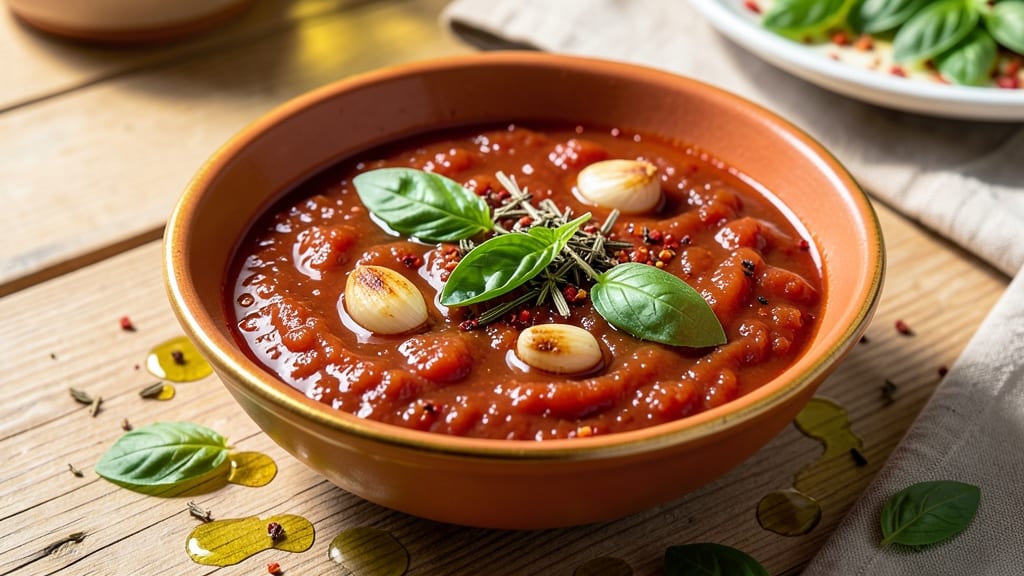
This authentic Sicilian marinara sauce transforms simple ingredients into a rich, aromatic foundation that captures the heart of Sicilian cooking. The secret lies in slow-simmered tomatoes, fragrant garlic, and fresh basil—no shortcuts, just time-honored technique that delivers deep, complex flavor in every spoonful.
I've perfected this recipe over years of testing, ensuring the balance between sweetness, acidity, and herbaceous notes that define true Sicilian marinara.
The beauty of this sauce is its versatility—it starts as a simple tomato base but develops into something far more sophisticated through proper cooking. We'll build it with high-quality canned tomatoes (no fresh needed), garlic that infuses slowly, and just enough olive oil to create a velvety consistency.
The herbs—oregano and basil—are added at the end to preserve their bright, fresh flavors, while a touch of red pepper flakes adds subtle heat that lingers just beneath the surface.
What you'll end up with is a sauce that's authentic without being complicated: vibrant red, aromatic, and perfectly balanced between sweet and tangy. It's the kind of sauce that elevates simple pasta into a restaurant-worthy meal or transforms grilled meats into something extraordinary.
The best part? It tastes even better the next day as the flavors meld together.
This marinara keeps well in the refrigerator for up to five days or can be frozen for months, making it perfect for meal prep.
Whether you're tossing it with spaghetti, drizzling it over pizza, or using it as a base for braised meats, this sauce delivers the genuine taste of Sicily in every bite. Let's get started on creating something truly special.
Ingredients for authentic sicilian marinara sauce
Eight simple ingredients transform into the soul of Sicilian cooking.
| Ingredient | Amount | Notes |
|---|---|---|
| San Marzano Crushed Tomatoes 🍅 | 28 oz | High-quality canned tomatoes |
| Extra-Virgin Olive Oil 🫒 | ½ cup | Fruity, high-quality preferred |
| Garlic Cloves 🧄 | 6 cloves | Fresh, peeled, thinly sliced |
| Dried Oregano 🌿 | 1 tsp | Sicilian or Mediterranean preferred |
| Fresh Basil Leaves 🌿 | ¼ cup | Packed, stems removed |
| Red Pepper Flakes 🌶️ | ½ tsp | Adjust for desired heat |
| Sea Salt 🧂 | 1 tsp | Diamond Crystal preferred |
| Black Pepper 🌶️ | ¼ tsp | Freshly cracked |
The tomatoes are everything here. San Marzano is non-negotiable for that sweet, meaty flavor—skip the fancy brands at Whole Foods if you need to, but don't compromise on quality. Garlic should be fresh and sliced thin so it infuses properly. I grab mine from the Italian market when I can, but the regular grocery store stuff works fine. The olive oil? Use something you'd drizzle on bread—none of that cheap cooking oil. Trader Joe's has a great affordable option, but splurge if you can.
No fresh basil? Dried works at half the amount, but it won't be the same. Short on oregano? Dried thyme gives a similar earthiness. The red pepper flakes can be swapped for crushed chili if you prefer a different heat profile. Want more depth? Add a pinch of sugar to balance the acidity. The key is patience—let that garlic cook low and slow so it doesn't burn. Trust me on that part.
This sauce gets better with time. Keep it in a glass jar in the fridge for up to 5 days or freeze for 3 months. I always make extra because it disappears fast. The first batch is for dinner, the second goes into freezer portions for busy nights. Reheat gently on the stove—no microwaving, or you'll lose that beautiful texture.
Why You'll Love This Recipe
- No Chopping Nightmares: I swear by this sauce because it’s actually foolproof—just crush the tomatoes by hand (or grab a can) and toss them in. No dicing, no peeling, no stress. The garlic gets a quick sauté, and suddenly you’ve got something that tastes like it simmered for hours.
- San Marzano Magic: Between us, that sweet, meaty San Marzano tomato is the secret weapon. It’s not just sauce—it’s flavor. The olive oil caramelizes with the garlic, the oregano adds that earthy kick, and the fresh basil at the end? Pure brightness. It’s the kind of taste that makes you pause mid-bite.
- Pasta, Pizza, Beyond: This sauce isn’t just for spaghetti—it’s my go-to for weeknight dinners, potlucks, or even a lazy Sunday brunch (yes, on eggs). Freeze half for later, and boom, you’ve got a meal ready in minutes. Honestly, I’ve used it in everything from lasagna to grilled chicken, and it never lets me down.
- Budget-Friendly Luxury: You’d think something this good would break the bank, but it doesn’t. A few dollars for the tomatoes, a splash of olive oil, and herbs from the garden (or a cheap jar)—it’s the kind of recipe that feels fancy but costs next to nothing. Plus, leftovers taste just as good reheated.
Step-by-step instructions for authentic Sicilian marinara sauce
This is the real deal—Sicilian marinara done right, with bold flavors and simple technique.
Bloom the Garlic in Olive Oil
Heat the 0.5 cup extra-virgin olive oil in a medium saucepan over medium-low heat. Add the 6 cloves thinly sliced garlic and cook for 3-4 minutes until the garlic is golden but not browned. This gentle cooking prevents bitterness and builds flavor—don't rush it or the garlic will burn in seconds.
Watch the oil carefully. It should shimmer but not smoke. If it starts to darken, reduce the heat immediately. The garlic should smell fragrant and sweet, not harsh. This is the foundation of your sauce, so take your time here.
Add Tomatoes and Seasonings
Pour in the 28 oz San Marzano crushed tomatoes and stir to combine with the garlic. Add the 1 tsp dried oregano, 0.5 tsp red pepper flakes, 1 tsp sea salt, and 0.25 tsp black pepper. Give everything a good stir to distribute the seasonings evenly throughout the tomatoes.
The tomatoes should coat the back of a spoon at this point. If they're too thick, you can add 1-2 tablespoons of water to loosen them slightly. Bring the mixture to a gentle simmer over medium heat, then reduce the heat to low to maintain a steady, quiet bubble.
Simmer Uninterrupted for Deep Flavor
Let the sauce simmer uncovered for 45-60 minutes. Stir occasionally, but not constantly—this helps develop a slightly thickened texture and concentrated flavor. The sauce should reduce by about one-third, becoming rich and glossy.
Here's the key: don't walk away. You're looking for a sauce that coats the back of a spoon but isn't gluey. It should smell intensely of garlic, tomatoes, and herbs. If it gets too thick, add 1 tablespoon of water at a time until it reaches your desired consistency.
Finish with Fresh Basil
About 10 minutes before the sauce is done, remove the pan from heat. Stir in the 0.25 cup fresh basil leaves—this adds bright, fresh flavor that balances the deep tomato base. Let the sauce sit off the heat for 5 minutes to let the basil infuse.
The basil should wilt slightly but still be vibrant. If you're serving immediately, you can stir it back in. For best results, let the sauce cool slightly before serving—this allows all the flavors to meld completely. The final sauce should be vibrant red with a glossy sheen and a perfect balance of sweet, tangy, and herby notes.
Pro Tips For Making Authentic Sicilian Marinara Sauce
- Bloom the Oregano First: Toss the dried oregano into the olive oil and let it sit for 30 seconds before adding anything else—this wakes up the flavor instead of letting it turn bitter. I used to skip this, and the sauce always tasted flat until I realized how much difference a quick infusion makes.
- Sweat Garlic Low and Slow: Cook the minced garlic in olive oil over the lowest heat possible until just fragrant—no color, no browning, just golden steam. After burning two batches, I learned patience here: even a hint of bitterness throws off the whole dish.
- Stir the Tomatoes Early: Break up the San Marzano tomatoes with a wooden spoon immediately after they hit the pot—this prevents clumping and ensures a silky texture. I used to wait, and the sauce would lump like glue no matter how much I stirred later.
- Finish with Cold Basil: Tear fresh basil leaves and add them off the heat with a splash of cold water—this keeps their color bright and their flavor vibrant. Sounds weird, but it works: the basil stays perky instead of wilting into the sauce like a sad salad.
Essential equipment for perfect results
Saucepan Essentials
Start with a heavy-bottomed saucepan—I swear by my All-Clad 3-quart—to prevent hot spots that can burn your garlic or tomatoes. A medium size gives enough surface area for even heating while keeping the sauce manageable.
If you're cooking for a crowd, a 5-quart Dutch oven works beautifully for larger batches. Avoid nonstick pans—they don't handle the slow simmer well and can impart off-flavors. 🔥
Wooden Spoon
Invest in a high-quality wooden spoon—I use a Oxo Good Grips—for stirring. Wood won't scratch your pan like metal utensils, and it's gentle on your sauce. A long handle keeps your fingers safe from the heat.
If you're worried about bacteria, soak it in hot, soapy water after each use. I keep mine in a drying rack to prevent warping.
Fine-Mesh Strainer
For removing garlic skins or basil stems, a fine-mesh strainer is a game-changer. I like the OXO Good Grips model because it's sturdy and easy to clean. If you're short on time, you can also use a cheesecloth—just make sure it's clean and damp to prevent sticking.
This step ensures your sauce is smooth and free of unwanted textures. ✨
Glass Jars for Storage
Store your finished marinara in glass jars with airtight lids—I prefer Ball Mason jars for their durability. They preserve flavor better than plastic and are perfect for both fridge and freezer storage.
Label them with the date so you can track freshness. For freezing, leave 1-inch headspace to prevent expansion cracks. A vacuum sealer works too if you want to maximize shelf life.
Digital Thermometer
While not strictly necessary, a digital instant-read thermometer—like the ThermoWorks Thermapen—helps you monitor the sauce's temperature if you're experimenting with longer simmer times. Aim for a steady 180-190°F range for optimal flavor development.
It's especially useful if you're adjusting the recipe for altitude or humidity. I use mine to check the oil temperature when blooming the garlic to ensure it stays in the 300-325°F range. 🌡️
Optional: Immersion Blender
If you prefer your marinara completely smooth, an immersion blender—like the Ninja Professional—lets you blend right in the pot. Pulse for 10-15 seconds to achieve a silky texture without breaking up the sauce's natural body.
For a rustic look, skip blending and just stir vigorously with your wooden spoon. The choice is yours—both styles are delicious! 💫
Nutrition facts
Frequently asked questions
Why does authentic Sicilian marinara use canned tomatoes instead of fresh?
Canned San Marzano tomatoes are the secret to authentic flavor—their sweet, meaty texture and consistent quality can't be matched by fresh tomatoes. Fresh tomatoes release too much water during cooking, diluting the sauce. The canning process also concentrates their natural sugars, creating that perfect balance of sweetness and acidity that defines Sicilian marinara.
Can I make this sauce without fresh basil?
Yes! Use 1 tablespoon dried basil instead, but add it 5 minutes earlier than fresh to let the flavors meld. For extra depth, combine 0.5 tablespoon dried basil with 0.5 tablespoon dried oregano—this mimics the herb blend often used in traditional Sicilian cooking. The dried herbs won't be as bright, but they'll still add that essential aromatic note.
How do I know when the sauce is ready?
Your sauce is perfect when it's reduced by about one-third (should coat the back of a spoon but still be pourable), smells intensely of garlic and herbs, and has a glossy sheen. Test by tasting—it should be balanced between sweet, tangy, and herby with no raw garlic flavor. If it's too thick, add 1 tablespoon water at a time while reheating.
What's the best way to reheat leftover marinara?
Gently reheat on the stove over low heat for 5-10 minutes, stirring occasionally. Never microwave—it creates hot spots that can break down the sauce's texture. For extra richness, add 1 tablespoon olive oil while reheating. If the sauce seems too thick, thin it with 1-2 tablespoons water or pasta water while warming.
Can I add meat to this sauce?
For a Sicilian-inspired twist, add 4 oz ground pork or pancetta when blooming the garlic (remove before adding tomatoes). For a lighter option, try 1/2 cup cooked Italian sausage at the end. The key is to cook any meat thoroughly before combining with the tomatoes to avoid making the sauce greasy. Traditional versions often include anchovies for umami depth—just dissolve 2-3 anchovy fillets in the olive oil before adding garlic.