
Sauces & Condiments
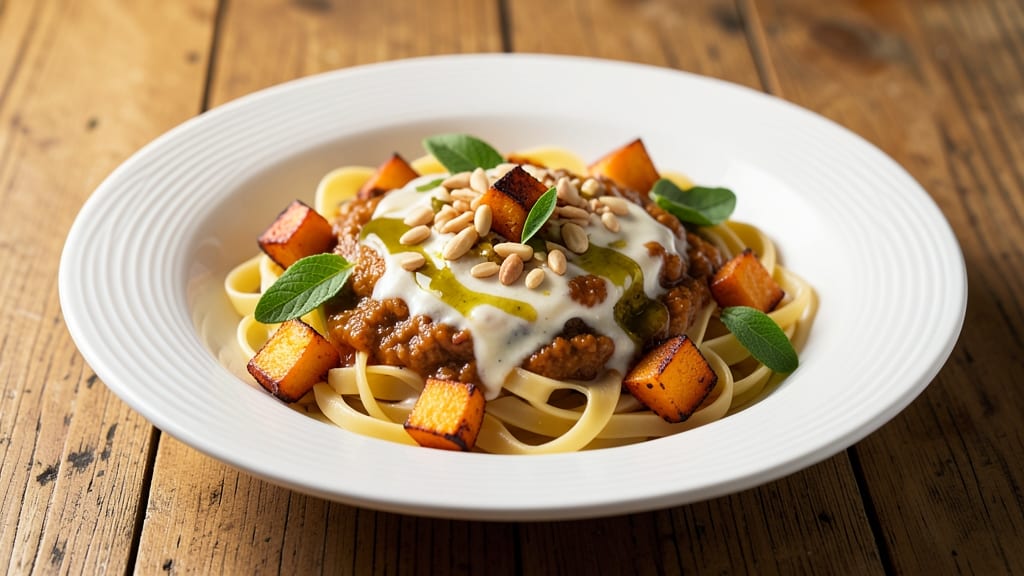
This autumn pasta sauce recipe transforms simple ingredients into velvety richness that clings perfectly to every noodle. Roasted butternut squash and fresh sage create a deep, aromatic base that simmers into a creamy sauce with just the right balance of sweetness and earthiness.
The secret lies in slow roasting the squash until tender, then blending it with broth and cream for a texture that's impossibly smooth yet still vibrant.
What sets this sauce apart is its versatility—it works equally well with hearty winter pastas like penne or rigatoni, or even as a luxurious coating for roasted vegetables. The roasting process caramelizes the squash naturally, eliminating the need for added sugar while building complex flavors.
A splash of white wine brightens the sauce, while a touch of nutmeg adds warmth that feels like autumn in a bowl.
By the time you're done, you'll have a sauce that's rich enough to stand alone but balanced enough to complement any dish. It reheats beautifully, making it perfect for meal prep, and freezes well for up to three months. The aroma alone will have everyone asking what's for dinner.
Pair it with crispy sage leaves for garnish and a sprinkle of parmesan for extra depth. This isn't just a sauce—it's the centerpiece of your autumn table. Let's make it.
Ingredients for autumn pasta sauce
Nine simple ingredients, one velvety sauce that steals the show every time.
| Ingredient | Amount | Notes |
|---|---|---|
| Butternut Squash 🎃 | 2 lbs | Cubed, skin on for flavor |
| Fresh Sage Leaves 🌿 | ½ cup | Stems removed, loosely packed |
| Heavy Cream 🥛 | 1 cup | Full-fat for best texture |
| Vegetable Broth 💧 | 2 cups | Low-sodium preferred |
| Dry White Wine 🍷 | ¼ cup | Sauvignon Blanc works well |
| Extra-Virgin Olive Oil 🫒 | 2 tbsp | For roasting and finishing |
| Freshly Grated Nutmeg 🌶️ | ¼ tsp | Freshly grated for warmth |
| Garlic Cloves 🧄 | 3 cloves | Peeled, slightly crushed |
| Parmesan Cheese 🧀 | ½ cup | Freshly grated, for finishing |
| Salt 🧂 | 1 tsp | Diamond Crystal preferred |
| Black Pepper 🌶️ | ½ tsp | Freshly cracked |
The butternut squash is your flavor foundation—look for firm, heavy squash with no soft spots. Trader Joe's or Whole Foods usually have the best quality, but any grocery store will do. Roasting caramelizes the natural sugars, so don't skip this step. The sage? Fresh is non-negotiable here—dried just won't give that same earthy aroma. If you're prepping ahead, store the roasted squash in the fridge for up to 3 days before blending.
No white wine? Substitute extra broth with a splash of apple cider vinegar—it brightens the sauce just as well. Heavy cream too rich? Half-and-half or coconut milk keeps it creamy without overpowering. Nutmeg too strong? Cut it to a pinch—it's subtle but essential. The garlic can be roasted with the squash for deeper flavor, but raw works in a pinch. And if you're feeling fancy, toast your sage leaves in olive oil before adding them to the sauce for extra crunch.
This sauce reheats like a dream—just warm gently on the stove with a splash of broth. Keeps 4-5 days in the fridge, freezes for 3 months (portion into ice cube trays for easy use). Double the batch—it's perfect over roasted veggies or as a dip. The aroma alone will have your kitchen smelling like autumn. Trust me, you'll want to make this often.
Why You'll Love This Recipe
- One-Pot Magic: The butternut squash roasts while you prep the rest—no chopping chaos, no extra pans. Just toss everything in one deep skillet, let it simmer, and walk away. (Yes, even on a Tuesday night.)
- Sage & Squash Symphony: That first whiff of sage and caramelized squash hitting your tongue? It’s like autumn in a bowl. The wine cuts through the creaminess, and the squash adds this silky sweetness—no one will guess it’s secretly healthy.
- Leftover Hero: This sauce actually improves the next day—thicker, richer, and still packed with flavor. I’ve used it on toast for brunch, tossed it with eggs, even drizzled it over grilled cheese. (Don’t judge me.)
- Budget-Friendly Luxury: Heavy cream makes it feel fancy, but butternut squash and vegetable broth keep it affordable. A bottle of cheap white wine? Even better. It’s the kind of dish that makes you feel special without breaking the bank.
Step-by-step instructions for roasted squash and sage pasta sauce
This velvety sauce starts with roasted squash and sage for deep autumnal flavor.
Roast the Butternut Squash and Sage
Preheat your oven to 400°F and line a large baking sheet with parchment paper. Toss the 2 lbs butternut squash cubes and 0.5 cup fresh sage leaves with 1 tablespoon of the extra-virgin olive oil, 0.5 teaspoon salt, and 0.25 teaspoon black pepper. Spread them in a single layer—don't crowd the pan.
Roast for 25-30 minutes until the squash is tender when pierced with a fork and the edges are deep golden brown. The sage should be crispy around the edges. Let it cool slightly before transferring to a blender—this makes blending easier and prevents splattering.
Build the Sauce Base
In a large skillet, heat the remaining 1 tablespoon extra-virgin olive oil over medium heat. Add the 3 peeled garlic cloves and sauté for 30 seconds until fragrant but not browned. Pour in the 0.25 cup dry white wine and let it simmer for 2 minutes until reduced by half.
Add the roasted squash and sage mixture to the skillet, along with the 2 cups vegetable broth. Bring to a gentle simmer and cook for 5 minutes until the flavors meld. The sauce should be thick but still liquid enough to blend smoothly.
Blend to Velvety Perfection
Transfer the squash mixture to a blender or food processor. Add the 1 cup heavy cream, 0.25 teaspoon freshly grated nutmeg, and blend until completely smooth. Taste and adjust seasoning with more salt or black pepper if needed. The sauce should be rich and slightly sweet from the roasted squash.
Return the blended sauce to the skillet and simmer over low heat for 5 minutes to let the flavors deepen. If the sauce thickens too much, whisk in 1-2 tablespoons water to reach your desired consistency.
Finish and Serve
Stir in the 0.5 cup freshly grated Parmesan cheese until fully melted and smooth. The sauce should coat the back of a spoon with a luxurious, creamy texture. Taste again and adjust seasoning one final time.
Serve immediately over your choice of pasta, drizzled with a little extra extra-virgin olive oil and additional Parmesan cheese if desired. The sauce will thicken slightly as it cools, so don't worry if it looks a bit thin at first—it's designed to cling beautifully to each strand of pasta.
Pro Tips For Making Autumn Pasta Sauce
- Roast Squash Until Caramelized: I learned this the hard way—soft squash turns to mush in the sauce. Cut the butternut into 1-inch cubes, toss with olive oil and salt, then roast at 400°F (200°C) for 30-40 minutes, stirring once. The edges should be deep golden and slightly crisp; if they’re just tender, you’ve missed the flavor. (Yes, even if you’re impatient like me.)
- Deglaze With Wine Immediately: After the sage hits the pan, pour in the white wine right away—don’t let it burn. Use about ½ cup, scraping every last bit of browned bits with a wooden spoon. Let it reduce by half (about 2 minutes) before adding broth. Skimp here, and you’ll taste alcohol instead of depth.
- Strain the Broth First: Vegetable broth often hides bits of onion or celery that turn the sauce grainy. Strain it through a fine-mesh sieve before adding to the pan—trust me, your sauce will look silky, not gloppy. (I skip this when I’m lazy, but the dish is noticeably better when I don’t.)
- Finish With Cold Cream: Heavy cream scalds easily, and once it curdles, there’s no fixing it. Warm the cream separately in a small saucepan over low heat (no higher than 160°F/70°C) until steaming, then whisk it into the sauce off the heat. The contrast in temps keeps it smooth—no lumps, no drama.
Essential equipment for autumn pasta sauce
Blender Essentials
You’ll need a high-powered blender or immersion blender to achieve that silky texture—my go-to is the Ninja BN601 for its smooth handling of hot liquids. If you’re using a regular blender, let the squash mixture cool slightly first to prevent splattering.
For an ultra-smooth finish, strain the blended sauce through a fine-mesh sieve to remove any fibrous bits. 💫
Skillet and Pot
A heavy-bottomed stainless steel skillet (like All-Clad) is ideal for building the sauce base—it distributes heat evenly and prevents burning. If you don’t have one, a cast-iron skillet works too, but watch the temperature closely.
For simmering, a wide, shallow saucepan (like Le Creuset) gives you more surface area to reduce the sauce gently. Avoid nonstick—it can’t handle the high heat needed for caramelization.
Baking Sheet
Use a half-sheet pan (about 13x18 inches) for roasting the squash—it gives enough space to spread the cubes in a single layer without crowding. Line it with parchment paper for easy cleanup, or use a silicon baking mat if you prefer.
Avoid dark-colored pans—they can over-brown the squash faster than lighter ones. Preheat the oven to 400°F and let it stabilize for 10 minutes before adding the squash.
Measuring Tools
Precision matters here! Use a digital kitchen scale for the squash (aim for 2 lbs exact) and a fine-mesh grater for the nutmeg—pre-measured spice jars can be inconsistent. A garlic press speeds up mincing, but a sharp knife works just as well.
For the broth, a liquid measuring cup ensures accuracy, especially since you’re using 2 cups—too little and the sauce will be too thick.
Optional Upgrades
For next-level flavor, toast the sage leaves in a dry skillet for 30 seconds before roasting—they’ll add a nutty depth. A mortar and pestle can intensify the nutmeg’s aroma if you grind it fresh.
If you love garnishes, keep a pair of kitchen tweezers handy for placing crispy sage leaves on top of the pasta. These extras aren’t required, but they elevate the dish from good to chef’s kiss.
Nutrition facts
Frequently asked questions
Can I substitute butternut squash with another autumn vegetable?
Try acorn squash or delicata squash for similar sweetness, or swap for roasted sweet potatoes (peeled and diced) for a heartier texture. Just adjust roasting time—sweet potatoes may need 15-20 minutes less. For a tomato-based twist, use roasted heirloom tomatoes (remove skins first) with a splash of balsamic vinegar.
How do I adjust the sauce if I'm making it dairy-free?
Replace the heavy cream with full-fat coconut milk for richness, and use nutritional yeast instead of Parmesan. For extra creaminess, blend in 2 tablespoons cashew butter or avocado. The sauce will still be velvety, though slightly lighter in texture. Taste as you go—you may need 1 extra tablespoon broth to balance consistency.
What's the best pasta shape to pair with this sauce?
This rich sauce clings beautifully to ridged shapes like penne, rigatoni, or fettuccine. For extra texture, try casarecce (tubular pasta with ridges) or pappardelle (wide ribbons). If you prefer lighter options, farfalle or gemelli work too—just toss with a little extra olive oil to help the sauce adhere.
Can I make this sauce ahead of time?
Yes! This sauce actually improves overnight. Store in an airtight container in the fridge for 4-5 days—the flavors meld beautifully. For freezing, portion into ice cube trays, freeze, then transfer cubes to a bag. Thaw in the fridge overnight before reheating gently on low heat with 1 tablespoon broth to restore creaminess. Avoid microwaving to prevent skin formation.
Why did my sauce turn out too thick?
This happens when the squash releases too much moisture during roasting. Fix it by whisking in 1-2 tablespoons water or broth while simmering, or adjust next time by roasting squash at 375°F instead of 400°F to control moisture. For immediate use, thin with a splash of pasta water—it's seasoned perfectly to blend in. If storing, the sauce will naturally thicken further when cooled.