
Sauces & Condiments
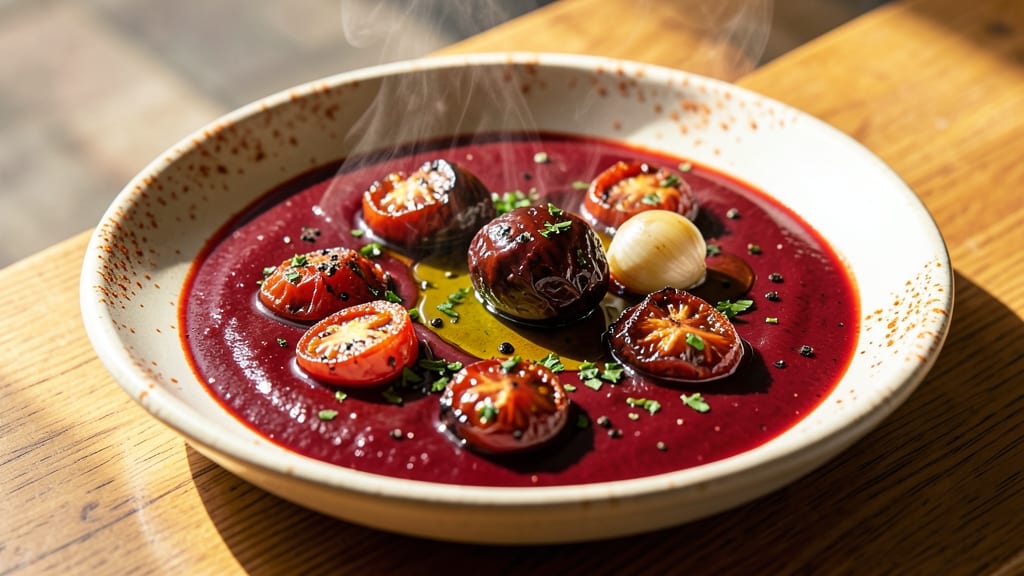
Bilbaina sauce transforms simple dishes into Basque culinary masterpieces with its smoky depth and velvety texture. This traditional Spanish sauce blends roasted tomatoes, garlic, and sweet paprika into a rich, aromatic base perfect for drizzling over eggs, potatoes, or grilled meats. The slow-cooked reduction creates a balance of sweetness and smokiness that lingers on the palate, making it a pantry essential for home cooks.
The beauty of Bilbaina sauce lies in its simplicity—just a handful of ingredients that work together to create something extraordinary. Roasted tomatoes form the foundation, while garlic and paprika add layers of flavor that deepen as the sauce simmers.
A touch of vinegar brightens the richness, ensuring each spoonful delivers that signature Basque restaurant taste without the fuss of complex techniques.
What sets this sauce apart is its versatility. Use it as a drizzle for huevos rotos or tortilla española, or let it elevate grilled vegetables and meats with minimal effort.
The key to success is patience—allowing the sauce to reduce slowly develops its signature depth, turning a simple combination into something truly special. Once mastered, you’ll reach for it whenever you crave that authentic Spanish flavor.
Perfect for meal prep or last-minute cooking, this sauce keeps well in the refrigerator for up to a week, making it a go-to for quick yet impressive meals. The process is straightforward, but the result is undeniably restaurant-quality—a testament to how a few well-chosen ingredients can make all the difference.
Ingredients for bilbaina sauce
Nine essential ingredients crafting Basque restaurant-quality sauce with smoky depth and velvety richness.
| Ingredient | Amount | Notes |
|---|---|---|
| Ripe Roma Tomatoes 🍅 | 2 lb | Halved, seeds removed |
| Extra-Virgin Olive Oil 🫒 | ½ cup | High-quality, fruity variety |
| Garlic Cloves 🧄 | 6 cloves | Peeled, lightly smashed |
| Sweet Paprika 🌶️ | 2 tbsp | Smoked variety preferred |
| Red Wine Vinegar 🍷 | 1 tbsp | Balances richness |
| Salt 🧂 | 1 tsp | Diamond Crystal preferred |
| Ground Black Pepper 🌶️ | ½ tsp | Freshly ground |
| Bay Leaf 🍃 | 1 whole | For aromatic depth |
| White Wine 🍷 | ¼ cup | Dry, medium-bodied |
The foundation begins with Roma tomatoes—their meaty texture and low acidity create the ideal base. Purchase heirloom or vine-ripened when available, or opt for San Marzano canned tomatoes for consistent quality. Whole Foods or Trader Joe's carry excellent options, though fresh is superior when in season. The garlic should be freshly peeled—pre-minced cloves lose their punch. For paprika, Penzeys offers authentic Spanish varieties, but any smoked paprika will enhance the sauce's signature depth. The olive oil must be extra-virgin—substandard oils will compromise the sauce's velvety texture.
No Roma tomatoes? San Marzano canned tomatoes work beautifully—just crush them by hand for authentic texture. Short on white wine? Dry vermouth or even apple cider vinegar can substitute, though the flavor profile will shift slightly. The bay leaf is optional but recommended—it infuses subtle aromatic notes that elevate the sauce. For vinegar, red wine vinegar is ideal, but balsamic vinegar adds a touch of sweetness if preferred. The paprika is non-negotiable for that signature smokiness—smoked paprika is essential, though sweet paprika can be used in a pinch with slightly less depth. Always toast the paprika lightly in the oil before adding other ingredients to develop its aromatic compounds.
This sauce develops its signature richness through slow reduction, so patience is key. Store in an airtight glass jar in the refrigerator for up to 7 days, though flavor improves with time. For longer storage, freeze in ice cube trays for single-portion use—thaw quickly in warm water when ready to use. The sauce thickens as it cools, so reheat gently over low heat, stirring occasionally. Once mastered, this sauce becomes a pantry staple for drizzling over eggs, grilled meats, or roasted vegetables, delivering that restaurant-quality Basque flavor with minimal effort.
Why You'll Love This Recipe
- No-Chop Necessary: I swear by this—just halve those Roma tomatoes and toss them in. No dicing, no peeling, no fuss. The skin softens right into the sauce, and honestly? That’s where the real depth comes from.
- Sweet-Savory Magic: That sweet paprika and red wine vinegar combo is chef’s kiss—bright, smoky, and just enough tang to cut through the richness. The olive oil ties it all together like a warm hug for your taste buds.
- Weeknight to Dinner Party: Slather it on grilled fish, drizzle over roasted potatoes, or serve it with crusty bread—this sauce plays well everywhere. Between us, I’ve even used it as a marinade for chicken. Versatile doesn’t even begin to cover it.
- Pantry Staple Power: You’re already using things you own: olive oil, garlic, vinegar. No specialty trips, no wasted ingredients. And the leftovers? They last a solid five days in the fridge, making it my go-to for lazy Mondays or last-minute guests.
Step-by-step instructions for Bilbaina sauce
Master this Basque classic with a balance of smoky depth and velvety texture—each step builds the signature richness.
Roast Tomatoes and Garlic for Foundational Flavor
Preheat your oven to 425°F. Arrange the 2 lb halved ripe Roma tomatoes (seeds removed) and 6 peeled, lightly smashed garlic cloves on a rimmed baking sheet in a single layer. Drizzle with 1 tablespoon of the extra-virgin olive oil and sprinkle lightly with ½ teaspoon salt. Roast for 20-25 minutes until the tomatoes collapse slightly and edges darken to a deep golden color.
This roasting caramelizes natural sugars while concentrating tomato flavor—critical for the sauce's depth. Watch closely after 15 minutes to prevent burning; the garlic should soften but not brown. Remove from oven and let cool for 5 minutes before transferring to a food processor.
Process Roasted Ingredients with Olive Oil
Transfer the roasted tomatoes and garlic to a food processor along with the remaining 0.33 cup extra-virgin olive oil (reserving 2 tablespoons for finishing). Process until completely smooth, scraping down the sides as needed. The mixture should resemble a thick, vibrant purée with no visible texture.
This step emulsifies the sauce's base. If the purée seems too thick, add 1-2 tablespoons water to achieve a consistency similar to heavy cream. The purée should coat the back of a spoon but still flow freely when poured.
Build the Sauce with Paprika and Wine
Return the purée to your baking sheet and place over medium-low heat. Stir in the 2 tbsp sweet paprika and cook for 3-4 minutes, stirring constantly, until the mixture begins to thicken slightly and the paprika aroma intensifies. This is where the sauce develops its signature smoky character.
Add the 0.25 cup white wine and 1 tbsp red wine vinegar, stirring continuously. Simmer for 5-6 minutes until the wine reduces by half and the sauce begins to coat the back of a spoon. The sauce should now have a glossy sheen and slightly thickened consistency.
Finish with Aromatics and Seasoning
Remove the sauce from heat and stir in the whole bay leaf, 1 tsp salt, and 0.5 tsp ground black pepper. Return to low heat and simmer gently for 8-10 minutes, stirring occasionally, until the sauce reaches a velvety consistency that coats a spoon completely. The bay leaf should infuse subtle herbal notes without becoming bitter.
Strain the sauce through a fine-mesh sieve into a clean saucepan, pressing gently on the solids to extract maximum flavor. Discard the bay leaf. Return the strained sauce to low heat and stir in the reserved 2 tablespoons olive oil to create a silky finish. The sauce should now be rich, glossy, and perfectly balanced between smoky, sweet, and tangy notes.
Rest and Serve for Optimal Texture
Transfer the sauce to a bowl and let it rest at room temperature for 15-20 minutes. This resting period allows flavors to meld completely and the sauce to reach its ideal consistency—thick enough to cling but still fluid enough to drizzle. The sauce should be 100°F or warmer when served.
Serve immediately over grilled fish, roasted vegetables, or crusty bread. For best results, stir gently before serving to redistribute any settled ingredients. The sauce keeps well in the refrigerator for up to 5 days in an airtight container, though it's best enjoyed fresh when its velvety texture is at its peak.
Pro Tips For Making Bilbaina Sauce
- CHAR THE TOMATOES FIRST: I used to just dump raw tomatoes into the pan, but that turns your sauce into a watery mess. Sear them cut-side down in olive oil for 3-4 minutes until they collapse and release their juices—this concentrates the flavor and thickens the sauce right from the start. (Yes, even if they look sad afterward.)
- SWEAT THE GARLIC LOW: Bilbaina sauce needs sweet, not bitter, garlic. Cook the minced cloves on the lowest heat possible, stirring constantly, until they’re just golden—about 5-6 minutes. If you rush this, they’ll burn and turn the whole sauce acrid. (I learned this after one very unpleasant batch.)
- STRAIN THE PAPRIKA: Skip the pre-ground paprika—it’s full of stems and grit that ruin texture. Toast whole paprika pods in a dry pan until fragrant, then grind them yourself. This gives you a smoother, silkier sauce. (Your blender will thank you too.)
- ACIDIFY GRADUALLY: Red wine vinegar is potent—add it in stages. Start with half the amount, taste, then adjust. Too much upfront and your sauce tastes harsh; too little and it lacks balance. (I now keep a small bowl of vinegar on hand to drizzle, not pour.)
Essential equipment for great bilbaina sauce
Food Processor
You'll need a high-quality food processor to achieve that ultra-smooth texture—look for one with a 1.5-liter capacity like the Cuisinart DLC-10BCNY or Ninja BN601. The blade should be sharp enough to purée the roasted tomatoes and garlic completely without overheating.
I've found that stainless steel blades last longer and handle hot ingredients better than plastic. 💡
Heavy-Bottomed Saucepan
A stainless steel saucepan with a 3-quart capacity is essential for even heat distribution during reduction. I swear by the All-Clad Stainless line—they're pricey but worth it for professional results. If you're on a budget, the Cuisinart MultiClad Pro offers similar performance at half the cost.
Avoid nonstick pans for this sauce; they can't handle the prolonged simmering required for depth.
Fine-Mesh Strainer
For that silky finish, you'll strain out the bay leaf and any remaining solids. A fine-mesh stainless steel strainer like the OXO Good Grips is my go-to—it catches all the tiny particles while letting the sauce flow freely.
The mesh size should be around 200 microns for optimal texture. Pro tip: Press gently with a wooden spoon to extract every last drop of flavor from the solids. 🌟
Baking Sheet
Your rimmed baking sheet (half-sheet pan) should be 18x13 inches to accommodate the tomatoes and garlic in a single layer. I prefer aluminum for even heat conduction, but stainless steel works too.
Line it with parchment paper for easy cleanup and to prevent sticking. This sheet will also double as your stovetop vessel for the initial reduction stage.
High-Quality Olive Oil
While not equipment per se, extra-virgin olive oil is your secret weapon here. I recommend Spanish varieties like Picual or Arbequina for their fruity notes that complement the sauce. Avoid anything labeled "light" or "pure"—these lack the flavor depth needed.
A 16-ounce bottle of Penzeys Spanish Olive Oil gives you enough for multiple batches and becomes a pantry staple. 🫒
Thermometer
A kitchen thermometer ensures you don't overcook the sauce. I use the Thermoworks Thermapen ONE—it's fast and accurate to 0.1°F. The sauce should reach 100°F when served, but never exceed 160°F or it'll break down.
For the roasted tomatoes, aim for 400°F in the oven—any hotter risks burning the garlic. This small investment prevents flavor loss from overheating. 🌡️
Nutrition facts
Frequently asked questions
Can I make Bilbaina sauce without roasting the tomatoes?
Roasting the tomatoes is key for developing their natural sweetness and deep flavor. If you skip this step, the sauce will taste flat and lack complexity. For a quick alternative, simmer fresh tomatoes on the stovetop with a splash of water for 10 minutes before blending, but the flavor won't be as rich.
How do I adjust the thickness of Bilbaina sauce?
The sauce should be velvety but pourable. If it's too thick after simmering, whisk in 1-2 tablespoons warm water or white wine until smooth. For a thicker consistency, reduce it longer over low heat or add a ½ teaspoon cornstarch slurry. Always stir constantly to prevent clumping.
What's the best way to store leftover Bilbaina sauce?
Transfer the cooled sauce to an airtight glass jar and refrigerate for up to 5 days. For longer storage, freeze in ice cube trays or small containers—thaw overnight in the fridge. Avoid reheating directly from frozen; let it sit at room temperature for 10 minutes first to prevent separation.
Can I substitute white wine in Bilbaina sauce?
Yes! Use dry vermouth or apple cider vinegar for a similar acidity profile. For a non-alcoholic version, substitute with extra tomato juice or white grape juice. Just remember that vinegar will add more tang, while juice will dilute the sauce slightly. Adjust seasoning after simmering.
Why did my Bilbaina sauce turn bitter?
Overcooking or using too much paprika can cause bitterness. The sauce should simmer gently for 20-25 minutes total—never let it boil. If it tastes bitter, balance it with a splash of red wine vinegar or a pinch of sugar. For future batches, reduce the paprika to 1.5 tablespoons and taste frequently during cooking.