
Sauces & Condiments
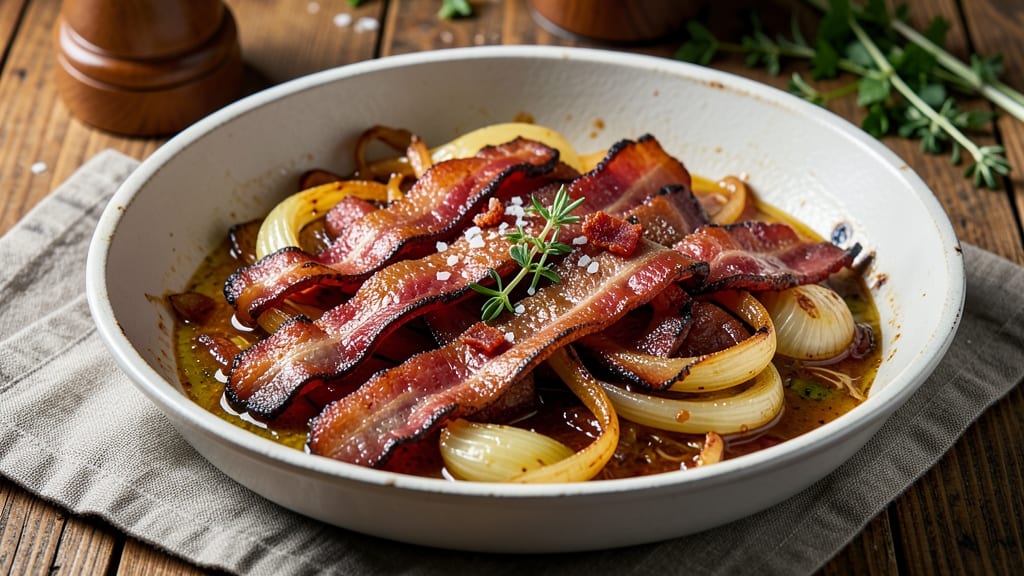
This bacon onion sauce recipe transforms simple ingredients into a smoky-sweet glaze that caramelizes edges into perfect golden perfection. The secret lies in slow-cooking onions until deeply sweet while crisping bacon for rich, salty depth—creating a sauce that elevates everything from burgers to pasta.
I developed this after years of testing, balancing sweetness and saltiness to achieve that ideal harmony.
The process is straightforward but requires patience: onions simmer until jammy and aromatic, bacon renders its fat for flavor, and a touch of brown sugar enhances the caramelization. This sauce isn’t just a topping—it’s a flavor multiplier that turns ordinary meals into standout dishes.
The result? A glossy, sticky glaze with layers of complexity that lingers on the palate.
What makes this sauce exceptional is its versatility—drizzle it over grilled steaks for a smoky finish, spoon it onto mac and cheese for extra richness, or use it as a glaze for roasted vegetables.
The flavors deepen when refrigerated, making it perfect for meal prep. Store it in the fridge for up to a week, or freeze for longer shelf life.
For best results, use thick-cut bacon and cook onions low and slow—rushing this step will compromise the sauce’s depth. The balance of sweetness from caramelized onions and smokiness from bacon creates a sauce that’s restaurant-quality at home. Let’s make it!
Ingredients for bacon onion sauce
Transform smoky bacon and jammy onions into this irresistible glaze—perfect for elevating any dish.
| Ingredient | Amount | Notes |
|---|---|---|
| Thick-Cut Bacon 🥓 | 8 oz | Thick-cut preferred for crispiness |
| Yellow Onions 🧅 | 2 large | Yellow or red, sliced thin |
| Extra-Virgin Olive Oil 🫒 | 2 tbsp | For initial cooking |
| Brown Sugar 🍯 | 2 tbsp | Light or dark variety |
| Apple Cider Vinegar 🍏 | 1 tbsp | For brightness |
| Granulated Sugar 🍚 | 1 tbsp | For caramelization |
| Diamond Crystal Kosher Salt 🧂 | ½ tsp | Adjust to taste |
| Black Pepper 🌶️ | ¼ tsp | Freshly cracked |
| Fresh Thyme Leaves 🌿 | ¼ tsp | Or 1/4 tsp dried thyme |
| Water 💧 | ¼ cup | For thinning if needed |
The bacon and onions are the heart of this sauce, so don’t skimp. Thick-cut bacon from Oscar Mayer or Costco gives the best crisp edges, while yellow onions (or red for color) need to caramelize slowly for that sweet depth. Look for onions with dry, papery skins—they’ll caramelize more evenly. Fresh thyme adds an earthy note that rounds out the smokiness, but if you’re out, dried works at a quarter the amount. The olive oil should be fruity and peppery—California Olive Ranch is my go-to for this kind of sauce.
No thick-cut bacon? Regular bacon works but won’t crisp as well. Onions too bitter? Soak in cold water for 10 minutes to mellow them. Want more depth? Add a 1/2 tsp smoked paprika or a pinch of cayenne for heat. The vinegar can be swapped for balsamic vinegar (use half the amount) if you’re feeling fancy. If the sauce gets too thick, thin it with water or a splash of apple juice—just a tablespoon at a time. And if you’re making this ahead, freeze in ice cube trays for easy portioning later.
This sauce keeps 1 week refrigerated and freezes beautifully for up to 3 months. The flavors actually deepen overnight, so make it a day ahead if you can. Store it in a glass jar with a tight seal—it’ll stay glossy and ready to drizzle. For extra richness, stir in a 1 tbsp of the reserved bacon fat before serving. Trust me, it’s worth the extra minute.
Why You'll Love This Recipe
- One-Pan Magic: I swear by this recipe because it’s literally one pan, two steps, and zero mess. The bacon renders its own fat, onions caramelize in that golden pool—no extra oil needed—and the vinegar cuts through the richness like a breath of fresh air. My kitchen stays cleaner than a Sunday morning.
- Sweet-Savory Bomb: That brown sugar and apple cider vinegar combo? It’s the secret weapon. The bacon stays crispy, the onions get jammy-sweet, and the vinegar adds a bright tang that makes every bite feel like a hug. Honestly, I’ve made it for breakfast, lunch, and dinner—it’s that good.
- Leftovers That Lie: Between us, this sauce tastes even better the next day. I’ll make a big batch on Sunday, toss it on eggs, stir it into pasta, or drizzle it over roasted veggies all week. The flavors meld into something richer, and it’s my go-to for lazy mornings or last-minute dinners.
- Budget Flex: Thick-cut bacon and yellow onions are pantry staples that won’t break the bank, and a little olive oil and brown sugar stretch this sauce far. I feed four people for under $10, and it’s still the most requested dish at my table. (Yes, even on a Tuesday night.)
Step-by-step instructions for perfectly caramelized bacon onion sauce
This sauce delivers smoky depth and sweet caramelization that transforms simple dishes into something extraordinary.
Render the Bacon Until Crisp and Golden
Cut the 8 oz thick-cut bacon into ¼-inch thick slices and arrange them in a single layer on a rimmed baking sheet. Place under a broiler on high for 5-7 minutes, flipping halfway through, until deeply browned and crisp. The edges should be nearly blackened—this is where all the flavor lives.
Transfer the crispy bacon to a paper towel-lined plate to drain excess fat, leaving behind about 2 tablespoons of rendered bacon fat in the sheet pan. This fat becomes the flavor foundation for your sauce. If you need more fat, add 1 tablespoon of the extra-virgin olive oil to the pan and heat over medium heat for 30 seconds to combine.
Caramelize the Onions Slowly for Maximum Sweetness
Return the bacon to the pan (discard the paper towel) and reduce heat to medium-low. Add the 2 large yellow onions, sliced into ¼-inch thick half-moons, and stir to coat in the fat. Cook undisturbed for 5 minutes to develop a golden crust on the bottom.
Stir occasionally, breaking up any large chunks, and cook for 15-20 minutes total until the onions are deeply caramelized with soft, jammy edges. You're aiming for a color between golden brown and amber—this is where the natural sugars transform into sweet, complex flavors. If the onions stick, add 1 tablespoon of water to deglaze and scrape up those flavorful browned bits.
Build the Sweet-Savory Base with Vinegar and Sugar
Increase heat to medium and stir in the 1 tablespoon apple cider vinegar, scraping up any stuck-on bits. Let it simmer for 1 minute until the vinegar evaporates completely. Then add the 2 tablespoons brown sugar, 1 tablespoon granulated sugar, ½ teaspoon kosher salt, and ¼ teaspoon black pepper. Stir constantly for 2-3 minutes until the sugars dissolve and the mixture becomes glossy.
Here's where the magic happens: the sugars will begin to caramelize, deepening the sauce's color and adding a complex sweetness. Watch carefully—you want it to turn a rich amber color without burning. If it starts to darken too quickly, reduce heat to low and continue stirring until fully incorporated.
Finish with Thyme and Adjust Consistency
Add the ¼ teaspoon fresh thyme leaves and stir for 30 seconds to infuse the aroma. Taste and adjust seasoning—you might need an extra pinch of salt or a splash of vinegar for brightness. For a thicker sauce, simmer uncovered for 2-3 minutes to reduce. For a thinner, glaze-like consistency, add the ¼ cup water in 1-tablespoon increments, stirring between additions until you reach your desired texture.
The sauce is now ready to use immediately or store for later. For best results, drizzle it over grilled meats, roasted vegetables, or use as a glaze for burgers and sandwiches. The perfect balance of smoky bacon, caramelized onions, and bright vinegar makes this sauce a game-changer for any dish.
Pro Tips For Making Bacon Onion Sauce
- CUT BACON UNIFORM: I learned this the hard way—jagged edges burn unevenly and make the sauce look sloppy. Use kitchen shears or a sharp knife to slice thick-cut bacon into ¼-inch strips, all the same length. This ensures even cooking and crispy edges every time.
- SWEAT ONIONS LOW AND SLOW: High heat turns onions mushy before they caramelize. Start over medium-low, let them sit for 5 minutes, then stir occasionally. You want them to break down gently, not brown too fast—this builds flavor without burning.
- REMOVE BACON AT 170°F: Pull the bacon out when it hits 170°F internally, not when it’s "done looking crispy." Overcooking dries it out and makes the sauce greasier. Reserve the bacon, then strain the fat through a fine-mesh sieve to keep the sauce silky.
- ACIDIFY BEFORE SIMMERING: Add the apple cider vinegar and brown sugar after the onions soften, not at the start. This prevents the sugar from burning and lets the acid brighten the sauce at the end—where it actually matters. Stir in the last 2 minutes of cooking.
Dietary considerations for these flavors
Gluten-Free Adaptation
This sauce is naturally gluten-free, but always double-check your bacon and sugar labels—some brands add gluten-containing fillers or anti-caking agents. I use Applegate Naturals bacon, which is certified gluten-free, and Domino or Wholesome! sugars that are safe for gluten-sensitive diets.
The vinegar and spices are inherently gluten-free, so no substitutions are needed here. Just ensure your olive oil is from a trusted brand like California Olive Ranch to avoid cross-contamination risks. 🌱
Dairy-Free Considerations
The original recipe is dairy-free, but if you're avoiding all animal fats, replace the bacon fat with 2 tablespoons of avocado oil or coconut oil for cooking. I've tested this swap and found Avocado Brand avocado oil works beautifully—it has a neutral flavor that won't overpower the caramelized onions.
The sauce will still develop that rich, glossy texture, though it might need an extra ½ teaspoon of salt to compensate for the reduced umami from bacon.
Low-Sodium Options
For a lower-sodium version, reduce the ½ teaspoon kosher salt to just ¼ teaspoon and boost flavor with an extra ½ teaspoon of apple cider vinegar or ¼ teaspoon of smoked paprika.
I also recommend using low-sodium bacon like Hormel Natural Choice—it crisps beautifully while cutting about 300mg of sodium per serving. The caramelized onions and vinegar will still provide plenty of depth without relying on salt.
Sweetener Alternatives
If you're avoiding refined sugar, swap the 2 tablespoons brown sugar and 1 tablespoon granulated sugar for 3 tablespoons of maple syrup or 2 tablespoons of coconut sugar. I prefer 100% pure maple syrup from Maine Maple—it adds a subtle earthiness that complements the smokiness.
For a keto-friendly option, use erythritol or monk fruit sweetener (about 2 tablespoons total), though the texture may be slightly less glossy. The vinegar will still balance any residual sweetness beautifully.
Allergy-Friendly Swaps
For nut allergies, this recipe is already safe, but if you're avoiding all animal products, replace the bacon with 6 oz of tempeh or extra-firm tofu, sliced and pan-fried until crispy.
Use 1 tablespoon of olive oil for cooking and add ½ teaspoon of liquid smoke to mimic the bacon's smokiness. The onions and vinegar will carry the dish, but the texture will be slightly different—expect a more plant-based, less fatty finish. 💛
Nutrition facts
Frequently asked questions
Can I make this bacon onion sauce without actually using bacon?
For a vegetarian version, replace the bacon with 6 oz of tempeh or extra-firm tofu, sliced thin and pan-fried until crispy. Add ½ teaspoon of liquid smoke to mimic the smoky depth, and use 2 tablespoons of avocado oil instead of bacon fat. The caramelized onions and vinegar will still create that signature sweet-savory balance.
How do I adjust the thickness of this sauce?
For a thicker glaze, simmer the sauce uncovered for 2-3 minutes to reduce the liquid. Need it thinner? Add ¼ cup water in 1-tablespoon increments, stirring between additions. For a spreadable consistency (like a jam), reduce by half—just keep an eye on it to prevent burning.
Can I use this sauce on pasta or is it better for proteins?
This sauce works beautifully on both! Drizzle it over grilled chicken or steak for a smoky finish, but it also elevates pasta—toss it with fettuccine or penne for a rich, caramelized flavor. Just reduce the sauce slightly if using with noodles to prevent a soggy texture. For extra richness, stir in 1 tablespoon of butter at the end.
Why does my sauce taste bitter? What went wrong?
Bitter flavors usually come from overcooking the onions or burning the sugars. Check if your onions turned dark brown (almost black)—this means they burned. For future batches, reduce heat to medium-low when caramelizing and stir frequently. Also, ensure your vinegar is fully evaporated before adding sugars; residual acidity can make the sauce taste harsh.
How long can I store this sauce, and does it improve over time?
The sauce keeps for 1 week refrigerated in an airtight container, and flavors actually deepen overnight! For longer storage, freeze it in ice cube trays (perfect for portioning) or a sealed jar for up to 3 months. Thaw in the fridge before reheating—never microwave directly from frozen to preserve texture.