
Sauces & Condiments
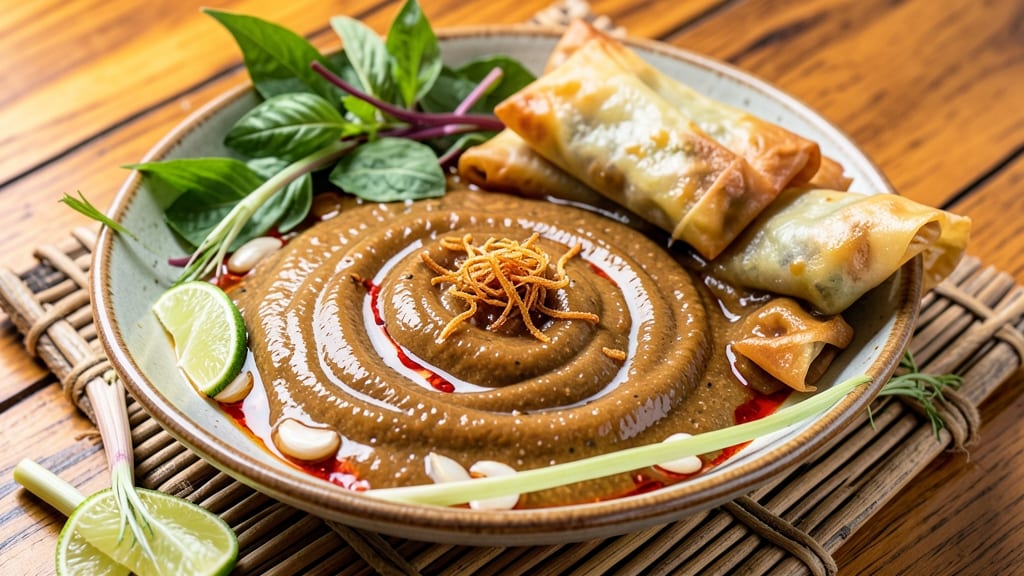
This authentic Thai peanut sauce recipe transforms ordinary spring rolls into a restaurant-worthy masterpiece with its velvety texture and perfect balance of nutty, spicy, and tangy flavors. ✨ The secret lies in toasting the peanut butter to deepen its aroma while blending it with a fragrant paste of lemongrass, garlic, and chili—just 10 minutes of prep yields a sauce that elevates every bite.
What sets this sauce apart is its authentic technique: simmering coconut milk with spices creates a rich, aromatic base before blending with creamy peanut butter and lime juice.
The result is a glossy, slightly sticky sauce that clings beautifully to spring rolls while delivering layers of complexity—smoky from the chili, bright from the lime, and rich from the toasted peanuts.
Perfect for dipping, drizzling, or tossing, this sauce delivers restaurant-quality results without the fuss. The blend of heat, sweetness, and umami makes it irresistible with both traditional spring rolls and modern wraps.
Whether you're serving a crowd or meal prepping, this versatile sauce keeps well in the fridge for up to 5 days.
For dietary adjustments, simply swap coconut milk for a lighter option or reduce the peanut butter for a less rich version. The key to authenticity remains: balancing all flavors so no single note overpowers. Let's create this sauce!
Ingredients for authentic thai peanut sauce recipe for spring rolls
Authentic Thai flavors start with these 10 simple yet powerful ingredients.
| Ingredient | Amount | Notes |
|---|---|---|
| Natural Peanut Butter 🥜 | ½ cup | Creamy, unsweetened preferred |
| Coconut Milk 🥥 | 1 can | Full-fat for creaminess |
| Lemongrass Stalk 🌿 | 3 whole | Lower 3 inches chopped |
| Garlic Cloves 🧄 | 4 cloves | Peeled and minced |
| Red Chili Peppers 🌶️ | 2 whole | Bird's eye or Thai chili |
| Lime Juice 🍋 | 2 tbsp | Freshly squeezed |
| Soy Sauce 🍜 | 1 tbsp | Light or dark preferred |
| Fish Sauce 🐟 | 1 tbsp | Red Boat preferred |
| Brown Sugar 🍚 | 1 tbsp | Packed firmly |
| Sesame Oil 🫒 | 1 tsp | Toasted for aroma |
The peanut butter is non-negotiable—natural, unsweetened gives the authentic depth. Trader Joe's or 365 by Whole Foods brands are reliable. Lemongrass is the secret weapon here—look for fresh stalks with vibrant green leaves at Asian markets. The bird's eye chilies pack serious heat; if you can't find them, Thai chilies from the ethnic aisle work perfectly. For the coconut milk, full-fat cans create that luxurious texture, but light works if you're watching calories. Toast the peanut butter in a dry pan for 2-3 minutes to deepen its aroma—trust me on this.
No lemongrass? Lime zest plus a dash of ginger adds brightness, though it won't be identical. Short on fish sauce? Soy sauce plus a pinch of sugar mimics the umami. Prefer less heat? Remove seeds from chilies before blending. The brown sugar can be swapped for maple syrup or coconut sugar—just use the same amount. For a vegan version, ensure your peanut butter has no honey and use coconut aminos instead of fish sauce. The sesame oil is optional but adds that signature nutty aroma—skip it if you're avoiding oil entirely.
This sauce keeps beautifully—5 days in the fridge sealed tightly. For longer storage, freeze in ice cube trays for 3 months. The texture thickens when chilled, so thin with a splash of water or coconut milk before serving. Double the batch—it disappears fast. I always make extra to drizzle over noodles or stir-fries. The flavors actually improve after sitting overnight as everything melds together.
Why You'll Love This Recipe
- Fewer Ingredients, Big Payoff: I swear by this sauce—just five pantry staples (peanut butter, coconut milk, lemongrass, garlic, chili) and you’re golden. No fancy prep, no hidden spices—just the real deal.
- Lemongrass Magic: That stalk of lemongrass? It’s the secret weapon. One quick smash with the flat side of a knife, and suddenly you’ve got this bright, citrusy depth that makes the sauce sing—no fancy tools, no fuss.
- Weeknight Meal Prep: Make a double batch on Sunday, and you’ve got sauce for spring rolls, noodles, or even grilled chicken all week. It thickens beautifully when refrigerated, so every dip is just as rich.
- Budget-Friendly Luxury: Natural peanut butter and coconut milk stretch far, and lemongrass lasts forever in the freezer. Here’s what sold me—this sauce costs pennies per serving but tastes like a restaurant special.
Step-by-step instructions for authentic Thai peanut sauce
This sauce delivers perfect balance—creamy, nutty, and authentically spiced in just 10 minutes.
🍳 Step 1: Toast Aromatics for Deep Flavor
Heat 1 teaspoon sesame oil in a small saucepan over medium heat. Add the lower 3 inches of 3 lemongrass stalks, chopped, and the 4 minced garlic cloves. Sauté for 2-3 minutes until fragrant—you'll smell that bright, citrusy lemongrass aroma and see the garlic turn golden.
Here's the thing—don't let the lemongrass burn. It releases bitterness quickly. Add the 2 whole red chili peppers (seeds removed if you prefer less heat) and cook for another 30 seconds until they soften slightly. This step builds the aromatic foundation—skip it, and your sauce will taste flat.
🥘 Step 2: Build the Sauce Base
Pour in the 1 can coconut milk and stir to combine with the aromatics. Bring to a gentle simmer over medium-low heat, then reduce heat to low and let it cook for 3 minutes. You're not trying to reduce it yet—just infuse the coconut milk with those flavors.
While it simmers, whisk together the 0.5 cup natural peanut butter, 1 tablespoon soy sauce, 1 tablespoon fish sauce, 1 tablespoon brown sugar, and 2 tablespoons lime juice in a separate bowl. The peanut butter should melt completely—if it doesn't, warm the mixture slightly over hot water in a double boiler.
🍳 Step 3: Combine and Simmer to Perfection
Pour the peanut butter mixture into the saucepan with the coconut milk and stir vigorously. The sauce will thicken immediately—this is normal. Let it simmer gently for 3-4 minutes until it reaches your desired consistency. It should coat the back of a spoon but still be pourable.
Taste and adjust: Need more heat? Add a pinch of chili flakes. Too sweet? A splash more lime juice brightens it. Too salty? A tiny bit more peanut butter balances it. The key is achieving that perfect harmony of nutty, tangy, and umami—this is what makes it authentic.
⏰ Step 4: Finish and Cool
Remove from heat and let the sauce cool slightly—it will thicken as it cools. For spring rolls, you want it to be smooth and spreadable but not so thick it can't be drizzled. If needed, thin with 1-2 teaspoons warm water to reach the right consistency.
Strain through a fine-mesh sieve if you prefer ultra-smooth sauce (this removes any lemongrass fibers). Transfer to a clean jar and refrigerate until ready to use. This sauce keeps for 5 days in the fridge—its flavor actually improves as it sits!
Pro Tips For Making Authentic Thai Peanut Sauce Recipe For Spring Rolls
- TOAST PEANUTS FIRST: I learned this the hard way—raw peanut butter makes the sauce clump like glue. Dry-toast 2 tablespoons of peanut butter in a small pan over medium heat for 2-3 minutes until fragrant (not brown). Stir constantly or it’ll burn. This step cuts the greasiness and builds depth—trust me, your sauce will taste like it came from a Bangkok street cart.
- SCRAPE LEMONGRASS CLEAN: Don’t just chop the stalk—scrape the pale, fibrous inner pith first with a spoon. That white core is bitter and ruins the bright aroma. Then, bruise the outer layers with the side of your knife before mincing. It releases more citrusy oils, and you’ll actually taste the lemongrass instead of just peanuts and coconut.
- SIMMER LOW AND SLOW: After adding coconut milk, resist the urge to crank the heat. A gentle simmer (barely bubbles at the edges) for 8-10 minutes lets the flavors meld without curdling the milk. I used to rush this, and the sauce always tasted thin and one-dimensional. Patience here makes a real difference—especially when pairing with spring rolls.
- CHILI PREP MATTERS: Skip the seeds if you want heat without capsaicin sting, but keep the veins for texture. For extra kick, toast whole dried chilies in a dry pan for 30 seconds until fragrant—then crush them with the garlic. Fresh chilies? Mince them fine; dried ones? Soak first, then blend. Don’t just toss in random heat—control it.
Flavor customization for authentic thai peanut sauce recipe for spring rolls
Spice Level Control
Adjust the heat by modifying the chilies—remove seeds for milder sauce or keep them for serious kick. For extra spice, add ½ teaspoon of chili flakes after cooking. If you love heat, toast 1 extra Thai chili with the aromatics.
I often keep a small bowl of chili flakes on the side for guests to customize their dipping experience. 🌶️
Sweetness Balance
Brown sugar adds depth, but you can swap it for maple syrup or coconut sugar for a more natural sweetness. For less sweetness, reduce to ½ tablespoon and add ½ teaspoon of lime zest instead.
I find that balancing the sweetness with extra lime juice (up to 3 tablespoons) keeps the sauce bright and refreshing.
Richness Adjustments
For a lighter sauce, reduce peanut butter to ¼ cup and add 1 tablespoon of Greek yogurt or coconut yogurt for tang. If you want extra richness, stir in 1 tablespoon of tahini at the end for a nutty depth.
I’ve also added 1 teaspoon of peanut powder (from leftover peanuts) for an intense peanut flavor without extra fat.
Umami Boost
Enhance the savory depth by adding ½ teaspoon of miso paste or 1 teaspoon of oyster sauce (if you eat shellfish). For a vegan umami boost, use 1 teaspoon of mushroom powder or an extra ½ tablespoon of soy sauce.
I often add a splash of fish sauce (up to 1½ tablespoons) if I’m serving this with seafood spring rolls.
Texture Tweaks
Want a smoother sauce? Strain it through a fine-mesh sieve after blending. For a thicker sauce, simmer the combined mixture for an extra 2 minutes or add 1 teaspoon of cornstarch mixed with water.
If it’s too thick, thin with 1-2 teaspoons of warm water or coconut milk while stirring constantly.
Flavor Layering
Add complexity by infusing the coconut milk with 1 cinnamon stick or 1 star anise pod while simmering. For a floral note, stir in ½ teaspoon of pandan extract (common in Thai desserts). I’ve also experimented with a pinch of white pepper for warmth—it’s subtle but adds another dimension. 💫
Nutrition facts
Frequently asked questions
Can I make this sauce without lemongrass?
Yes, but the flavor will differ slightly. Replace the lemongrass with 1 tablespoon lime zest plus ½ teaspoon grated ginger for brightness. The sauce will still taste delicious but lose that signature citrusy depth. For the closest substitute, use 1 teaspoon lemongrass paste (found in Asian markets).
How do I prevent the sauce from separating?
Keep the peanut butter warm while combining it with the coconut milk mixture. If separation occurs, whisk in 1 teaspoon of warm water or coconut milk to re-emulsify. For extra insurance, blend the sauce briefly after simmering. The key is maintaining consistent heat throughout the process.
What's the best way to store leftover sauce?
Transfer to an airtight container and refrigerate for up to 5 days. The sauce thickens when chilled—stir in 1-2 teaspoons of warm water before using. For longer storage, freeze in ice cube trays for 3 months. Thaw overnight in the fridge and stir well before serving.
Can I use this sauce for other dishes besides spring rolls?
This versatile sauce works beautifully with noodles, grilled meats, or as a marinade. For stir-fries, reduce the peanut butter slightly (¼ cup) to prevent heaviness. It also makes an excellent dipping sauce for veggie sticks or dumplings. The balance of flavors adapts well to many Asian-inspired dishes.
Why does my sauce taste too sweet?
Balance the sweetness with ½ teaspoon more lime juice or ¼ teaspoon more fish sauce for umami. If you reduced the sugar initially, add a pinch of salt to enhance other flavors. The sauce should have a subtle sweetness—not overpowering. For future batches, reduce sugar to ¾ tablespoon if you prefer less sweetness.