
Sauces & Condiments
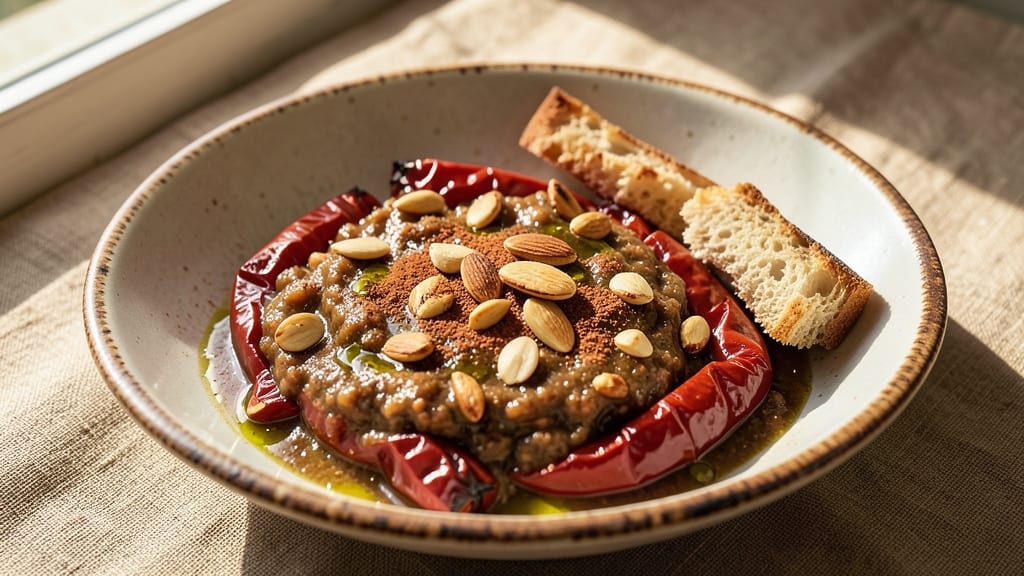
This authentic romesco sauce recipe brings the smoky, nutty flavors of Catalonia to your kitchen with just a few simple ingredients. Roasted red peppers, toasted almonds, and garlic blend into a velvety, smoky paste that’s as versatile as it is delicious.
The key lies in toasting the bread and nuts to deepen their flavors, creating a sauce that’s rich, complex, and impossible to resist.
Traditionally used as a dip or drizzled over grilled vegetables, fish, or crusty bread, romesco sauce is a vegetarian and vegan powerhouse. Its smoky paprika and toasted bread base give it a depth that pairs perfectly with bold flavors.
The sauce keeps well in the fridge for up to a week or freezes for months, making it a perfect make-ahead condiment for any meal.
What makes this recipe truly authentic is the careful balance of toasted ingredients—each component plays a role in creating that signature smoky, nutty, and slightly tangy flavor. The garlic adds brightness, the almonds bring crunch, and the roasted peppers lend a deep, caramelized sweetness.
This sauce isn’t just a condiment; it’s a flavor enhancer that elevates every dish it touches.
The best part? It’s incredibly adaptable. Use it as a dip for bread, a marinade for grilled meats, or a finishing sauce for roasted vegetables. Once you try this authentic romesco sauce, you’ll never go back to store-bought versions again. Let’s get started!
Ingredients for authentic romesco sauce
Toasted bread, smoky paprika, and roasted peppers create this iconic Catalan sauce.
| Ingredient | Amount | Notes |
|---|---|---|
| Roasted Red Peppers 🍅 | 1 cup | Jarred or homemade, drained |
| Spanish Smoked Paprika 🌶️ | 2 tbsp | Pimentón de la Vera preferred |
| Toasted Almonds 🥜 | ½ cup | Skin-on for texture, lightly toasted |
| Garlic Cloves 🧄 | 4 cloves | Peeled, roughly chopped |
| Stale Bread 🍞 | 1 slice | Crusty bread, cut into pieces |
| Extra-Virgin Olive Oil 🫒 | ¾ cup | High-quality, fruity variety |
| Sherry Vinegar 🍷 | 1 tbsp | For tangy depth |
| Salt 🧂 | 1 tsp | Diamond Crystal preferred |
| Ground Black Pepper 🌶️ | ½ tsp | Freshly ground for warmth |
| Dried White Wine 🍷 | ¼ cup | Dry variety, optional |
The Spanish smoked paprika is non-negotiable—Pimentón de la Vera from Spain delivers that unmistakable smoky depth. Trader Joe's carries a good brand, but if you can find it at a specialty store, it's worth the splurge. For the almonds, skin-on is key—they add texture that jarred sauces miss. Toast them in a dry pan over medium heat until golden, about 5 minutes. The bread should be stale but not hard—toss it in the toaster until crisp, then toast in olive oil for 3-4 minutes until golden brown. Roasted red peppers? No need to peel if using jarred—just drain and chop. Fresh peppers work too, but roasting them yourself takes time.
No sherry vinegar? Red wine vinegar works in a pinch, but it lacks the complexity. Skip the wine? Extra broth or water keeps the sauce from being too thick. For a nut-free version, swap almonds for toasted hazelnuts or walnuts—just adjust the amount to match the texture. The garlic can be roasted with the peppers to mellow the flavor, or left raw for a sharper bite. If you're making a big batch, double the paprika and almonds—they're the flavor anchors. And if your sauce seems too thick after blending, thin with a splash of water or extra vinegar.
This sauce keeps beautifully—1 week in the fridge sealed tightly, or 3 months frozen in ice cube trays for single servings. For best texture, let it sit at room temperature for 10 minutes before serving. The flavors deepen over time, so it actually tastes better the next day. Store it in a glass jar with a tight lid to preserve the smoky aroma. If you make extra, freeze half—it’s perfect for drizzling over roasted vegetables or grilled fish later in the month.
Why You'll Love This Recipe
- No Chopping Chaos: I’ll be real—this sauce only needs one knife for garlic and maybe a quick tear of stale bread. The roasted peppers and almonds? Just open the jar, pulse in a food processor. Honestly, I’ve made it while scrolling through emails.
- Smoky Nutty Magic: That Spanish smoked paprika and toasted almonds? They’re the stars—warm, earthy, with a crispy crunch that disappears into your food. The garlic cloves, lightly toasted, add a sweet depth that makes it ridiculously good on everything.
- Weeknight to Dinner Party: Slather it on grilled chicken for Tuesday, drizzle over roasted veggies for a crowd, or toss with shrimp for a fancy-ish vibe. It’s my go-to for when I’m too tired to think but still want flavor. (Yes, even on a Tuesday night.)
- Leftovers That Don’t Suck: This sauce actually improves the next day—thicker, richer, and still packed with that nutty punch. Store it in the fridge for up to a week, or freeze it in ice cube trays for single-serving portions. No waste, all flavor.
Step-by-step instructions for authentic romesco sauce
Transform simple ingredients into Spain's most beloved sauce with this traditional method.
Toast the Almonds and Bread for Depth
Heat a dry skillet over medium heat and add the 0.5 cup toasted almonds. Toast for 3-4 minutes until fragrant and lightly golden, stirring constantly to prevent burning. Remove immediately and set aside—their nutty aroma forms the sauce's foundation.
In the same skillet, add the 1 slice stale bread cut into pieces. Toast for 2-3 minutes until golden brown and crisp. This step develops the sauce's signature toasted flavor and removes any moisture that could dilute the sauce. The bread will become the sauce's textural backbone, absorbing flavors beautifully.
Blend the Base Ingredients
Transfer the toasted almonds and bread to a food processor. Add the 1 cup roasted red peppers, 4 cloves garlic cloves, 2 tbsp Spanish smoked paprika, 1 tsp salt, and 0.5 tsp ground black pepper. Pulse until the mixture forms a coarse, uneven paste with visible texture—this is essential for authentic romesco's rustic character.
Stop occasionally to scrape down the sides with a spatula. The goal is to create a thick, chunky base rather than a smooth puree. The texture should resemble coarse sand with visible almond pieces and red pepper flecks. This uneven texture is what gives romesco its distinctive mouthfeel and visual appeal.
Incorporate the Liquid Components
With the food processor running, slowly drizzle in the 0.75 cup extra-virgin olive oil and the 0.25 cup dried white wine (if using). The wine adds subtle acidity that balances the sauce's richness. Process until the mixture is smooth but still retains some texture—you should still see small almond pieces and red pepper bits.
Add the 1 tbsp sherry vinegar and process for an additional 30 seconds. Taste and adjust seasoning if needed. The sauce should be thick but pourable, with a balance of smoky, nutty, and slightly tangy flavors. If it's too thick, add 1-2 tablespoons water at a time until you reach the desired consistency.
Rest and Refine the Sauce
Transfer the sauce to a bowl and let it rest at room temperature for 15-20 minutes. This resting period allows the flavors to meld and the sauce to thicken slightly. Stir occasionally to ensure even distribution of ingredients.
For the best texture, strain the sauce through a fine-mesh sieve if you prefer a smoother consistency, or leave it slightly chunky for a more rustic presentation. The sauce will continue to develop in flavor as it sits, so taste it again before serving. Authentic romesco should be rich, complex, and perfectly balanced—smoky from the paprika, nutty from the almonds, and slightly tangy from the vinegar and wine.
Pro Tips For Making Authentic Romesco Sauce
- TOAST ALMONDS UNTIL GOLDEN: I learned this the hard way—lightly toasted almonds taste bland, but burnt ones ruin the sauce. Dry-toast them in a skillet over medium heat for 3-4 minutes, stirring constantly, until they’re fragrant and just starting to turn golden. Remove them immediately—they’ll keep toasting in the heat.
- ROAST PEPPERS UNTIL BLACKENED: Skip the jarred peppers if you want real depth. Char them directly over a gas flame or under a broiler until the skin blackens in spots. The smoky, slightly bitter char is what makes authentic romesco sing—don’t rush this step, even if you’re impatient like me.
- BLANCH BREAD IN OIL: Soak your stale bread in warm water first, then squeeze out the excess. Fry the cubes in olive oil over medium heat until they’re crisp and golden, not soggy. This adds texture and richness that just blending bread won’t match—yes, it’s extra work, but it’s worth it.
- CONTROL THE GARLIC HEAT: Add minced garlic to the sauce last, and cook it for no more than 30 seconds over the lowest possible heat. Burnt garlic turns bitter and overpowers the sauce. If you’re nervous, sauté it in a separate pan first, then stir it in—your future self will thank you.
Wine and beer pairings for this recipe
Spanish White Wine
For an authentic touch, pair romesco with a crisp Verdejo from Rueda or a Albariño from Rías Baixas—both showcase citrus and mineral notes that complement the sauce’s smoky depth. I love Marqués de Riscal Verdejo for its bright acidity and floral hints.
If you prefer red, a Garnacha or Tempranillo with light body works beautifully, especially with grilled meats. 🍷
Catalan Cava
Skip the wine and opt for Cava—Spain’s sparkling wine—especially if serving romesco as a dip or with seafood. A Brut Nature style from Codorníu or Freixenet cleanses the palate between bites. The bubbles and slight bitterness cut through the sauce’s richness, balancing flavors perfectly. Serve chilled for best results.
Spanish Craft Beer
For beer lovers, a Spanish lager like Estrella Damm or Alhambra Reserva pairs wonderfully with romesco’s nutty, smoky profile. If you prefer hoppier options, try a Spanish IPA such as La Fábrica de Cerveza—the citrusy hops mirror the sauce’s garlic and vinegar notes.
Serve the beer slightly chilled to avoid overpowering the dish. 🍺
Regional Adaptations
In Barcelona, romesco is often paired with grilled sardines and served with a dry rosé like Priorat. For a Valencian twist, try pairing it with paella and a Moscatel dessert wine—its sweetness contrasts the sauce’s smokiness.
In Andalusia, pair with jamón ibérico and a Pedro Ximénez sherry for a bold, sweet contrast.
Non-Alcoholic Pairings
Skip the alcohol? A sparkling water with a splash of sherry vinegar mimics the sauce’s tangy brightness. For a refreshing drink, try sangria blanca—mix white wine, citrus slices, and a touch of soda water for a light, bubbly option.
A cucumber-mint infused water also works beautifully with romesco’s rich flavors. ✨
Nutrition facts
Frequently asked questions about authentic romesco sauce
Why does my romesco sauce taste bland?
The key to authentic flavor lies in toasting the almonds and bread until golden—this deepens their nutty, caramelized notes. If your sauce tastes flat, try adding 1 extra teaspoon of Spanish smoked paprika or a splash of sherry vinegar for brightness. Always use high-quality olive oil and fresh garlic for maximum impact.
Can I make romesco sauce without almonds?
Yes! Swap almonds for toasted hazelnuts or walnuts (use 0.4 cup instead of 0.5 cup for similar texture). For a seed-based version, try toasted pumpkin seeds (0.6 cup), though the flavor will be earthier. The sauce will still taste delicious but lose some of the traditional nutty depth.
How do I fix romesco sauce that's too thick?
Thin the sauce gradually with 1 tablespoon water at a time while blending, or add 1-2 tablespoons extra olive oil to loosen it. For a smoother texture, strain through a fine-mesh sieve after resting. Never add liquid too quickly—this can break the sauce's emulsified texture. The ideal consistency should be thick but pourable, like hummus.
What's the best way to use leftover romesco?
Romesco freezes beautifully—portion into ice cube trays, freeze, then transfer to a bag for 3 months. Thaw overnight in the fridge. Use it as a marinade for grilled fish, a dip for crusty bread, or a topping for roasted vegetables. It also elevates paella, tortilla española, or even pizza sauce! The flavors deepen over time, so leftovers often taste better.
Is jarred roasted red pepper okay for romesco?
Jarred peppers work perfectly—they're already roasted and peeled, saving you time. Look for ones packed in oil for extra flavor. For homemade peppers, roast whole until charred, then peel and chop. The jarred version won't affect authenticity, but fresh peppers add slightly more depth. Just ensure they're drained well before using.