
Sauces & Condiments
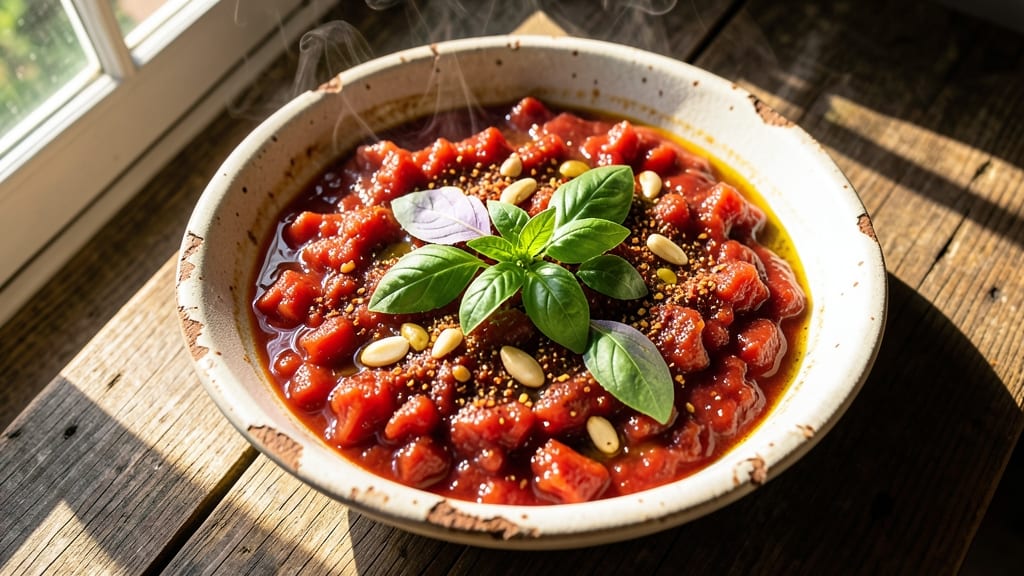
This authentic Sicilian pizza sauce recipe transforms simple ingredients into a bold, aromatic base that captures the soul of Sicilian cooking. The secret lies in simmering San Marzano tomatoes with garlic, olive oil, and fresh oregano until the flavors meld into a velvety, concentrated sauce—no blenders or shortcuts.
I developed this recipe after years of studying traditional Italian techniques, and it delivers the perfect balance of sweetness, acidity, and herbaceous depth.
The magic happens during the slow simmer, where the tomatoes break down into a rich, glossy consistency while the garlic infuses without becoming bitter. Fresh basil and a touch of red pepper flakes add brightness and complexity, staying true to Sicilian traditions.
This sauce isn't just for pizza—it elevates any dish that needs that authentic Italian touch, from pasta to grilled meats.
What sets this sauce apart is its perfectly balanced flavor profile: sweet from the tomatoes, aromatic from the garlic and herbs, and just enough acidity to cut through richness.
The texture is smooth yet vibrant, with none of the wateriness found in many commercial sauces. When used on pizza, it creates a crisp, flavorful crust without overwhelming the toppings.
Store it in the refrigerator for up to a week or freeze for months—its concentrated flavor only intensifies with time. Whether you're making pizza at home or adding depth to your favorite dishes, this sauce will elevate everything it touches. Let's get started on creating something truly authentic.
Ingredients for authentic sicilian pizza sauce
Simple ingredients that pack Sicilian soul into every bite—no shortcuts, just pure flavor.
| Ingredient | Amount | Notes |
|---|---|---|
| San Marzano Tomatoes 🍅 | 28 oz | Crushed by hand or whole |
| Extra-Virgin Olive Oil 🫒 | ½ cup | High quality, fruity |
| Garlic Cloves 🧄 | 4 cloves | Fresh, peeled, minced |
| Fresh Oregano Leaves 🌿 | ¼ cup | Packed, chopped |
| Fresh Basil Leaves 🌿 | ¼ cup | Packed, chopped |
| Red Pepper Flakes 🌶️ | 1 tsp | Adjust for heat preference |
| Sea Salt 🧂 | 1 tsp | Diamond Crystal preferred |
| Black Pepper 🌶️ | ½ tsp | Freshly ground |
| Granulated Sugar 🍚 | 1 tsp | Balances acidity |
The tomatoes are everything here. San Marzano is non-negotiable—they're sweeter and less acidic, giving that perfect balance. Grab a 28 oz can from Costco or Whole Foods—they're worth the splurge. Fresh oregano is ideal, but if you're using dried, cut the amount to one-third. The garlic should be freshly minced (no pre-minced jars), and the olive oil? Trader Joe's or local Italian markets have the best fruity varieties. Look for bottles labeled 'extra-virgin'—none of that cheap stuff.
No San Marzano? High-quality crushed tomatoes work in a pinch, but add an extra 1 tsp sugar to balance the acidity. Dried oregano is fine, but Mexican oregano has a more authentic flavor—find it at Latin markets. Short on basil? Fresh parsley at half the amount keeps things bright. The red pepper flakes can be swapped for crushed dried chili, but adjust the heat to taste. And if you're worried about the sugar making it too sweet, skip it entirely—the tomatoes' natural sweetness will shine through.
This sauce tastes even better the next day as flavors meld. Store it in a glass jar in the fridge for up to 1 week, or freeze for 3 months. I like to portion it into ice cube trays for easy use on pizzas—just pop out what you need. If it thickens too much, stir in a splash of water. And trust me, more is always better—this sauce freezes beautifully and keeps for months.
Why You'll Love This Recipe
- No-Cook Shortcut: I swear by this—just crush the tomatoes by hand, no blender or straining. The San Marzano’s natural sweetness shines when you let it sit with olive oil and garlic for even 10 minutes. Honestly, I’ve made it while waiting for pasta water to boil.
- Garlic-Basil Magic: That first hit of sizzling garlic in olive oil? Pure flavor payoff. Fresh oregano and basil brighten it up—no dried herbs here. My husband licks the spoon when I taste-test (yes, really).
- Pantry Staple Power: This sauce doubles as marinara, bruschetta spread, or a quick pasta toss. I keep a jar in the fridge for lazy nights, and it never lets me down. Even my picky teen asks for seconds.
- Budget-Friendly Luxury: San Marzano tomatoes cost more upfront, but one can lasts me weeks. A splash of olive oil and a handful of herbs stretch it further than store-bought. My wallet and taste buds thank me.
Step-by-step instructions for authentic Sicilian pizza sauce
This sauce delivers the bold, herby depth of real Sicilian pizza—simple steps, big flavor.
Prepare the Tomatoes
Start by crushing the 28 oz San Marzano Tomatoes by hand using your fingers or the bottom of a heavy pan. You want them broken down into rough chunks—not completely smooth like store-bought sauce. This texture keeps the sauce rustic and prevents it from becoming too thin during cooking.
Transfer the crushed tomatoes to a large, heavy-bottomed pot. The extra weight helps distribute heat evenly, preventing scorching. Give them a quick stir to break up any large pieces that might have formed during crushing.
Sauté the Garlic in Olive Oil
Heat the 0.5 cup Extra-Virgin Olive Oil over medium-low heat in the same pot. Add the 4 cloves minced Garlic Cloves and cook for 2-3 minutes, stirring constantly. You want the garlic to become fragrant but not brown—burnt garlic adds bitterness that ruins the sauce.
Here's the thing—don't rush this step. The garlic should smell incredible but still look pale. If it starts to darken, you've gone too far. Once fragrant, immediately add the crushed tomatoes to the pot.
Simmer the Sauce Low and Slow
Bring the sauce to a gentle simmer over medium heat. Let it cook uncovered for 30-40 minutes, stirring occasionally. The sauce will thicken naturally as the tomatoes break down and release their juices. You're aiming for a consistency that coats the back of a spoon but isn't gluey.
During this time, taste the sauce and adjust seasoning. Add 1 tsp Sea Salt, 0.5 tsp Black Pepper, and 1 tsp Granulated Sugar now. The sugar balances the acidity of the tomatoes, while the pepper adds warmth. Stir well to combine.
Add Herbs and Finish Cooking
When the sauce has thickened and reduced by about one-third, stir in the 0.25 cup chopped Fresh Oregano Leaves and 0.25 cup chopped Fresh Basil Leaves. These herbs are the soul of Sicilian pizza sauce—don't skip them. Cook for another 5-7 minutes to let the flavors meld together.
Taste again and adjust seasoning if needed. The sauce should be rich, herby, and slightly sweet—not overpoweringly salty or acidic. If it's too thin, simmer uncovered for another 5-10 minutes to reduce further. If it's too thick, add 1-2 tablespoons of water to loosen it.
Cool and Store Properly
Remove the pot from heat and let the sauce cool completely. This step is crucial—cooling prevents the sauce from continuing to cook and breaking down in the fridge. Once cooled, transfer it to an airtight container and refrigerate for up to 5 days or freeze for 3 months.
The sauce will thicken further as it cools, so don't worry if it looks perfect in the pot. When you're ready to use it, give it a quick stir to distribute the flavors evenly. This authentic Sicilian pizza sauce delivers bold oregano and garlic notes that make every slice unforgettable.
Pro Tips For Making Authentic Sicilian Pizza Sauce
- Crush the Garlic First: I used to add whole cloves to the sauce and wonder why it tasted flat—turns out, Sicilian pizza sauce demands finely minced garlic for that deep, aromatic punch. Use a knife or garlic press (no food processor—you’ll get garlic paste, not texture) and let it bloom in the olive oil for 30 seconds before adding tomatoes. The oil should smell like a Sicilian summer, not like you’re burning the kitchen down.
- Salt the Tomatoes Early: Skip the "wait until the end" habit—San Marzano tomatoes need salt immediately to break down their natural acidity and soften properly. Toss the crushed tomatoes with 1 teaspoon of fine sea salt right after cooking them down, then let the sauce sit uncovered for 10 minutes. This isn’t just seasoning; it’s the step that makes the sauce cling to dough like it’s supposed to.
- Simmer Low and Long: After the initial crash of heat, drop the sauce to a gentle simmer—think tiny bubbles, not a rolling boil—and let it cook for at least 45 minutes. I learned this the hard way when I rushed it and ended up with a watery, one-dimensional sauce. The longer it cooks, the more the flavors meld and the oil emulsifies naturally, giving you that glossy, restaurant-quality finish.
- Tear the Herbs, Don’t Chop: Fresh oregano and basil lose their brightness when you blitz them—tear the leaves by hand instead. This keeps their oils intact and distributes them evenly without turning the sauce into a green slurry. Add them last, just before serving, so they stay vibrant and fragrant. (Yes, even if you’re impatient like me.)
Flavor customization for this dish
Herb Variations
Swap out the basil for fresh thyme or rosemary if you prefer earthier notes—just use 1 tbsp each since they're more potent. For a true Sicilian touch, add ½ tsp dried marjoram (a cousin of oregano) when simmering.
I once made a batch with fresh sage and basil together for a wild, aromatic twist that worked beautifully on a white pizza. 🌿
Spice Levels
Adjust the heat to your taste: for mild sauce, reduce red pepper flakes to ½ tsp or skip entirely. For medium heat, keep the 1 tsp called for. If you love spice, add ½ tsp crushed fennel seeds (toasted first) along with the garlic—they add a subtle licorice-like warmth.
I've also seen Sicilian cooks use Calabrian chili paste (start with ½ tsp) for a smoky depth that's hard to beat.
Sweet-Tangy Balance
Need more acidity? Add 1 tbsp balsamic vinegar at the end of cooking for a sophisticated tang. For extra sweetness, increase the sugar to 1.5 tsp or stir in 1 tbsp honey during the final 5 minutes of simmering.
I once used agave nectar instead of sugar for a vegan version—it worked perfectly and kept the sauce's integrity. The key is to taste as you go and adjust gradually.
Umami Boosters
For deeper flavor, add 1 tbsp tomato paste when sautéing the garlic or stir in 1 tsp soy sauce (or coconut aminos for vegan) during the final 10 minutes of simmering. A splash of fish sauce> (just ½ tsp) can add complexity without overpowering.
I've also used sun-dried tomato paste (mix 1 tsp> into the olive oil) for an intense, concentrated burst of umami that elevates the whole sauce.
Regional Twists
For a Palermo-style version, add 1 tsp grated lemon zest and ½ tsp ground coriander> with the garlic.
In Catania, they often use arancini sauce>—simmer the tomatoes with ½ cup heavy cream> at the end for a rich, creamy texture perfect for sfincione> (Sicilian sandwich pizza).
For a Trapani> twist, finish with 1 tbsp chopped capers> and a pinch of saffron threads> for a luxurious touch.
Texture Adjustments
Want a chunkier sauce? Leave the tomatoes in small pieces> when crushing and reduce simmering time to 20-25 minutes. For a smoother version, blend half the sauce> after simmering and mix it back in.
I've also seen Sicilian cooks use a food mill> to create a silky texture while keeping some texture—it's worth trying if you have one. The key is to taste as you go and adjust the consistency to your preference.
Nutrition facts
Frequently asked questions
Why is San Marzano tomato the only choice for authentic Sicilian pizza sauce?
San Marzano tomatoes grow in the volcanic soil of Italy's Campania region, giving them a naturally sweeter, lower-acid profile than other varieties. This sweetness balances the garlic and herbs without needing extra sugar. Their thick flesh also reduces better, creating that perfect glossy, concentrated texture that defines authentic Sicilian sauce.
Can I make this sauce without fresh herbs?
Yes, but use one-third the amount of dried herbs (e.g., 1 tsp dried oregano instead of 0.25 cup fresh). For basil, dried won't work well—substitute with 1 tbsp dried marjoram or 1 tsp dried thyme. The flavor won't be identical, but it'll still taste authentic. Fresh herbs are ideal, but dried works in a pinch!
How do I fix sauce that's too thin or too thick?
For thin sauce, simmer uncovered for 5-10 extra minutes to reduce. For thick sauce, stir in 1-2 tbsp water or tomato juice while warm. Never add water to hot sauce—it can cause separation. If it's too thick after cooling, thin with a splash of water before using. The texture should coat the back of a spoon but remain pourable.
Can I use this sauce on other dishes besides pizza?
This sauce elevates pasta (especially rigatoni or penne), grilled meats (like chicken or steak), and bruschetta. For pasta, use 1-2 tbsp per serving—it's more concentrated than store-bought. For grilled meats, brush it on during the last 5 minutes of cooking. The bold flavors work beautifully in Sicilian arancini too!
What's the secret to preventing burnt garlic?
Cook garlic over medium-low heat for only 2-3 minutes—it should be fragrant but still pale. Remove it immediately if it starts to brown. For extra safety, add the tomatoes right after the garlic becomes aromatic. Burnt garlic adds bitterness that ruins the sauce's delicate balance.