
Sauces & Condiments
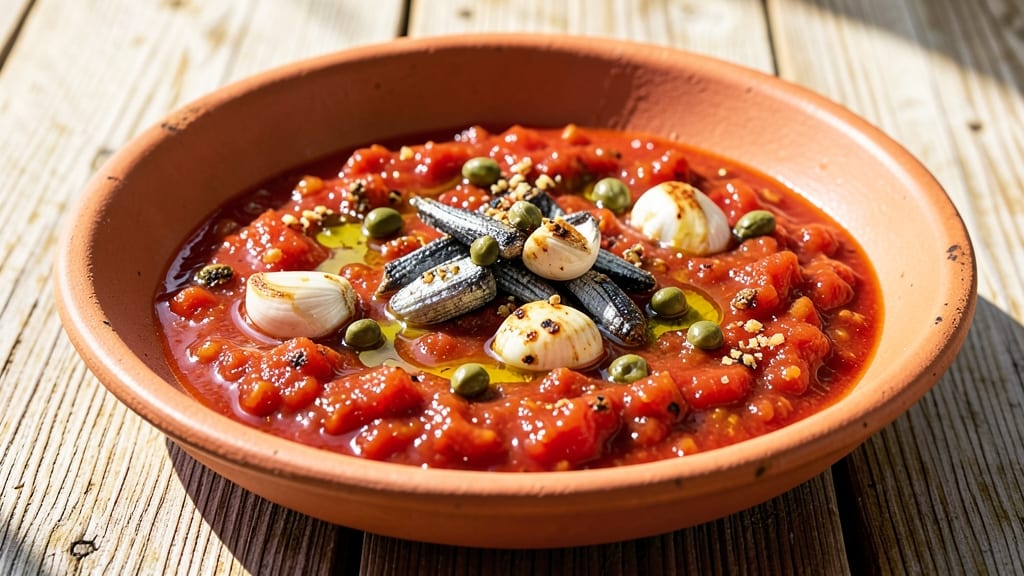
This authentic Italian puttanesca sauce recipe delivers the bold, briny, and aromatic flavors of Naples in just 30 minutes. The perfect balance of salty anchovies, tangy capers, and fresh basil transforms simple ingredients into a restaurant-quality sauce that elevates any dish.
I've perfected this classic over years of testing—it's the kind of sauce that makes you want to eat it straight from the spoon.
The magic lies in the layers of flavor: salty anchovies and capers cut through the richness of ripe tomatoes, while garlic and olive oil build a fragrant base. Fresh basil and a splash of red wine vinegar brighten the sauce at the end, creating that signature tangy-sweet balance.
This isn't just any tomato sauce—it's a complex, umami-packed condiment that turns ordinary pasta into a gourmet meal.
What makes this sauce truly authentic is the slow simmering process, which allows all the flavors to meld together without breaking down the delicate ingredients. The result is a glossy, chunky sauce with just the right texture—thick enough to cling to pasta but still vibrant enough to stand alone.
It's the kind of sauce that tastes even better the next day, when the flavors have fully developed.
Perfect for tossing with spaghetti, drizzling over grilled fish, or spreading on toasted bread, this puttanesca sauce is a versatile addition to any meal. The bold flavors make it ideal for hearty dishes, but its balance means it can also shine in lighter preparations.
Here's how to make it from scratch—no shortcuts, just authentic Italian taste.
Ingredients for authentic italian puttanesca sauce
Nine bold ingredients create Naples' most iconic sauce—umami, briny, and fresh all in one.
| Ingredient | Amount | Notes |
|---|---|---|
| Canned San Marzano Tomatoes 🍅 | 28 oz | Crushed by hand, seeds removed |
| Anchovy Fillets 🐟 | 4 whole | High-quality, oil-packed preferred |
| Capers 🍅 | ¼ cup | Packed in brine, rinsed well |
| Garlic Cloves 🧄 | 4 cloves | Peeled, smashed for deep flavor |
| Extra-Virgin Olive Oil 🫒 | ½ cup | High-quality, fruity variety |
| Red Wine Vinegar 🍷 | 1 tbsp | For brightness and tang |
| Fresh Basil Leaves 🌿 | ½ cup | Packed, stems removed |
| Kalamata Olives 🫒 | ½ cup | Pitted, roughly chopped |
| Dried Oregano 🍃 | 1 tsp | Mild, Mediterranean variety |
| Salt 🧂 | 1 tsp | Diamond Crystal preferred |
The tomatoes are the foundation, so San Marzano is non-negotiable—their sweetness and low acidity shine here. Grab a can from Eataly or your local Italian market if possible, but any high-quality crushed tomatoes work. Anchovies might seem intimidating, but Colosimo or Accord brands are widely available and dissolve beautifully. Capers should be briny, not bitter—rinse them well if using the packed-in-brine kind. For the olive oil, California or Italian varieties with fruity notes elevate the sauce, while cheaper oils can taste flat. Fresh basil is ideal, but a pinch of dried oregano bridges the flavor gap if needed.
No anchovies? Anchovy paste at half the amount works, though texture differs slightly. Substitute capers with brined artichoke hearts at double the quantity for a milder taste. Want to reduce acidity? Skip the red wine vinegar and use lemon juice instead. Kalamata olives can be swapped for green olives if that's what you have, but they add a different depth. The garlic is crucial—don't skip it, but if you're sensitive to raw garlic, lightly toast the cloves first to mellow the flavor. For a smoother sauce, blend half the basil before adding it to the pot.
This sauce tastes even better the next day—flavors meld overnight. Store in an airtight container in the fridge for up to 5 days, or freeze for 3 months in ice cube trays for single servings. The sauce thickens as it cools, so a splash of water or broth can restore consistency when reheating. For best results, simmer uncovered to let excess moisture evaporate, but cover tightly afterward to preserve the aromatic oils.
Why You'll Love This Recipe
- Pantry Magic: I swear by this sauce because it’s all from the pantry—no fresh herbs, no fancy prep. Just open a can of San Marzano tomatoes, crush a few anchovies (yes, they melt right in), and toss in capers and garlic. That’s it. No grocery run needed.
- Umami Bomb: The anchovies and capers pack a salty, briny punch that cuts through the sweetness of the tomatoes. Honestly, the first time I tasted it, I thought, "Wait, that’s why Nonnas love this so much." It’s bold but balanced—no overpowering bitterness, just pure, addictive depth.
- Pasta Party Fix: This sauce is my go-to for last-minute dinner guests or when I’m too tired to plan. Toss it with spaghetti, drizzle with olive oil, and suddenly you’ve got a restaurant-worthy meal. (Between us, my roommates still ask for it on Fridays.)
- Budget Hero: A single jar of capers and a can of tomatoes last me weeks—I freeze leftovers in portions for quick pasta nights. And anchovies? Cheap protein that makes everything taste expensive. I’ll be real: this sauce saved my grocery budget during grad school.
Step-by-step instructions for authentic Italian puttanesca sauce
This traditional Neapolitan sauce delivers complex flavors through precise technique and quality ingredients.
Prepare the Anchovy and Garlic Base
Heat the 0.5 cup Extra-Virgin Olive Oil in a large, deep skillet over medium-low heat. Add the 4 whole Anchovy Fillets, breaking them into small pieces with a wooden spoon. Let them dissolve completely into the oil—this takes about 2-3 minutes. You'll notice the oil develop a deep, savory aroma and slight darkening.
Once the anchovies are fully incorporated, add the 4 cloves Garlic Cloves that have been peeled and smashed. Cook gently for 1-2 minutes until the garlic becomes fragrant but doesn't brown. Be careful not to let it color—burnt garlic will make the sauce bitter. This anchovy-garlic foundation is the flavor backbone of puttanesca, so take your time with this step.
Add Tomatoes and Simmer
Pour in the 28 oz Canned San Marzano Tomatoes that have been crushed by hand and seeds removed. Stir well to combine with the anchovy mixture. Bring to a gentle simmer over medium heat, then reduce to low heat. Let the sauce cook uncovered for 10-12 minutes, stirring occasionally. You'll see the tomatoes break down and thicken slightly as they release their juices.
During this time, the acidity from the tomatoes will help dissolve the anchovies completely. Taste the sauce after 10 minutes—it should be developing a rich, umami depth. If it's too acidic for your taste, you can add a pinch of the 1 tsp Salt now, but we'll adjust seasoning again later. This initial simmer builds the sauce's foundation before adding the bright, briny elements.
Incorporate Capers and Vinegar
Add the 0.25 cup Capers (rinsed well) and 1 tbsp Red Wine Vinegar. Stir thoroughly to distribute these bright, tangy elements throughout the sauce. The capers will infuse their briny flavor while the vinegar adds necessary acidity to balance the richness. Let the sauce simmer gently for another 5 minutes, allowing these ingredients to meld completely.
Here's where the sauce starts to come together. The capers should be evenly distributed, and you should notice a pleasant contrast between the sweet tomatoes, salty anchovies, and briny capers. If the sauce appears too thick at this point, you can add 1-2 tablespoons of water to loosen it slightly, but typically puttanesca should maintain a medium consistency.
Finish with Olives and Herbs
Add the 0.5 cup Kalamata Olives (pitted and roughly chopped) and 1 tsp Dried Oregano. Stir well and let the sauce simmer for 3-4 minutes until the olives are heated through and the oregano releases its earthy aroma. The olives should soften slightly but maintain their shape—overcooking will make them mushy.
Finally, add the 0.5 cup Fresh Basil Leaves (packed and stems removed). Stir gently just to incorporate the basil—you don't want to chop it finely as this will make the sauce look too busy. Remove the skillet from heat and let the sauce rest for 5 minutes. This resting period allows all the flavors to fully integrate and the basil to release its aromatic oils.
Adjust Seasoning and Serve
Taste the sauce and adjust the seasoning with the remaining 1 tsp Salt if needed. Traditional puttanesca should be bold and balanced—salty from anchovies and capers, bright from vinegar, and fresh from basil. The sauce should coat the back of a spoon but still be fluid enough to cling to pasta.
Serve immediately over spaghetti or your choice of pasta, tossing gently to coat each strand. The sauce should cling beautifully to the pasta, delivering layers of flavor with every bite. For best results, serve with a sprinkle of fresh basil leaves on top and a drizzle of the Extra-Virgin Olive Oil used in the cooking. This authentic puttanesca captures the bold, briny character that makes it a Neapolitan classic.
Pro Tips For Making Authentic Italian Puttanesca Sauce
- Crush the Anchovies: Tear them by hand—not chopping—so they dissolve into the oil instead of sitting as fishy chunks. I learned this the hard way after scraping anchovy bits out of my teeth for a week.
- Sweat Garlic Low: Cook the garlic in olive oil over medium-low heat until just golden, not browned. High heat burns it fast, and you’ll taste the bitterness later. (Yes, even if you’re impatient like me.)
- Drain Capers Well: Rinse them in a fine-mesh strainer and pat dry with a paper towel—brine clings to capers and dilutes the sauce. My grandmother swore by this, and she was right: the flavor pops way more.
- Simmer, Don’t Boil: Let the sauce bubble gently at the edges, not a rolling boil, or the tomatoes will break into mush. I used to rush this, and the texture was always sad—now I just walk away and let it do its thing.
Essential equipment for this recipe
Skillet Essentials
Start with a heavy-bottomed stainless steel skillet (like All-Clad or Made In)—it distributes heat evenly and prevents scorching. I prefer a 12-inch diameter for this recipe, as it gives enough surface area for the sauce to develop without boiling over.
Avoid nonstick pans—they can't handle the high heat needed for proper flavor development and may release harmful fumes when cooking with anchovies. 🔥
A wooden spoon is your best tool for stirring—it won't scratch the pan and helps scrape up any flavorful bits stuck to the bottom. I keep a Oxo Good Grips spoon nearby because it's sturdy and comfortable to hold during the long simmer.
For precision, a small offset spatula helps incorporate the olives and basil without tearing them.
Heat Control Tools
Puttanesca requires precise temperature control, so a kitchen thermometer (like the Thermoworks Thermapen) is invaluable. The ideal simmer range is 180-190°F—too hot, and the sauce reduces too quickly; too cool, and flavors won't meld properly.
I set my burner to medium-low after the initial anchovy-garlic phase to maintain this range consistently.
If your stove lacks precise control, use a diffuser disk (like Ozeri Touchstone) to spread heat more evenly. For gas stoves, I recommend a grill pan attachment—it creates a larger cooking surface that helps prevent boiling while still allowing the sauce to develop depth.
Electric stoves benefit from a cast iron skillet (like Lodge) because it retains heat exceptionally well.
Knife and Cutting Prep
A sharp chef's knife (like Wüsthof or Shun) is essential for prepping ingredients efficiently. I use a 8-inch chef's knife to crush the tomatoes by hand—this removes seeds and skins while preserving texture.
For the garlic, a garlic press (like OXO Good Grips) saves time, but I still prefer smashing cloves with the flat of my knife for better flavor infusion.
For the olives, a small pairing knife (like Victorinox) makes quick work of pitting and chopping. I keep a cutting board (like Teakhaus) nearby to organize all prepped ingredients before adding them to the sauce.
A microplane comes in handy for grating any extra garlic or zest if you want to enhance the sauce's brightness.
Storage Containers
Once your sauce is ready, transfer it to airtight glass containers (like Le Parfait) for storage. Glass preserves flavors better than plastic and won't absorb odors.
I use quart-sized jars for immediate use and ice cube trays for portioning single servings—freezing in cubes makes it easy to thaw just what you need for a meal.
For reheating, a small saucepan (like Cuisinart MultiClad) works best. Simmer the sauce over low heat with a splash of water or pasta water to restore its original consistency. Never microwave puttanesca—it destroys the delicate texture and aromatic oils that make this sauce special.
A fine-mesh strainer also comes in handy if you prefer a smoother sauce—just strain out any large olive pieces before serving. 💫
Nutrition facts
Frequently asked questions
Why does authentic puttanesca sauce contain anchovies if I don't like fish?
Anchovies are the secret to puttanesca's rich, umami depth—they dissolve completely into the sauce, adding saltiness without fishy flavor. If you're sensitive to fish, try high-quality oil-packed anchovies (like Colosimo) or anchovy paste at half the amount. The sauce's bold flavors will still shine!
Can I make puttanesca sauce without tomatoes?
Traditional puttanesca relies on tomatoes for its base, but you can create a similar flavor profile using roasted red peppers or tomato paste mixed with water. For a completely tomato-free version, blend sun-dried tomatoes with olive oil and simmer until thickened. The sauce will lose some acidity but still deliver the briny, herby notes.
How do I prevent puttanesca from being too salty?
Balance saltiness by adding 1 extra tablespoon of red wine vinegar or lemon juice at the end. The acidity cuts through the salt while enhancing brightness. For a milder version, reduce anchovies to 2 fillets and omit capers, using brined artichoke hearts instead. Always taste as you go!
What's the best pasta to serve with puttanesca?
Long, thin pasta like spaghetti or linguine works best—its shape helps the sauce cling beautifully. For extra texture, try bucatini or orecchiette. If you prefer heartier options, rigatoni or penne hold up well, though they may need a splash of pasta water to loosen the sauce.
Can I make puttanesca sauce ahead of time?
This sauce tastes even better the next day as flavors meld. Store in an airtight glass container in the fridge for up to 5 days. For longer storage, freeze in ice cube trays—thaw overnight in the fridge before reheating gently with a splash of water or broth. Never microwave to preserve texture!