
Sauces & Condiments
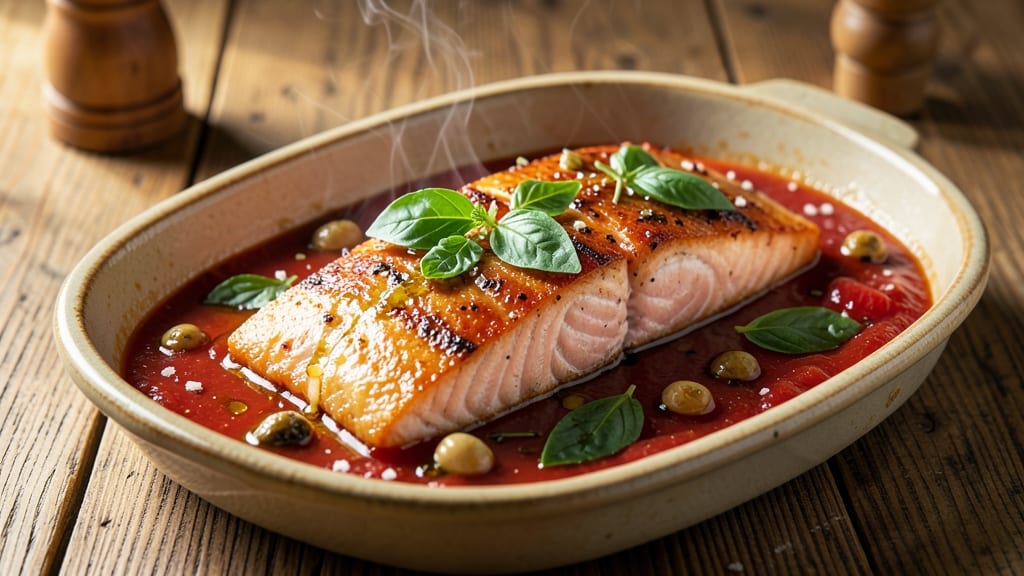
This baked salmon in tomato sauce recipe delivers restaurant-quality umami flavor with just one pan and minimal effort. The secret lies in a slow-baked tomato sauce that caramelizes beautifully around tender salmon fillets, creating a dish that's both elegant and approachable.
I developed this technique after years of perfecting the balance between sweet tomatoes and fresh herbs, ensuring every bite is packed with flavor without being overly complicated.
The beauty of this recipe is its simplicity—just a few key ingredients transform into a deeply satisfying meal. You'll start with fresh salmon fillets nestled in a vibrant tomato sauce infused with garlic, herbs, and a touch of sweetness.
The sauce simmers while the salmon bakes, allowing the flavors to meld perfectly without overpowering the delicate fish. This method guarantees moist, flaky salmon with a sauce that's rich yet bright, thanks to the acidity from the tomatoes and the freshness of the herbs.
What makes this dish truly special is how it elevates a simple weeknight dinner into something memorable. The caramelized tomato sauce clings to the salmon, creating a harmonious blend of textures and flavors that will have everyone at the table asking for seconds.
It's a dish that works equally well for a quick weeknight meal or a slightly more formal dinner, making it incredibly versatile. The best part? It comes together in under 30 minutes with minimal cleanup.
Pair this baked salmon with a side of crusty bread to soak up the delicious sauce, or serve it alongside roasted vegetables for a complete, balanced meal. The combination of the tender salmon and the rich, herby tomato sauce makes this recipe a standout for any occasion.
Ready to create a dish that's as impressive as it is easy? Let's get started.
Ingredients for baked salmon in tomato sauce
Fresh salmon meets caramelized tomato sauce in this elegant one-pan dish.
| Ingredient | Amount | Notes |
|---|---|---|
| Fresh Salmon Fillets 🐟 | 4 pieces | Skin-on, center-cut preferred |
| Canned San Marzano Tomatoes 🍅 | 28 oz | Crushed by hand for texture |
| Garlic Cloves 🧄 | 4 cloves | Minced for even distribution |
| Fresh Basil Leaves 🌿 | ½ cup | Chopped, stems removed |
| Extra-Virgin Olive Oil 🫒 | ¼ cup | High-quality, fruity variety |
| Dry White Wine 🍷 | ½ cup | Sauvignon Blanc preferred |
| Tomato Paste 🍅 | 2 tbsp | Squeeze tube preferred |
| Orange Zest 🍊 | 1 tbsp | Freshly grated for brightness |
| Salt 🧂 | 1 ½ tsp | Diamond Crystal preferred |
| Black Pepper 🌶️ | ½ tsp | Freshly cracked |
| Red Pepper Flakes 🌶️ | ¼ tsp | Adjust for heat preference |
| Fresh Parsley 🌿 | ¼ cup | Chopped for garnish |
| Lemon Juice 🍋 | 1 tbsp | Freshly squeezed |
The salmon makes all the difference here. Center-cut fillets with skin stay together beautifully while baking—ask your fishmonger for the thickest portion near the center of the fillet. Whole Foods or local seafood markets usually carry the best quality, but grocery store brands like Trader Joe's or Wild Alaskan work perfectly too. Look for fillets with vibrant pink color and minimal fishy odor. The San Marzano tomatoes are non-negotiable—they're sweeter and less acidic than regular canned tomatoes, which balances the dish perfectly. If you can't find them, Muir Glen is a solid second choice. For the herbs, fresh basil and parsley are essential—they bring that bright, herby aroma that makes this dish sing.
No white wine? Dry vermouth or vegetable broth works in a pinch, though you'll lose some depth. Short on tomato paste? Pureed canned tomatoes at double the amount gets you close, but you'll miss that concentrated umami punch. The orange zest can be swapped for lemon zest at double the amount, though it won't be quite as vibrant. For the red pepper flakes, crushed dried chili de árbol adds a smoky depth if you're feeling adventurous. Fresh herbs wilt fast, so chop them right before baking—no substitutions here. The salmon should be at room temperature when it goes in the oven, so take it out of the fridge 20 minutes before cooking.
This sauce reheats beautifully—just add a splash of water or wine to loosen it. Keeps in the fridge for 4-5 days and freezes for 3 months if you portion it properly. I always make extra sauce because it's perfect for topping toast or pasta later in the week. The salmon itself cooks in under 15 minutes, so plan to bake it last if you're serving with other dishes. Store any leftovers in an airtight container with plastic wrap pressed directly on the sauce to prevent it from drying out.
Why You'll Love This Recipe
- Here’s what sold me: the way the garlic softens into the sauce while the basil leaves release their perfume right into the oven. The first bite? That crispy salmon skin with a tangy, herby sauce—it’s like a Mediterranean vacation in my mouth.
- One-Pan Magic: I swear by this recipe when I’m too tired to wash dishes. Toss the salmon and tomatoes on a single sheet pan, bake, and boom—cleanup is just wiping one surface. That rich San Marzano sauce clings to everything, so no extra plates needed.
- Garlic-Basil Bomb: Here’s what sold me: the way the garlic softens into the sauce while the basil leaves release their perfume right into the oven. The first bite? That crispy salmon skin with a tangy, herby sauce—it’s like a Mediterranean vacation in my mouth.
- Weeknight to Dinner Party: Between us, this recipe works for anything. Serve it over crusty bread for a lazy Tuesday, or plate it with fresh arugula and crusty bread for a fancier guest night. The sauce even reheats beautifully, so it’s my go-to for last-minute gatherings.
Step-by-step instructions for baked salmon in tomato sauce
This one-pan method delivers perfectly flaked salmon with a rich, balanced tomato-herb sauce.
Prepare the Tomato Sauce Base
Preheat your oven to 375°F. In a large oven-safe skillet, heat 0.25 cup extra-virgin olive oil over medium heat until shimmering. Add the 4 cloves minced garlic and sauté for 30 seconds until fragrant—don't let it brown or it'll turn bitter.
Stir in the 2 tbsp tomato paste and cook for 1 minute to develop its flavor. Pour in the 28 oz crushed San Marzano tomatoes and 0.5 cup dry white wine, scraping up any browned bits from the bottom. Bring to a gentle simmer and let it reduce slightly for 5 minutes—this concentrates the flavors.
Build the Herb and Spice Layer
Reduce heat to low and stir in the 1 tbsp orange zest, 1.5 tsp salt, 0.5 tsp black pepper, and 0.25 tsp red pepper flakes. Let the sauce simmer for 2 minutes to allow the spices to bloom and meld with the tomatoes.
Add the 0.5 cup chopped fresh basil leaves and 1 tbsp lemon juice, stirring gently. The basil will wilt slightly, releasing its bright aroma. Taste and adjust seasoning—this is your flavor baseline before adding the salmon. The sauce should be tangy, slightly sweet, and well-seasoned.
Arrange and Bake the Salmon
Carefully place the 4 skin-on salmon fillets on top of the sauce, skin-side down. The skin will crisp slightly while protecting the delicate flesh underneath. Spoon some of the sauce over each fillet to ensure they're partially submerged.
Transfer the skillet to the preheated oven and bake for 12-15 minutes, until the salmon flakes easily with a fork and the edges are just beginning to turn opaque. The skin should be golden and crisp in spots. If the sauce starts to bubble vigorously, reduce oven temperature to 350°F to prevent overcooking.
Finish with Fresh Herbs and Garnish
Remove the salmon from the oven and let it rest for 3-5 minutes—this prevents it from falling apart when served. During this time, stir the sauce one last time and bring it to a gentle simmer if needed.
Sprinkle the 0.25 cup chopped fresh parsley over the salmon and sauce, then drizzle with any remaining sauce from the skillet. The parsley adds a final fresh note that brightens the rich tomato flavors. Serve immediately with crusty bread or over polenta to soak up every bit of that umami-packed sauce.
Pro Tips For Making Baked Salmon In Tomato Sauce
- Preheat Pan First: Crank your oven to 400°F (200°C) and slide the salmon fillets directly into a cold baking dish—then pop it in the oven. The hot air will cook the fish evenly without sticking, and you’ll avoid the sad, rubbery texture that comes from starting with a cold pan. (Yes, this goes against what most recipes say, but trust me on this one.)
- Crush Garlic Coarse: Skip the minced garlic—it burns fast. Instead, smash 3-4 cloves with the flat side of your knife, then let them sit in the olive oil for 5 minutes before adding tomatoes. This keeps the flavor deep and sweet without turning bitter. (I learned this the hard way after one disastrous batch where I rushed it.)
- Don’t Overcrowd Tomatoes: San Marzano tomatoes are your MVP, so don’t drown them in other ingredients. Use about 1 (28 oz) can, crushed by hand, and let them simmer uncovered for 10 minutes to thicken slightly. Overloading the pan with garlic or basil will make the sauce watery and bland. (Your future self will thank you.)
- Salt the Salmon Last: Season everything except the salmon with salt and oil first, then add the fish right before baking. The salt draws out moisture, and if you season it early, the fillets will turn out dry. Sprinkle flaky salt and a drizzle of olive oil on top right before going in the oven—simple, but it makes a real difference.
Dietary considerations for this dish
Gluten-Free Adaptation
This recipe is naturally gluten-free since it relies on fresh ingredients and doesn't include any wheat-based components. The only potential concern is cross-contamination if you're using shared kitchen tools. I always recommend using a clean cutting board and utensils when preparing gluten-free meals.
The tomato sauce base and salmon are both safe for gluten-sensitive diets, so you can enjoy this dish without worry. 🌱
Dairy-Free Options
No dairy ingredients are used in this recipe, making it perfect for those avoiding lactose. The sauce relies on tomatoes, herbs, and citrus for brightness rather than cream or cheese.
If you're serving with sides, opt for dairy-free alternatives like roasted vegetables or a simple arugula salad with olive oil and lemon. The salmon's natural richness stands up beautifully on its own. 🍋
Low-Carb Considerations
For a low-carb version, you can reduce the tomato paste slightly (use just 1 tbsp instead of 2 tbsp) and skip the wine if you're strict about carbs. The natural sweetness of the tomatoes will still shine through.
Pair with cauliflower rice or zucchini noodles to keep this dish under 10g net carbs per serving. The salmon provides high-quality protein without any carb impact. 🥦
Vegetarian Substitutes
While this dish centers on salmon, you can create a vegetarian version by replacing the fish with firm tofu or tempeh cut into fillets.
Press the tofu for 30 minutes first to remove excess water, then marinate in 1 tbsp soy sauce, 1 tbsp olive oil, and 1 tsp smoked paprika before baking. The tomato sauce will still be the star of the show. 🌿
Allergen-Friendly Tips
For nut allergies, ensure all ingredients are nut-free (especially the olive oil and wine). If you're sensitive to sulfites, choose a sulfite-free wine or omit it entirely—just add 1 tbsp extra lemon juice for acidity.
For seafood allergies, this recipe is unfortunately not suitable, but the same tomato sauce works beautifully with grilled chicken or tofu. Always double-check ingredient labels for hidden allergens. 🚫
Keto Adaptations
To make this keto-friendly, use 1 tbsp tomato paste (instead of 2 tbsp) and omit the wine. The resulting sauce will be richer and more concentrated, perfect for a 20g net carb meal.
Serve with a side of sautéed spinach or roasted Brussels sprouts to keep carbs minimal. The salmon provides 30g protein per serving without any carb impact. 🥑
Nutrition facts
Frequently asked questions
Can I use frozen salmon for this recipe?
Yes, but thaw it properly first! Place frozen salmon in its original packaging on a plate and transfer to the refrigerator 24 hours before cooking. For a quicker method, submerge the sealed package in cold water for 30 minutes, changing the water every 10 minutes. Never thaw at room temperature—this can promote bacterial growth. The texture will be just as tender as fresh salmon when cooked properly.
How do I know when the salmon is fully cooked?
The salmon is done when it reaches an internal temperature of 145°F and flakes easily with a fork. The edges should turn opaque and pull away from the skin. For skin-on fillets, the skin will be golden and crisp in spots. If you're unsure, use a meat thermometer—it's the most accurate way to check doneness. Overcooking can make the salmon dry, so aim for the 12-15 minute range.
What if my tomato sauce tastes too acidic?
Balance the acidity by adding a pinch of sugar (½ tsp) or a splash of honey (1 tsp) to the sauce while it simmers. Stir well and let it cook for 1-2 minutes to meld the flavors. If you prefer less sweetness, add a small piece of butter or a spoonful of heavy cream at the end to round out the acidity. Taste as you go—this sauce is very forgiving!
Can I make this ahead of time?
Prepare the tomato sauce up to 2 days ahead and store it in an airtight container in the fridge. When ready to cook, reheat the sauce gently on the stove, then add the salmon and bake as directed. For best results, bake the salmon fresh rather than reheating it—it stays moistest when cooked from cold. The sauce reheats beautifully, so making it ahead saves time on busy weeknights.
What's the best way to store leftovers?
Store leftovers in an airtight container with plastic wrap pressed directly on the sauce surface to prevent drying. Keep salmon and sauce separate if possible—they reheat best individually. Refrigerated salmon stays fresh for 2 days while the sauce keeps for 4-5 days. For longer storage, freeze the sauce in portions (up to 3 months) and thaw overnight in the fridge. Reheat gently on low heat, adding a splash of water if needed.