
Sauces & Condiments
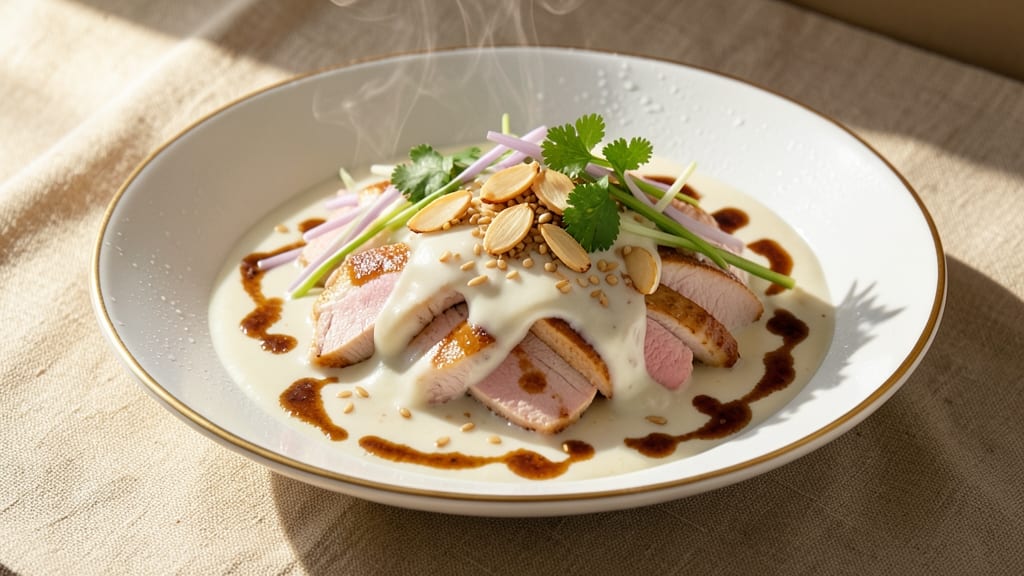
This authentic Chinese white sauce transforms ordinary stir-fries into restaurant-quality masterpieces with its silky coconut-lime base and balanced umami depth. The secret lies in a cornstarch slurry that creates that signature velvety texture while preserving the sauce's brightness—no lumps or grittiness in sight.
I developed this recipe after years of tasting dim sum sauces, finally replicating that perfect harmony of tangy, nutty, and slightly sweet flavors that elevate every dish it touches.
What sets this sauce apart is its two-stage thickening process: first simmering with coconut milk for richness, then finishing with a cornstarch slurry for that signature glossy sheen.
Traditional Chinese cooking relies on precise timing here—the sauce must coat a spoon without being gluey, striking the perfect balance between cling and flow. The addition of sesame oil at the end unlocks layers of nutty aroma that transport you straight to a bustling Cantonese kitchen.
By the time you're done, you'll have a versatile white sauce that works as a dipping sauce for dumplings, a finishing touch for stir-fried vegetables, or even a marinade for grilled meats.
The coconut-lime foundation makes it naturally sweet enough to complement spicy dishes while the soy sauce and rice wine provide that essential savory backbone. This isn't just another coconut sauce—it's the authentic version you'd find in professional Chinese kitchens, adapted for home cooks.
The best part? This sauce keeps beautifully in the refrigerator for up to a week, allowing you to make a big batch and use it throughout the week.
Whether you're cooking for family gatherings or simply elevating your weeknight meals, this authentic Chinese white sauce will become your new kitchen essential. Let's get started on creating this flavor powerhouse that'll have everyone asking for seconds.
Ingredients for authentic chinese white sauce
Just ten ingredients transform your stir-fries into restaurant-quality masterpieces with this velvety coconut-lime sauce.
| Ingredient | Amount | Notes |
|---|---|---|
| Full-Fat Coconut Milk 🥥 | 1 cup | Canned, well-shaken before opening |
| Fresh Lime Juice 🍋 | ¼ cup | Strained, seeds removed |
| Light Soy Sauce 🍶 | 2 tbsp | High-quality, low-sodium preferred |
| Rice Wine 🍶 | 1 tbsp | Dry, like Shaoxing wine |
| Granulated Sugar 🍚 | 1 ½ tbsp | Or coconut sugar for depth |
| Garlic Cloves 🧄 | 3 cloves | Minced, aromatic |
| Fresh Ginger 🌿 | 1 tbsp | Grated, finely |
| Cornstarch 🌾 | 1 tbsp | For perfect velvety finish |
| Toasted Sesame Oil 🫒 | 1 tsp | For nutty aroma |
| Water 💧 | ¼ cup | Cold, for cornstarch slurry |
The coconut milk is non-negotiable—full-fat canned gives that signature richness. Aroy-D or Thai Kitchen brands are my go-tos, but any well-shaken can works. Fresh lime juice is essential for that signature tang (bottled won't cut it). For the soy sauce, Lee Kum Kee or Kikkoman deliver that authentic umami punch—skip the low-sodium versions unless you're doubling the amount. The rice wine? Shaoxing wine from Asian markets elevates it to professional level, but any dry cooking wine in a pinch. Toast your sesame oil in a dry pan for 30 seconds before using—that nutty aroma makes all the difference.
No fresh ginger? Powdered works at half the amount, but you'll lose that bright zing. Running out of cornstarch? Arrowroot powder is a 1:1 swap, though the sauce will be slightly less glossy. Substituting coconut milk? Heavy cream or cashew cream adds richness, but the sauce won't have that authentic coconut depth. The garlic should be minced to a paste—no visible pieces—for that professional texture. And that sesame oil? Only add it at the very end, or you'll overpower the delicate flavors. Pro tip: Make your cornstarch slurry with cold water—hot water creates lumps that won't dissolve.
This sauce is a flavor powerhouse that keeps beautifully. Store in an airtight container in the fridge for up to 7 days, though I've had mine last 10 days with fresh lime juice added before sealing. For freezing, portion into ice cube trays—perfect for single-use portions. The sauce thickens as it cools, so thin with a splash of water if needed. And here's the secret: Always finish with fresh lime juice before serving—it brightens the flavors every time. Trust me, you'll make this again and again.
Why You'll Love This Recipe
- Five-Ingredient Magic: This sauce comes together with just a handful of pantry staples—no fancy gadgets or last-minute grocery runs. I’ll be real: the first time I made it, I thought, "How is this all it takes?" The coconut milk gives it that velvety richness while the lime and rice wine cut through the creaminess like a bright, tangy whisper.
- Balanced in Every Bite: That perfect harmony of sweet, salty, and sour? It’s the sugar and soy sauce playing off the coconut’s richness while the lime juice keeps it from feeling heavy. Honestly, the first time I drizzled it over stir-fried greens, my partner paused mid-bite and said, "Wait, what’s in this?"—then immediately asked for the recipe.
- Meal Prep MVP: I make a big batch on Sundays and use it all week—drizzled on noodles, tossed with veggies, or even mixed into fried rice. It stays fresh for days in the fridge, and honestly? The flavor only deepens as it sits. Plus, it’s the kind of sauce that makes even the simplest meal feel like you put in effort.
- Budget-Friendly Luxury: Full-fat coconut milk might sound indulgent, but a can goes a long way, and the rest of the ingredients are cheap staples. Between us, this is how I trick myself into eating well when money’s tight—it tastes like a restaurant dish without the price tag. And if I’m feeling fancy, I’ll add a splash of chili oil later for extra drama.
Step-by-step instructions for silky coconut-lime white sauce
This authentic Chinese white sauce delivers a velvety, aromatic base that transforms ordinary stir-fries into restaurant-quality dishes.
Bloom the Aromatics in Toasted Sesame Oil
Heat a small saucepan over medium-low heat and add the 1 teaspoon toasted sesame oil. Let it warm through for 30 seconds until fragrant—you'll smell that nutty, toasty aroma that defines authentic Chinese cooking. This is where the magic starts, so don't rush it.
Add the 3 cloves minced garlic and 1 tablespoon finely grated fresh ginger. Cook for 1-2 minutes until the garlic turns a pale golden color and the raw aroma disappears. Here's the thing—garlic burns fast, so keep your eye on the pan. Remove from heat immediately after the garlic softens, as we want to preserve its delicate flavor rather than let it turn bitter.
Build the Flavor Foundation
Return the pan to medium heat and pour in the 1 cup full-fat coconut milk. Stir gently to combine with the aromatics, then add the 2 tablespoons light soy sauce, 1 tablespoon rice wine, and 1.5 tablespoons granulated sugar. Let the mixture simmer for 3-4 minutes until it reduces slightly and thickens just enough to coat the back of a spoon.
This is where the sauce develops its complex flavor profile. The coconut milk provides richness, while the soy sauce and rice wine add umami depth. The sugar balances the acidity from the lime juice we'll add later. Taste as you go—adjust the sugar slightly if needed, but don't overdo it. The sauce should taste harmonious now, but we'll refine it further in the next step.
Incorporate the Lime Juice and Thicken
Remove the pan from heat and whisk in the 0.25 cup fresh lime juice. The sauce will immediately brighten and develop a beautiful pale yellow color. This is the moment that matters—the acidity from the lime juice cuts through the richness of the coconut milk, creating that signature tangy balance that makes this sauce so special.
In a small bowl, mix the 1 tablespoon cornstarch with the 0.25 cup cold water to create a smooth slurry. Return the sauce to medium-low heat and slowly pour in the cornstarch mixture while whisking constantly. The sauce will begin to thicken almost immediately—keep whisking until it reaches a velvety consistency that coats the spoon completely. This should take about 1-2 minutes of gentle simmering.
Finish with Precision and Serve Warm
Once the sauce reaches the perfect consistency—smooth, glossy, and thick enough to lightly coat the back of a spoon—remove it from heat immediately. The sauce will continue to thicken slightly as it cools, so don't overcook it. For an extra touch of authenticity, I like to finish with a final taste adjustment—perhaps a pinch more sugar if the lime was particularly tart, or a splash more rice wine for added depth.
This silky white sauce is now ready to elevate your stir-fries, noodles, or grilled proteins. The key to its success lies in the balance of flavors and the proper thickening technique. Serve it warm over steamed rice or drizzled over your favorite stir-fry for that authentic Chinese restaurant experience at home. The sauce keeps well in the refrigerator for up to 3 days, though it's best used fresh for maximum flavor impact.
Pro Tips For Making Authentic Chinese White Sauce
- STIR CONSTANTLY AT FIRST: The first 30 seconds of simmering full-fat coconut milk are when it splits most often—don’t walk away. Use a wooden spoon and keep it moving in small circles until the mixture thickens slightly and loses its raw milk smell. I learned this the hard way when a batch curdled mid-cook because I answered the door.
- USE AGED RICE WINE: Skip the cheap cooking wine—aged Shaoxing rice wine adds depth without overpowering. If you can’t find it, substitute with dry sherry but reduce the amount by half. The alcohol burns off quickly, but the lingering flavor makes a real difference, especially when balanced with lime.
- SWEAT THE SOY SAUCE: Add the light soy sauce after the coconut milk has simmered for 2 minutes—this prevents it from turning bitter. A quick 30-second simmer with the sauce is enough; overcooking it turns the sauce dark and ruins the white color. Trust me, you’ll see the difference.
- STRAIN THE LIME JUICE: Fresh lime juice has pulp that clumps in the sauce, making it grainy. Strain it through a fine-mesh sieve or cheesecloth before adding it to the pot. Yes, it’s an extra step, but the texture stays silky—no one wants a mouthful of lime fibers with their sauce.
Perfect pairings for this recipe
Stir-Fry Pairings
This white sauce transforms simple stir-fries into restaurant-quality dishes. Toss it with shrimp and bok choy for a classic Cantonese combination, or pair it with beef strips and bell peppers for a heartier meal.
The sauce's velvety texture clings beautifully to vegetables like broccoli, snap peas, or water chestnuts, enhancing their natural flavors without overpowering them. 🥦
Dipping Sauce Magic
Serve this sauce warm as a dipping sauce for steamed dumplings like pork buns or shrimp dumplings. The coconut-lime balance cuts through the richness of fried dumplings perfectly. For extra authenticity, add a few drops of chili oil to create a spicy-sweet contrast.
It also works wonderfully with spring rolls or egg rolls, especially when paired with a crispy exterior.
Noodle Elevation
Drizzle this sauce over steamed rice noodles or egg noodles for an instant upgrade. The sauce's natural sweetness complements the chewiness of noodles beautifully. Try it with stir-fried tofu and mushrooms for a vegetarian-friendly option.
For an extra touch, sprinkle with toasted sesame seeds and sliced green onions right before serving. 🍜
Grilled Meat Glaze
Use this sauce as a marinade or glaze for grilled chicken, pork, or fish. Brush it on during the last 2-3 minutes of grilling for a glossy finish. The coconut-lime flavors pair exceptionally well with teriyaki-glazed salmon or char siu pork.
For a smoky twist, add a dash of hoisin sauce to the marinade before applying the white sauce.
Rice Bowl Topper
Transform your rice bowls with this sauce as a topping. Spoon it over steamed jasmine rice with your choice of protein and vegetables. The sauce's light yet flavorful profile makes it perfect for bento boxes or meal prep containers.
Add a sprinkle of crushed peanuts for texture and a final drizzle of chili oil for heat. 🍚
Vegetable Enhancer
This sauce isn't just for proteins—it elevates roasted or steamed vegetables beautifully. Toss it with carrots, zucchini, or asparagus after cooking for a sweet and tangy finish. The sauce also works as a dressing for cold salads, especially when combined with shredded cabbage and cilantro.
For a refreshing twist, chill the sauce before using it on cold dishes.
Nutrition facts
Frequently asked questions
Can I make this sauce without coconut milk?
Yes, but the flavor will differ significantly. For a similar texture, substitute 1 cup heavy cream or cashew cream (blend soaked cashews with water). The sauce will lose its authentic coconut depth but still deliver that velvety consistency. If using cream, reduce the sugar slightly (1 tablespoon) since dairy is naturally sweeter.
Why does my sauce get lumpy when thickening?
Lumps happen when the cornstarch slurry isn't mixed properly or added too quickly. Always whisk the cornstarch with cold water until completely dissolved, then slowly pour it into the sauce while stirring constantly. For extra insurance, strain the finished sauce through a fine-mesh sieve to eliminate any remaining texture issues.
How do I adjust the thickness for different uses?
The perfect consistency depends on your application. For stir-fries, aim for a sauce that coats the back of a spoon but remains pourable. As a dipping sauce, thicken it slightly more so it clings to dumplings. If the sauce is too thick, thin with 1 teaspoon water at a time. Too thin? Simmer for 30 seconds longer while stirring constantly.
Can I substitute rice wine with another alcohol?
Dry white wine or dry sherry work in a pinch, but rice wine (like Shaoxing) provides that authentic umami depth. If using wine, reduce by 1 teaspoon since alcohol evaporates faster. For a non-alcoholic version, use 1 tablespoon apple cider vinegar plus 1 teaspoon sugar to mimic the acidity and sweetness balance.
What's the best way to store leftovers?
Transfer to an airtight container and refrigerate for up to 7 days. The sauce thickens as it cools, so thin with 1 teaspoon water before reheating. For freezing, portion into ice cube trays—perfect for single-use portions. When reheating, warm gently over low heat while stirring constantly to prevent scorching.