
Sauces & Condiments
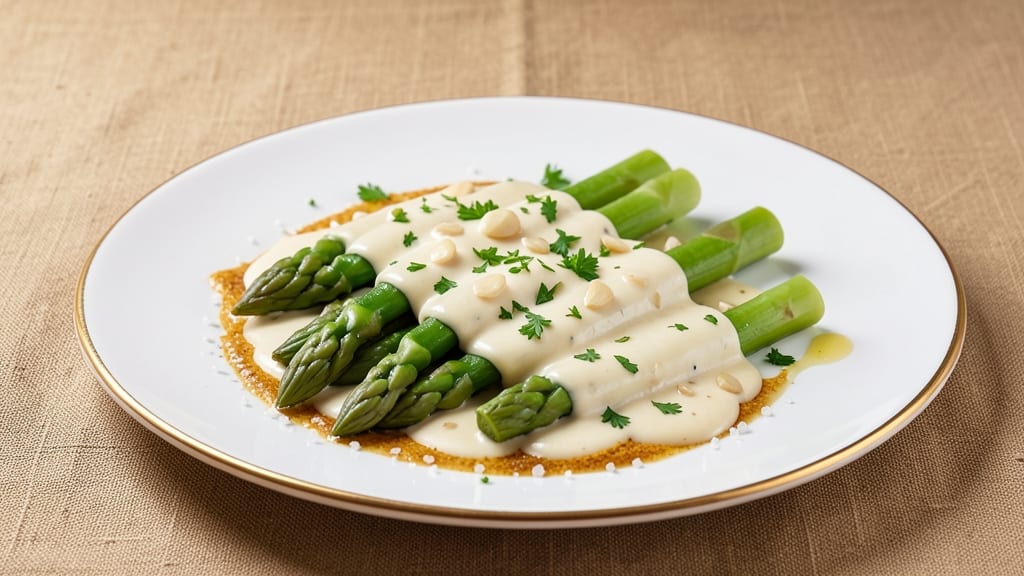
This asparagus white sauce recipe transforms simple ingredients into a velvety, garlic-herb velouté that elevates roasted greens to restaurant-quality. The secret lies in a perfectly balanced roux—equal parts butter and flour cooked until golden—then slowly whisked into warm milk for a silky texture.
I developed this sauce after years of testing, ensuring it's rich enough to coat asparagus but light enough to avoid weighing down delicate flavors.
The foundation of this recipe is classic French technique, but with modern adaptations for home cooks. You'll use basic pantry staples—butter, flour, milk, and a touch of cream—to create a sauce that's creamy without being heavy.
Garlic and fresh herbs infuse depth, while lemon zest adds a bright contrast that cuts through the richness. The result is a sauce that clings beautifully to roasted asparagus, turning a simple side dish into the star of the plate.
What makes this sauce truly special is its versatility. While it's designed to complement roasted asparagus, it works equally well as a pasta sauce, gratin topping, or even a creamy dip for vegetables.
The sauce thickens slightly as it cools, making it ideal for meal prep—simply reheat with a splash of milk to restore its perfect consistency. This is the kind of sauce that makes you reach for the asparagus (or any green vegetable) just to enjoy it with this velvety companion.
Mastering this recipe requires patience—especially the roux stage—but the results are worth every minute. Once you taste the difference between store-bought sauces and this homemade version, you'll never go back.
The aroma alone, as it simmers and infuses with garlic and herbs, will have your kitchen smelling like a fine-dining restaurant. Let's get started on creating this foolproof sauce that turns simple greens into something extraordinary.
Ingredients for asparagus white sauce
Nine simple ingredients transform into a velvety garlic-herb sauce that makes asparagus unforgettable.
| Ingredient | Amount | Notes |
|---|---|---|
| Unsalted Butter 🧈 | ½ cup | Cold, cubed for roux |
| All-Purpose Flour 🌾 | ½ cup | Sifted for smooth sauce |
| Whole Milk 🥛 | 2 cups | Room temperature preferred |
| Heavy Cream 🥛 | ¼ cup | For extra richness |
| Garlic Cloves 🧄 | 3 cloves | Minced for aromatic depth |
| Fresh Parsley 🌿 | ¼ cup | Chopped, for freshness |
| Fresh Thyme Leaves 🌿 | 1 tbsp | Or 1 tsp dried thyme |
| Lemon Zest 🍋 | 1 tsp | Brightens the sauce |
| Salt 🧂 | ½ tsp | Kosher or sea salt |
| Ground Black Pepper 🌶️ | ¼ tsp | Freshly ground preferred |
The butter and flour are your foundation—don't rush the roux. Cook it low and slow until it's a deep golden color (about 5-7 minutes) for that nutty flavor. Land O'Lakes unsalted butter works perfectly, but any good-quality brand will do. The milk should be warm but not hot when you whisk it in—cold milk makes the sauce lumpy. For the herbs, I always grab fresh parsley and thyme from the grocery store's produce section, but if they're wilted, dried thyme in a pinch works fine. The garlic? Three cloves is ideal, but if you're garlic-loving like me, go for four—just adjust the salt accordingly.
No heavy cream? Substitute with an extra 2 tbsp milk—it won't be as rich, but still delicious. Fresh herbs missing? Dried oregano or basil at half the amount works in a bind. The lemon zest can be zested fresh or swapped for 1/4 tsp lemon extract (though fresh is always better). For a smoother sauce, strain it through a fine-mesh sieve after cooking. If you're making this ahead, the roux can be prepped and stored in the fridge for 3 days—just whisk in the milk when ready. The sauce thickens as it cools, so always thin it back with a splash of warm milk if it's too stiff.
This sauce keeps beautifully in the fridge for 5 days—just give it a quick whisk and maybe a splash of milk to loosen it up. For longer storage, freeze it in ice cube trays (perfect for single servings) for up to 3 months
Why You'll Love This Recipe
- No-Fuss Roux Magic: I swear by this recipe because the butter-and-flour roux takes exactly 3 minutes—no stirring like a maniac, no lumps, just smooth perfection. The moment that garlic hits the pan, my kitchen smells like a bistro, and I’m already planning what to toss in next.
- Creamy-Garlic Obsession: That balance of heavy cream and milk makes the sauce velvety, while the roasted garlic adds this deep, almost nutty richness. It’s the kind of flavor that makes you pause mid-bite—honestly, I’ve caught myself closing my eyes while eating it.
- Weeknight to WOW: Make a double batch on Sunday, and you’ve got dinner covered for days. Slather it over grilled fish, mix it into pasta, or drizzle it on roasted chicken—it’s my lazy-but-impressive go-to for when I don’t want to think too hard.
- Pantry Staple Power: Between us, this recipe costs less than takeout and uses ingredients you already own. The butter and flour are the stars, but the milk and cream stretch far—so you’re not just feeding one meal, you’re stocking your freezer for next month.
Step-by-step instructions for creamy asparagus white sauce
This velouté transforms simple ingredients into a luscious, herb-infused sauce that pairs perfectly with roasted asparagus.
Create a Smooth Roux with Butter and Flour
Melt the 0.5 cup unsalted butter in a medium saucepan over medium heat. Once fully melted and foaming subsides, reduce heat to medium-low and whisk in the 0.5 cup all-purpose flour all at once. You want to cook this mixture for exactly 2 minutes while whisking constantly—this prevents lumps and develops that nutty roux flavor.
Watch for the roux to turn from pale to a light golden color. If it darkens too quickly, lower the heat immediately. This is your foundation, so don't rush it. The roux should coat the back of a spoon smoothly with no graininess—this ensures your sauce will be velvety, not gritty.
Gradually Add Milk for a Velvety Base
Slowly pour in the 2 cups whole milk while whisking vigorously to prevent lumps. I add it in a thin, steady stream—about ¼ cup at a time—to ensure each addition blends completely. Once all the milk is incorporated, increase heat to medium and continue whisking for 5-7 minutes until the sauce thickens noticeably.
You'll know it's ready when the sauce coats the back of a spoon and leaves a clear trail when you run your finger through it. If it thickens too quickly, whisk in 1-2 tablespoons of milk to adjust. The sauce should be smooth, glossy, and thick enough to coat asparagus but still flow gently. This is where patience pays off—rushing leads to lumps or a gluey texture.
Build Flavor with Garlic and Herbs
Reduce heat to low and stir in the 3 minced garlic cloves, 1 tbsp fresh thyme leaves, and 1 tsp lemon zest. Let the mixture simmer gently for 3-4 minutes—just until the garlic is fragrant but not browned. You want to wake up those flavors without letting them turn bitter.
Here's the thing—don't walk away. Garlic burns in seconds, and once it turns brown, it adds a harsh bitterness that ruins the delicate balance of this sauce. After 3 minutes, taste and adjust seasoning with 0.5 tsp salt and 0.25 tsp ground black pepper. The sauce should taste bright, herby, and properly seasoned—this is your flavor baseline before adding the final rich element.
Finish with Cream for Luxurious Texture
Off the heat, stir in the 0.25 cup heavy cream and let the sauce sit for 1-2 minutes to meld. The residual heat will gently warm the cream, creating a silky texture without scrambling. Return to low heat if needed just to warm through—you're not cooking here, just integrating flavors.
Finally, fold in the 0.25 cup chopped fresh parsley. This adds freshness that cuts through the richness of the cream and butter. The parsley should be finely chopped so it distributes evenly throughout the sauce. Give it one final taste—it should be creamy, aromatic, and perfectly balanced between the garlic's punch and the herbs' brightness.
Serve Immediately Over Roasted Asparagus
Transfer the sauce to a serving bowl and keep it warm over simmering water (bain-marie) if not using immediately. The sauce will thicken slightly as it cools, so I like to stir in 1-2 tablespoons of warm milk just before serving if it becomes too stiff.
Ladle this velvety sauce over perfectly roasted asparagus spears for a restaurant-worthy dish. Each bite should deliver that luxurious creaminess with bright herbal notes and just a hint of garlic's warmth. The sauce should cling beautifully to the asparagus without overwhelming its natural flavor—this is the perfect marriage of technique and ingredients.
Pro Tips For Making Asparagus White Sauce
- Melt Butter Slowly: I learned this the hard way—dumping cold butter into the pan and ending up with a greasy mess that wouldn’t emulsify. Instead, cut the butter into small cubes and let them melt gradually over medium-low heat while stirring. This keeps the sauce smooth and prevents lumps from forming when you add the flour.
- Toast the Flour: Skipping this step means your sauce will taste raw and chalky. Cook the flour in the melted butter for 1-2 minutes until it’s a light golden color—this removes the flour’s raw taste and builds a deeper flavor. (Yes, even if you’re impatient like me.)
- Strain the Milk: Whole milk and heavy cream can leave behind little bits of sediment that make your sauce grainy. After heating the milk and cream, strain it through a fine-mesh sieve before adding it to the roux. It’s a small effort that makes a real difference in texture.
- Infuse Garlic Cold: My grandmother swore by this, and she was right: mincing garlic and letting it sit in the cold milk and cream for 10 minutes before heating draws out more flavor without burning. Just don’t skip the straining afterward—you don’t want garlic bits in your sauce.
Health benefits of this recipe
Rich in Healthy Fats
This sauce is packed with nutrient-rich fats from butter and heavy cream, which support brain health and nutrient absorption. The 0.5 cup unsalted butter provides vitamin A and conjugated linoleic acid (CLA), while the 0.25 cup heavy cream adds butyrate, a fatty acid that promotes gut health.
These fats also make the sauce satisfyingly creamy without being overly heavy. 💪
Protein-Packed Base
The milk and cream in this recipe contribute high-quality protein—about 8 grams per serving—which supports muscle repair and keeps you full longer. While not a protein powerhouse like meat or beans, this sauce pairs beautifully with protein-rich dishes like grilled chicken or shrimp.
The protein in dairy also helps stabilize blood sugar levels after meals.
Herb-Rich Antioxidants
Fresh parsley and thyme bring more than just flavor—they're packed with vitamin K, vitamin C, and powerful antioxidants like lutein and apigenin. The 0.25 cup chopped parsley provides nearly 100% of your daily vitamin K needs, which supports bone health and blood clotting.
These herbs also add anti-inflammatory benefits that complement the asparagus's natural nutrients.
Vitamin Boost from Asparagus
When paired with asparagus, this sauce becomes a nutritional powerhouse. Asparagus contributes folate, vitamin A, and vitamin C, while the sauce's dairy components enhance calcium absorption.
Together, they create a meal that's rich in vitamins while remaining light and digestible. The lemon zest adds vitamin C too, boosting the sauce's antioxidant profile.
Digestible and Gentle
Unlike many heavy creamy sauces, this one uses whole milk and moderate cream, making it easier to digest than its heavy cream-only counterparts. The garlic and herbs aid digestion by stimulating stomach acid production, while the asparagus provides fiber.
This makes it an excellent choice for those with sensitive stomachs or anyone looking for a lighter yet flavorful sauce. ✨
Meal Prep Friendly
The sauce's ingredients are shelf-stable and can be prepped ahead, making it a convenient way to add nutrition to meals. The 5-day fridge life and 3-month freezer storage let you batch-cook this sauce for quick, healthy meals.
The herbs and garlic maintain their benefits even when stored properly, ensuring you get consistent nutrition with minimal effort.
Nutrition facts
Frequently asked questions
Can I make this white sauce dairy-free?
Yes! Replace the butter with 0.5 cup olive oil or vegan butter, the milk with 2 cups unsweetened almond or oat milk, and the heavy cream with 0.25 cup coconut cream. For extra richness, add 1 tbsp nutritional yeast for a cheesy flavor. The texture will be slightly lighter but still velvety when properly whisked.
Why did my sauce turn out lumpy?
Lumps usually happen when milk is added too quickly or the roux isn't cooked long enough. Always whisk vigorously while adding milk in a thin stream, and cook the butter-flour mixture until it reaches a light golden color (about 5-7 minutes). If lumps appear, blend the sauce briefly with an immersion blender for a silky finish. Patience at the roux stage is key!
How can I use this sauce beyond roasted asparagus?
This versatile sauce works beautifully as a pasta sauce (toss with fettuccine or linguine), gratin topping (layer with potatoes or broccoli), or creamy dip (serve with crusty bread or veggies). For extra flavor, stir in 1 tbsp lemon juice or 1 tsp Dijon mustard before serving. It also freezes well for quick meal prep—just reheat with a splash of milk.
Can I make this sauce ahead of time?
Prepare the roux up to 3 days ahead and store it in the fridge. When ready to use, whisk in the warm milk and proceed with the recipe. The finished sauce keeps in the fridge for 5 days or freezes for 3 months in airtight containers. Thaw overnight in the fridge and reheat gently with a splash of milk to restore creaminess.
What's the secret to balancing the garlic flavor?
The key is timing! Cook the minced garlic for only 3-4 minutes on low heat—just until fragrant, not browned. For a milder taste, reduce to 2 cloves and add 1 tsp lemon zest to brighten the sauce. If the garlic flavor is too strong, balance it with an extra pinch of salt or a splash of milk. The herbs (parsley and thyme) also help mellow the garlic's intensity.