
Sauces & Condiments
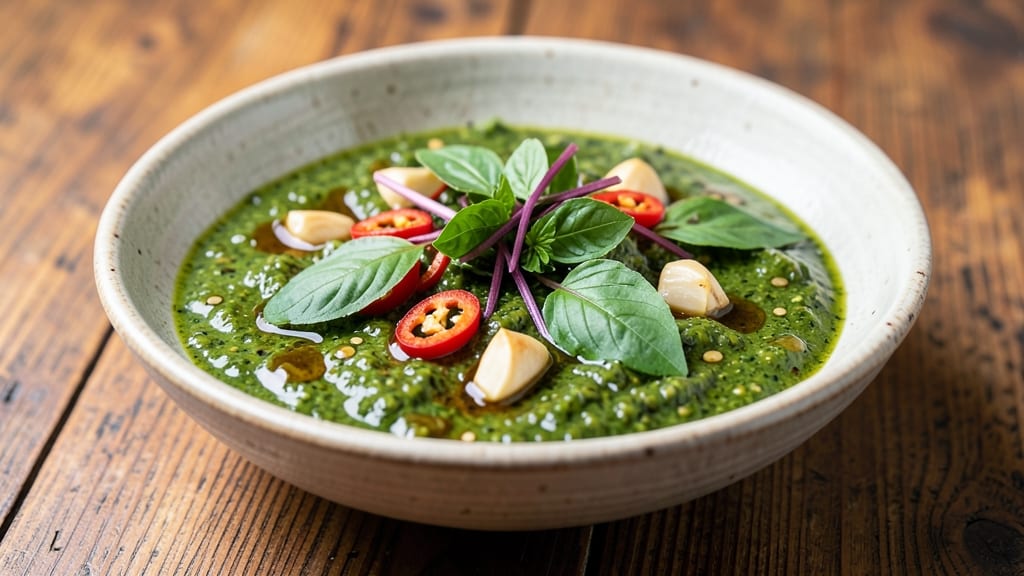
This Asian chimichurri sauce recipe transforms traditional chimichurri into a vibrant, umami-rich condiment that bridges East and West. The secret lies in fermented depth from rice vinegar and fish sauce, balanced by bright Thai basil and garlic—creating a sauce that's both complex and approachable.
I developed this version after craving something with the fresh herb punch of chimichurri but with the layered flavors of Asian cuisine.
The sauce delivers bold herb fire with a silky texture that clings beautifully to grilled meats, noodles, or crispy tofu. What sets it apart is the fermentation element—letting the ingredients marry for at least 30 minutes (or overnight for maximum depth) transforms it from good to extraordinary.
The result? A sauce that's tangy, aromatic, and packed with umami without overpowering the dish.
Perfect for elevating weeknight dinners, this sauce requires just 10 minutes of prep but tastes like it took hours. The fresh herbs stay vibrant when refrigerated for up to 5 days, making it ideal for meal prep.
Drizzle over seared scallops, toss with cold soba noodles, or use as a marinade—its versatility makes it a pantry essential.
For an extra layer of complexity, add a splash of sesame oil before serving. The nutty aroma complements the herbal notes perfectly, creating a sauce that's as visually striking as it is delicious. Let's make this flavor-packed condiment that'll become your new go-to for Asian-inspired dishes.
Ingredients for asian chimichurri sauce
Nine vibrant ingredients create this umami-packed Asian chimichurri that bridges bold flavors.
| Ingredient | Amount | Notes |
|---|---|---|
| Thai Basil Leaves 🌿 | 1 ½ cups | Packed, stems removed for brightness |
| Garlic Cloves 🧄 | 6 cloves | Peeled, roughly chopped for depth |
| Red Chili Peppers 🌶️ | 2 whole | Thinly sliced, seeds removed for heat control |
| Rice Vinegar 💧 | ½ cup | Seasoned for authentic tang |
| Fish Sauce 🍜 | 2 tbsp | Red Boat preferred for quality |
| Sesame Oil 🫒 | 1 tbsp | Toasted for nutty aroma |
| Extra-Virgin Olive Oil 🫒 | ½ cup | High-quality for silky texture |
| Lime Juice 🍋 | 2 tbsp | Freshly squeezed for zesty brightness |
| Honey 🍯 | 1 tbsp | Balances acidity and sweetness |
| Diamond Crystal Kosher Salt 🧂 | 1 tsp | Fine grain for even seasoning |
Thai basil is the heart of this sauce—look for bright green leaves at the grocery store or Asian markets. Whole Foods and Trader Joe's usually carry the best quality. If you can't find Thai basil, regular basil plus a pinch of lemongrass paste works in a pinch. The garlic should be fresh—no pre-minced jars, those turn bitter. For the chili peppers, Thai bird's eye peppers add serious heat, but serrano or jalapeño work too if that's what you've got. The fish sauce is non-negotiable for that fermented depth—Red Boat is my go-to, but any reputable brand will do.
No fish sauce? Soy sauce plus a splash of miso paste mimics the umami punch. Running short on Thai basil? Cilantro plus mint leaves (half and half) keeps the herbal brightness. The sesame oil can be toasted in a dry pan for 30 seconds before adding—worth the extra minute for deeper flavor. If you're sensitive to heat, remove all seeds from the chili peppers. For extra richness, add 1 tbsp of tahini to the finished sauce. The rice vinegar should be seasoned—plain white vinegar won't cut it for that authentic tang.
This sauce keeps beautifully in the fridge for 5 days—the flavors actually deepen over time. Store it in a glass jar with a tight seal, submerged in its own oil to preserve freshness. For longer storage, freeze in ice cube trays and transfer to a bag. Thaw overnight in the fridge before using. The texture will be slightly thicker after refrigeration—give it a quick whisk before serving. A splash of sesame oil right before using adds that final nutty dimension that makes it restaurant-quality.
Why You'll Love This Recipe
- Five-Ingredient Magic: I swear by this—just basil, garlic, chili, vinegar, and fish sauce. No fancy gadgets, no waiting for herbs to wilt. Honestly, I keep a jar in my fridge because it’s that simple to throw together when I’m craving something bright and punchy.
- Umami Bomb: That fish sauce and garlic combo? It’s the secret weapon. The Thai basil adds a fragrant kick, while the rice vinegar cuts through the richness—like a flavor explosion in your mouth. I’ll be real: my first batch had too much chili, but now I double it because the heat lingers in the best way.
- Dresses Everything: Grill? Check. Stir-fry? Done. Even a simple bowl of rice gets a glow-up. I’ve drizzled it over cold noodles, tossed it with tofu, and even slathered it on sandwiches. It’s my go-to for when I want restaurant-level taste without the fuss.
- Lasts a Week: Make a big batch—it keeps for days in the fridge. The flavors actually deepen, so it’s even better the next time. Between us, I’ve used it to revive week-old takeout or jazz up a sad salad. Budget-friendly? Absolutely. Waste-free? Even better.
Step-by-step instructions for Asian chimichurri sauce
This vibrant sauce balances bright herbs, fermented funk, and aromatic oils—perfect for seafood, grilled meats, or rice bowls.
Pulse Herbs and Aromatics to a Fine Texture
In a food processor, combine the 1.5 cups Thai basil leaves (stems removed) with the 6 cloves garlic cloves and 2 whole red chili peppers (thinly sliced, seeds removed). Pulse in short bursts until you achieve a coarse, uneven chop—about 10-12 pulses. You want visible texture, not a smooth paste, to preserve the sauce's fresh, herby character.
This step ensures maximum flavor extraction from the garlic and chili while keeping the basil's bright aroma intact. Avoid over-processing, or the sauce will turn bitter. If using a mortar and pestle instead, crush the ingredients in batches until finely minced—about 3-4 minutes of vigorous grinding.
Whisk in the Wet Ingredients for Balance
Transfer the herb mixture to a medium bowl and add the 0.5 cup rice vinegar, 2 tbsp fish sauce, and 1 tbsp honey. Using a whisk or silicone spatula, stir vigorously for 2 minutes until fully combined. The fish sauce will add umami depth, while the honey balances the acidity of the vinegar and lime juice you'll add next.
Here's the thing—taste as you go. If the mixture tastes too sharp, add a pinch more honey. Too flat? Stir in an extra splash of fish sauce. This sauce relies on balance, and adjustments now prevent overpowering flavors later. Let the mixture sit for 5 minutes while you prepare the oils.
Emulsify the Oils for Silky Texture
In a small separate bowl, whisk together the 0.5 cup extra-virgin olive oil and 1 tbsp sesame oil until fully combined. Slowly drizzle this oil mixture into the herb-vinegar blend while whisking continuously. This gradual incorporation creates a stable emulsion—think of it as tempering the sauce to prevent separation.
The olive oil provides a neutral base, while the sesame oil adds nutty warmth. Whisk for another 2-3 minutes until the sauce thickens slightly and clings to the back of the spoon. If it looks too thick, add 1-2 teaspoons of water to loosen it. The texture should be like a thick, vibrant pesto.
Finish with Lime and Salt for Brightness
Stir in the 2 tbsp lime juice and 1 tsp Diamond Crystal kosher salt, mixing until fully dissolved. The lime juice adds a citrusy tang that cuts through the richness of the oils, while the salt enhances all the flavors. Taste again and adjust seasoning—you might need a touch more salt or lime depending on your preference.
Let the sauce rest for 10 minutes before using. This resting period allows the flavors to meld and the oils to fully emulsify. The sauce will thicken slightly as it sits, so if you plan to use it immediately, give it a quick whisk to restore its original consistency.
Serve Immediately or Store Properly
Use the sauce immediately over grilled shrimp, seared scallops, or steamed jasmine rice for the best results. If storing, transfer to an airtight container and refrigerate for up to 3 days. The flavors will continue to develop and deepen over time, making it even more complex. When ready to use, give it a good stir—it may separate slightly, but a quick whisk will restore its silky texture.
This sauce is incredibly versatile. Drizzle it over noodles, toss it with fresh greens, or use it as a marinade for tofu or chicken. The key to its success lies in the balance of ingredients and the patience to let the flavors shine. Enjoy it while it's fresh, but don't be afraid to experiment with storage—sometimes the best flavors come after a little time.
Pro Tips For Making Asian Chimichurri Sauce
- STACK THE BASIL LAST: Pile the Thai basil leaves on top of your blended sauce, not in the blender first. I used to crush them early, and the sauce turned bitter—those leaves release their oils when pressed, and you want that punch at the very end. Let the other flavors marry first, then fold them in gently.
- PEEL GARLIC IN THE MORNING: If you’re prepping ahead, peel your garlic cloves and store them in cold water overnight. The cold slows oxidation, so they won’t turn bitter or pungent by the time you blend them. (Yes, I know it’s weird—trust me, it works.)
- SALT THE FISH SAUCE: Add a pinch of salt to the fish sauce before blending—it balances the umami without overpowering. I learned this the hard way after making a batch that tasted too funky. A quarter teaspoon does the trick.
- PULSE DON’T PURÉE: Run the blender in short bursts, not continuously. You want texture—tiny chunks of chili and garlic keep the sauce lively. Over-blending turns it into a gloppy paste. (And no, straining it won’t fix that.)
Regional styles of these flavors
Japanese-Inspired Version
Swap the Thai basil for 1 cup packed shiso leaves (red or green) and add 1 tbsp grated ginger to the wet ingredients. Replace fish sauce with 1 tbsp soy sauce and 1 tsp mirin for a subtler umami.
The shiso leaves add a delicate minty note, while the ginger brings warmth. Use 1 tbsp toasted sesame oil instead of olive oil for authenticity. This version pairs beautifully with yuzu kosho for an extra kick. 🌿
Thai-Inspired Spicy Kick
Boost the heat by adding 1 tbsp of Thai bird's eye chili paste (like Maesri) to the wet ingredients. Replace lime juice with 2 tbsp of tamarind paste for a tangier, more complex flavor.
Add 1 tsp of palm sugar to balance the heat. Garnish with crushed roasted peanuts and Thai basil for texture. This version works amazingly with grilled lemongrass chicken or spicy pad Thai. 🌶️
Korean-Inspired Gochujang Twist
Replace fish sauce with 1 tbsp gochujang (Korean chili paste) and add 1 tsp of toasted sesame seeds to the dry ingredients. Use 1 tbsp of rice vinegar and 1 tsp of honey for balance.
The gochujang adds a deep, fermented heat that pairs perfectly with the fresh herbs. This version is ideal for bulgogi beef or kimchi fried rice. 🔥
Vietnamese-Inspired Nuoc Cham Fusion
Replace fish sauce with 2 tbsp of nuoc cham (Vietnamese fish sauce mix) and add 1 tsp of sugar to the wet ingredients. Swap the lime juice for 1 tbsp of rice vinegar and 1 tsp of fish sauce for extra depth.
The nuoc cham brings a sweet-savory balance that elevates the sauce. This version is perfect for grilled shrimp skewers or rice paper rolls. 🍤
Chinese-Inspired Five-Spice Blend
Add ½ tsp of Chinese five-spice powder to the herb mixture before pulsing. Replace the honey with 1 tsp of hoisin sauce for a richer, slightly sweet note. Use 1 tbsp of rice vinegar and 1 tsp of soy sauce in the wet ingredients.
This version has a warm, aromatic depth that pairs well with char siu pork or stir-fried greens. ✨
Filipino-Inspired Siling Labuyo Heat
Replace the Thai basil with 1 cup packed cilantro and add 1 tbsp of siling labuyo (Filipino bird’s eye chili) for intense heat. Use 1 tbsp of fish sauce and 1 tsp of sugar in the wet ingredients.
The siling labuyo brings a fiery, smoky depth that’s perfect for grilled pork skewers or adobo-style dishes. 💥
Nutrition facts
Frequently asked questions
Can I substitute Thai basil with regular basil?
The flavor will differ slightly, but you can use 1 cup packed regular basil plus 1 tbsp fresh mint leaves for a similar bright, aromatic profile. Thai basil has a subtle anise-like note that regular basil lacks, but the combination works well. For an extra layer of authenticity, add a pinch of dried lemongrass powder.
How spicy should this sauce be?
The heat level depends on the chili peppers used. With 2 whole red chili peppers (seeds removed), it's mild to medium—great for beginners. For extra heat, add 1 tbsp of Thai chili paste or leave the seeds in. Always taste before serving and adjust with more chili or a touch of honey to balance.
Can I make this sauce without fish sauce?
Yes! Replace the 2 tbsp fish sauce with 1 tbsp soy sauce plus 1 tsp miso paste for umami depth. For a vegetarian option, use 1 tbsp coconut aminos plus 1 tsp nutritional yeast. The miso or nutritional yeast adds a fermented complexity that mimics fish sauce's savory punch.
Why does my sauce separate after refrigeration?
This is normal due to oil separation. Simply whisk vigorously for 1-2 minutes before using—it will re-emulsify. To prevent separation, store the sauce in a glass jar and press plastic wrap directly on the surface to minimize air exposure. For extra insurance, add ½ tsp of xanthan gum when making the sauce.
What are the best proteins to pair with this sauce?
This sauce shines with delicate proteins that won't overpower its bright flavors. Try it with grilled shrimp, seared scallops, or crispy tofu. For heartier options, pair it with bulgogi beef or teriyaki chicken. The sauce also works beautifully as a marinade for 1-2 hours before cooking.