
Sauces & Condiments
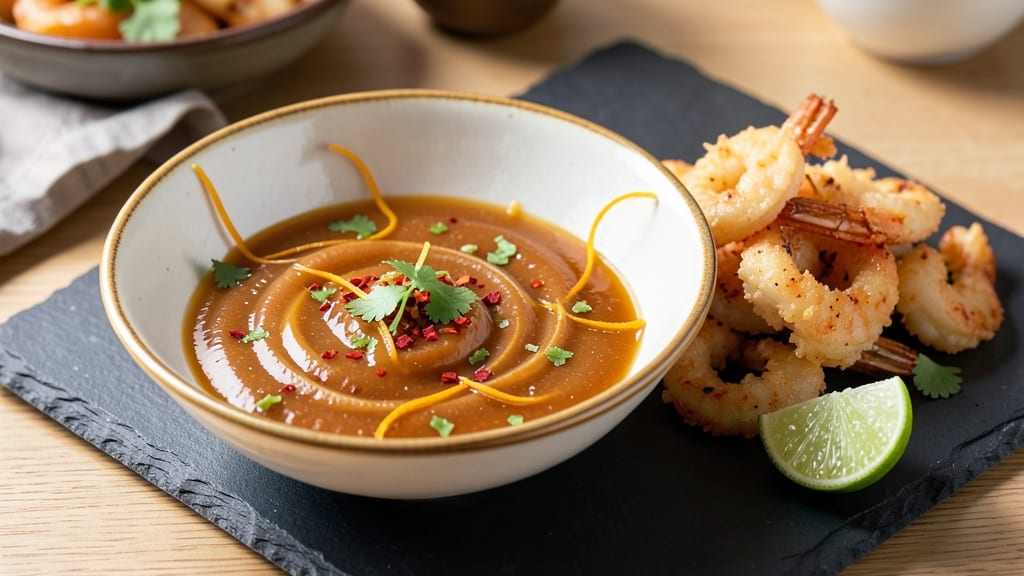
This apricot dipping sauce transforms simple coconut shrimp into a restaurant-worthy dish with its perfect balance of sweet, tangy, and slightly spicy flavors. The secret lies in combining apricot puree with honey and citrus for a glaze that clings beautifully to crispy shrimp, enhancing their natural sweetness without overpowering it.
What makes this sauce special is its versatility—it works equally well with store-bought or homemade coconut shrimp, and the recipe comes together in just 10 minutes using simple pantry staples.
A touch of ginger adds warmth, while a hint of chili brings subtle heat, creating a complex flavor profile that keeps every bite exciting.
The result is a glossy, velvety sauce that's rich enough to stand alone but bright enough to complement the coconut's natural sweetness. It thickens slightly as it cools, making it ideal for dipping, drizzling, or even as a glaze for grilled meats or vegetables.
Store leftovers in the refrigerator for up to 5 days, or freeze for 3 months—perfect for meal prep or entertaining. This sauce is the game-changer that turns a simple appetizer into an unforgettable centerpiece.
Ingredients for apricot dipping sauce for coconut shrimp
Nine ingredients blend to create a restaurant-quality sauce that elevates coconut shrimp effortlessly.
| Ingredient | Amount | Notes |
|---|---|---|
| Apricot Puree 🍑 | ½ cup | High-quality, unsweetened preferred |
| Honey 🍯 | ¼ cup | Wildflower for floral depth |
| Lime Juice 🍋 | ¼ cup | Freshly squeezed, seeds strained |
| Orange Zest 🍊 | 1 tbsp | Bright, organic preferred |
| Fresh Ginger 🌿 | 1 tbsp | Finely grated, aromatic |
| Red Chili Flakes 🌶️ | ½ tsp | Adjust for heat preference |
| Soy Sauce 🍶 | 1 tbsp | Light or dark, unsalted preferred |
| Extra-Virgin Olive Oil 🫒 | 2 tbsp | High-quality, fruity notes |
| Garlic Cloves 🧄 | 2 cloves | Minced, aromatic |
| Sesame Oil 🌰 | ½ tsp | Toasted, for nutty aroma |
The apricot puree is the foundation—opt for unsweetened to maintain balance, especially if using store-bought coconut shrimp that may already be sweetened. Trader Joe's carries excellent quality, or check the international aisle at Whole Foods for artisanal options. Fresh lime juice is non-negotiable; bottled lacks the bright acidity needed to cut through the sauce's richness. For the orange zest, organic citrus yields more vibrant flavor, and a microplane ensures fine, even shreds without bitter pith. Ginger should be freshly grated—pre-minced loses potency quickly. Store all citrus and ginger in the fridge, wrapped in damp paper towels for up to 1 week.
No apricot puree? Mango puree or unsweetened applesauce works in a pinch, though texture may vary slightly. Substitute honey with maple syrup for a vegan option, though flavor will differ subtly. For extra tang, add 1 tsp rice vinegar to the lime juice. The soy sauce can be reduced by half if using a salted variety, but unsalted allows better flavor control. Low-sodium tamari offers a gluten-free alternative. Chili flakes can be omitted entirely for a mild version, or replaced with 1/4 tsp cayenne for more heat. Sesame oil should be toasted for depth—heat 1 tsp in a dry pan for 30 seconds before adding to the sauce.
This sauce thickens as it cools, making it ideal for make-ahead prep. Store in an airtight container in the fridge for 5-7 days, where it continues to develop flavor. For longer storage, freeze in ice cube trays—thawed portions can be reheated gently with a splash of water. The sauce pairs beautifully with homemade coconut shrimp (coat shrimp in coconut milk, panko, and lime zest before frying) or store-bought varieties. A drizzle over grilled chicken or tofu also works wonderfully, proving its versatility beyond shrimp.
Why You'll Love This Recipe
- Five-Ingredient Magic: I swear, this sauce comes together faster than you can say "dinner’s ready." Just blend the apricot puree, honey, lime juice, orange zest, and a thumb of ginger—no peeling, no straining, no fuss. Honestly, the hardest part is waiting for the shrimp to crisp.
- Sweet-Sour Balance: That first dip is ridiculously good—the honey and apricot puree play off the bright lime and citrusy orange zest, while the ginger adds just enough kick. It’s sweet enough to satisfy a dessert craving but tangy enough to cut through the coconut’s richness.
- Party in a Bowl: Between us, this sauce is my go-to for game day, date night, or when friends drop by unannounced. It pairs perfectly with coconut shrimp but also works with grilled chicken, fish, or even veggie sticks. (Yes, even on a Tuesday night.)
- Leftovers That Shine: The sauce keeps for days in the fridge, and it’s way better the second time around—thicker, more concentrated. I’ll often make a double batch: one for the shrimp, one to drizzle over yogurt or oatmeal the next morning. Zero waste, all flavor.
Step-by-step instructions for apricot dipping sauce
This vibrant glaze balances sweetness, acidity, and umami—perfect for enhancing coconut shrimp.
Bloom the Aromatics in Olive Oil
Heat the 2 tablespoons extra-virgin olive oil in a small saucepan over medium-low heat until shimmering. Add the 2 minced garlic cloves and 1 tablespoon finely grated fresh ginger, cooking for 1-2 minutes until fragrant but not browned. The ginger should release its aromatic oils without turning bitter—this is your flavor foundation.
Here's the thing—ginger burns quickly, so keep the heat gentle. You'll know it's ready when the kitchen fills with that bright, citrusy ginger aroma. Remove from heat immediately after the aromatics are perfumed, as they'll continue cooking when other ingredients join.
Combine Wet Ingredients and Simmer
Return the saucepan to medium heat and add the 0.5 cup apricot puree, 0.25 cup honey, 0.25 cup lime juice, and 1 tablespoon soy sauce. Stir continuously to prevent scorching, then bring to a gentle simmer. Let it cook for 5-6 minutes until the mixture thickens slightly and reduces by about 20%.
Watch for small bubbles forming at the edges—this indicates proper reduction. The sauce should coat the back of a spoon but still flow smoothly. If it thickens too quickly, add 1 teaspoon water to maintain balance. The honey and lime juice will create a delicate effervescence that enhances the sauce's complexity.
Finish with Zest and Chili
Remove the saucepan from heat and stir in the 1 tablespoon orange zest and 0.5 teaspoon red chili flakes. Let it steep off heat for 2 minutes—this allows the citrus oils to infuse fully without cooking away. The chili flakes should remain visible for visual appeal while adding subtle heat.
For the final touch, drizzle in the 0.5 teaspoon sesame oil and stir gently. The nutty aroma will complement the fruit notes beautifully. Taste and adjust seasoning—you might need a pinch more salt to balance the sweetness, especially if using unsalted soy sauce. The sauce should be vibrant, with bright apricot notes, citrus tang, and a whisper of spice.
Strain and Serve Warm
Transfer the sauce to a fine-mesh strainer set over a bowl and press gently with a silicone spatula to remove any ginger fibers or citrus pulp. This ensures a silky texture that clings perfectly to coconut shrimp. Return the strained sauce to the saucepan and warm through over low heat for 1-2 minutes—just enough to maintain serving temperature without further reduction.
The sauce should be glossy with a velvety consistency, ready to enhance every bite of your coconut shrimp. Serve immediately while warm, as the flavors meld best at this temperature. For best results, keep the sauce covered between uses to preserve its aromatic qualities.
Pro Tips For Making Apricot Dipping Sauce For Coconut Shrimp
- Simmer Slowly: I learned this the hard way—rushing the sauce on high heat turns it into syrup faster than you can say "overcooked." Keep it at a gentle bubble (just small, occasional ripples) for 5-7 minutes to let the ginger and citrus meld without burning. You want the aroma to wake up your kitchen, not fill it with smoke.
- Zest Fresh, Use Fast: That jarred orange zest? Skip it. The oil in dried zest dulls the bright, citrusy punch this sauce needs. Instead, grate a tiny strip of peel (about 1 teaspoon) right before adding it to the sauce—it loses potency fast. And for ginger? Finely mince it (not grate) so it dissolves smoothly without gummy bits.
- Balance the Sweet-Sour: Too much honey and the sauce tastes like dessert. Too little lime and it’s just cloying apricot glue. Taste as you go: start with 1 tablespoon lime juice, then adjust. The sauce should make your mouth pucker just enough to cut through the coconut shrimp’s richness—like a well-timed joke, not a punch.
- Strain for Smoothness: After simmering, skip the food mill if you’re in a hurry. A fine-mesh sieve (the kind for nut butters) removes ginger bits and apricot skin without losing flavor. Just press with a spoon—don’t strain too hard, or you’ll dilute the sauce with pulp. (Yes, even if you’re impatient like me.)
Make-ahead tips for this recipe
Prep Ahead Components
Break down the sauce into its core components before assembly to save time. Store the orange zest and fresh ginger in a sealed container in the fridge for up to 5 days. Keep the lime juice in an airtight bottle—it’ll stay bright for 3 days without browning.
The apricot puree and honey can be pre-mixed in a small jar and refrigerated for 4 days, though the texture may thicken slightly. 🍋
Sauce Assembly Timeline
Make the sauce 1 day ahead for deeper flavor development. After straining, let it cool completely, then transfer to an airtight container and refrigerate. The flavors meld beautifully overnight, intensifying the apricot and citrus notes.
When ready to serve, simply reheat gently over low heat for 2-3 minutes, stirring occasionally to restore its glossy texture.
Freezer-Friendly Portions
For long-term storage, freeze the sauce in 1-tablespoon portions using ice cube trays. Once frozen, transfer the cubes to a freezer bag and flatten to save space. Thaw in the fridge overnight—add 1 teaspoon water when reheating to restore moisture.
This method works perfectly for meal prep or when you only need a small amount for a quick appetizer. ❄️
Double-Batch Strategy
Double the recipe and store half in the fridge while using the other half immediately. The sauce keeps well for 5 days in the fridge, making it ideal for entertaining.
Label the container with the date to track freshness. I often make two batches when hosting—one for shrimp and one for grilled chicken, proving its versatility beyond seafood. 🍗
Garnish Prep Shortcut
Prep garnishes ahead to streamline serving. Toast sesame seeds in a dry pan for 1 minute and store in a small jar. Keep red chili flakes and orange zest in separate containers.
When ready to serve, sprinkle the toasted sesame seeds over the sauce for extra crunch and visual appeal. This step takes just 2 minutes but elevates the presentation dramatically. 🌟
Reheating for Optimal Texture
Reheat the sauce gently to avoid breaking its silky consistency. Use a small saucepan over low heat and add 1 tablespoon water per ½ cup sauce to prevent scorching. Stir constantly until warm—about 3-4 minutes.
For microwave reheating, use 30-second intervals on 50% power, stirring between each interval. The goal is to restore warmth without altering the sauce’s delicate balance. 🔥
Nutrition facts
Frequently asked questions
Can I make this sauce without apricot puree?
Yes! For a similar texture and flavor, substitute the apricot puree with ½ cup unsweetened mango puree or ¼ cup unsweetened applesauce. Mango works best as it maintains the tropical brightness that complements coconut shrimp. If using applesauce, add ½ teaspoon vanilla extract to enhance the fruitiness. The sauce will still be delicious but may have a slightly different depth of flavor.
How do I adjust the sweetness if my coconut shrimp is already sweet?
Reduce the honey to 2 tablespoons and increase the lime juice to 3 tablespoons to balance the sweetness. The extra acidity will cut through the sugar in the shrimp while maintaining the sauce's tangy profile. Taste as you go—you can always add a pinch of salt to enhance the flavors without adding more sweetness.
Can I use this sauce for other dishes besides shrimp?
This versatile sauce pairs beautifully with grilled chicken, tofu, or even as a glaze for roasted vegetables like bell peppers or carrots. For grilled meats, reduce the chili flakes to ¼ teaspoon to avoid overpowering the protein. The sweet-tangy profile also works well as a marinade—coat your protein in the sauce and let it sit for 30 minutes before cooking.
What if my sauce turns out too thick or too thin?
If the sauce is too thick, stir in 1 teaspoon water at a time until it reaches a smooth, dippable consistency. For a thinner sauce, simmer it uncovered for an additional 2-3 minutes to reduce the liquid further. The ideal texture should coat the back of a spoon but still flow freely. Pro tip: If using store-bought apricot puree, check the thickness—some brands are thicker than others and may require extra water.
How do I store leftovers to maintain the best flavor?
Transfer the sauce to an airtight container and refrigerate for up to 5 days. For longer storage, freeze in 1-tablespoon portions using ice cube trays. Thaw overnight in the fridge and reheat gently over low heat with a splash of water to restore its glossy texture. Avoid microwaving directly from frozen to prevent separation. The sauce's flavors actually improve slightly after refrigeration!