
Sauces & Condiments
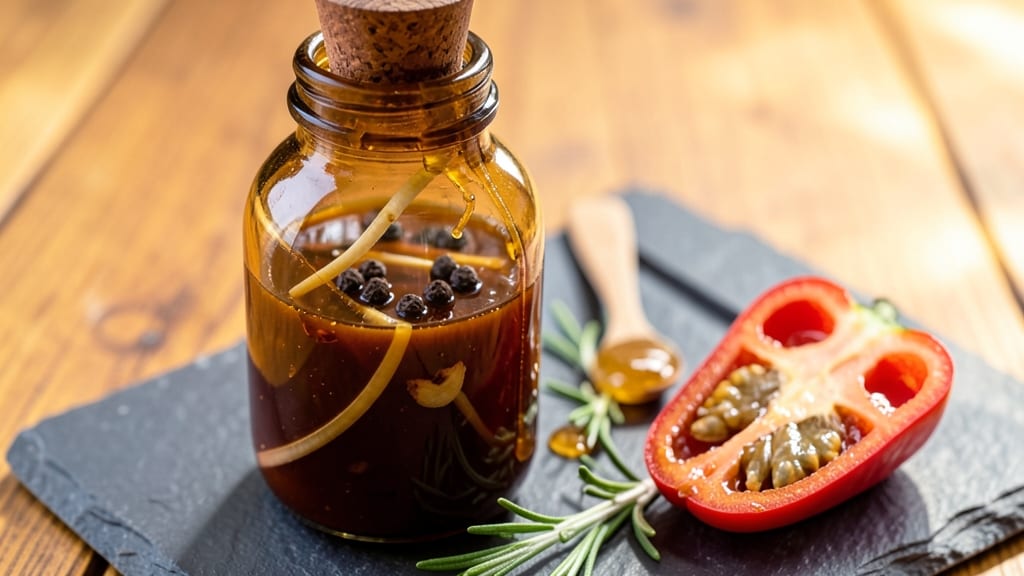
This apple ghost pepper hot sauce delivers a perfect balance of sweet apple brightness and intense, lingering heat—no preservatives required.
The ghost pepper (one of the world’s hottest) needs careful handling, but when paired with tart apple cider vinegar and a touch of honey, it creates a sauce that’s complex, vibrant, and restaurant-worthy.
The fermentation process deepens the flavors while keeping the heat manageable, making it ideal for drizzling on wings, tacos, or even pizza.
What sets this recipe apart is the three-stage cooking and fermenting process, which ensures the ghost pepper’s capsaicin disperses safely while preserving its fiery punch. We’ll use apple cider vinegar as the base—not only for its tangy acidity but also to balance the ghost pepper’s heat with natural sweetness.
Safety is critical here: always wear gloves when handling ghost peppers, and never touch your face during prep.
The result is a glossy, medium-thick sauce with layers of sweetness, acidity, and heat that builds gradually. Unlike store-bought hot sauces loaded with additives, this version relies on whole-food ingredients and a simple fermentation technique.
The apple’s natural sugars caramelize slightly during cooking, adding depth, while the ghost pepper delivers a slow-burning heat that lingers without overwhelming.
Store it in the fridge for up to 3 months, and the flavors will only improve with time. Whether you’re a hot sauce enthusiast or a first-timer, this recipe proves you can make something bold and balanced at home—without compromising on quality or safety. Let’s get started.
Ingredients for apple ghost pepper hot sauce
Six fiery ingredients and four pantry staples create a sauce that balances sweet apple and ghost pepper heat.
| Ingredient | Amount | Notes |
|---|---|---|
| Ghost Peppers 🌶️ | 2 whole | Wear gloves during handling |
| Apple Cider Vinegar 🍎 | 1 ½ cups | Raw, unfiltered preferred |
| Raw Honey 🍯 | ½ cup | Local honey for depth |
| Fresh Garlic Cloves 🧄 | 4 cloves | Peeled, roughly chopped |
| Fresh Ginger 🌿 | 2 tbsp | Grated, fresh only |
| Granulated Garlic 🧄 | 1 tsp | For heat consistency |
| Diamond Crystal Kosher Salt 🧂 | 1 tsp | For flavor balance |
| Extra-Virgin Olive Oil 🫒 | ¼ cup | High-quality, fruity |
| Granulated Sugar 🍚 | 2 tbsp | For caramelization |
| Distilled Water 💧 | ½ cup | For thinning if needed |
Ghost peppers are the star here—always buy fresh from specialty markets or online sources like Bhutan Spice. The vinegar should be raw and unfiltered for maximum tang, and local honey adds depth that store-bought can't match. Fresh ginger is non-negotiable; powdered lacks the complexity. For safety, never touch your face when handling peppers, and wear gloves. The garlic and ginger should be bright white and firm, with no signs of sprouting or mold. If you can't find ghost peppers, habanero or scotch bonnet can substitute at half the quantity—but expect a different heat profile.
No raw honey? Maple syrup or agave nectar works in a pinch, though the flavor will differ slightly. The olive oil should be extra-virgin and fruity—none of that cheap cooking oil. For a smokier profile, swap half the olive oil for smoked paprika-infused oil. The granulated garlic adds consistency, but if you prefer fresh, mince 2 extra cloves and add them during the cooking stage. The sugar helps caramelize the apple flavors—brown sugar works too, but granulated dissolves more evenly. If you're sensitive to heat, reduce the ghost peppers to 1 whole and add extra honey to balance.
This sauce ferments beautifully, so sterilize your jar before use. Store in the fridge for up to 3 months, though the flavors peak after 2-3 weeks. For gifting, use amber glass bottles to preserve freshness. If the sauce thickens too much, add water 1 tbsp at a time until desired consistency. The heat builds gradually—start with a small drizzle and adjust to your tolerance. Freeze in ice cube trays for 6 months if you won't use it all at once.
Why You'll Love This Recipe
- No Chopping Needed: I swear, this sauce takes less prep than boiling water. Just toss ghost peppers, garlic, and ginger into the vinegar—no dicing, no peeling, no mess. The heat and sweetness balance themselves out while you sip your coffee.
- Sweet Heat Balance: That honey isn’t just for sweetness—it tames the ghost pepper’s fury into something addictive. One minute you’re sweating, the next you’re licking the spoon. (Yes, even on a Tuesday night.)
- Gifts That Keep Giving: A single batch stretches for weeks, perfect for stocking the freezer or gifting to spice-loving friends. The vinegar keeps it fresh, and the flavor only deepens over time—like a secret weapon for holiday hampers.
- Pantry Magic: Honestly, you’ve got this covered. Vinegar, honey, garlic—stuff you already own. No specialty trips, no wasted ingredients. Just fire up the stove, let it simmer, and boom: restaurant-quality heat in under 30 minutes.
Step-by-step instructions for crafting apple ghost pepper hot sauce
This method delivers a perfectly balanced sauce where sweet apple cider vinegar meets ghost pepper heat.
Prepare the Ghost Peppers for Infusion
Put on food-safe gloves before handling the 2 whole ghost peppers—their capsaicin content is intense. Remove stems and seeds carefully, leaving the flesh intact. This preserves the natural oils that carry the heat while reducing bitterness. For a smoother texture, I like to roughly chop the peppers into small pieces, about ¼-inch thick—this maximizes surface area for infusion without making the sauce too chunky.
Transfer the chopped peppers to a heatproof bowl. Here's the thing—ghost pepper oils are potent, so don't rush this step. The chopping should be uniform to ensure even heat distribution throughout the sauce. If you're particularly sensitive to heat, consider wearing gloves throughout the entire process to avoid skin contact with the capsaicin.
Create the Base Mixture
In a separate bowl, combine the 1.5 cups apple cider vinegar, 0.5 cup raw honey, 2 tbsp granulated sugar, 1 tsp granulated garlic, 1 tsp Diamond Crystal kosher salt, and 0.5 cup distilled water. Whisk vigorously until the sugar and honey fully dissolve—you should see a smooth, golden liquid with no graininess. The vinegar acts as both a preservative and flavor carrier, while the honey and sugar create that signature sweetness that balances the ghost pepper's ferocity.
Next, add the 4 cloves fresh garlic cloves and 2 tbsp fresh ginger to the mixture. I prefer to keep these whole for the first infusion—they'll release their flavors more gradually. Pour this liquid over the chopped ghost peppers in the bowl and stir gently to ensure everything is coated. Let this mixture sit at room temperature for 30 minutes—this allows the ghost pepper oils to begin extracting into the liquid.
Infuse and Simmer the Mixture
Transfer the entire mixture to a medium saucepan and place it over medium-low heat. Bring to a gentle simmer, then reduce heat to maintain a steady, barely bubbling state. Let it simmer uncovered for 20-25 minutes, stirring occasionally with a wooden spoon. You'll notice the liquid darkens slightly and develops a rich aroma—this is the ghost pepper's heat and the apple cider vinegar's tang working together.
During this time, the heat will help extract more capsaicin from the ghost peppers while the honey and sugar begin to caramelize slightly, adding depth. If you notice the mixture is too thick and syrupy, add 1-2 tablespoons of distilled water to reach your desired consistency. The sauce should be thick enough to coat the back of a spoon but still pourable. This is where the balance between sweet and heat really starts to develop.
Strain and Finish the Sauce
After simmering, remove the pan from heat and let the mixture cool for 5 minutes. Line a fine-mesh strainer with cheesecloth and carefully pour the hot sauce through, pressing gently on the solids with a wooden spoon to extract all the flavor. Discard the solids—they've done their job. The strained sauce should be smooth with a deep red hue from the ghost peppers.
Return the strained sauce to the clean saucepan and stir in the 0.25 cup extra-virgin olive oil. This adds a silky texture and helps distribute the heat more evenly. Taste and adjust the balance—if it's too sweet, add a splash more vinegar; if it's too sharp, add a touch more honey. The goal is that first bite where the sweetness hits, then the ghost pepper's heat builds gradually. Let the sauce cool completely before bottling, as it will thicken slightly as it sits.
Pro Tips For Making Apple Ghost Pepper Hot Sauce
- STEAM THE GHOST PEPPERS: Toss whole ghost peppers into a steamer basket with a splash of water and cover for 10 minutes first—this softens them enough to peel like a dream. I learned this the hard way after struggling to slice through raw peppers with a knife; steaming saves your fingers and your sanity.
- PEEL GINGER IN THIN STRIPS: Use a peeler to shave ginger into matchstick-thin strips instead of grating—it infuses flavor without turning your sauce into soup. Sounds weird, but it works: the surface area is perfect for blending, and you avoid that mushy texture that kills balance.
- SIMMER LOW AND SLOW: Reduce heat to a bare simmer after adding vinegar, or you’ll cook off the acid too fast and end up with flat, bitter sauce. I was skeptical until I tried it—now I swear by the gentle bubble, even if it takes 20 minutes longer.
- STRAIN TWICE FOR SMOOTHNESS: Run the blended sauce through a fine-mesh sieve first, then a cheesecloth for ultra-smooth results—worth the extra step if you’re serving it to guests who hate texture. (Yes, even if you’re impatient like me.)
Flavor customization for apple ghost pepper hot sauce
Sweet Heat Balance
Adjust the sweet-to-heat ratio by tweaking the honey or apple cider vinegar. For more sweetness, add an extra 1-2 tablespoons of honey or swap in maple syrup. If you want sharper heat, reduce honey to ¼ cup and increase vinegar by ¼ cup.
I’ve found that local wildflower honey adds the most depth—its floral notes complement the ghost pepper’s smoky undertones beautifully. 🍯
Smoky Depth Additions
For a smoky twist, stir in ½ teaspoon smoked paprika during the simmering stage or replace ¼ cup of olive oil with smoked olive oil.
Alternatively, add 1-2 slices of bacon (cooked until crispy) to the simmering mixture for a bacon-infused heat—just strain carefully to remove all solids. This works surprisingly well with the apple’s natural sweetness. 🔥
Fruit Variations
Swap the apple cider vinegar for peach or mango puree (reduce by ¼ cup) to create a tropical heat profile. For a citrusy kick, add zest from 1 lime or lemon during the simmer.
I love using peach vinegar (fermented peaches) for a fruity depth that pairs perfectly with the ghost pepper’s complexity. Just remember—fruity bases ferment faster, so reduce the cooking time to 15 minutes to avoid over-extraction.
Spice Level Control
For milder heat, reduce ghost peppers to 1 whole pepper and add extra honey (1 tbsp). For extreme heat, use 3 ghost peppers and reduce honey to ¼ cup.
Always taste before bottling—ghost pepper heat builds gradually, so start conservative. If you’re unsure, freeze a small portion before making the full batch. The heat will intensify over time, so adjust accordingly. 🌶️
Herb & Umami Boosters
Enhance the sauce with fresh herbs like cilantro, basil, or thyme (add 2 tbsp chopped during the final simmer). For umami depth, stir in 1 teaspoon fish sauce or ½ teaspoon soy sauce during the last 5 minutes of cooking.
I’ve also experimented with toasted sesame oil (1 tsp) for an Asian-inspired twist—it adds a nutty richness that balances the heat perfectly. 🌿
Texture Adjustments
For a thicker sauce, reduce the simmering time by 5 minutes and skip the water addition. For a lighter drizzle, add 2-3 tablespoons of distilled water after straining.
If you prefer chunks, blend ½ cup cooked apples into the sauce before bottling. The texture should complement your dish—thicker for dipping, lighter for drizzling. 💧
Nutrition facts
Frequently asked questions
How do I handle ghost pepper capsaicin safely?
Always wear food-safe gloves when handling ghost peppers—their capsaicin can burn skin and eyes. Avoid touching your face during prep, and wash hands thoroughly with soap and water after contact. If you get capsaicin on your skin, wash immediately with cold water and mild soap; never use hot water as it opens pores and increases burning. Store peppers in a sealed container away from children and pets.
Can I adjust the heat level if the sauce is too spicy?
Yes! For milder heat, reduce ghost peppers to 1 whole pepper and add an extra 1-2 tablespoons of honey or 2 tablespoons apple cider vinegar. If the sauce is already made, thin it with 1-2 tablespoons of water or apple juice and let it sit for 24 hours—the heat will mellow slightly. Never add dairy (like milk) as it can cause curdling and make the heat feel worse.
How long should I ferment this hot sauce?
Fermentation isn't required for this recipe, but letting it sit in the fridge for 1-2 weeks deepens the flavors. The apple cider vinegar acts as a natural preservative, so it's safe to consume immediately after straining. For best results, store in an airtight glass jar and taste after 3 days—the heat and sweetness will mellow and meld beautifully over time.
What’s the best way to store my homemade hot sauce?
Transfer the cooled sauce to a clean, sterilized glass jar with an airtight lid. Store in the fridge for up to 3 months—the flavors actually improve with time. For longer storage, freeze in ice cube trays (use within 6 months) or small portions in silicone molds. Label with the date and heat level to track freshness.
Can I substitute ghost peppers with other hot peppers?
Yes, but expect different heat profiles. Use habanero or scotch bonnet at half the quantity (1 pepper total) for a fruity heat, or carolina reaper for extreme spice (start with ½ pepper). For a milder sauce, try jalapeño or serrano, but add extra honey (2 tbsp) to balance the acidity. Always taste before bottling—heat builds over time!