
Sauces & Condiments
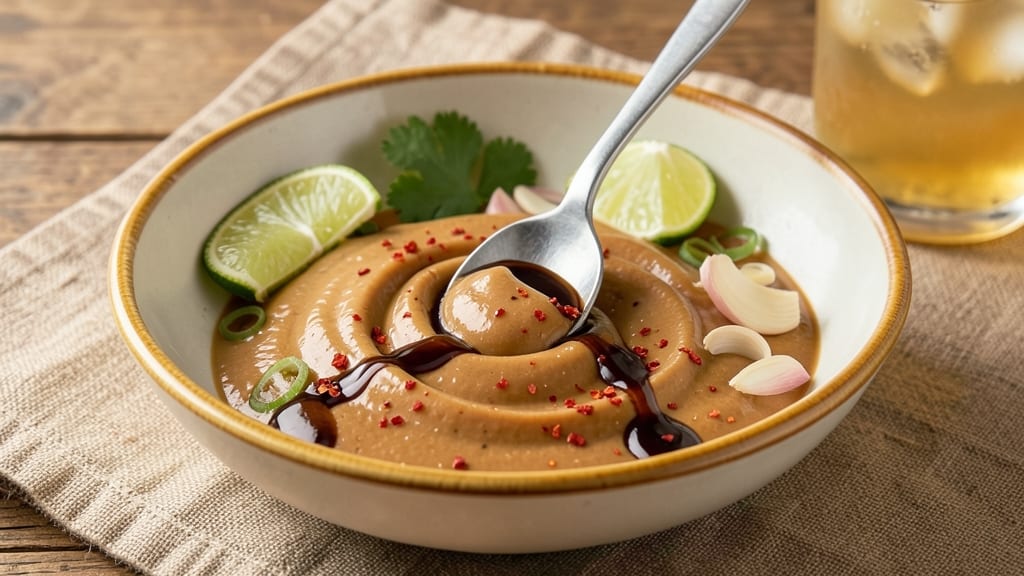
This almond butter satay sauce recipe transforms simple ingredients into a rich, nutty-sweet glaze that elevates grilled meats and veggies to restaurant-quality levels. The combination of creamy almond butter, tangy lime, and aromatic spices creates a sauce that's both bold and balanced—perfect for dipping, marinating, or drizzling.
I developed this recipe after craving the depth of traditional satay flavors without the dairy, and the result is a versatile, plant-based sauce that works equally well with tofu, chicken, or even crispy spring rolls.
The foundation of this sauce lies in its simplicity: just six core ingredients come together in a 15-minute process that requires no cooking skills beyond basic blending and simmering. Almond butter provides the signature nutty richness, while soy sauce and lime juice deliver the tangy, umami backbone.
Fresh ginger and garlic add warmth, and a touch of chili brings just the right amount of heat to balance the sweetness. The sauce thickens beautifully when simmered, creating that perfect glaze consistency without separating.
What makes this sauce truly special is its versatility—it doubles as a marinade for tender, flavorful meats or a dipping sauce for crispy appetizers. The nutty-sweet profile pairs beautifully with grilled tofu, chicken skewers, or even roasted vegetables, making it a go-to for both weeknight dinners and special occasions.
Unlike many store-bought satay sauces, this one stays fresh in the fridge for up to 10 days or can be frozen for 3 months without losing its vibrant flavor.
For an extra layer of richness, stir in a spoonful of coconut milk before serving, or add a pinch of smoked paprika for depth. The sauce also works wonders as a glaze for baked tofu or tempeh, giving it that irresistible caramelized finish.
Whether you're hosting a dinner party or simply craving a flavor-packed sauce, this recipe delivers professional-quality results with minimal effort.
Ingredients for almond butter satay sauce
Six essential ingredients create this restaurant-quality almond butter satay sauce perfect for grilling, dipping, or marinating.
| Ingredient | Amount | Notes |
|---|---|---|
| Creamy Almond Butter 🥜 | ½ cup | Natural, unsweetened preferred |
| Tamari or Soy Sauce 🥢 | ¼ cup | Gluten-free tamari for allergy-friendly |
| Fresh Lime Juice 🍋 | ¼ cup | Strained, freshly squeezed |
| Fresh Ginger 🌿 | 1 tbsp | Finely grated, aromatic |
| Garlic Cloves 🧄 | 3 cloves | Minced, aromatic intensity |
| Red Chili Flakes 🌶️ | 1 tsp | Adjust for heat preference |
| Maple Syrup 🍯 | 2 tbsp | Pure, grade B preferred |
| Water 💧 | ½ cup | Room temperature preferred |
| Smoked Paprika 🌶️ | ½ tsp | Optional for depth |
The almond butter forms the sauce's nutty-sweet foundation, so choose natural, unsweetened varieties—brands like Almond Breeze or 88 Acres work well. For extra depth, toast the almond butter gently in a dry pan for 2-3 minutes before blending. Fresh ginger and garlic are non-negotiable here; organic produce from the grocery store's fresh section delivers the most aromatic punch. The tamari or soy sauce should be reduced-sodium to balance the sauce's sweetness without overpowering it. Look for tamari in the Asian foods aisle at Whole Foods or Trader Joe's for a gluten-free option.
No tamari? Coconut aminos work as a 1:1 substitute, though the flavor profile shifts slightly. Fresh lime juice can be swapped for bottled lime juice in a pinch, but freshly squeezed delivers brighter acidity. If you're sensitive to heat, reduce the chili flakes to 0.5 teaspoon or omit entirely. For a smokier profile, increase the smoked paprika to 1 teaspoon. The maple syrup can be replaced with agave nectar for a neutral sweetener, though maple adds subtle caramel notes. Always strain the lime juice to avoid bitterness from seeds or pulp.
This sauce thickens beautifully when simmered, creating a glossy glaze ideal for drizzling. Store in an airtight container in the fridge for up to 10 days, or freeze for 3 months in ice cube trays for portion control. For extra richness, stir in 1 tablespoon coconut milk before serving. The sauce pairs exceptionally well with grilled tofu, chicken skewers, or crispy spring rolls, making it a versatile addition to any meal. If the sauce separates after refrigeration, whisk vigorously to re-emulsify before use.
Why You'll Love This Recipe
- No Blender Needed: I swear by this—just stir. That creamy almond butter and tamari blend into a silky sauce with a spoon, no pulsing or whisking required. Honestly, the only tools you’ll need are a bowl and a fork, and I’ve made this in my kitchen sink when I forgot the bowl.
- Umami Creamy Magic: Between us, the almond butter brings a rich, toasty depth while the tamari adds that salty punch. Fresh lime and ginger cut through the richness, so it’s never heavy—just addictively balanced, like a hug in sauce form.
- Weeknight to Party: This sauce is my secret weapon for grilled chicken, roasted veggies, or even drizzled over rice bowls. (Yes, even on a Tuesday night.) But it also elevates skewers for a dinner party—just double the batch and let guests dip away.
- Lasts All Week: A full jar of this keeps in the fridge for five days, and it only gets better with time. I’ll be real: I’ve made it once and had it three times the next week. Plus, almond butter is cheaper than peanut butter, so you’re saving cash while saving effort.
Step-by-step instructions for almond butter satay sauce
This rich, aromatic sauce balances nutty depth with bright acidity—perfect for grilled skewers.
Bloom the Aromatics in a Saucepan
Combine the 0.5 cup creamy almond butter, 0.25 cup tamari or soy sauce, 2 tbsp maple syrup, and 0.5 cup water in a medium saucepan over medium-low heat. Stir constantly for 3-4 minutes until the almond butter melts completely and the mixture begins to simmer gently. The sauce should thicken slightly and develop a glossy sheen.
Here's the thing—don't rush this step. The almond butter needs time to fully incorporate, or you'll end up with grainy texture. If it starts to stick, add 1-2 tablespoons of water to loosen it. The base should be smooth and uniform before moving forward.
Add Ginger, Garlic, and Chili for Depth
Reduce the heat to low and stir in the 1 tbsp finely grated fresh ginger, 3 minced garlic cloves, and 1 tsp red chili flakes. Cook for 2-3 minutes, stirring frequently, until the garlic becomes fragrant and the ginger softens slightly. You'll notice the aroma intensify—this is when the sauce starts building complexity.
I always taste at this stage. The sauce should be slightly sweet with a hint of heat and earthy ginger. If the chili flakes feel too mild, add an extra ¼ tsp—but be warned, the heat will develop further as it simmers. Keep the mixture moving to prevent burning, especially the garlic.
Brighten with Lime and Finish with Smoked Paprika
Remove the saucepan from heat and let it cool for 1 minute. Then stir in the 0.25 cup fresh lime juice and 0.5 tsp smoked paprika. The lime juice will immediately brighten the sauce, cutting through the richness while adding a citrusy tang. The smoked paprika adds a subtle, woodsy depth that complements the almond butter beautifully.
Give it a final taste. The balance should be perfect: nutty from the almond butter, umami from the tamari, sweet from the maple syrup, and a kick from the chili. If it needs adjustment, add more lime for acidity or a pinch of salt to enhance the flavors. The sauce should coat the back of a spoon with a velvety texture.
Strain and Rest for Maximum Flavor
Transfer the sauce to a fine-mesh strainer set over a bowl or clean jar. Press gently with a spoon to extract all the liquid while leaving behind any ginger fibers or garlic bits. This step ensures a silky-smooth finish. Let the strained sauce rest at room temperature for 10-15 minutes before using.
Resting allows the flavors to meld and the sauce to reach its ideal consistency. If the sauce thickens too much after resting, thin it with 1-2 teaspoons of warm water. The final product should be glossy, aromatic, and ready to drizzle over grilled meats, tofu skewers, or even roasted vegetables.
Pro Tips For Making Almond Butter Satay Sauce
- Warm the Almond Butter: DESCRIPTION: Don’t just dump cold almond butter straight into the sauce—it’ll clump like a stubborn glue. Heat it gently in a small saucepan with a splash of water (about 2 tablespoons) over low heat, stirring until it’s silky smooth. This also mellows out its bitterness, which is especially helpful if you’re using a strong, unsweetened brand.
- Grate Ginger Like a Pro: DESCRIPTION: Skip the pre-grated jar—it’s waterlogged and flavorless. Use a microplane or fine grater to zest about 1 teaspoon of fresh ginger (no need to peel), then let it sit for 5 minutes before adding it to the sauce. This releases more oils and aroma, and you’ll taste the difference immediately.
- Balance the Lime Gradually: DESCRIPTION: I learned this the hard way—dumping all the lime juice at once can turn your sauce sour before it even hits the table. Start with half the juice, taste, then add the rest one teaspoon at a time. You can always brighten it up later, but you can’t fix a sauce that’s already too sharp.
- Simmer, Don’t Boil: DESCRIPTION: Once you combine everything, keep the heat at a gentle simmer—not a rolling boil. Boiling burns the almond butter’s delicate flavor and can make the sauce taste bitter. A steady, barely-there bubble is all you need to blend the ingredients without wrecking the taste. (Yes, even if you’re impatient like me.)
Best sauces and condiments for these flavors
Peanut Butter Swap
If you prefer the classic satay flavor but want to keep it nutty, swap the almond butter for peanut butter in a 1:1 ratio. I recommend creamy natural peanut butter (like Smucker’s or 365 by Whole Foods) for a smoother texture.
The peanut butter adds a deeper, toastier richness that many find more familiar. Just be sure to use unsweetened varieties to avoid altering the sauce's balance. 🥜
Coconut Milk Boost
For a creamier, more tropical version, stir in 2 tablespoons of coconut milk (like Thai Kitchen or Goya) after removing the sauce from heat. This adds a velvety texture and pairs beautifully with grilled tropical fruits like pineapple or mango.
The coconut milk also helps balance the sauce's acidity, making it even more versatile for dipping or drizzling. 🥥
Spicy Variations
Want more heat? Add 1 teaspoon of gochujang (Korean chili paste) for a smoky, fermented kick, or swap the red chili flakes for 1 tablespoon of sambal oelek. For a sweeter heat combo, drizzle 1 teaspoon of honey or agave nectar into the finished sauce.
These tweaks work especially well with spicy dishes like satay skewers or crispy tofu bites. 🌶️
Sweet Glaze Adaptation
To turn this into a caramelized glaze, simmer the sauce uncovered over low heat for an extra 5-7 minutes until it thickens to a syrupy consistency. Brush it over grilled chicken, pork, or tofu in the last 3-5 minutes of cooking for a sticky, glossy finish.
This technique works wonders for kebabs or roasted vegetables, adding a sweet-savory crust. 🔥
Storage and Shelf Life
Store the sauce in an airtight container in the fridge for up to 10 days—the flavors actually deepen over time. For longer storage, freeze in ice cube trays or small jars for 3 months.
Thaw overnight in the fridge and whisk to restore smoothness. If the sauce separates, simply reheat gently and whisk vigorously to re-emulsify. 🧊
Best Pairings
This sauce shines with grilled meats like chicken or shrimp, but it’s also amazing with vegan proteins such as tofu or tempeh. Serve it as a dipping sauce for spring rolls, dumplings, or veggie sticks.
For a complete meal, pair it with jasmine rice and a simple cucumber salad to balance the richness. The nutty-sweet profile makes it a crowd-pleaser for any occasion. 🍽️
Nutrition facts
Frequently asked questions
Can I make this sauce without almond butter?
Yes! While almond butter gives the sauce its signature nutty richness, you can substitute it with peanut butter (1:1 ratio) for a more traditional satay flavor or cashew butter for a lighter texture. Just use unsweetened varieties to maintain balance.
How do I adjust the heat level?
Start with 1 teaspoon of red chili flakes as written, but you can easily adjust. For milder heat, reduce to 0.5 teaspoon or swap for ½ teaspoon of cayenne pepper. For extra spice, add 1 teaspoon of gochujang or 1 tablespoon of sambal oelek after cooking. Always taste before serving!
Will this sauce work for non-vegan dishes?
This sauce pairs beautifully with grilled chicken, shrimp, or pork. The nutty-sweet profile complements proteins perfectly, and the tangy lime brightens rich meats. Just reduce the tamari to 0.2 cup if using with dairy-based dishes to prevent overpowering.
Why does my sauce separate after refrigeration?
This happens when the almond butter and water separate naturally. Simply whisk vigorously or gently reheat (don't boil) to restore smoothness. For prevention, stir in 1 tablespoon of coconut milk before storing, which helps stabilize the texture.
Can I use this sauce as a marinade?
Yes! This sauce makes an excellent marinade for 1-2 hours (tofu, chicken, or shrimp). For best results, reserve 2 tablespoons to use as a finishing glaze after cooking. The sauce's acidity helps tenderize proteins while infusing flavor.