
Sauces & Condiments
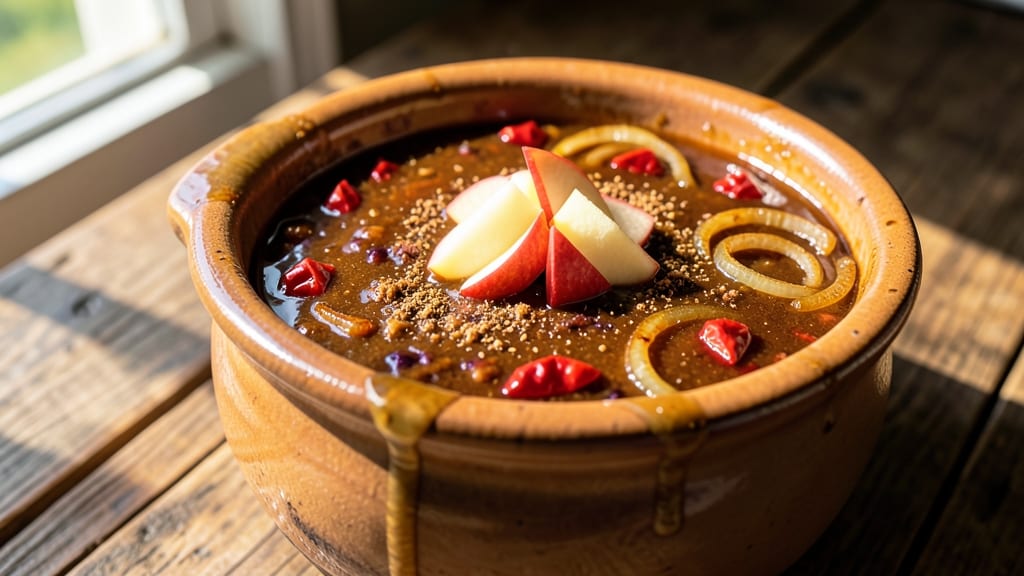
This apple habanero BBQ sauce recipe balances sweet apple cider with fiery habanero for a glaze that transforms grilled meats into showstoppers. 🔥 As a pitmaster who grew up on slow-smoked ribs, I developed this sauce to cut through rich meats while delivering a perfect heat-to-sweetness ratio.
The key? Simmering until thick and glossy, with just enough acidity to keep the heat from overwhelming.
The foundation starts with apple cider and vinegar for natural sweetness and tang, while habanero peppers deliver heat that lingers without burning. Brown sugar adds depth, and molasses ties everything together—no artificial ingredients, just bold flavors.
This sauce works as a glaze, marinade, or dipping sauce, and the recipe scales perfectly for batches or small batches.
What you’ll end up with is a glossy, sticky sauce that caramelizes beautifully on grills or in ovens, creating a crust on wings, ribs, or pork shoulders.
The apple sweetness mellows the habanero’s heat over time, making each bite complex and satisfying. It’s the kind of sauce that turns ordinary meals into memorable ones.
For extra depth, smoke the sauce lightly over wood chips or add a dash of liquid smoke. Store it in the fridge for up to 2 weeks or freeze for longer shelf life. Let’s make this sauce—your next cookout won’t be the same without it.
Ingredients for apple habanero bbq sauce
Sweet apple meets fiery habanero—just 10 ingredients transform grilled meats into showstopping dishes.
| Ingredient | Amount | Notes |
|---|---|---|
| Apple Cider 🍎 | 1 ½ cups | Unfiltered preferred for depth |
| Apple Cider Vinegar 🍏 | ½ cup | For tangy balance |
| Habanero Peppers 🌶️ | 2 whole | Seeds removed for moderate heat |
| Brown Sugar 🍚 | ½ cup | Dark brown preferred |
| Molasses 🍯 | ¼ cup | Unsulphured for authentic flavor |
| Yellow Onion 🧅 | 1 whole | Medium size, diced |
| Garlic Cloves 🧄 | 3 cloves | Freshly minced |
| Kosher Salt 🧂 | 1 ½ tsp | Diamond Crystal preferred |
| Black Peppercorns 🌶️ | ½ tsp | Freshly cracked |
| Liquid Smoke 🔥 | ½ tsp | Optional for smoky depth |
The habanero is the star here—pick fresh, vibrant ones from the produce section, not the jarred stuff. Trader Joe's usually has good options, or hit your local Latin market for extra heat. Apple cider matters too: unfiltered cider has more sediment and depth of flavor. For the vinegar, Bragg is my go-to—it's consistent and tangy without being harsh. The molasses should be unsulphured; sulphured versions add a bitter note that doesn't play well with the sweetness. If you can't find unsulphured, reduce the amount slightly to compensate.
No habanero? Serrano peppers at double the amount get you close, but expect more heat. The onion and garlic can be swapped for asafetida powder at 1/4 tsp if you're avoiding alliums, though it's a totally different flavor profile. Short on molasses? Maple syrup at half the amount works in a pinch, though it lacks the deep, almost caramel-like complexity. The liquid smoke is optional but worth it for that campfire vibe—just a half teaspoon makes all the difference. For a smoother sauce, blend the cooked mixture until silky, but I prefer the rustic texture from a quick pulse.
This sauce keeps beautifully—2 weeks in the fridge sealed in an airtight jar. For longer storage, freeze in ice cube trays and transfer to a bag; thaw as needed. The flavor actually improves over time as the sugars caramelize further. I always make a double batch: one for immediate use and one to stash in the freezer. When reheating, do it low and slow—high heat can turn the sauce bitter. A splash of apple cider or water keeps it from seizing up if it gets too thick.
Why You'll Love This Recipe
- Sweet Heat in Minutes: That habanero’s fire meets the apple’s tang in one quick simmer—no fancy techniques, just a pot and 20 minutes. Honestly, the vinegar cuts through the heat while the molasses rounds it out, so you’re not left with just spice overload.
- Crowd-Pleasing Balance: Between us, this sauce is the kind that makes people ask for seconds without even realizing they’re eating something "spicy." The brown sugar caramelizes just enough to mellow the habanero’s kick, leaving a sticky, smoky-sweet finish that sticks with you.
- Weeknight BBQ Hero: Slather it on grilled chicken for Taco Tuesday, toss it with baked beans for a potluck, or drizzle it over pulled pork sandwiches—it’s my go-to for anything that needs a punch. (Yes, even on a Tuesday night when you’re too tired to think.)
- Makes More Than You Need: The best part? It doubles easily, and the leftovers keep for weeks in the fridge. I’ll be real: I’ve brought jars to family gatherings, and no one leaves with an empty one. Budget-friendly? Absolutely. Versatile? Even more so.
Step-by-step instructions for apple habanero BBQ sauce
Transform simple ingredients into a bold, balanced sauce that delivers sweet heat and smoky depth.
🍳 Step 1: Sauté the Aromatics Until Fragrant
Heat a medium saucepan over medium heat and add the diced yellow onion and minced garlic cloves. Cook for 3-4 minutes until the onions become translucent and the garlic releases its aroma. You'll know it's ready when the mixture smells sweet and inviting—not browned, just softened.
Here's the thing—don't rush this step. Properly sautéed aromatics form the flavor foundation of your sauce. If you see the onions starting to brown too quickly, reduce the heat slightly. The goal is to build flavor, not color. Keep stirring occasionally to prevent sticking, especially since we're not adding any fat.
🔥 Step 2: Add Habaneros and Cook Until Soft
Carefully add the 2 whole habanero peppers (with seeds removed) to the pan. Stir to combine with the onions and garlic, then cook for another 2-3 minutes until the peppers begin to soften. You'll notice the sauce starting to take on a slightly deeper color and a subtle heat building in the air.
I press the peppers gently with a wooden spoon during this time—this helps release their oils and intensifies the flavor without burning them. The peppers shouldn't turn completely mushy, just tender enough to break down during the simmering process. If you're sensitive to heat, wear gloves during this step.
🍳 Step 3: Combine Wet Ingredients and Simmer
Pour in the 1.5 cups apple cider, 0.5 cup apple cider vinegar, 0.5 cup brown sugar, and 0.25 cup molasses. Stir well to combine all ingredients thoroughly. Bring the mixture to a gentle boil over medium-high heat, then immediately reduce to medium-low heat.
Let the sauce simmer uncovered for 15-20 minutes, stirring occasionally. You'll see the sauce reduce and thicken noticeably as the liquid evaporates. The color should deepen to a rich amber, and you'll smell that perfect balance of sweet apple, tangy vinegar, and subtle habanero heat. This is where the magic happens—patience pays off with a more concentrated flavor.
🥘 Step 4: Season and Finish with Liquid Smoke
Stir in the 1.5 teaspoons kosher salt and 0.5 teaspoon cracked black peppercorns. Taste the sauce and adjust the seasoning if needed—you might want to add a touch more salt or sugar to balance the heat. For that smoky depth, add the 0.5 teaspoon liquid smoke and stir well.
Simmer for another 5 minutes to let all the flavors meld together. The sauce should now coat the back of a spoon and have a glossy appearance. If it's too thick, add 1-2 tablespoons water to reach your desired consistency. For maximum flavor, let it cool slightly before tasting—it'll thicken further as it cools.
⏰ Step 5: Strain and Store for Maximum Flavor
Once the sauce has cooled for 10 minutes, strain it through a fine-mesh sieve to remove any habanero skins or onion bits. This gives you that silky-smooth texture perfect for glazing. Press on the solids with a spoon to extract every last bit of flavor—don't waste that precious liquid.
Transfer the sauce to a clean jar or airtight container. It'll keep in the refrigerator for up to 2 weeks, or you can freeze it for up to 3 months. The flavors actually improve as it sits, developing even more complexity. Use it to glaze ribs, chicken wings, or even as a marinade—just remember, the heat builds over time, so start with small amounts if you're sensitive to spice.
Pro Tips For Making Apple Habanero Bbq Sauce
- STRAIN THE PEPPERS WELL: Habanero seeds pack brutal heat, and this sauce isn’t about burning your mouth—it’s about balanced fruit-forward fire. After seeding, chop the peppers and press them through a fine-mesh strainer with a spoon. I used to just blend them, but that leaves behind bitter pulp that muddies the sauce.
- SIMMER LOW AND LONG: This isn’t a quick dump-and-go sauce. Reduce the apple cider and vinegar mixture over medium-low heat for at least 20 minutes—until it’s syrupy enough to coat the back of a spoon. Rushing this step leaves you with a thin, watery glaze that clings like regret.
- SWEETEN THE HABANERO GRADUALLY: Toss in the brown sugar and molasses in two batches—first half with the peppers, then the rest at the end. This prevents a sudden sugar crash that can turn your sauce cloying. I learned this after one batch tasted like a candy store exploded in my pot.
- USE AGED CIDER VINEGAR: Skip the cheap stuff. Aged apple cider vinegar (6+ months) adds depth that cuts through the habanero’s heat without overpowering the fruit. If you’re in a pinch, add a splash of real apple cider at the end—just don’t skimp on the vinegar itself.
Pro cooking tips for this dish
Heat Management
Habanero peppers pack serious heat, so control it with precision. Use 2 whole peppers with seeds removed for a balanced kick—this gives you enough heat to taste without overwhelming the sweet apple base.
If you're unsure about the heat level, mash one pepper and taste it first before adding both to the pan. Remember, the sauce will mellow slightly as it cools, but the habanero's heat builds over time. 🌶️
For extra control, roast the habaneros first. Wrap them in foil and char over an open flame or under a broiler for 3-4 minutes—this deepens their flavor while slightly muting the raw heat. The charred peppers will add a smoky dimension that pairs beautifully with the apple cider's sweetness.
Balancing Sweetness
The brown sugar and molasses are your sweetness anchors, but don't rush their integration. Simmer the sauce uncovered for 15-20 minutes to let the sugars caramelize naturally. This creates a deeper, more complex sweetness than just dissolving sugar.
If you taste the sauce and find it too sweet, add a splash of apple cider vinegar to cut through it—this also brightens the overall flavor.
For a more refined texture, blend the finished sauce until silky smooth. I prefer a slightly rustic texture with visible flecks of habanero and onion, but if you're making this for a crowd that prefers smooth sauces, pulse it in a blender for 10-15 seconds.
Just be sure to strain out any large pieces first to avoid clogging your blender.
Smoke Infusion
The 0.5 teaspoon liquid smoke adds that campfire essence without requiring a smoker.
If you want to go the extra mile, simmer the sauce over applewood or hickory chips for 5 minutes at the end—just place a metal colander over the saucepan and add the chips to a small foil packet underneath. The smoke will infuse gently without overpowering the sauce's natural flavors.
For a deeper smoky profile, try adding 1/4 teaspoon smoked paprika during the final simmer. This works especially well if you're using the sauce on pulled pork or brisket. The paprika's earthy notes complement the habanero's heat and the apple's sweetness, creating a more complex flavor profile.
Thickness Control
Sauce consistency is all about timing and technique. Simmer uncovered to let the liquid evaporate naturally—this prevents a skin from forming while concentrating the flavors. If the sauce thickens too much, add 1 tablespoon water or apple cider at a time until you reach a glossy, glaze-like consistency.
The sauce should coat the back of a spoon but still flow freely when drizzled.
For a thicker, spreadable sauce (ideal for ribs or sandwiches), simmer for an additional 5-10 minutes after the initial reduction. This extra time helps the sugars caramelize further, creating a deeper, more intense flavor.
Just keep an eye on it—over-simmering can turn the sauce bitter, especially if the liquid reduces too much.
Flavor Layering
Let the sauce rest for at least 1 hour before using it on meats. This allows the flavors to meld and the heat to mellow slightly. I often make the sauce the night before so it has time to develop fully.
The longer it sits, the more balanced and complex the flavors become—this is especially true for the habanero's heat, which becomes more integrated over time.
For an extra layer of depth, add a pinch of ground cinnamon or allspice during the final simmer. These warm spices complement the apple and habanero beautifully, adding a subtle complexity that elevates the sauce from good to extraordinary.
Just a 1/8 teaspoon is enough—too much can overpower the natural flavors.
Nutrition facts
Frequently asked questions about apple habanero BBQ sauce
Can I adjust the heat level in this sauce?
For milder heat, reduce the habaneros to 1 pepper or remove all seeds. For extra spice, add 1/2 teaspoon cayenne pepper or a pinch of red pepper flakes during the final simmer. Roasting the peppers first also mellows their raw heat while adding smoky depth.
What's the best way to use this sauce on different meats?
For chicken wings or fish, use it as a glaze by brushing on during the last 5-7 minutes of grilling. On ribs or pork shoulders, apply during the final 2 hours of smoking for deep penetration. For pulled pork, mix 1/4 cup sauce with the meat during the last 30 minutes of cooking.
How do I prevent the sauce from getting too thick?
Simmer uncovered and stir occasionally to prevent skin formation. If it thickens too much, add 1 tablespoon apple cider or water at a time. For a glossy finish, reduce the simmer time slightly—15 minutes instead of 20. The sauce will continue thickening as it cools, so err on the thinner side when hot.
Can I make this sauce without molasses?
Yes! Replace the 1/4 cup molasses with 2 tablespoons maple syrup or 1 tablespoon honey for a lighter sweetness. For deeper flavor, use 2 tablespoons balsamic vinegar instead—it adds complexity but reduces the sauce's richness. The molasses is key for that caramel-like depth, though!
Why does my sauce taste too sweet after cooking?
This happens when sugars caramelize too quickly. Balance it by adding 1 tablespoon apple cider vinegar or a pinch of smoked salt to cut through the sweetness. For future batches, simmer 5 minutes longer to let flavors meld—this often reduces perceived sweetness. Taste as you go!