
Sauces & Condiments
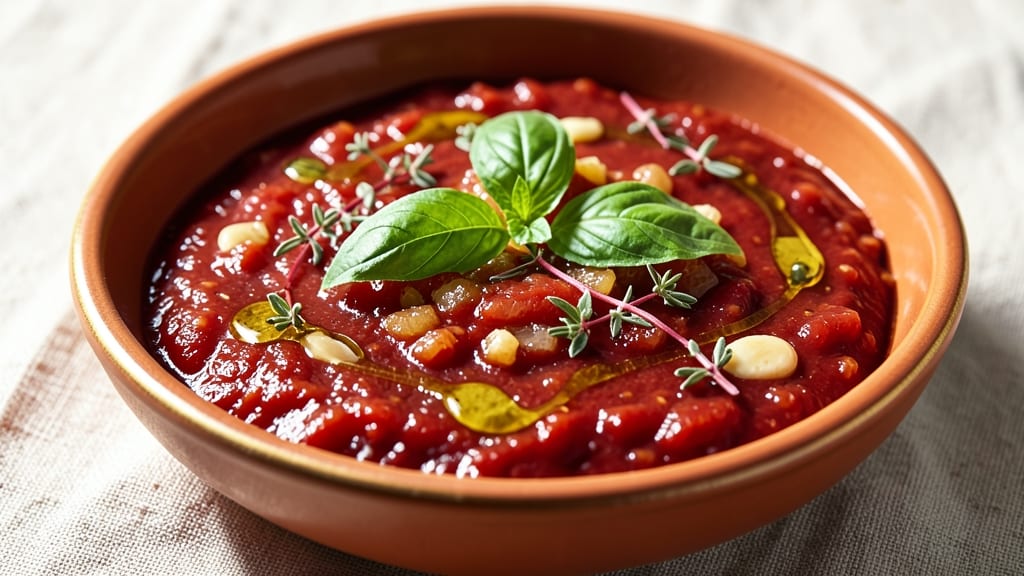
This all-day pasta sauce recipe transforms simple ingredients into a deeply flavorful, restaurant-quality sauce that only gets better with time. 💛 The secret lies in slow simmering, which allows the tomatoes to break down into a rich, velvety texture while developing layers of umami through caramelization and aromatics.
What sets this sauce apart is its ability to deliver consistent quality even after reheating—no one will guess it's been simmering all day. The combination of fresh herbs, garlic, and quality canned tomatoes creates a balanced flavor profile that works with any pasta shape, from spaghetti to penne.
By the time you're ready to serve, you'll have a sauce that's rich, aromatic, and perfectly balanced—with just the right amount of acidity from tomatoes and depth from herbs. Each spoonful delivers that satisfying, complex flavor that makes homemade pasta night feel like a special occasion.
This versatile sauce pairs beautifully with grilled meats, roasted vegetables, or even as a marinade. The recipe is designed to be made ahead, so you can focus on other dishes while the sauce simmers away, developing its incredible depth of flavor.
Ingredients for all day pasta sauce
Eight essential ingredients for a sauce that builds rich, umami depth over hours of simmering.
| Ingredient | Amount | Notes |
|---|---|---|
| San Marzano Crushed Tomatoes 🍅 | 2 cans | 28 oz each, no salt added |
| Extra-Virgin Olive Oil 🫒 | ½ cup | High quality, fruity variety |
| Yellow Onion 🧅 | 1 whole | Medium, finely chopped |
| Garlic Cloves 🧄 | 4 cloves | Peeled and minced |
| Fresh Basil Leaves 🌿 | ½ cup | Packed, stems removed |
| Fresh Oregano Leaves 🍃 | ¼ cup | Packed, chopped |
| Tomato Paste 🍅 | ¼ cup | Squeeze tube preferred |
| Red Wine 🍷 | ½ cup | Dry, bold variety |
| Vegetable Broth 💧 | 1 cup | Low-sodium preferred |
| Kosher Salt 🧂 | 1 ½ tsp | Diamond Crystal preferred |
| Ground Black Pepper 🌶️ | ½ tsp | Freshly ground |
The tomatoes are non-negotiable—San Marzano delivers that perfect balance of sweetness and acidity. Grab the 28 oz cans for the best yield, and skip anything with added salt. Fresh herbs? Farmers markets have the most vibrant basil and oregano, but grocery store bunches work too if you use them within 2-3 days. The tomato paste can be the squeeze-tube kind from Trader Joe's—no waste, and it keeps for months. For the red wine, any bold, dry variety works—Cabernet Sauvignon, Merlot, whatever's open. The olive oil should be fruity and peppery, not mild. California Olive Ranch or Colavita are reliable choices.
No red wine? Vegetable broth with a splash of balsamic vinegar gets you close. Fresh herbs wilting? Dried basil and oregano at half the amount will work in a pinch. The tomato paste can be swapped for extra crushed tomatoes, but you'll lose that concentrated depth. For a meatier flavor, add 1 tbsp soy sauce or 1 tsp fish sauce—though the latter isn't vegetarian. The onion and garlic can be roasted first for extra sweetness, but raw works fine too. If you're short on time, jarred marinara can be the base, but it won't develop the same complexity.
This sauce only gets better with time—4-6 hours of simmering is ideal, but it's safe to leave it overnight. Store in an airtight container in the fridge for up to 5 days, or freeze for 3 months. For reheating, add a splash of water or broth to loosen it up. The sauce thickens as it cools, so don't worry if it seems too thick when first refrigerated. Portion into containers for easy leftovers—it reheats beautifully and tastes just as vibrant as day one.
Why You'll Love This Recipe
- Garlic-Basil Magic: That first whiff of fresh basil swirling into warm olive oil and caramelized garlic? Honestly, it’s the kind of aroma that makes you pause mid-conversation. The San Marzanos deepen over hours, but the basil keeps it bright and alive—no bitterness, just pure, unfiltered flavor.
- Weeknight to Potluck: I’ve used this sauce for Tuesday dinners, Sunday family gatherings, and even as a last-minute potluck contribution. It’s the same base every time, but the toppings change—crusty bread for dipping, grilled chicken for protein, or just tossed with fresh pasta. Always a win.
- Budget-Friendly Goldmine: A single can of San Marzanos and a handful of fresh basil stretch across multiple meals. The olive oil and onion are pantry staples, and the garlic? Well, you’ll need it for everything anyway. Make a big batch, freeze half, and thank me later when you’re eating well without breaking the bank.
Step-by-step instructions for simmered umami pasta sauce
This method builds deep, balanced flavor through slow cooking—key for sauces that taste fresh even after days.
🍳 Step 1: Sauté Aromatics Until Deeply Fragrant
Heat the 0.5 cup Extra-Virgin Olive Oil in a heavy-bottomed pot over medium heat. Add the 1 whole Yellow Onion (finely chopped) and cook for 5-6 minutes until translucent and slightly caramelized at the edges. This step develops sweetness that forms the sauce's foundation.
Add the 4 cloves Garlic Cloves (minced) and cook for another 30 seconds until fragrant but not browned. Garlic burns quickly—watch it closely. The goal is to infuse the oil with flavor without bitterness. If you smell burning, immediately reduce heat or remove the pan from the stove.
🍳 Step 2: Build the Base with Wine and Tomatoes
Pour in the 0.5 cup Red Wine and scrape up any browned bits from the bottom of the pot with a wooden spoon. This deglazing captures all the flavor you've built so far. Let it simmer for 2-3 minutes until reduced by half, allowing the alcohol to cook off and intensify the flavor.
Add the 2 cans San Marzano Crushed Tomatoes (with juices), 0.25 cup Tomato Paste, 1.5 tsp Kosher Salt, and 0.5 tsp Ground Black Pepper. Stir well to combine. The paste will thicken the sauce and deepen its umami character. Bring to a gentle simmer and let cook uncovered for 15 minutes to develop initial flavor.
🥘 Step 3: Simmer Low and Slow for Maximum Flavor
Reduce heat to low and add the 1 cup Vegetable Broth. This creates the perfect balance of acidity and body. Partially cover the pot and let the sauce simmer gently for 1.5-2 hours. Stir occasionally to prevent sticking, but avoid over-mixing which can break down the tomatoes.
Here's the thing—patience pays off. The longer it simmers, the more the flavors meld and the sauce develops that restaurant-quality depth. You'll know it's ready when the sauce has thickened noticeably and the aroma is rich and complex. The sauce should coat the back of a spoon but still be pourable.
👨🍳 Step 4: Finish with Fresh Herbs
Remove the pot from heat and stir in the 0.5 cup Fresh Basil Leaves (packed, stems removed) and 0.25 cup Fresh Oregano Leaves (chopped). Let the herbs steep for 5 minutes before serving. This final step adds bright, fresh notes that cut through the richness of the simmered tomatoes.
Taste and adjust seasoning if needed. The sauce should be well-balanced with bright acidity, rich umami, and fresh herbal notes. If it's too thick, whisk in a splash of water or broth. If too thin, simmer uncovered for another 10 minutes to reduce. The sauce will continue to thicken as it cools, so aim for a slightly looser consistency when hot.
Pro Tips For Making All Day Pasta Sauce
- SWEEAT THE ONIONS LOW: I learned this the hard way—don’t rush the onions. Cook them on medium-low heat for 10-12 minutes until they’re deep golden and almost caramelized, not just translucent. That’s when they’ll actually sweetness the sauce instead of tasting raw or bitter.
- CRUSH GARLIC LIKE IT’S 1950: Skip the mincer—smash those garlic cloves with the flat side of your knife first, then finely chop. This releases more flavor without burning, and you won’t end up with bitter, blackened bits in your sauce. (Yes, even if you’re impatient like me.)
- SALT THE TOMATOES FIRST: Before adding the San Marzano tomatoes, sprinkle them with 1 teaspoon of salt and let sit for 10 minutes. This breaks down their texture, making the sauce silky instead of chunky, and balances acidity from the can. —I know, I know, but trust the process.
- STIR IN BASIL AT THE END: Tossing in fresh basil too early turns it to mush and makes the sauce taste like a sad pesto. Add it in the last 5 minutes of simmering, then stir just enough to distribute. The leaves should stay vibrant—your future self will thank you.
Flavor customization for this dish
Sweet & Tangy Twist
Add 2 tbsp balsamic glaze and 1 tbsp honey during the final 10 minutes of simmering to create a sweet-tangy balance. I love this variation with cherry tomatoes and fresh mozzarella on top.
For extra depth, stir in ½ tsp cinnamon—it sounds unusual, but it pairs beautifully with tomatoes. 💛
Spicy Heat Boost
For a kick, add 1-2 dried chili peppers (like arbol or cayenne) with the tomatoes. Or, stir in 1 tbsp hot sauce (like Tabasco) at the end.
If you love heat, try ½ tsp red pepper flakes and 1 tsp smoked paprika for a smoky, spicy depth. Adjust to taste—this sauce is forgiving!
Creamy Garlic Variation
Swap ½ cup vegetable broth for ½ cup heavy cream or cashew cream (blend ½ cup soaked cashews with ½ cup water) for a velvety texture. Finish with 1 tbsp grated Parmesan and 1 tsp lemon zest for brightness. This works beautifully with fettuccine or pappardelle. 🌶️
Meaty Umami Depth
For a heartier sauce, add ½ lb ground pork or Italian sausage (like Calabrese) when sautéing the onions. Brown the meat first, then proceed with the recipe.
Alternatively, stir in 1 tbsp soy sauce or 1 tsp fish sauce (for vegetarian versions) to boost umami without meat. The sauce will be richer and more complex.
Herb-Forward Brightness
Double the fresh herbs to 1 cup basil and ½ cup oregano for an herb-forward sauce. Add 1 tbsp fresh thyme or rosemary for an earthy note.
For a Mediterranean twist, stir in 1 tbsp capers and 2 anchovy fillets (finely chopped) during the simmer. This variation shines with orzo or penne.
Smoky Charred Tomato
Char 2-3 Roma tomatoes under a broiler or over an open flame until blackened in spots. Peel, seed, and chop them before adding to the sauce. This adds a smoky depth that’s hard to replicate.
Pair with grilled chicken or shrimp for a restaurant-worthy meal. The charred flavor elevates the sauce to new heights! ✨
Nutrition facts
Frequently asked questions
Can I make this sauce in a slow cooker?
Transfer all ingredients to a 6-quart slow cooker and cook on low for 6-8 hours or high for 3-4 hours. The slow cooker's gentle heat enhances the sauce's depth without risk of burning. Just stir in fresh herbs at the end—slow cooking wilts them prematurely.
Why does my sauce get watery after refrigerating?
This is completely normal! The sauce thickens as it cools, then releases moisture when chilled. To fix it, simply reheat the sauce over medium-low heat for 5-10 minutes while stirring occasionally. If it's still too thin, simmer uncovered for another 5 minutes to reduce. The texture will adjust beautifully when reheated.
What's the best pasta shape for this sauce?
This versatile sauce works with almost any pasta, but penne, rigatoni, or fettuccine are ideal. The ridges on penne and rigatoni hold the sauce perfectly, while fettuccine's flat surface creates a silky texture. For extra fun, try farfalle or gemelli—the unique shapes make every bite exciting.
Can I make this sauce without wine?
Yes! Replace the 0.5 cup red wine with 0.5 cup vegetable broth plus 1 tbsp balsamic vinegar for similar acidity. Or use 0.5 cup apple juice for a sweeter profile. The sauce will still develop depth—just expect slightly less complexity. The key is maintaining the same 0.5 cup total liquid measurement.
How do I prevent the sauce from sticking to the pot?
Use a heavy-bottomed pot (like Dutch oven) and keep heat at medium-low once simmering. Stir gently every 15-20 minutes to prevent sticking. If you notice browning, add a splash of water or broth to deglaze. Never let the sauce boil vigorously—this breaks down the tomatoes and creates a thinner texture.