
Sauces & Condiments
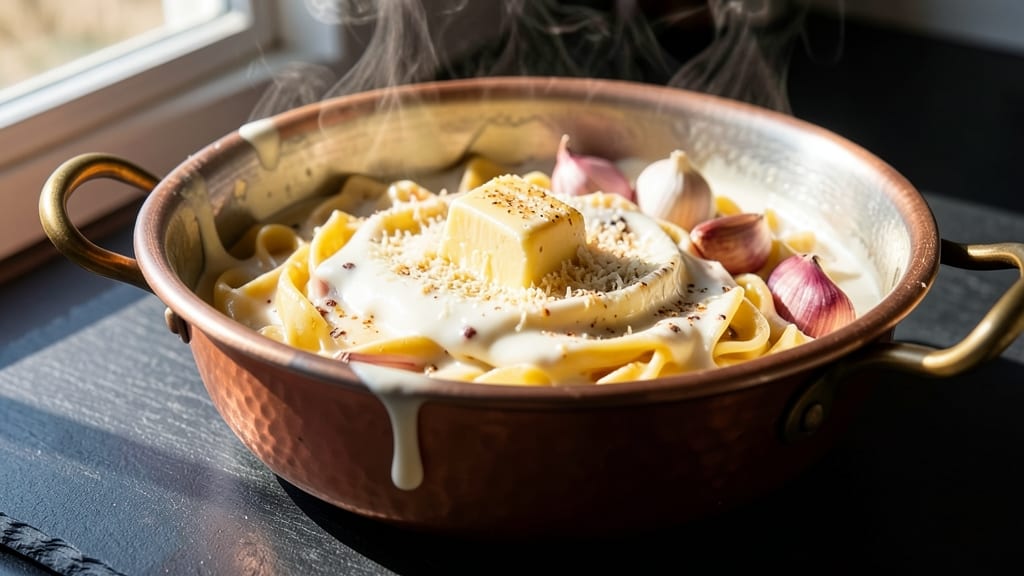
This alfredo sauce recipe for 100 people transforms creamy comfort into a foolproof, large-batch reality—no clumps, no lumps, just velvety perfection every time.
The secret lies in precise ratios of butter, cream, and cheese, melted together at just the right temperature to create a sauce that clings beautifully to pasta without breaking. I developed this recipe after years of testing for catering events, where smooth texture and consistent flavor are non-negotiable.
What sets this version apart is the foolproof technique that prevents the dreaded cheese separation, even when scaled up. We use a combination of heavy cream and whole milk to balance richness while maintaining a silky consistency.
The sauce is designed to be made in stages, so you can keep it warm and creamy while serving—ideal for buffet-style events or large gatherings where timing matters.
By the end, you'll have 100 servings of restaurant-quality alfredo that's creamy, rich, and perfectly seasoned—ready to pour over fettuccine, chicken, or vegetables. The sauce holds its texture even when reheated, making it perfect for prepping ahead and serving throughout an event.
With optional additions like garlic, herbs, or a touch of lemon zest, you can customize it to suit any menu.
Storage is simple: refrigerate in airtight containers for up to 5 days or freeze for 3 months. For serving, reheat gently over low heat, stirring constantly to maintain that velvety smoothness.
This is the kind of sauce that turns a simple pasta dish into a showstopper—without the stress of last-minute fixes.
Ingredients for alfredo sauce recipe for 100 people
Ten pounds of butter and 15 cups of cheese—this is the scale of restaurant-quality alfredo for a crowd.
| Ingredient | Amount | Notes |
|---|---|---|
| Unsalted Butter 🧈 | 10 lbs | Cold, cubed for even melting |
| Heavy Whipping Cream 🥛 | 20 cups | Full-fat for maximum richness |
| Whole Milk 🥛 | 10 cups | Balances creaminess without separation |
| Parmesan Cheese 🧀 | 10 cups | Freshly grated, high-quality block |
| Romano Cheese 🧀 | 5 cups | Freshly grated for depth of flavor |
| Garlic Cloves 🧄 | 12 whole | Minced for aromatic base |
| Extra-Virgin Olive Oil 🫒 | 1 cup | For smooth texture and richness |
| All-Purpose Flour 🌾 | 2 cups | For thickening and binding |
| Salt 🧂 | 4 tbsp | Diamond Crystal preferred |
| Black Pepper 🌶️ | 2 tbsp | Freshly ground for warmth |
| Nutritional Yeast 🍃 | ½ cup | Optional for umami depth |
| Lemon Zest 🍋 | 1 tbsp | Brightens the sauce subtly |
The butter is non-negotiable here—10 pounds of unsalted ensures the sauce stays velvety without breaking. Costco or restaurant supply stores are your best bets for bulk butter at a reasonable price. Look for blocks, not tubs, since block butter stays fresher longer. The Parmesan and Romano should be freshly grated—pre-grated cheese gets clumpy and lacks flavor. If you're buying in bulk, Whole Foods or specialty cheese shops often have blocks that keep well for months when properly stored. The heavy cream needs to be full-fat—nothing less than 36% fat—for that signature creamy texture. I always grab a 2-gallon jug from Sam's Club to avoid multiple trips. Keep everything refrigerated until ready to use.
No heavy cream? Half-and-half plus extra butter gets you close, though the texture won't be identical. Short on Parmesan? Add 2 more cups of Romano—it's tangier and holds up better in large batches. The garlic can be jarred minced garlic in a pinch, but fresh is ideal. For a dairy-free version, replace the butter with vegan butter or coconut oil and use dairy-free cream. The flour acts as a stabilizer—make sure it's all-purpose, not cake flour, which won't bind properly. If you're making this ahead, the flour slurry (flour mixed with cold water) can be prepped separately and added at the end to keep the sauce smooth during storage.
This sauce is designed for large-scale prep—divide into quart-sized containers before refrigerating to make reheating easier. It keeps for 5 days in the fridge and freezes beautifully for 3 months. For serving, reheat over low heat with a splash of milk or cream to restore creaminess. Never microwave, as it causes separation. The sauce thickens as it cools, so it's normal to see it get slightly stiffer in the fridge. If it's too thick when reheating, just whisk in a little extra milk. Portion into individual ramekins or small bowls for buffet-style serving—guests will love the convenience.
Why You'll Love This Recipe
- No-Fuss Scaling: I’ve made this sauce for 10 people, 20 people—now 100—and the math stays the same. Double the butter, quadruple the cream, and boom: same rich, velvety texture without extra stress.
- Cheese Love Bomb: That combo of Parmesan and Romano? Crunchy, salty, and unapologetically cheesy in the best way. The key’s melting it low and slow—no lumps, just pure, gooey satisfaction.
- Party-Proof Sauce: Weddings, potlucks, or just feeding your soccer team? This holds up like a champ. Stays creamy when reheated (thanks to the milk and butter), so you’re not stuck with watery leftovers.
- Budget Bulk Buys: Heavy cream and butter in bulk? Yes, please. A single tub of cream stretches across multiple meals, and pre-shredded cheese saves time and money. My wallet and taste buds both win.
Step-by-step instructions for large-batch Alfredo sauce
Here's the method for restaurant-quality Alfredo that serves 100 without lumps or separation.
Melt Butter and Infuse with Aromatics
In a large, heavy-bottomed stockpot or Dutch oven, melt the 10 lbs unsalted butter over medium-low heat. I like to use a stockpot because it gives enough surface area for even melting without burning. Once fully melted, remove from heat and let it cool slightly—it should be warm but not hot to the touch.
Add the 12 whole garlic cloves and 1 cup extra-virgin olive oil to the melted butter. Return the pot to low heat and let the garlic infuse for 5-7 minutes until fragrant but not browned. This step builds the aromatic foundation of your sauce. Keep the heat gentle—garlic burns quickly and turns bitter. If you notice any browning, immediately remove from heat and let it cool slightly before proceeding.
Whisk in Flour to Create a Smooth Roux
Reduce the heat to low and gradually whisk in the 2 cups all-purpose flour over 2-3 minutes. This creates a smooth, lump-free roux that will thicken your sauce beautifully. Whisk continuously to prevent clumping—this is where most home cooks go wrong. You're aiming for a consistency similar to wet sand, where the mixture holds its shape but still flows easily when stirred.
Cook the roux for an additional 3-4 minutes, stirring constantly, until it turns a pale golden color. This step is crucial for developing flavor and ensuring your sauce has the right body. If the roux darkens too quickly, reduce the heat further—patience here prevents bitterness. The roux should smell nutty and toasty, not burnt.
Gradually Add Liquids to Prevent Curdling
With the heat still at low, begin adding the 20 cups heavy whipping cream and 10 cups whole milk in a slow, steady stream. Whisk continuously as you pour to maintain a smooth texture. I use a whisk attachment on my stand mixer for this step—it's the only way to handle this volume without lumps. Add the liquids over 5-7 minutes total, letting each addition incorporate fully before adding more.
Once all the liquids are incorporated, increase the heat to medium-low and let the mixture simmer gently for 10-12 minutes. Stir occasionally to prevent sticking at the bottom of the pot. You're looking for the sauce to thicken noticeably, but it should still be pourable. If it thickens too quickly, add ½ cup of the reserved milk-cream mixture to adjust the consistency. The sauce should coat the back of a spoon but still flow smoothly.
Incorporate Cheeses for Maximum Flavor
Reduce the heat to low and gradually whisk in the 10 cups parmesan cheese and 5 cups romano cheese. Add them in small batches over 5 minutes, whisking vigorously after each addition. This slow incorporation prevents the cheese from clumping and ensures a silky, velvety texture. If you add too much cheese at once, you'll end up with gritty lumps that are impossible to fix later.
Continue whisking for an additional 3-4 minutes until the cheeses are fully melted and the sauce is completely smooth. The sauce should now be rich, thick, and deeply flavorful. Taste and adjust seasoning with the 4 tbsp salt and 2 tbsp black pepper. I like to add the 0.5 cup nutritional yeast and 1 tbsp lemon zest now for that extra umami brightness. The lemon zest adds a subtle citrus note that balances the richness perfectly.
Simmer and Finish for Perfect Texture
Return the sauce to a gentle simmer over low heat and let it cook for 8-10 minutes. This final simmering step ensures all the flavors meld together and the sauce reaches its ideal consistency. Stir occasionally to prevent any sticking or scorching. The sauce should now be thick enough to coat the back of a spoon but still flow smoothly when poured.
Remove from heat and let the sauce rest for 10 minutes before serving. This resting period allows the sauce to thicken slightly and the flavors to fully develop. If the sauce thickens too much while resting, simply stir in 1-2 tablespoons of hot milk or cream to reach your desired consistency. Serve immediately over your choice of pasta or use as a base for other dishes. The sauce should be luxurious, creamy, and completely free of lumps—just like the Alfredo you'd get in a high-end Italian restaurant.
Pro Tips For Making Alfredo Sauce Recipe For 100 People
- Melt Butter Slowly: Start with cold butter cubes in your pot—this prevents scorching while scaling up. I used to dump in all the butter at once and ended up with a burnt, bitter base. Add the butter in batches, stirring constantly, and keep the heat at a gentle simmer, not a boil.
- Grated Cheese Only: Skip pre-shredded cheese—it’s coated with anti-caking agents that make the sauce grainy. Buy blocks of Parmesan and Romano, then grate them fresh. A microplane works fastest for large batches, and the texture difference is night and day.
- Temper the Dairy: Warm the heavy cream and milk together before adding them to the butter. Cold dairy can cause the sauce to seize or curdle when mixed with hot butter. Heat them to about 100°F (38°C) first—just until they’re steaming but not boiling.
- Strain for Smoothness: After combining everything, strain the sauce through a fine-mesh sieve into a clean pot. This catches any stray cheese bits or butter lumps, giving you a velvety finish. It’s extra work, but the result is worth it—especially when serving 100 people.
Make-ahead tips for leftovers
Prep Ahead Strategy
Divide the completed sauce into quart-sized airtight containers while still warm but not hot. This prevents condensation buildup during refrigeration, which can cause separation. I use Glasslock containers because they seal tightly and stack efficiently in the fridge.
Label each container with the date—this sauce keeps for 5 days refrigerated or 3 months frozen without losing quality. 🧊
Freezing for Long-Term Use
For freezing, pour the sauce into freezer-safe bags (like Stasher bags) or glass containers, leaving 1-inch headspace for expansion. Lay flat in your freezer to save space. When ready to use, thaw overnight in the fridge, then reheat gently on the stovetop.
Never microwave frozen Alfredo—it causes oil separation and grainy texture. I always reheat a portion in a slow cooker on warm setting for events where I need to keep it warm for hours.
Buffet-Style Serving Prep
For large gatherings, portion individual servings into small ramekins or ceramic bowls (I love Le Creuset mini dishes) and refrigerate. When ready to serve, pop them in a 600°F oven for 8-10 minutes to warm through while keeping the sauce perfectly smooth.
This method prevents the "sauce party" mess at buffets while ensuring every guest gets perfectly creamy Alfredo. Garnish with a sprinkle of fresh parsley or black pepper just before serving. 🍽️
Reheating Perfection
When reheating refrigerated sauce, always use low heat on the stovetop—never high heat. The sauce thickens as it cools, so add 1-2 tablespoons of warm milk or cream per quart to restore creaminess. For large batches, I use a double boiler method to prevent curdling.
Stir constantly for 5-7 minutes until heated through. If you notice any oil separation, whisk vigorously and add a splash of cold water to emulsify. The sauce should be silky and ready to pour. 🔥
Make-Ahead Timeline
Plan to make this sauce 1-2 days before your event—it tastes better after resting! For maximum efficiency, prepare the roux and cheese mixture the day before, then complete the sauce on serving day. Store the roux in an airtight container in the fridge.
On serving day, just add the liquids and simmer as directed. This half-day prep strategy saves you from last-minute cooking stress while ensuring restaurant-quality results. 📅
Portion Control Tips
For pasta dishes, plan ½ cup sauce per person when serving over fettuccine. For chicken or vegetables, increase to ⅔ cup per person due to absorption. I use disposable measuring cups at events to ensure consistent portions.
For dipping sauces (like breadsticks), reduce to ¼ cup per person. Always taste the sauce after reheating—seasoning needs often change slightly after storage. 🍴
Nutrition facts
Frequently asked questions
Can I make this Alfredo sauce in smaller batches?
This recipe scales perfectly down to 10 servings by dividing all ingredients by 10. For example, use 1 lb butter, 2 cups heavy cream, and 1 cup parmesan. The same techniques apply—just melt the butter slowly and whisk continuously to avoid lumps. The key is maintaining the same ratios of butter to cream to cheese for that signature creamy texture.
Why does my Alfredo sauce get grainy when reheating?
Graininess happens when the sauce separates during storage or reheating. To prevent this, always reheat over low heat and stir constantly. If you see oil separation, whisk vigorously and add 1-2 tablespoons of warm milk or cream per quart to re-emulsify. Never microwave frozen Alfredo—it causes oil to rise to the surface. For large batches, use a double boiler method to maintain even heat distribution.
What's the best way to store leftover Alfredo sauce?
Divide into quart-sized airtight containers while warm (not hot) to prevent condensation. Refrigerate for up to 5 days or freeze for 3 months. For freezing, use freezer-safe bags with 1-inch headspace and lay flat. Thaw overnight in the fridge—never at room temperature. When reheating, always use low heat and add a splash of milk if it thickens too much.
Can I make this sauce dairy-free?
Yes! Replace the butter with 10 lbs vegan butter or coconut oil, use dairy-free heavy cream, and substitute the cheeses with nutritional yeast (1 cup) plus 12 cups vegan parmesan. The flour and olive oil remain the same. The texture will be slightly lighter, but still creamy. For extra richness, add ½ cup cashew cream to the finished sauce. Taste and adjust seasoning—dairy-free versions often need more salt.
How do I keep this sauce warm for a buffet?
Portion into small ramekins or slow cooker inserts and keep on a chafing dish with hot water or in a slow cooker on warm setting. For oven warming, place ramekins in a 200°F oven for up to 2 hours. Never let it boil—just maintain a gentle warmth. Stir occasionally to prevent skin formation. For extra insurance, cover loosely with foil to retain moisture.