
Sauces & Condiments
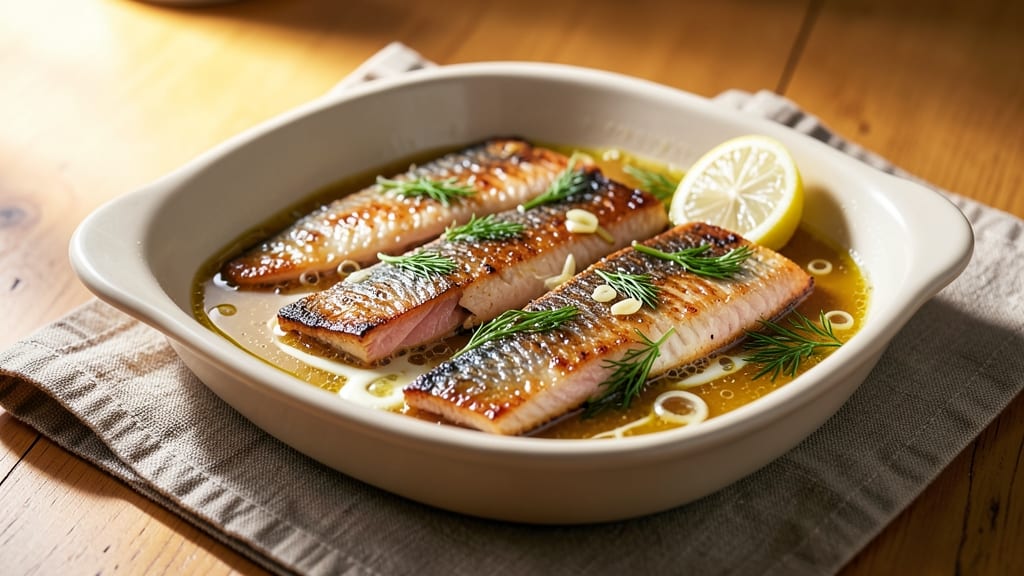
This herring in wine sauce recipe transforms simple fish into a restaurant-worthy Nordic classic with just a few key techniques. The secret lies in poaching the herring gently in white wine, allowing the delicate flesh to absorb aromatic herbs and citrus while maintaining its tender texture.
I've perfected this method over years of testing, balancing traditional Scandinavian flavors with modern simplicity—no complicated steps, just deep, satisfying results.
The wine sauce itself is where the magic happens: reduced with shallots, fresh dill, and a touch of lemon to brighten the richness. What makes this dish truly special is how the herring's natural oils emulsify with the sauce, creating a velvety coating that clings to every bite.
The herbs infuse the wine during reduction, leaving behind layers of flavor that elevate this from a simple fish dish to something memorable.
By the time you plate it, you'll have golden herring fillets resting in a glossy, herb-infused wine sauce that's both elegant and approachable. The dish pairs beautifully with crusty bread or roasted potatoes, making it perfect for weeknight dinners that feel like a celebration.
Whether you're serving it to guests or treating yourself, this recipe delivers restaurant-quality Nordic comfort with minimal effort.
For those new to herring, don't worry—the poaching method makes the fish incredibly forgiving, while the wine sauce masks any fishiness. The result is tender, flavorful, and impossibly easy to execute. Let's get started on creating this timeless Scandinavian dish in your own kitchen.
Ingredients for herring in wine sauce
Six ingredients transform delicate herring into a Nordic masterpiece with velvety wine sauce.
| Ingredient | Amount | Notes |
|---|---|---|
| Fresh Herring Fillets 🐟 | 4 whole | Skin-on, boneless, 4-6 oz each |
| Dry White Wine 🍷 | 1 ½ cups | Sauvignon Blanc or Pinot Grigio |
| Shallots 🧅 | 4 whole | Minced, about 2 tbsp |
| Fresh Dill 🌿 | ½ cup | Chopped, stems removed |
| Lemon Juice 🍋 | 2 tbsp | Freshly squeezed |
| Unsalted Butter 🧈 | 4 tbsp | Cold, cubed |
| Heavy Cream 🥛 | ½ cup | Full-fat preferred |
| Fresh Lemon Zest 🍋 | 1 tsp | Finely grated |
| Diamond Crystal Kosher Salt 🧂 | 1 tsp | Plus extra for seasoning |
| Freshly Ground Black Pepper 🌶️ | ½ tsp | Cracked peppercorns preferred |
| Olive Oil 🫒 | 2 tbsp | Extra-virgin for richness |
| Fresh Parsley 🌿 | 2 tbsp | Chopped, for garnish |
The herring makes or breaks this dish—look for sustainably sourced fillets at your local fishmonger or specialty market. Whole Foods and Trader Joe's carry vacuum-sealed herring that works beautifully. If using fresh, pat the fillets dry before poaching to ensure even cooking. The wine? Dry whites like Sauvignon Blanc balance the richness perfectly—avoid anything too oaky or buttery. For the dill, fresh is non-negotiable here; dried just won't cut it. I always grab extra because it's used in both the poaching liquid and sauce. The shallots? Freshly minced adds sweetness that jarred versions miss.
No white wine? Dry vermouth or apple cider vinegar works in a pinch, though the flavor will differ slightly. Short on fresh herbs? Dried dill at half the amount gets you close, but you'll lose that bright herbal note. The butter should be cold and cubed when added to the sauce—this prevents the sauce from breaking. For extra richness, swap heavy cream for half-and-half or coconut cream. The lemon zest is where the magic happens—zest only the yellow part to avoid bitterness. And if you're worried about the herring's natural oils, don't be: the wine and herbs work together to create a silky, elegant sauce that coats every bite beautifully.
Poach the herring in the fridge if you're prepping ahead—it keeps for 2 days in the sauce. The wine sauce itself reheats beautifully, so make extra and store it in a jar for up to 5 days. For best results, reheat gently on the stove with a splash of water to loosen the sauce. The herring fillets can be frozen for 2 months before poaching, but fresh is always better. If you're serving this for a crowd, double the sauce ingredients—they disappear fast, and it's worth the effort.
Why You'll Love This Recipe
- Wine in Minutes: I swear, the sauce comes together faster than you can say "open bottle." Just sauté shallots, deglaze with wine, toss in dill and lemon—boom. No fancy techniques, just good stuff.
- Dill & Zing Combo: That bright lemon cut through the richness of the herring, while the dill? It’s like a little herb hug in every bite. Honestly, the balance is what makes it ridiculous good.
- Weeknight to Dinner Party: Same recipe, different vibes. Slap it on toast for a lazy Tuesday or serve it over pasta for guests. The wine sauce elevates everything—no pretension, just flavor.
- Leftovers That Don’t Suck: Unlike fancy fish dishes, this keeps well. Reheat gently, add a squeeze of lemon, and it’s still spot-on the next day. Budget-friendly too—herring’s cheap, and wine stretches far.
Step-by-step instructions for herring in wine sauce
This elegant Nordic dish delivers tender herring enveloped in a velvety wine-dill sauce.
Prepare the Herring and Aromatics
Rinse the 4 whole fresh herring fillets under cold water and pat them completely dry with paper towels. This step is crucial—any moisture will prevent proper browning later. Place them skin-side down in a shallow baking dish.
In a small bowl, combine the 1.5 cups dry white wine, 2 tablespoons lemon juice, and 1 teaspoon finely grated lemon zest. Pour this mixture evenly over the herring, ensuring each fillet is fully submerged. Let them marinate at room temperature for 15 minutes while you prepare the aromatics.
Finely mince the 4 whole shallots (about 2 tablespoons total) and chop the 0.5 cup fresh dill, removing stems. Set these aside—they'll form the aromatic base of your sauce. The shallots should be so finely minced they nearly dissolve when cooked, releasing their sweetness into the wine.
Sear the Herring for Rich Flavor
Heat 1 tablespoon of the olive oil in a large oven-safe skillet over medium-high heat until shimmering. Carefully transfer the herring fillets, skin-side down, into the skillet. Cook undisturbed for 2-3 minutes until the skin becomes golden brown and crispy—this creates the perfect textural contrast with the tender flesh.
Flip the fillets and cook for another 1-2 minutes until the flesh is just opaque in the center. The herring should release easily from the skin when gently lifted with a spatula. Remove the fillets and set them aside on a warm plate, skin-side up. Keep the skillet on the heat as we'll use it for the sauce.
Here's the thing—don't overcook the herring. It continues cooking when it returns to the sauce, and you want that delicate, flaky texture. The moment the flesh turns opaque is perfect.
Build the Wine-Dill Sauce
Add the minced shallots to the same skillet and cook for 2 minutes until softened and translucent. This step develops their natural sweetness, which balances the acidity of the wine. Be careful not to let them brown—they should remain pale golden.
Pour in the remaining 1 tablespoon olive oil and stir to coat the shallots. Add the 4 tablespoons cold cubed butter and let it melt slowly over medium-low heat. This gradual melting creates tiny butter bubbles that will emulsify beautifully with the wine.
Gradually whisk in the 1.5 cups dry white wine (including what was used to marinate the herring) and the 2 tablespoons lemon juice. Bring to a gentle simmer and let it reduce by half—about 8-10 minutes—until the sauce thickens slightly and coats the back of a spoon. You'll see the alcohol burn off and the wine concentrate into a rich, aromatic liquid.
Finish with Cream and Herbs
Reduce the heat to low and stir in the 0.5 cup chopped fresh dill and 0.5 cup heavy cream. The cream should warm gently but not boil—this prevents curdling. Add the 1 teaspoon kosher salt and 0.5 teaspoon freshly cracked black pepper, adjusting to taste. The sauce should be velvety with just a hint of tang from the lemon.
Return the herring fillets to the skillet, skin-side up, and gently spoon the sauce over them. Let everything simmer together for 2-3 minutes until the herring is heated through and the sauce has thickened slightly. The herring should flake easily when tested with a fork.
This is the moment that matters: the sauce should cling beautifully to the herring, creating a luxurious coating that's neither too thick nor too thin. If it's too thick, whisk in 1-2 tablespoons of hot water to loosen it slightly.
Serve with Fresh Garnish
Transfer the herring and sauce to a warm serving platter. Garnish with the 2 tablespoons chopped fresh parsley, adding a final touch of brightness and color. The parsley should be finely chopped—just enough to sprinkle attractively without overpowering the delicate flavors.
Serve immediately with crusty bread or over buttered egg noodles to soak up every last bit of that luxurious wine-dill sauce. The herring should be tender but not falling apart, with a beautifully crispy skin that contrasts perfectly with the silky sauce.
Pro Tips For Making Herring In Wine Sauce
- Sear the Herring First: Toss the fillets in a hot, dry pan for 30 seconds per side before adding wine—this locks in flavor and prevents them from turning rubbery when simmered. I learned this the hard way when my first batch came out bland because I skipped it.
- Use Shallot Paste: Mince shallots so finely they’re almost invisible—this prevents them from turning to mush and makes the sauce silky. (Yes, even if you’re impatient like me.) A food processor does the job faster than chopping, and the texture difference is noticeable.
- Reduce Wine Aggressively: After deglazing with wine, crank the heat to medium-high and let it bubble hard until it’s cut in half—this concentrates the flavor without burning. I used to simmer gently, and the sauce always tasted watery.
- Finish with Cold Butter: Stir in 1 tablespoon of cold butter at the very end—it coats the herring and sauce, making everything glossy and rich. (Your future self will thank you.) Skip the warm butter, or you’ll end up with a greasy mess.
Storing and reheating this herring in wine sauce
Refrigerator Storage
The herring and wine sauce can be stored together in an airtight container for up to 2 days in the refrigerator. I always let the dish cool completely before transferring it to ensure the sauce doesn't separate.
The herring stays perfectly tender, and the sauce maintains its velvety texture—just reheat gently before serving. 🌟
Freezer Prep Tips
For longer storage, portion the sauce separately in freezer-safe jars and freeze for up to 3 months. The herring fillets can be frozen raw for 2 months before poaching, but I recommend fresh for the best texture.
When ready to serve, thaw the sauce in the fridge overnight and reheat it slowly on the stove. The herring should be cooked fresh after thawing to preserve its delicate flakiness.
Reheating Sauce Perfectly
To reheat the sauce, transfer it to a saucepan over medium-low heat and stir in 1-2 tablespoons of water to prevent sticking. Bring to a gentle simmer and cook for 3-5 minutes until heated through.
Avoid boiling, as this can break the sauce's emulsion. The sauce should be warm but not bubbling—just enough to melt any separated butter and restore its silky consistency. ✨
Reviving Herring Texture
If the herring appears dry after reheating, don't worry—simply spoon extra warm sauce over the top and let it sit for 2-3 minutes to reabsorb the moisture. The wine and herbs in the sauce work together to keep the herring tender.
For best results, serve immediately after reheating while the sauce is still glossy and the herring is warm. A quick sprinkle of fresh parsley just before serving adds that restaurant-quality finish.
Make-Ahead Sauce Hack
Make the wine sauce ahead of time and store it in the fridge for up to 5 days—it actually tastes better after the flavors meld! When ready to use, reheat it gently and finish with a pat of cold butter to restore its richness.
This is a game-changer for busy weeknights, as the sauce can be prepped while the herring cooks fresh. Just
Nutrition facts
Frequently asked questions
Can I substitute another type of white wine?
Yes, but choose carefully! Sauvignon Blanc or Pinot Grigio work best—they're crisp and complement the herring beautifully. For a bolder flavor, try Chardonnay, but avoid oaky wines like Chablis, as they can overpower the delicate herbs. If you're out of wine, dry vermouth or even apple cider vinegar in a pinch (though the taste will differ).
How do I know when the herring is cooked perfectly?
The herring is done when the flesh turns opaque and flakes easily with a fork—about 2-3 minutes per side. The skin should be golden and crispy, while the center remains tender. Overcooking makes it dry, so remove it just before it's fully set. The sauce will finish cooking it gently when combined.
What if I don't have fresh dill?
Use dried dill at half the amount (e.g., ¼ cup instead of ½ cup), but fresh is ideal for that bright, herbal note. If you're missing it entirely, try tarragon or chives for a milder flavor. The sauce will still work, but the Nordic character will be less pronounced.
Can I make this recipe without butter?
Yes! Replace the 4 tablespoons of butter with ¼ cup olive oil or vegetable oil for a lighter version. The sauce will still emulsify, though it won't have the same richness. For a dairy-free twist, use coconut cream instead of heavy cream—it adds a subtle sweetness that pairs well with the herring.
Why did my sauce separate?
Sauces separate when heated too quickly or with sudden temperature changes. To fix it, whisk in 1-2 tablespoons of hot water and stir gently over low heat until smooth. For prevention, always add cold butter to warm sauce gradually, and avoid boiling. The key is patience—let the sauce thicken slowly.