
Sauces & Condiments
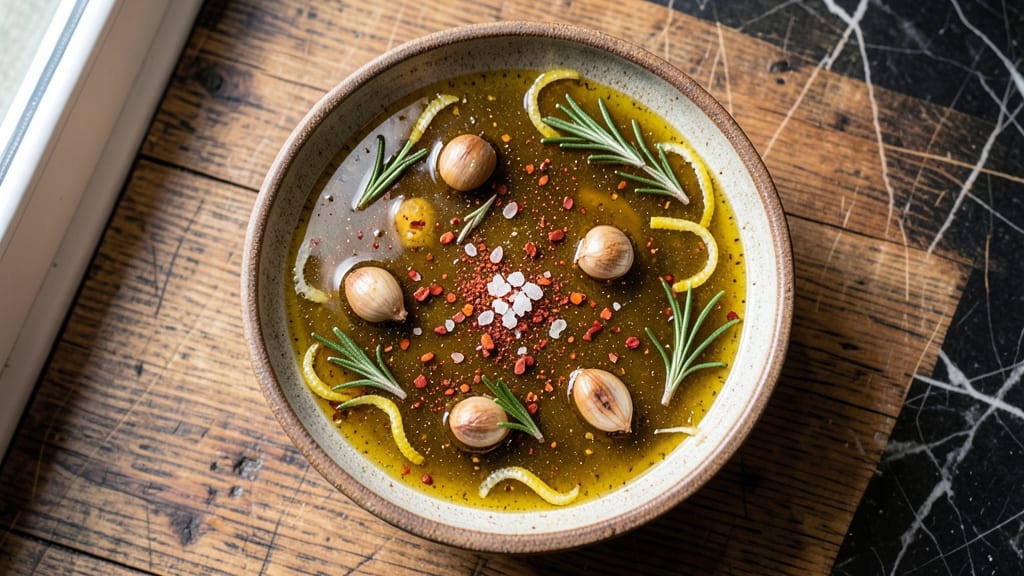
This focaccia sauce recipe transforms simple focaccia into a restaurant-worthy masterpiece with just five ingredients and 10 minutes of prep. The secret lies in slow-infused garlic and fresh herbs that elevate every bite—no cooking required.
I developed this sauce after realizing how much better focaccia tastes when drizzled with something beyond plain olive oil, and it’s become my go-to for bruschetta, salads, and even grilled vegetables.
The beauty of this focaccia sauce is its versatility and simplicity. High-quality extra virgin olive oil serves as the base, infused with fresh garlic and herbs like rosemary or thyme for depth. A touch of red pepper flakes adds subtle heat, while lemon zest brightens the flavors.
Unlike store-bought versions, this sauce keeps its freshness and vibrant taste for up to a week in the fridge, making it perfect for meal prep.
What sets this sauce apart is how it enhances other dishes without overpowering them. Drizzle it over warm focaccia for an instant upgrade, toss it with arugula and cherry tomatoes for a quick salad, or use it as a marinade for grilled chicken.
The balance of garlic, herbs, and acidity creates a harmonious flavor profile that works in both warm and cold applications.
For best results, store the sauce in an airtight container in the refrigerator and bring it to room temperature before using. If you prefer a thicker texture, strain out the herbs after infusing. This sauce is a game-changer for anyone who loves bold, aromatic flavors with minimal effort.
Ingredients for focaccia sauce
Five ingredients, ten minutes—this sauce turns focaccia from ordinary to extraordinary.
| Ingredient | Amount | Notes |
|---|---|---|
| Extra-Virgin Olive Oil 🫒 | 1 cup | High quality, fruity variety |
| Garlic Cloves 🧄 | 6 cloves | Fresh, peeled, lightly crushed |
| Fresh Rosemary 🌿 | ¼ cup | Chopped, stems removed |
| Red Pepper Flakes 🌶️ | 1 tsp | Adjust for heat preference |
| Lemon Zest 🍋 | 1 tbsp | Freshly grated, no pith |
| Flaky Sea Salt 🧂 | ½ tsp | Diamond Crystal preferred |
| Fresh Thyme 🌿 | ⅛ cup | Optional, chopped leaves |
The olive oil is everything here. Trader Joe's and Whole Foods carry excellent extra-virgin options, but any fruity, peppery oil works. Fresh garlic cloves should smell vibrant—no musty ones. I usually grab rosemary and thyme from the grocery store's fresh herb section, but if they're wilted, dried herbs at one-third the amount will do. For the red pepper flakes, Penzeys has the best quality, but the cheap stuff at the supermarket is fine for everyday use. The lemon zest needs to be fresh—no dried powder substitutes here.
No fresh rosemary? Fresh thyme or oregano works just as well. Short on garlic? Garlic powder at half the amount gets you close, but it won't have that same depth. The red pepper flakes can be swapped for crushed cayenne pepper if you prefer a different heat profile. If you're worried about the sauce being too thin, just strain it through a fine-mesh sieve after infusing—keeps all the flavor but removes the herbs. The lemon zest can be omitted if you're sensitive to citrus, but I promise it brightens everything up.
This sauce keeps beautifully for up to a week in the fridge, sealed in a clean jar. For longer storage, freeze it in ice cube trays—perfect for single-use portions. Bring it to room temperature before using, and give it a gentle stir. The flavors actually improve after a day or two as everything melds together. I always make a double batch so I've got some on hand for quick focaccia upgrades or salad dressings.
Why You'll Love This Recipe
- Five-Ingredient Magic: I swear, this sauce comes together with just a handful of things I already have in my pantry. No fancy prep—just heat the oil, toss in the garlic and rosemary, and let the red pepper flakes wake up your taste buds.
- Bright & Bold: That lemon zest cuts through the richness of the olive oil like a breath of fresh air. The rosemary adds a piney depth, while the garlic and chili flakes make it impossible to stop dipping.
- Weeknight Workhorse: I’ve used it to dress up grilled chicken, tossed it with roasted veggies, and even slathered it on toast for a lazy breakfast. It’s the kind of sauce that makes me feel like I’m feeding a crowd without the stress.
- Leftovers That Shine: This stuff actually tastes better the next day—honestly, I’ve made a double batch just to have it on hand. Store it in the fridge for up to a week, and it’s still the star of whatever I’m cooking.
Step-by-step instructions for garlicky olive oil drizzle
This sauce transforms simple focaccia into a flavor explosion with minimal effort.
Infuse the Olive Oil with Garlic
Place the 6 cloves garlic cloves in a small saucepan over low heat. Add the 1 cup extra-virgin olive oil and let it warm gently for 5-7 minutes. You'll know it's ready when the garlic turns golden and fragrant—don't let it brown or it'll turn bitter. I like to stir occasionally, but not too much, so the garlic infuses slowly and evenly.
Here's the thing—low heat is key. If the oil gets too hot, the garlic burns quickly, and you'll end up with a bitter, acrid flavor instead of that sweet, aromatic base you want. Keep the temperature steady and watch closely for that golden hue. Once it reaches that point, remove the pan from heat immediately.
Strain and Add Herbs
Strain the garlic-infused oil through a fine-mesh sieve into a clean bowl, pressing gently on the garlic with a spoon to extract every last bit of flavor. Discard the garlic cloves—they've done their job. Now, add the 0.25 cup chopped fresh rosemary and 0.125 cup chopped fresh thyme to the warm oil. Stir gently and let the mixture sit for 10 minutes at room temperature.
This resting time allows the herbs to release their oils and mingle with the garlic-infused base. Don't skip it—it makes all the difference in flavor depth. While it steeps, I usually grab a glass of water and take a quick break. The aroma alone is worth the wait.
Finish with Zest, Salt, and Pepper Flakes
After the herbs have infused, stir in the 1 tablespoon lemon zest, 0.5 teaspoon flaky sea salt, and 1 teaspoon red pepper flakes. The lemon zest brightens the whole sauce, cutting through the richness of the oil. Taste it now—you might want to adjust the salt or pepper flakes to your preference. I usually add a pinch more salt, since the lemon zest can be subtle.
Real talk: if you're making this ahead of time, now's the perfect moment to store it. Transfer the sauce to a clean, airtight jar and refrigerate for up to 1 week. The flavors actually improve with time, as everything melds together beautifully. When ready to use, just give it a good stir to redistribute the herbs.
Heat and Drizzle to Perfection
When you're ready to use the sauce, gently reheat it in a small saucepan over low heat for 2-3 minutes—just enough to warm it through. You don't want to cook the herbs, just wake up their flavors. Pour the warm sauce over your focaccia, crusty bread, or fresh vegetables. The perfect drizzle creates a golden, glistening finish that makes everything taste like it came from a high-end Italian trattoria.
Pro tip: for extra drama, drizzle the sauce in a zigzag pattern right before serving. The warmth of the focaccia will make the oil pool beautifully, creating those gorgeous, glossy rivulets that everyone will notice. Trust me, it's worth the effort—this sauce turns ordinary meals into something special with almost no work at all.
Pro Tips For Making Focaccia Sauce
- Bloom the Rosemary: Tear the rosemary sprigs with your hands—don’t chop them—so the oils release properly. If you’re using dried, toast it in the oil for 30 seconds first; otherwise, it’ll taste like you forgot it entirely.
- Low and Slow Garlic: Sauté the garlic cloves on the lowest heat possible, stirring constantly, until they’re golden but not browned. Burnt garlic turns bitter fast—trust me, I’ve ruined a batch by walking away for "just a minute."
- Toast the Red Pepper: Heat the red pepper flakes in the oil for 10 seconds before adding anything else. This wakes up their flavor and prevents them from just floating like decorative flakes. (Yes, it’s a small step, but it makes a real difference.)
- Zest First, Oil Last: Add the lemon zest after the garlic and rosemary, right before turning off the heat. If you mix it in too early, the acid will mute the other flavors—like throwing a party and showing up late to the fun.
Serving suggestions for leftovers
Focaccia Pairings
This garlic-herb olive oil sauce is a game-changer for focaccia—drizzle it warm over fresh-baked focaccia right from the oven for a restaurant-quality finish. The sauce's richness complements the focaccia's airy texture perfectly, creating a balance of crispy crust and soft interior.
I always serve it with a side of roasted cherry tomatoes and burrata cheese for an Italian-inspired bruschetta platter. 🍅
Salad Upgrades
Toss this sauce lightly with arugula salads or mixed greens for instant elevation. The garlic and herbs add depth while the lemon zest brightens the dish. I love pairing it with shaved fennel, pear slices, and crumbled goat cheese.
For extra crunch, add toasted pine nuts or walnuts right before serving.
Protein Pairings
Use this sauce as a marinade for grilled chicken or shrimp skewers—the garlic and herbs infuse beautifully into the protein. I also love drizzling it over seared scallops or grilled salmon for a Mediterranean-inspired finish. The acidity from the lemon zest cuts through rich proteins beautifully.
Vegetable Dishes
This sauce transforms simple roasted vegetables into a gourmet side. Drizzle it over roasted zucchini, asparagus, or eggplant after roasting for a flavorful finish.
I also use it as a dip for crudités like carrot sticks or celery—it’s like a fancier version of hummus but with way more depth.
Breakfast Boost
Don’t limit this sauce to dinner—it’s perfect for breakfast too! Drizzle it over toasted sourdough with poached eggs or avocado slices. The garlic and herbs add a savory kick that pairs perfectly with the richness of eggs.
I also love using it as a finishing touch for shakshuka or frittatas.
Storage & Serving Tips
Store leftover sauce in an airtight container in the fridge for up to 1 week. Before serving, let it sit at room temperature for 10-15 minutes and give it a good stir to redistribute the herbs.
For a thicker texture, strain out the herbs before storing. If you prefer a thinner sauce, skip the straining—just stir well before using. 💛
Nutrition facts
Frequently asked questions
Can I make this focaccia sauce without fresh garlic?
Yes, but the flavor will be less vibrant. Use 1 teaspoon garlic powder or 1/2 teaspoon granulated garlic instead of fresh cloves. For best results, toast the garlic powder in the oil for 1 minute on low heat to deepen its flavor. Fresh garlic gives that sweet, aromatic punch you can't replicate with powder, but it's a decent substitute in a pinch.
How can I adjust the heat level in this sauce?
The red pepper flakes control the heat—start with 1/2 teaspoon for mild, 1 teaspoon for medium, or 1 1/2 teaspoons for spicy. For a different heat profile, swap them for crushed cayenne (use half the amount) or a pinch of chili powder. Always taste before drizzling—you can reduce heat by adding more lemon zest, which balances the spice.
What if I don't have rosemary or thyme?
No problem! Use any combination of fresh herbs like oregano, basil, or parsley—they'll still add great flavor. For a Mediterranean twist, try dried oregano (use 1/4 teaspoon) or fresh basil leaves (chopped). If you're out of herbs entirely, skip them—the garlic, lemon, and olive oil still make a delicious base. The key is balancing the flavors, so adjust salt or lemon zest as needed.
Can I freeze this focaccia sauce?
Yes, but it's best for short-term storage. Freeze the sauce in ice cube trays for single-use portions, then transfer to a freezer bag. Thaw overnight in the fridge and stir well before using. The texture may separate slightly after freezing, but reheating gently will restore it. For longer storage, refrigerate instead—this sauce keeps its quality for up to 1 week without freezing.
Why does my focaccia sauce taste bitter?
Bitter flavor usually means the garlic burned during infusion. Keep the heat low and steady—never let the oil smoke or the garlic brown. If it happens, strain out the garlic immediately and start fresh with a new batch. Another cause could be using low-quality olive oil—always choose extra-virgin with a fruity, peppery taste. Fresh herbs can also become bitter if overcooked, so add them after straining the garlic oil.