
Sauces & Condiments
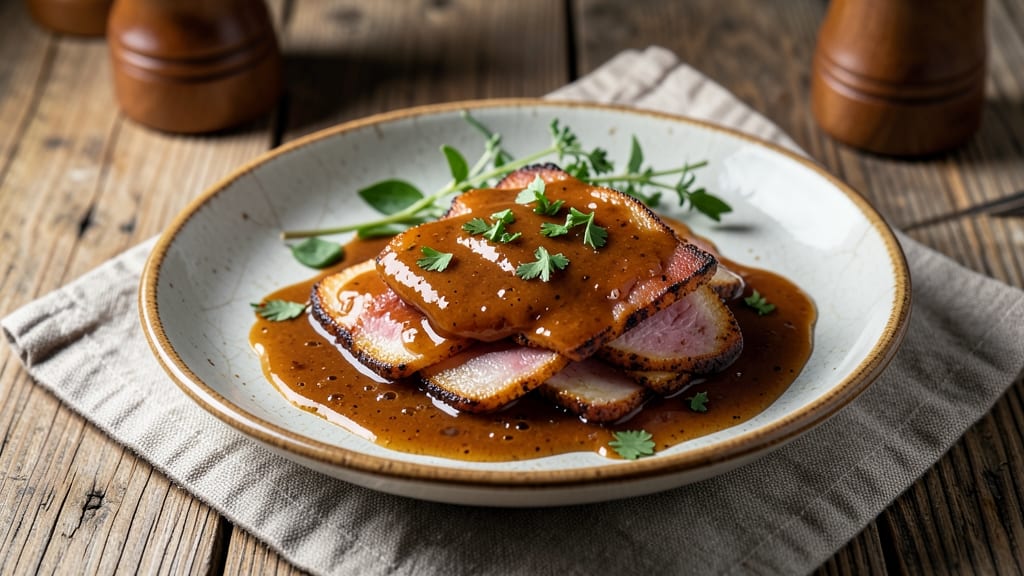
Cam's ham sauce transforms ordinary dishes into something extraordinary with its rich, slow-simmered depth—perfect for glazing hams, drizzling over roasted vegetables, or elevating sandwiches. This recipe delivers a balanced blend of sweetness, tang, and savory ham flavor that develops beautifully over time, making it a versatile pantry staple for holiday feasts or weeknight meals.
The secret lies in simmering ham stock, sugar, and vinegar until the flavors meld into a glossy, velvety sauce with just the right thickness. A touch of mustard adds subtle complexity, while cornstarch creates a smooth, coatable texture without overpowering the natural taste.
What you’ll end up with is a sauce that’s equally at home on a holiday ham or drizzled over grilled meats.
What sets this sauce apart is its adaptability—use it as-is for a classic glaze, or customize with fruit preserves for a brighter twist. The slow-simmering process ensures deep flavor development, while the precise ingredient ratios guarantee consistent results every time.
Store it in the fridge for up to 2 weeks, or freeze for longer shelf life.
Whether you’re preparing for a festive gathering or simply craving a restaurant-quality drizzle, this ham sauce delivers professional-level flavor with minimal effort. The instructions are straightforward, and the ingredients are easy to find, making it the perfect addition to your cooking repertoire.
Ingredients for cam's ham sauce
Nine pantry staples—just simmer and stir for restaurant-quality ham sauce.
| Ingredient | Amount | Notes |
|---|---|---|
| Ham Stock 🍖 | 4 cups | Homemade or high-quality store-bought |
| Granulated Sugar 🍚 | ½ cup | Light brown sugar for depth |
| Apple Cider Vinegar 🍎 | ¼ cup | Or white vinegar for tang |
| Dijon Mustard 🌶️ | 1 tbsp | For subtle complexity |
| Cornstarch 🌾 | 1 tbsp | For smooth, glossy finish |
| Water 💧 | ½ cup | For thinning if needed |
| Salt 🧂 | 1 tsp | Diamond Crystal preferred |
| Black Pepper 🌶️ | ¼ tsp | Freshly cracked for warmth |
| Fresh Thyme Leaves 🌿 | ¼ tsp | Or 1/4 tsp dried thyme |
| Cloves 🌱 | 2 whole | For aromatic depth |
The ham stock is where the magic happens. Homemade (simmering ham bones with water and aromatics) gives the deepest flavor, but high-quality store-bought works in a pinch—just skip the salt if it's pre-seasoned. For the sugar, light brown adds subtle molasses notes, but white works fine. Trader Joe's has great vinegar options, but any apple cider vinegar will do. The mustard is non-negotiable—it cuts through the sweetness and adds that subtle tang that makes this sauce sing. If you're using dried thyme, crush the leaves between your fingers first to release the oils.
No Dijon mustard? Yellow mustard at half the amount works, though it's less refined. Short on vinegar? Lemon juice at the same quantity adds brightness. The cornstarch is key for that glossy finish—don't skip it. For extra depth, add a 1/2 tsp of smoked paprika or a pinch of cinnamon. The cloves should be whole and lightly crushed with a mortar and pestle (or the flat side of a knife) to release their aroma without overpowering. If you're making this ahead, the flavors actually improve over time—let it sit overnight before using.
This sauce keeps beautifully. Store in an airtight jar in the fridge for up to 2 weeks, or freeze for 6 months. The consistency will thicken as it cools, so add a splash of water if needed before using. I like to make a big batch—it's perfect for glazing holiday hams, drizzling over roasted vegetables, or even mixing into mashed potatoes. The sauce reheats beautifully, so don't be afraid to make extra. If it's too thick after reheating, thin with a little water or ham stock.
Why You'll Love This Recipe
- Pantry Magic: I swear by this sauce because it uses stuff I already have—no special trips to the store. The ham stock adds depth instantly, while the apple cider vinegar cuts through the sweetness just enough to keep it from being cloying.
- Sweet-Tangy Balance: That perfect harmony of sugar and vinegar? It’s like a hug for your taste buds. The Dijon mustard sneaks in a little bite that makes it way more interesting than plain glaze—trust me, it’s the kind of flavor you’ll reach for again.
- Dinner Party Hack: I make this for everything from weeknight roasts to holiday hams. It’s the star of the show without stealing the spotlight—drizzle it over grilled chicken, toss it with noodles, or even use it as a marinade. No one will guess it took 20 minutes.
- Leftover Goldmine: This sauce thickens beautifully and keeps for days in the fridge. I’ve turned last night’s glaze into tomorrow’s stir-fry sauce or even a quick pan sauce for eggs. Plus, it’s cheap to make—cornstarch keeps it silky without breaking the bank.
Step-by-step instructions for cam's ham sauce
Here's how to build rich, balanced ham sauce with layers of sweetness and depth.
Build the Flavor Base
In a medium saucepan, combine the 4 cups ham stock, 0.5 cup granulated sugar, 0.25 cup apple cider vinegar, and 1 tbsp Dijon mustard. I like to use a heavy saucepan here—it distributes heat more evenly and prevents scorching. Bring the mixture to a gentle boil over medium-high heat, then immediately reduce to a medium simmer. The sugar will dissolve quickly, but let it cook for 10 minutes to develop that caramelized depth.
Here's the thing—don't rush this step. You'll notice tiny bubbles forming at the edges and a gradual reduction in volume. That's when you know the flavors are melding together. The vinegar adds brightness that cuts through the richness of the ham stock, while the mustard introduces subtle complexity. Stir occasionally to prevent any sticking, but don't obsess over it.
Add Aromatics and Thicken
While the mixture simmers, add the 2 whole cloves and 0.25 tsp fresh thyme leaves. Give it a quick stir to distribute the aromatics—you want those cloves to infuse their warm, earthy notes without overpowering. Simmer for another 5 minutes, then remove from heat and let it steep for 10 minutes off the stove. This resting period allows the cloves to fully release their flavor.
After steeping, return the sauce to medium heat and whisk in the 1 tbsp cornstarch mixed with 0.5 cup water. I always make a smooth paste first to prevent clumping—just whisk the cornstarch and water together in a small bowl before adding it to the sauce. Bring to a gentle boil, stirring constantly with a wooden spoon or silicone spatula. You're looking for a thick, glossy consistency that coats the back of a spoon. This should take about 2-3 minutes of active stirring.
Season and Finish
Once thickened, remove from heat and stir in the 1 tsp salt and 0.25 tsp black pepper. Taste and adjust—this is where you fine-tune the balance. The sauce should be sweet enough to complement ham but not cloying, with a nice tang from the vinegar. If it's too thick, whisk in 1 tablespoon water at a time until it reaches your desired consistency. For drizzling, I prefer a slightly thinner sauce that clings beautifully.
Let the sauce rest for 10 minutes before using. This final rest allows the flavors to fully meld and the sauce to reach its ideal texture. The result should be a rich, balanced glaze with perfect harmony between sweet, tangy, and savory notes. It's ready to drizzle over roasted ham, glaze pork chops, or even use as a dipping sauce for spring rolls.
Pro Tips For Making Cam'S Ham Sauce
- Reduce Vinegar Slowly: Simmer the apple cider vinegar on low heat for 3-4 minutes before adding it to the stock—this softens the harsh acidity and lets the sugar caramelize better. I used to dump it all in at once, and the sauce always tasted sharp and unfinished.
- Whisk Cornstarch Wet: Mix the cornstarch with cold water first (about 1 tablespoon liquid per teaspoon starch) before stirring it into the hot sauce—this prevents clumping like gluey lumps in a bad glue factory. Trust me, you’ll notice the difference in texture.
- Taste Before Sweetening: Check the sauce’s balance with just the ham stock, vinegar, and mustard first—you might need less sugar than you think. I’ve ruined batches by blindly adding sugar without tasting, ending up with a dessert-like glaze instead of a savory sauce.
- Strain the Stock: If your ham stock has bits of fat or sediment, strain it through a fine-mesh sieve before building the sauce—it keeps the final texture silky smooth. Skipping this step means a slightly gritty finish, and no one wants that.
Dietary considerations for these flavors
Gluten-Free Adaptations
This ham sauce is naturally gluten-free as long as you use certified gluten-free ingredients. The Dijon mustard and cornstarch are the only potential concerns—opt for gluten-free mustard like Annie's or Mustard & Co. and Bob's Red Mill gluten-free cornstarch for a safe version.
The ham stock should also be checked for gluten additives, especially if store-bought. I always double-check labels to avoid cross-contamination. 🌾
Low-Sugar Options
For a lower-sugar version, reduce the ½ cup granulated sugar to ¼ cup and add ¼ cup unsweetened applesauce or mashed banana for natural sweetness. The sauce will still caramelize beautifully while cutting calories.
If you're watching carbs, this swap keeps the richness without the sugar spike. Taste as you go—sometimes less sugar needs more vinegar for balance.
Dairy-Free Note
This recipe is already dairy-free, making it perfect for lactose-intolerant diets. The Dijon mustard and cornstarch slurry provide thickening without any milk products. Just ensure your ham stock isn't made with dairy-based seasonings.
I've used this sauce as a glaze for dairy-free desserts like pound cakes—it adds a delicious tangy-sweet contrast. 🍰
Vegan Substitutions
For a vegan version, replace the ham stock with vegetable broth (about 4 cups) and add 1 tbsp soy sauce or coconut aminos for umami depth. The Dijon mustard can stay, but swap cornstarch for arrowroot powder (same ratio) if avoiding refined starches.
A splash of balsamic vinegar adds richness. The texture will be slightly different but still glossy and flavorful.
Allergy-Friendly Tips
If nut allergies are a concern, this sauce is already safe—just confirm all ingredients are nut-free. For mustard allergies, skip it entirely or use apple cider vinegar for extra tang. Always check labels on ham stock for hidden allergens.
I keep a small batch of this sauce on hand for guests with dietary restrictions—it's a crowd-pleaser that works for almost everyone. ✨
Nutrition facts
Frequently asked questions
Can I make this ham sauce without cornstarch?
Yes, but the texture will be thinner and less glossy. For a cornstarch-free version, whisk 1 tbsp arrowroot powder with 2 tbsp cold water instead, then add to the simmering sauce. Alternatively, simmer uncovered for 20-30 extra minutes to reduce naturally—just stir frequently to prevent scorching. The flavor will be just as rich, but the consistency will be more like a light syrup.
How do I prevent my ham sauce from getting too sweet?
Balance the sweetness by adjusting the vinegar or adding a splash of lemon juice at the end. Start with 1 extra tbsp vinegar if you prefer tangier sauce. For a more complex flavor, add ½ tsp smoked paprika or a pinch of cinnamon—these spices add depth without extra sweetness. Always taste as you go!
What's the best way to store leftover ham sauce?
Transfer to an airtight container and refrigerate for up to 2 weeks. The sauce will thicken as it cools—add a splash of water or ham stock when reheating. For longer storage, freeze in ice cube trays for single-use portions or in a jar with space for expansion. Thaw overnight in the fridge before using.
Can I use this sauce for non-ham dishes?
This versatile sauce works beautifully on roasted pork chops, glazed carrots, or even as a dipping sauce for spring rolls. For vegetarian options, drizzle it over mushroom risotto or use it as a glaze for tofu. The sweet-tangy balance makes it a fantastic all-purpose condiment.
Why did my sauce turn cloudy after thickening?
Cloudiness usually means the cornstarch wasn't fully dissolved before adding to the sauce. Next time, whisk the cornstarch with cold water into a smooth paste first, then stir it into the simmering liquid. Also, avoid boiling vigorously after adding the slurry—keep it at a gentle simmer. If it happens, strain through a fine-mesh sieve for a clear finish.