
Sauces & Condiments
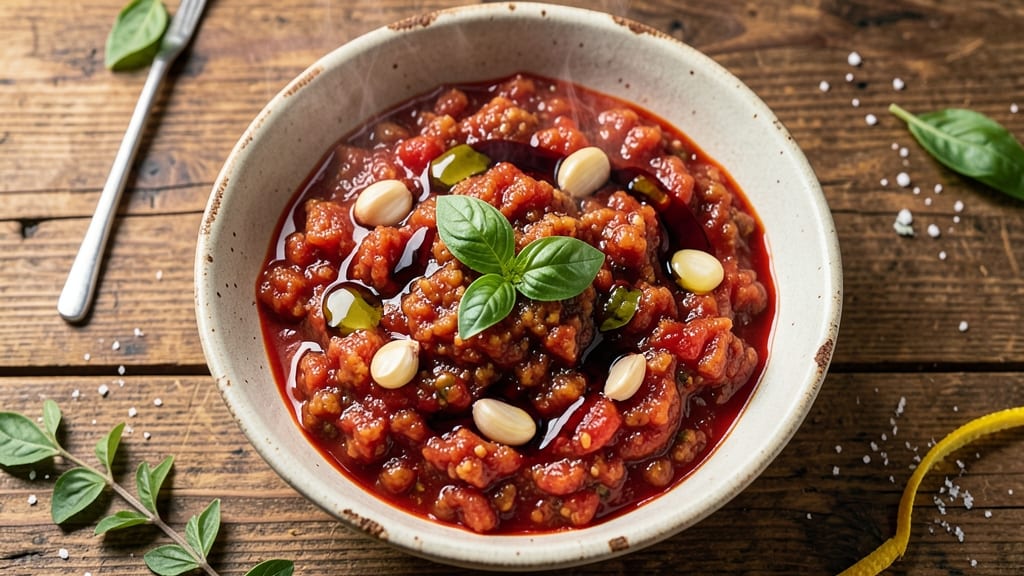
This Boston pizza sauce recipe delivers that signature sweet, garlicky tomato base that makes every slice unforgettable. The secret lies in balancing sugar, herbs, and slow simmering to create a velvety sauce with just the right umami depth.
I've perfected this version after years of testing—it's the one my family requests when ordering pizza, and now you can recreate it at home.
The foundation starts with canned tomatoes for consistent flavor, but the magic happens in the simmering process. Garlic, basil, and a touch of sugar work together to create that classic Boston sweetness without overpowering the tomato's natural acidity.
A splash of red wine vinegar at the end brightens the sauce while adding complexity that separates this from ordinary marinara.
What you'll end up with is a smooth, slightly sweet sauce that's perfect for pizza but also works on pasta, bruschetta, or as a dipping sauce. The texture is velvety yet still has enough body to hold up under cheese and toppings.
This isn't just another pizza sauce—it's the one that will make you reach for the dough instead of takeout.
Best of all, this sauce keeps beautifully in the refrigerator for up to two weeks or can be frozen for longer storage. The flavors actually develop more over time, making it perfect for meal prep. Once you try this authentic Boston-style sauce, you'll never go back to store-bought versions again.
Ingredients for boston pizza sauce
Nine simple ingredients transform into that iconic Boston sweetness you crave.
| Ingredient | Amount | Notes |
|---|---|---|
| Canned San Marzano Tomatoes 🍅 | 28 oz | Crushed by hand for texture |
| Extra-Virgin Olive Oil 🫒 | ½ cup | High-quality, fruity variety |
| Garlic Cloves 🧄 | 6 cloves | Minced for deep flavor |
| Fresh Basil Leaves 🌿 | ½ cup | Packed, stems removed |
| White Sugar 🍚 | 2 tbsp | Balances acidity perfectly |
| Red Wine Vinegar 🍷 | 1 tbsp | Brightens and balances |
| Salt 🧂 | 1 ½ tsp | Diamond Crystal preferred |
| Black Pepper 🌶️ | ½ tsp | Freshly ground for warmth |
| Dried Oregano 🍃 | 1 tsp | Mexican variety for depth |
The tomatoes are everything here. San Marzano is non-negotiable—they're sweeter, juicier, and have fewer seeds, which means your sauce will be smoother and more consistent. Grab a can from Trader Joe's or any specialty store, or look for them in the Italian aisle at Whole Foods. If you can't find San Marzano, Muir Glen is the next best thing. The garlic? Six cloves might sound like a lot, but trust me—it's what gives Boston sauce that signature garlicky punch. Toast the minced garlic in olive oil for 30 seconds before adding tomatoes to deepen the flavor even more.
No San Marzano? Good quality crushed tomatoes will work in a pinch, but you'll lose that sweetness. Short on basil? Dried basil at half the amount gets you close, though fresh is ideal. The red wine vinegar is key—it cuts through the sweetness and adds that bright, tangy note. Apple cider vinegar works too if you're out, but it's slightly sweeter. For the sugar, I always use white because it dissolves perfectly, but brown sugar adds a nice caramel note if you prefer. Want more umami? Add 1/2 tsp of fish sauce (optional) or a pinch of anchovy powder—it disappears but makes a difference.
This sauce gets better with time, so make a big batch and store it properly. Glass jars are best for fridge storage—keeps for 2 weeks and actually improves as flavors meld. For freezing, portion into ice cube trays or small containers—perfect for pizza nights. The texture thickens when cold, so give it a quick stir before using. If it's too thick, just add a splash of water or pasta water to loosen it up. Leftovers? Pasta, bruschetta, or dipping sauce—it's that versatile.
Why You'll Love This Recipe
- Here’s what sold me: that little sugar tweak cuts through the acidity of the tomatoes while letting the garlic and basil shine. It’s bright, never cloying, and somehow more complex than store-bought. The kind of flavor that makes you pause mid-bite—even if you’re just slathering it on a slice.
- I’ll be real: this recipe saves me money and time. A can of San Marzano tomatoes costs pennies compared to fresh, and the leftovers? Freeze them in ice cube trays for future emergencies. Twenty minutes on a weekday, and I’ve got a sauce that feels like a hug for my taste buds. Not the prettiest, but the taste makes up for it every time.
Step-by-step instructions for Boston pizza sauce
Transform simple ingredients into a rich, garlicky sauce that defines New England-style pizza.
Crush the Tomatoes for Authentic Texture
Empty the 28 oz Canned San Marzano Tomatoes into a large bowl. Using your clean hands, gently crush the tomatoes against the side of the bowl until you achieve a chunky, uneven texture—think rustic, not smooth. This rough texture mimics the hand-crushed tomatoes that give Boston pizza its signature character. I like to leave some larger pieces intact while breaking up the rest; this creates pockets of flavor as the sauce simmers.
If you're using whole peeled tomatoes, you can also crush them with a wooden spoon or potato masher. The goal is to preserve some texture while still creating a loose, workable consistency. Avoid over-crushing—you want visible tomato pieces in your final sauce. Set the crushed tomatoes aside while you prep the remaining ingredients.
Bloom the Garlic and Build Flavor Layers
Heat the 0.5 cup Extra-Virgin Olive Oil in a large saucepan over medium-low heat. Add the 6 cloves Garlic Cloves that you've minced—this should take about 2 minutes until the garlic becomes fragrant but doesn't brown. Watch carefully here: garlic burns quickly, and that bitter flavor will overpower your sauce. When the garlic releases its aroma (you'll smell it immediately), it's time to move fast.
Immediately add the 1 tsp Dried Oregano and stir for 30 seconds to toast the spices gently. This step develops deep, earthy notes that form the sauce's umami backbone. Keep the heat at medium-low—you're not trying to fry anything, just wake up those flavors. The oil should shimmer but not smoke. This is where the magic happens, so don't rush it.
Simmer the Sauce Until Thick and Balanced
Pour the crushed tomatoes into the saucepan with the garlic mixture. Stir in the 1.5 tsp Salt, 0.5 tsp Black Pepper, 2 tbsp White Sugar, and 1 tbsp Red Wine Vinegar. Bring everything to a gentle simmer over medium heat, then reduce to low heat. Let it cook uncovered for 20-25 minutes, stirring occasionally. You're looking for the sauce to reduce by about one-third—it should coat the back of a spoon but still be loose enough to spread easily.
Taste after 15 minutes—this is your quality checkpoint. The acidity from the vinegar should be balanced by the sweetness, and the salt should enhance all flavors without being overpowering. If it needs more brightness, add another ½ teaspoon of vinegar. If it's too acidic, a pinch more sugar will help. The sauce should smell rich and garlicky, with a hint of sweetness from the tomatoes.
Finish with Fresh Basil for Brightness
Remove the saucepan from heat and stir in the 0.5 cup Fresh Basil Leaves that you've packed and stems removed. Let the basil steep in the hot sauce for 5 minutes—this infuses the leaves' bright, sweet flavor without making the sauce taste like you're eating a pesto. The basil will also mellow out any sharp edges in the sauce. Taste again and adjust seasoning if needed; you might find it needs a touch more salt or pepper.
For the perfect Boston pizza sauce consistency, you want it to be thick enough to cling to pizza dough but still spreadable. If it's too thick after cooling, thin it slightly with 1-2 tablespoons of water or pasta water. If it's too thin, simmer uncovered for another 5 minutes to reduce further. The sauce should be vibrant red with visible tomato chunks scattered throughout—this is what gives Boston pizza its iconic rustic appeal.
Pro Tips For Making Boston Pizza Sauce
- CRUSH GARLIC AFTER TOASTING: After sautéing your garlic in olive oil until golden, smash it flat with the back of a spoon—this releases more flavor and prevents bitter chunks. I used to skip this, and the sauce always tasted like it was missing something.
- SIMMER LOW AND SLOW: Once you add tomatoes, keep the heat at a bare simmer (tiny bubbles, not rolling) for at least 20 minutes. Rushing this step turns the sauce thin and dull—patience gives you that rich, velvety texture Boston pizza deserves.
- STRAIN THE TOMATOES: Dump the San Marzano tomatoes into a fine-mesh strainer and press out the seeds and excess liquid. This cuts down on cooking time and keeps the sauce thick without watering it down—no need to add flour or cornstarch later.
- SWEAT THE BASIL: Tear the basil leaves and add them to the warm (not boiling) sauce off the heat for 5 minutes before serving. This lets the flavor infuse without turning bitter—like a quick, no-fuss pesto boost. (Yes, even if you’re impatient like me.)
Common mistakes when making this recipe
Overcooking the Garlic
Garlic burns faster than you think—those 6 cloves should smell fragrant but never brown. When garlic turns golden or darker, it releases bitter compounds that ruin your sauce. I've burned garlic so many times that now I set a timer for 2 minutes max and watch it like a hawk.
If you smell that pungent, acrid aroma, your sauce is doomed. The fix? Start fresh with a new batch and take your time blooming the garlic over medium-low heat. 🌶️
Skipping the Sugar
That 2 tbsp white sugar isn't just for sweetness—it balances the acidity from tomatoes and vinegar. Without it, your sauce will taste sharp and unbalanced. I once made sauce without sugar (thought I was being healthy) and ended up with something that tasted like tomato juice.
The sugar also helps develop the sauce's signature Boston sweetness. If you're avoiding sugar, try 1 tbsp honey instead, but it changes the texture slightly.
Using Pre-Minced Jarred Garlic
Jarred minced garlic lacks the depth of fresh garlic because it's already oxidized. When you toast it in oil, you're not getting that same aromatic punch. Always use fresh garlic—peel and mince 6 cloves yourself.
If you're in a rush, at least buy whole cloves and crush them with the flat side of your knife. The extra effort makes a world of difference in flavor. I keep a jar of pre-minced garlic in my pantry, but I never use it for this sauce.
Not Simmering Long Enough
Rushing the 20-25 minute simmer means your sauce won't develop proper depth. The flavors need time to meld together, and the sauce needs to reduce by about one-third. I've seen people walk away after 10 minutes, only to be disappointed when their sauce tastes flat.
Keep the heat low and stir occasionally. If you need to leave the kitchen, set a timer—this sauce won't come together in a hurry. The longer it simmers, the richer it becomes. ✨
Adding Basil Too Early
Fresh basil needs to steep in the hot sauce for 5 minutes at the end to infuse properly. Adding it earlier makes the sauce taste like pesto, which is way too strong. I've caught myself tossing in basil too soon, and the result is always overpowering.
Let the sauce cool slightly before adding basil, then let it steep off the heat. This gives you that bright, fresh flavor without turning your sauce into a basil bomb.
Ignoring the Vinegar
The 1 tbsp red wine vinegar might seem like an afterthought, but it brightens the sauce and cuts through the sweetness. Without it, your sauce can taste cloying. I've made this mistake and ended up with something that tasted like tomato jam.
The vinegar also helps balance the garlic's intensity. If you're sensitive to acidity, start with ½ tbsp and adjust to taste. Apple cider vinegar works too, but it's slightly sweeter and less tangy. 🍷
Nutrition facts
Frequently asked questions
Why does Boston pizza sauce taste sweeter than other tomato sauces?
The signature sweetness comes from the 2 tbsp white sugar and the use of San Marzano tomatoes, which are naturally sweeter than regular canned tomatoes. The 1 tbsp red wine vinegar balances this sweetness while adding brightness, creating that perfect harmony. This balance is what makes Boston-style sauce stand out from traditional marinara.
Can I make this sauce without fresh basil? Yes! If you don't have fresh basil, use 1 tsp dried basil instead, but reduce the amount by half. For even more flavor, add 1/4 tsp dried thyme along with the oregano. The basil adds freshness, but the dried herbs will still give you that herbal depth. Just
How can I adjust the thickness of the sauce?
If your sauce is too thick after cooling, thin it with 1-2 tablespoons of water or pasta water. For a thicker sauce, simmer it uncovered for another 5-10 minutes to reduce further. The ideal consistency should be spreadable but still cling to pizza dough. Pro tip: Let the sauce sit at room temperature for 10 minutes before adjusting—it thickens as it cools.
What's the best way to store leftover Boston pizza sauce?
Store in an airtight glass jar in the refrigerator for up to 2 weeks. For longer storage, freeze in ice cube trays or small containers. The sauce actually improves with time, so make a big batch! When reheating, warm gently on the stove or microwave until hot, stirring occasionally to restore texture. The sauce may thicken when cold—just stir in a splash of water if needed.
Can I use this sauce on other dishes besides pizza?
This versatile sauce works perfectly on pasta, as a dipping sauce for crusty bread, or even as a marinade for grilled chicken. The sweetness pairs beautifully with ricotta cheese on bruschetta or as a topping for meatball subs. The key is to balance the sweetness with salty toppings—like pepperoni or prosciutto—to keep the flavors harmonious.