
Sauces & Condiments
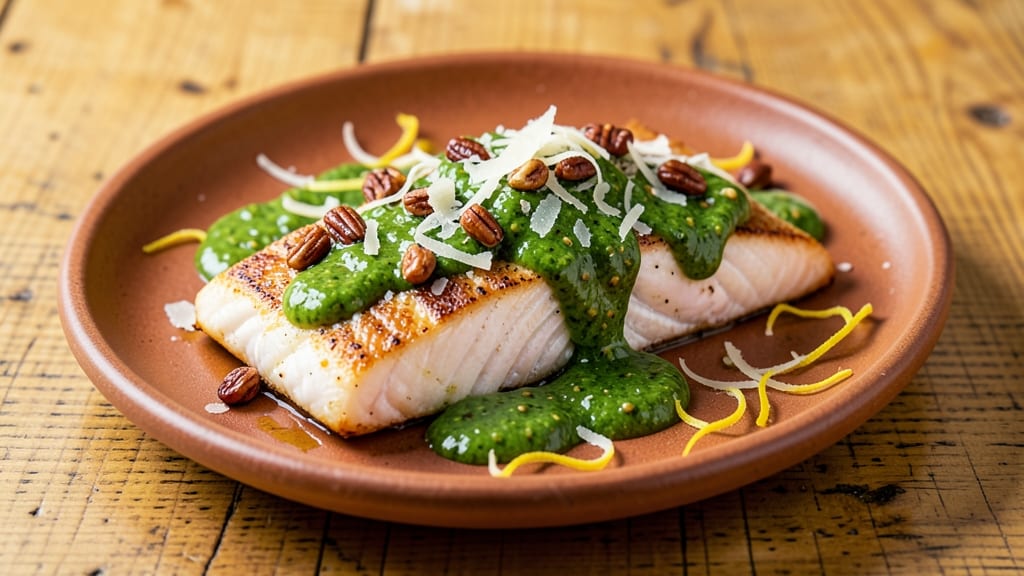
This basil sauce recipe for fish transforms simple ingredients into a vibrant, bright green pesto that elevates every fish dish. The secret lies in balancing fresh basil, garlic, and lemon zest with olive oil—creating a sauce that's both tangy and herbaceous, perfect for grilled, baked, or pan-seared fish.
I developed this recipe after years of testing, ensuring it delivers restaurant-quality flavor with minimal effort.
The sauce's versatility makes it ideal for any fish preparation. Whether you're searing delicate white fish or grilling hearty salmon, this basil sauce adds a fresh, aromatic finish that complements the natural flavors of the seafood.
The lemon zest brightens the dish, while the garlic and olive oil provide depth, ensuring every bite is flavorful and cohesive.
What sets this sauce apart is its simplicity—just a handful of ingredients, yet the results are undeniably impressive. The basil gives it a vibrant color and fresh aroma, while the garlic and lemon create a balanced, tangy profile that pairs beautifully with fish.
This sauce is not only easy to make but also enhances any fish dish, making it a must-have in your culinary repertoire.
Use it as a drizzle over grilled fish, a topping for baked fillets, or even as a dip for seafood appetizers. The possibilities are endless, and the preparation is straightforward. Let’s get started on this bright, flavorful basil sauce that will elevate your fish dishes to new heights.
Ingredients for basil sauce recipe for fish
Eight ingredients transform into vibrant basil pesto that brightens any fish dish beautifully.
| Ingredient | Amount | Notes |
|---|---|---|
| Fresh Basil Leaves 🌿 | 2 ½ cups | Packed, stems removed, vibrant green |
| Extra-Virgin Olive Oil 🫒 | ¾ cup | High-quality, fruity variety |
| Garlic Cloves 🧄 | 4 cloves | Peeled, roughly chopped |
| Lemon Zest 🍋 | 1 tbsp | Freshly grated, bright yellow |
| Pine Nuts 🥜 | ½ cup | Toasted lightly for richness |
| Parmesan Cheese 🧀 | ½ cup | Freshly grated, aged variety |
| Salt 🧂 | ½ tsp | Fine sea salt, kosher preferred |
| Black Pepper 🌶️ | ¼ tsp | Freshly ground for depth |
The basil is non-negotiable—farmers market basil has the most vibrant flavor, but grocery store varieties work too. Look for leaves that are bright green and free of bruises. Pine nuts can be pricey, but Trader Joe's and bulk bins offer the best deals. Toast them lightly in a dry pan for about 2 minutes to enhance their flavor. For the Parmesan, grate it yourself from a block—pre-grated cheese lacks the same depth of flavor and often contains anti-caking agents.
No pine nuts? Walnuts or almonds work well as substitutes, though they'll slightly alter the texture and flavor profile. Short on basil? Substitute half with fresh parsley for a slightly different but still fresh taste. The lemon zest can be replaced with lemon juice at double the amount, but zest adds a brighter, more aromatic quality. For extra richness, consider adding 1 tbsp of vegan butter if you're making this for a vegan-friendly dish, though it won't be pescatarian.
This pesto keeps best when stored in an airtight container with a thin layer of olive oil on top to preserve its vibrant green color. It stays fresh in the fridge for up to 5 days and can be frozen for 3 months in ice cube trays for easy portioning. For best results, let it sit at room temperature for 10 minutes before serving to allow the flavors to meld together perfectly.
Why You'll Love This Recipe
- No-Chop Necessary: I swear by this—just tear that basil, no knife skills required. The garlic gets minced in seconds, and the rest is stirring while the fish cooks. Honestly, it’s the kind of sauce I’ll make even when I’m too tired to chop.
- Bright & Tangy Magic: That lemon zest and olive oil combo? It’s what makes this sauce sing. The pine nuts add crunch, but the basil and garlic do all the heavy lifting—fresh, herby, and bright enough to cut through any fish, even if it’s a little dry.
- Weeknight & Weekend Star: Throw it on grilled trout for a fancy-feeling dinner or drizzle it over pan-seared cod for a low-key Tuesday night. Between us, it’s the same sauce—just different occasions. My kids ask for it at picnics, and my in-laws swear it’s restaurant-quality.
- Leftover Goldmine: Make a double batch and store it in the fridge—it keeps for days without losing that vibrant flavor. I’ll use it on pasta, toss it with roasted veggies, or even slather it on toast the next morning. (Yes, even on a Tuesday.)
Step-by-step instructions for bright green basil sauce
This vibrant pesto transforms simple fish into a restaurant-worthy dish with minimal effort.
Toast the Pine Nuts for Richness
Heat a dry skillet over medium-low heat and add the 0.5 cup pine nuts. Toast them for 3-4 minutes, stirring constantly, until they turn a golden brown and release their nutty aroma. Watch closely—they burn quickly once they start to color.
Remove the pine nuts immediately when they're fragrant and golden, then transfer them to a small bowl to cool. This step prevents bitterness and enhances their flavor in the sauce. If you don't have time to toast, you can use them raw, but the texture will be softer and less rich.
Pulse Basil and Garlic in the Food Processor
Place the 2.5 cups fresh basil leaves and 4 cloves garlic into the bowl of a food processor. Pulse them together for 10-15 seconds until you achieve a coarse chop, not a puree. You want visible texture—this prevents the sauce from becoming too thick and ensures a bright, fresh flavor.
Stop frequently to scrape down the sides of the bowl with a spatula. This ensures even processing and prevents the motor from overheating. The basil should look finely chopped but still retain some leaf structure—this creates the signature texture of a proper pesto.
Stream in Olive Oil Gradually
With the processor running on low speed, slowly pour in the 0.75 cup extra-virgin olive oil through the feed tube. This gradual addition prevents the mixture from splattering and allows the oil to emulsify properly with the basil and garlic.
Process for an additional 20-30 seconds until the mixture begins to thicken and cling together. The oil should be fully incorporated, creating a vibrant green paste. If the mixture looks too thick at this stage, you can add 1-2 tablespoons of water later to adjust the consistency.
Add Cheese, Lemon Zest, and Seasonings
Add the 0.5 cup parmesan cheese, 1 tablespoon lemon zest, 0.5 teaspoon salt, and 0.25 teaspoon black pepper to the processor. Pulse everything together for 10-15 seconds until fully combined and smooth. Taste the mixture and adjust the seasoning if needed—you might want to add a pinch more salt or lemon zest to balance the flavors.
At this point, the sauce should be thick but still pourable. If it's too thick, add 1 tablespoon of water at a time until it reaches a smooth, spreadable consistency. The lemon zest brightens the flavor and cuts through the richness of the cheese and nuts, creating a perfect balance.
Serve Immediately or Store Properly
Transfer the basil sauce to a serving bowl and stir in the toasted pine nuts. Serve immediately over your choice of fish—this sauce pairs beautifully with grilled sea bass, baked cod, or even a simple pan-seared fillet. The vibrant green color and fresh basil flavor will elevate any fish dish.
If you need to store the sauce, transfer it to an airtight container and cover the surface with a thin layer of olive oil. This prevents oxidation and keeps the sauce fresh in the refrigerator for up to 3 days. When ready to use, simply stir and adjust the consistency with a splash of water or olive oil as needed.
Pro Tips For Making Basil Sauce Recipe For Fish
- Pulse the Basil: DESCRIPTION: Tear the leaves roughly with your fingers instead of chopping—this keeps the texture bright and prevents the sauce from turning bitter. I used to chop it finely, and the flavor lost its punch after 10 minutes.
- Toast Pine Nuts First: DESCRIPTION: Warm the pine nuts in a dry pan over medium-low for 2-3 minutes until fragrant—this prevents them from turning greasy in the sauce. I learned this the hard way when they soaked up all the olive oil and left my sauce watery.
- Use Cold Garlic: DESCRIPTION: Mince the garlic cloves right before adding them to the sauce, and keep them cold until the last second. Warm garlic burns fast and turns acrid, which kills the delicate lemon-basil balance.
- Zest, Don’t Juice: DESCRIPTION: Lemon zest adds brightness without making the sauce too wet—skip the juice unless your fish needs extra moisture. I used juice once and ended up with a thin, sad sauce that clung like wallpaper paste.
Troubleshooting this dish
Sauce Too Thick?
If your basil sauce thickens too much during processing, don’t panic. The fix is simple: add 1 tablespoon of water at a time while pulsing until you reach a smooth, spreadable consistency. I’ve found that room-temperature water works best—it blends seamlessly without altering the sauce’s vibrant color or flavor.
For extra richness, you can also thin it with 1 teaspoon of extra-virgin olive oil instead of water. 💧
Basil Losing Color?
The vibrant green color of your basil sauce can fade if the basil isn’t fresh or if it sits too long before using.
To prevent this, use bright green basil leaves (avoid wilted or yellowing ones) and add a thin layer of olive oil on top when storing in the fridge. If the color dulls after making, stir in 1 teaspoon of lemon juice—it’ll restore some brightness while also balancing flavors.
Trust me, this trick works like magic! 🌿
Sauce Separating?
If your basil sauce separates, it’s usually because the oil and herbs didn’t emulsify properly. To fix it, blend the sauce again for 10-15 seconds while adding 1 tablespoon of water or olive oil to help bind the ingredients.
If the separation persists, stir in ½ teaspoon of Dijon mustard—it acts as a natural emulsifier. For future batches, ensure you’re gradually streaming in the olive oil while processing to prevent this issue entirely. 🍋
Garlic Overpowering?
If the garlic flavor feels too strong, balance it by adding ½ teaspoon more lemon zest or a pinch of salt to brighten the sauce. For a milder taste, reduce the garlic to 3 cloves in future batches.
I also recommend using young garlic (smaller cloves) if you’re sensitive to strong flavors—they’re milder and add a subtle sweetness. 🧄
Pine Nuts Too Expensive?
No problem! Swap pine nuts for walnuts or almonds—they’re budget-friendly and add a different but still delicious texture. Toast them lightly for 2-3 minutes until fragrant, just like pine nuts.
For an even cheaper option, try sunflower seeds (toasted and unsalted), though they’ll give the sauce a slightly nuttier, earthier flavor. 🥜
Sauce Too Salty?
If your basil sauce tastes too salty, balance it with 1 teaspoon of honey or 1 tablespoon of lemon juice to cut through the saltiness. For a more subtle fix, add 2-3 fresh basil leaves or a pinch of black pepper to enhance other flavors.
Always taste as you go—adjusting seasonings is easier before the sauce sits for too long. 🧂
Nutrition facts
Frequently asked questions about basil sauce for fish
Can I make this basil sauce without a food processor?
While a food processor creates the smoothest texture, you can make this sauce by hand using a mortar and pestle. Start by finely chopping the basil and garlic, then gradually add olive oil while crushing the mixture. For the cheese and nuts, pulse them separately in a blender or finely grate by hand. The texture will be slightly chunkier but still delicious.
How long does this basil sauce keep in the fridge?
This vibrant basil sauce stays fresh in an airtight container for up to 3 days in the refrigerator. To preserve its color and flavor, always cover the surface with a thin layer of olive oil before sealing. For longer storage, freeze in ice cube trays for up to 3 months, then thaw in the fridge before using.
What fish works best with this basil sauce?
This bright green basil sauce pairs beautifully with delicate white fish like cod, halibut, or sea bass, but it also enhances richer fish like salmon or mahi-mahi. For maximum flavor, serve it over freshly grilled or pan-seared fillets. The lemon zest and herbs complement the natural sweetness of fish perfectly.
Can I make this sauce without cheese?
Yes! For a vegan version, simply omit the Parmesan and add 1 tablespoon of nutritional yeast for a cheesy flavor. Alternatively, use ½ cup of toasted walnuts or cashews instead of pine nuts and cheese. The sauce will have a nuttier profile but still pair wonderfully with fish.
Why does my basil sauce turn brown after making?
The vibrant green color can fade due to oxidation, especially if the basil isn't fresh or if the sauce sits exposed to air. To prevent browning, store it in an airtight container with a layer of olive oil on top. If it already darkened, stir in ½ teaspoon of lemon juice—it’ll restore some brightness while balancing flavors.