
Sauces & Condiments
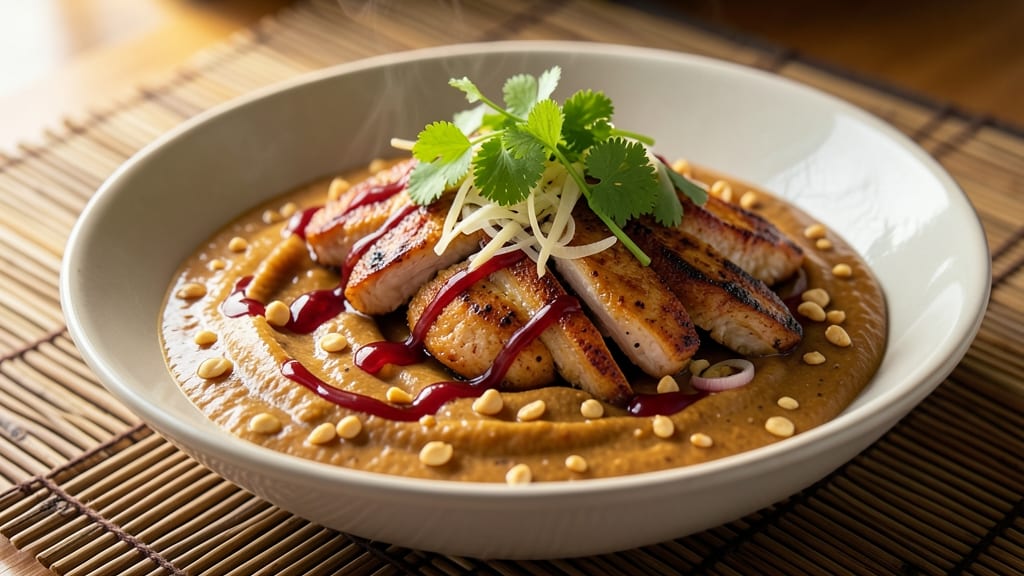
This Balinese peanut sauce recipe delivers the rich, nutty, and perfectly balanced flavors that elevate any dish. The blend of toasted peanuts, coconut milk, and aromatic spices creates a velvety sauce with just the right amount of sweetness and heat.
I developed this recipe after years of experimenting with traditional Balinese flavors, ensuring every spoonful delivers that signature depth without overpowering the main dish.
The sauce begins with a fragrant base of shallots, garlic, and ginger, gently cooked until fragrant before adding toasted peanuts and tamarind for that signature tangy-sweet balance. A touch of chili and lemongrass rounds out the flavor profile, while coconut milk creates a silky texture that coats every bite.
This sauce is foolproof—just blend, simmer, and adjust to taste, making it perfect for both weeknight meals and special occasions.
What makes this sauce truly special is its versatility. Drizzle it over grilled meats, toss it with noodles, or serve it alongside rice for an instant flavor upgrade. The rich, nutty notes complement spicy dishes beautifully, while the subtle tang keeps the flavors fresh.
With just 10 minutes of prep and 15 minutes of cooking, you’ll have a jar of restaurant-quality sauce ready to transform your favorite meals.
Store any leftovers in an airtight container in the fridge for up to 5 days, or freeze for longer shelf life. The sauce thickens slightly when refrigerated, so simply stir in a splash of warm water or coconut milk to restore its original consistency.
Whether you're a seasoned cook or just starting out, this sauce will become a staple in your kitchen.
Ingredients for balinese peanut sauce
Toasted peanuts, fragrant spices, and coconut milk create this velvety sauce that's foolproof and full of flavor.
| Ingredient | Amount | Notes |
|---|---|---|
| Peanuts 🥜 | 1 cup | Toasted until golden brown |
| Coconut Milk 🥥 | 1 can | Full-fat, 13.5 oz can |
| Shallots 🧅 | 3 whole | Finely minced |
| Garlic Cloves 🧄 | 4 cloves | Peeled and minced |
| Fresh Ginger 🌿 | 1 tbsp | Grated, not powdered |
| Tamarind Paste 🍋 | 1 ½ tbsp | Or 1 tbsp lime juice |
| Red Curry Paste 🌶️ | 1 tbsp | Mild or medium heat |
| Lemongrass 🌿 | 2 tbsp | Minced, from stalk |
| Fish Sauce 🍶 | 1 tsp | Or soy sauce for vegan |
| Brown Sugar 🍯 | 1 tbsp | Packed, not granulated |
| Vegetable Oil 🫒 | 1 tbsp | For cooking aromatics |
| Salt 🧂 | ½ tsp | Adjust to taste |
| Black Pepper 🌶️ | ¼ tsp | Freshly ground |
| Red Chili Flakes 🔥 | ½ tsp | Adjust for heat |
The peanuts are the heart of this sauce—toast them in a dry pan until golden so they don't turn greasy when blended. Costco or Trader Joe's sell bulk peanuts at great prices, but any natural food store works. For the coconut milk, full-fat is non-negotiable—it gives that rich, creamy texture. Skip the light version. The shallots and garlic? Fresh is best, but jarred minced garlic in a pinch (just drain the oil first). Lemongrass can be tricky to find—Asian markets usually have it, or look for the stalk in the frozen section.
No tamarind? Lime juice works in a pinch, though it won't have that exact tangy-sweet balance. The fish sauce adds depth—Red Boat is my go-to brand—but if you're avoiding it, soy sauce or vegan fish sauce (like Annie Chun's) does the trick. Want more heat? Double the chili flakes. Less? Skip them entirely. The brown sugar should be packed—lightly tap the measuring spoon to level it off. And if you're worried about the sauce being too thick after blending, add 1-2 tbsp of water while it cooks.
This sauce keeps beautifully—5 days in the fridge sealed in a jar, or 3 months in the freezer. It thickens when chilled, so just stir in a splash of warm water or coconut milk to loosen it up. I always make a double batch—one jar for the fridge, one for the freezer. The flavors actually improve after a day or two as everything melds together. Perfect for drizzling over noodles, grilled chicken, or even as a dip for veggies.
Why You'll Love This Recipe
- One-Pot Magic: I swear by this—just fry up the shallots, garlic, and ginger until fragrant, then toss in the peanuts and coconut milk. No blender, no extra bowls, and honestly? The sauce thickens into something velvety smooth while you stir.
- Nutty-Ginger Kick: That fresh ginger and toasted peanuts? It’s the perfect balance—sweet, spicy, and creamy all at once. I’ll be real: the first time I tasted it, I immediately drizzled it over everything (yes, even my eggs).
- Sauce for Everything: Need a quick weeknight dinner? Toss it with rice and grilled chicken. Craving something fancy? Slather it on seared tofu and serve with veggies. It’s my go-to for lazy nights and dinner parties—no one ever questions how little effort went into it.
- Budget Stretch: A single batch of this sauce costs me pennies but feels like a restaurant dish. The peanuts and coconut milk go a long way, and I’ve made it last for days—even my picky husband asks for seconds. (Between us, that’s saying something.)
Step-by-step instructions for Balinese peanut sauce
Here's how to create this nutty, aromatic sauce that balances sweet, spicy, and umami perfectly.
Toast the Peanuts Until Golden
Heat a dry skillet over medium heat and add the 1 cup peanuts. Toast them for 5-7 minutes, stirring constantly, until they turn a rich golden brown and smell deeply nutty. You'll know they're ready when you see the skins starting to darken slightly—this releases their oils and intensifies their flavor.
Remove the peanuts immediately and transfer them to a bowl. Let them cool for 2 minutes before grinding. This prevents the oil from splattering when you process them. I like to use a food processor for this step because it creates a fine, powdery texture that blends seamlessly into the sauce.
Cook the Aromatics Until Fragrant
In the same skillet, add the 1 tablespoon vegetable oil and heat over medium heat. Add the 3 minced shallots and cook for 3-4 minutes until they become translucent and just begin to soften. Add the 4 minced garlic cloves and 1 tablespoon grated fresh ginger, cooking for another 1 minute until fragrant but not browned.
Here's where it gets aromatic: stir in the 2 tablespoons minced lemongrass and 1 tablespoon red curry paste. Cook for 1-2 minutes until the curry paste darkens slightly and releases its deep, earthy aroma. This step builds the sauce's complex flavor foundation—don't skip it, even if it seems like just another aromatic.
Build the Sauce Base
Pour in the 1 can coconut milk and stir to combine with the aromatics. Add the 1.5 tablespoons tamarind paste, 1 tablespoon brown sugar, 1 teaspoon fish sauce, 0.5 teaspoon salt, and 0.25 teaspoon black pepper. Bring the mixture to a gentle simmer over medium-low heat, then reduce heat to low and let it cook for 5 minutes.
This is where the sauce begins to come together. You'll notice the coconut milk starts to thicken slightly as it absorbs the flavors. The tamarind adds that signature tangy brightness, while the brown sugar balances the heat. If the sauce looks too thick, add 1-2 tablespoons water to loosen it—just enough to create a smooth, pourable consistency.
Blend and Finish the Sauce
Transfer the sauce to a blender or food processor along with the toasted peanuts. Blend until completely smooth, scraping down the sides as needed. For an ultra-smooth texture, I recommend using an immersion blender directly in the sauce pot—it's less messy and gives you better control over the consistency.
Return the blended sauce to the skillet and stir in the 0.5 teaspoon red chili flakes. Taste and adjust the seasoning—you might want to add a touch more fish sauce for saltiness or brown sugar for sweetness. The sauce should be rich, nutty, and perfectly balanced with a hint of spicy heat. Let it simmer for another 2-3 minutes to let all the flavors meld together.
Serve Warm or Store Properly
This sauce is best served immediately over grilled meats, noodles, or vegetables. If you need to store it, let it cool completely and transfer to an airtight container. It keeps well in the refrigerator for up to 5 days or can be frozen for 3 months. When reheating, warm gently over low heat, stirring frequently to prevent separation.
For the best results, I recommend using this sauce within a day or two. The flavors continue to develop and deepen as it sits, but the texture may thicken slightly. If it becomes too thick, simply whisk in a splash of warm water or coconut milk to restore its smooth consistency. This versatile sauce is a game-changer for any dish that needs that perfect Balinese peanut flavor!
Pro Tips For Making Balinese Peanut Sauce
- TOAST PEANUTS LOW AND SLOW: Skip the high-heat blitz—cook your peanuts in a dry pan over medium-low for 8-10 minutes, stirring often, until they’re golden but not burnt. Overheating turns them bitter; this gentle approach keeps their flavor rich and nutty without going rancid.
- MINCE GINGER LIKE YOU MEAN IT: Use a sharp knife and chop the ginger into a paste—not just slices—before frying with shallots and garlic. I learned this the hard way: thin slices burn before releasing flavor, while a fine mince blends seamlessly and adds depth without grit.
- CONTROL THE COCONUT MILK HEAT: Once you add coconut milk, keep the sauce at a gentle simmer—never a rolling boil. High heat curdles the milk, turning your luscious sauce into a greasy, separated mess. A steady simmer guarantees a smooth, velvety texture every time.
- PRESIEVE THE PEANUT PASTE: After blending peanuts with aromatics, strain the paste through a fine-mesh sieve to remove skins and fiber. It’s tedious, but the result is a silky sauce without the texture of peanut pulp. (Yes, even if you’re impatient like me.)
Troubleshooting perfect results
Peanut Texture Issues
If your sauce ends up grainy with peanuts, you likely didn't grind them fine enough. Process toasted peanuts in a food processor until they resemble powdered peanut butter—about 30-45 seconds on pulse mode.
For ultra-smooth results, strain the blended sauce through a fine-mesh sieve before returning it to the pot. I've found that Costco's bulk peanuts grind more evenly than store-brand options. 🥜
Sauce Too Thin
Thin sauce usually means you added too much liquid during cooking. If this happens, simmer the sauce uncovered over low heat for 5-7 minutes to reduce. For immediate thickening, mix 1 teaspoon cornstarch with 1 tablespoon water, then stir into the sauce.
Let it simmer for 2 minutes until thickened. Avoid over-reducing—you want a pourable but coatable consistency, not glue-like thickness.
Separation Problems
Coconut milk separation occurs when you don't blend thoroughly or heat too aggressively. Always blend the sauce after adding all ingredients, and simmer gently over low heat—never boil. If separation happens, whisk in 1 tablespoon coconut milk and reheat until smooth.
For extra insurance, stir in ½ teaspoon xanthan gum (found in baking aisles) when blending to stabilize the emulsion.
Overpowering Fish Sauce
Fish sauce can dominate if you're not used to its strong flavor. Start with ½ teaspoon and taste before adding the full 1 teaspoon. For a milder version, substitute soy sauce (though it won't have the same depth).
If you accidentally overdo it, balance with ½ teaspoon brown sugar or a squeeze of lime juice to cut through the saltiness. Red Boat brand is my go-to because it's less intense than some Asian market options. 🍶
Tamarind Substitute Fails
Lime juice lacks tamarind's complex tang-sweet balance, but you can improve it by adding ½ teaspoon brown sugar and ¼ teaspoon salt to mimic tamarind's depth. For a closer match, use 1 tablespoon date paste (available in health food stores) mixed with 1 teaspoon lime juice.
If your sauce tastes too sharp, balance with ½ teaspoon honey or maple syrup during the final simmer.
Heat Level Off
If your sauce lacks heat, the chili flakes may not have infused properly. For better integration, toast the ½ teaspoon red chili flakes in the dry skillet for 30 seconds before adding to the sauce. For extra heat, blend in 1 teaspoon fresh chili paste (like sambal oelek) after blending.
If you prefer smoky heat, add ¼ teaspoon smoked paprika during the final simmer. Adjust gradually—you can always add more, but you can't remove excess heat. 🔥
Nutrition facts
Frequently asked questions
Can I make this sauce without tamarind?
Yes! If you don't have tamarind, substitute with 1 tbsp lime juice plus ½ tsp brown sugar to mimic its tangy-sweet balance. For a closer match, try 1 tbsp date paste mixed with 1 tsp lime juice. The sauce will still taste delicious but with slightly different depth.
How spicy should this sauce be?
The recipe includes ½ tsp red chili flakes for mild heat, but you can adjust to taste. For extra kick, blend in 1 tsp sambal oelek or toast the chili flakes first for deeper flavor. If you prefer smoky heat, add ¼ tsp smoked paprika during the final simmer. Always taste before serving!
Can I use peanut butter instead of whole peanuts?
Not recommended—peanut butter contains added oils and sugar that alter the sauce's texture and balance. For a quick fix, use ½ cup natural peanut butter (no sugar added) mixed with 1 tbsp coconut milk, but toasted whole peanuts give the best authentic flavor and texture.
What's the best way to store leftovers?
Transfer cooled sauce to an airtight container and refrigerate for up to 5 days. For longer storage, freeze for 3 months. When reheating, warm gently over low heat and stir in 1 tbsp warm water or coconut milk if it thickens. The sauce actually improves in flavor after 1-2 days!
What dishes pair best with this sauce?
This versatile sauce elevates grilled meats (especially chicken or beef satay), noodle dishes, and stir-fried vegetables. Try drizzling over rice or using as a dip for spring rolls. The nutty, spicy profile also works beautifully with coconut-based curries or as a marinade for tofu.