
Sauces & Condiments
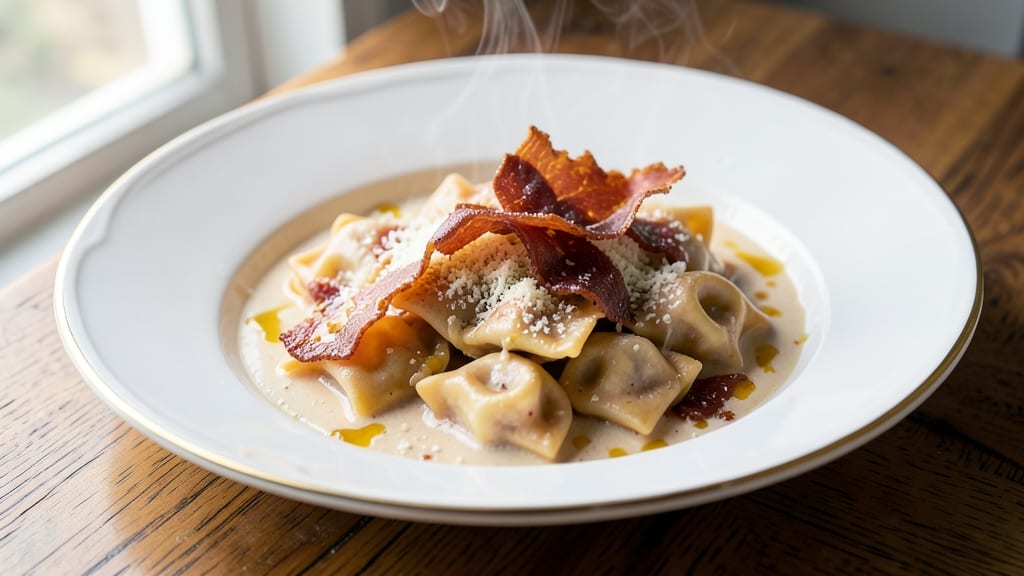
This bacon carbonara ravioli sauce delivers the perfect balance of crispy pancetta crunch and velvety egg yolk richness—no lumps, no guesswork. The secret lies in tempering raw egg yolks with stovetop heat while incorporating melted cheese and pasta water for a silky, restaurant-quality finish.
I perfected this technique after burning through three batches of scrambled eggs, and now it never fails to impress.
The foundation starts with crispy pancetta, rendered until golden and crisp, then set aside to preserve that addictive texture. Meanwhile, the sauce builds in stages: cheese melts into the pasta water, then raw egg yolks are whisked in slowly to create a smooth, creamy emulsion.
This method ensures a sauce that clings beautifully to ravioli without breaking apart when served.
What you'll end up with is a sauce that's creamy yet light, with pockets of crispy pancetta in every bite and a depth of flavor from aged Pecorino Romano and Parmesan.
The stovetop tempering technique transforms simple ingredients into something luxurious—no heavy cream needed, just the natural richness of eggs and cheese.
Perfect for tossing with homemade or store-bought ravioli, this sauce also works beautifully with fettuccine or even as a dipping sauce for crusty bread. The key is timing: remove the sauce just before it reaches peak thickness, as it will continue to thicken slightly off the heat.
Let's make this sauce!
Ingredients for bacon carbonara ravioli sauce
Eight essential ingredients transform into a luxurious sauce with crispy pancetta and velvety egg yolk perfection.
| Ingredient | Amount | Notes |
|---|---|---|
| Pancetta 🥓 | 6 oz | Diced into 1/4-inch pieces |
| Large Egg Yolks 🥚 | 4 whole | Fresh, room temperature |
| Pecorino Romano Cheese 🧀 | ¾ cup | Freshly grated, aged |
| Parmesan Cheese 🧀 | ½ cup | Freshly grated, aged |
| Reserved Pasta Water 💧 | 1 ½ cups | From cooked ravioli |
| Extra-Virgin Olive Oil 🫒 | 2 tbsp | For crisping pancetta |
| Freshly Ground Black Pepper 🌶️ | ½ tsp | Coarsely ground |
| Diamond Crystal Kosher Salt 🧂 | ¼ tsp | For seasoning |
| Freshly Grated Nutmeg 🍃 | ⅛ tsp | Fine, optional |
The pancetta is non-negotiable for that signature crunch—look for thick-cut slices at your local butcher or specialty market like Whole Foods for the best quality. Render it low and slow until golden, then crisp it up in the final moments. The cheese matters too: Pecorino Romano and Parmigiano-Reggiano should be freshly grated from blocks, not pre-shredded. If you're using store-bought, Kirkland Signature or Violife brands have reliable quality. Egg yolks need to be fresh and at room temperature for the emulsion to work properly—no cold yolks here.
No pancetta? Guanciale works perfectly if you can find it, otherwise thick-cut bacon in a pinch (though it's smokier). Short on Pecorino? Asiago or Grana Padano add depth, though they won't be identical. The pasta water is critical—it's what gives the sauce its signature cling. If you've drained all yours, add a splash of warm water with a pinch of salt. For the nutmeg, pre-grated works fine, but freshly grated adds that restaurant-quality aroma. The olive oil should be extra-virgin with peppery notes—none of that bland supermarket stuff.
Pancetta keeps for 5 days in the fridge if stored in an airtight container, but it's best used fresh for maximum crunch. Grated cheese should be used within 2 days for peak flavor, though it'll keep longer if wrapped tightly in parchment. The sauce itself is best made fresh but can be reheated gently on low heat with a splash of pasta water. For make-ahead convenience, pre-render the pancetta and store separately—just add it back in at the end when reheating. This sauce is all about timing, so don't rush the tempering process—patience ensures that silky texture.
Why You'll Love This Recipe
- Five-Ingredient Magic: I swear by this sauce—just pancetta, yolks, and those sharp cheeses. No fancy technique, no stress, and the result? Rich, golden perfection that tastes like you spent hours cooking.
- Creamy Without Cream: The yolks and reserved pasta water create that signature silky texture, but it’s the crispy pancetta that makes it sing. Honestly, the first bite is always the best—no one ever guesses how simple it is.
- Weeknight to Dinner Party: Same sauce works for a lazy Tuesday or impressing guests. Toss it with store-bought ravioli for a quick meal, or serve it at a gathering—no one will care if it’s "fancy" or not.
- Leftovers That Don’t Suck: Unlike carbonara, this sauce reheats like a dream. Toss cold ravioli with a splash of water to loosen it up, and it’s just as good the next day—my kids’ favorite for lunch.
Step-by-step instructions for bacon carbonara ravioli sauce
Master this technique and you'll achieve a perfect balance of crispy pancetta and velvety egg yolk sauce every time.
Crisp the Pancetta Until Golden and Crunchy
Heat a large skillet over medium heat and add the 2 tablespoons extra-virgin olive oil. Once the oil shimmers, add the 6 oz diced pancetta and cook undisturbed for 6-8 minutes until the pieces are deep golden brown and crisp around the edges. This slow rendering creates maximum flavor and that essential crunch.
Resist the urge to stir frequently—let the pancetta develop a proper crust. You want the fat to render out but not burn, which happens if you move it too much. When the pancetta reaches your desired crispness, transfer it to a small bowl using a slotted spoon, leaving the rendered fat in the pan. This fat is liquid gold for your sauce.
Prepare the Egg and Cheese Mixture
In a medium bowl, whisk together the 4 whole large egg yolks until they're completely smooth. Add the 0.75 cup freshly grated Pecorino Romano cheese, 0.5 cup freshly grated Parmesan cheese, 0.5 teaspoon freshly ground black pepper, 0.25 teaspoon Diamond Crystal kosher salt, and the 0.125 teaspoon freshly grated nutmeg (if using). Whisk until you achieve a thick, pale yellow custard-like consistency.
This mixture should be smooth with no visible cheese granules—if you see any, whisk more vigorously. The nutmeg adds subtle warmth that complements the salty pancetta and rich cheese. Keep this bowl ready at room temperature while you finish the sauce base.
Build the Sauce Base with Reserved Pasta Water
Return the skillet with pancetta fat to medium-low heat. Add ½ cup of the 1.5 cups reserved pasta water and scrape up any browned bits from the bottom of the pan using a wooden spoon. This deglazing step captures all the pancetta flavor that would otherwise stick to the pan.
Simmer the mixture for 2-3 minutes until it reduces slightly and becomes slightly thickened. This creates a flavorful base that will help emulsify your egg mixture later. Keep the heat gentle—you don't want to cook the pasta water too much or it will lose its starch content, which is crucial for sauce consistency.
Combine and Emulsify the Sauce
Remove the skillet from heat completely—this is critical to prevent scrambling the eggs. Add the crispy pancetta back to the pan along with the remaining 1 cup reserved pasta water. Pour in the egg-cheese mixture in a slow, steady stream while whisking constantly with a fork or small whisk.
Continue whisking vigorously for 1-2 minutes until the sauce becomes thick and creamy. The residual heat from the pan will gently cook the eggs into a silky sauce. If the sauce starts to look too thick, add 1 tablespoon at a time of additional reserved pasta water until you reach your desired consistency—it should coat the back of a spoon but still flow smoothly.
Finish and Serve Immediately
Taste the sauce and adjust seasoning if needed—you may need a pinch more salt or pepper to balance the flavors. The sauce should be rich, slightly tangy from the cheese, and peppery with a hint of nutmeg warmth. Transfer the sauce to a serving bowl and keep it warm over low heat while you cook your ravioli.
When ready to serve, toss the cooked ravioli with the sauce until each piece is fully coated. The final result should be crispy pancetta bits suspended in a velvety, creamy sauce that clings perfectly to each ravioli. Serve immediately while the sauce is at its peak consistency—carbonara doesn't wait, and the texture changes quickly as it cools.
Pro Tips For Making Bacon Carbonara Ravioli Sauce
- CRISP THE PANCETTA FIRST: Render the pancetta in a cold, dry pan—no oil needed—until it’s golden and crispy, not just fatty. If you rush this, you’ll end up with greasy ravioli sauce instead of that perfect crunch and rich flavor. I used to skip this step and wondered why my carbonara always tasted flat.
- GRATE THE CHEESE FINE: Use a microplane or fine grater for the Pecorino Romano and Parmesan—no big chunks allowed. The sauce needs to emulsify smoothly, and lumps will make it grainy. I learned this the hard way after serving a guest a bite with a chewy cheese surprise.
- TEMPER THE EGGS: Warm the egg yolk mixture with a splash of pasta water (about 1/4 cup) before adding it to the pan—just until it’s steaming, not boiling. This prevents scrambling and ensures a silky, creamy sauce. I was skeptical until I tried it, and now I never go back.
- SALT THE PASTA WATER: Reserve the pasta water after salting it generously—about 1 tablespoon per quart of water. The salted water is what makes the sauce emulsify properly, so skipping this step means your carbonara will taste bland and clumpy. Yes, even if you’re impatient like me.
Common mistakes when making perfect results
Overcooking Egg Yolks
This is the #1 mistake I see—eggs curdle when exposed to too much heat, turning your sauce into scrambled eggs. The key is removing the pan from heat before adding the yolks, then relying on residual heat to gently cook them.
I once ruined three batches before I realized the pan needed to be off the burner completely during this step. 🔥
Skipping Pasta Water
Reserved pasta water isn't just water—it contains starch that helps emulsify the sauce. Using plain water or skipping it entirely results in a thin, grainy sauce that won't cling to ravioli. Always keep at least 1.5 cups of starchy pasta water reserved when cooking your ravioli.
If you drained it all, add a splash of warm water with a pinch of salt to replicate the starch content.
Adding Cheese Too Early
Cheese melts quickly and can scramble eggs if added too soon. Always mix the cheese with the egg yolks first, then combine with the hot pancetta fat. I learned this the hard way when my sauce separated into a greasy mess.
The cheese needs to be fully incorporated into the egg mixture before any heat is applied.
Using Cold Ingredients
Cold egg yolks or cheese cause the sauce to break and curdle. Always use room-temperature ingredients—let yolks sit for 10-15 minutes before using. I keep my eggs in a bowl of warm water for 5 minutes before whisking to ensure they're perfectly tempered.
This small step makes all the difference in achieving that silky texture.
Not Deglazing Properly
Skipping the deglazing step means losing all those flavorful browned bits stuck to your pan. Always add ½ cup pasta water and scrape vigorously with a wooden spoon to capture every last bit of flavor. I've tasted the difference—proper deglazing adds depth that plain pancetta fat can't match. 💫
Overmixing After Combining
Once the sauce emulsifies, continue whisking can break the emulsion and turn it grainy. Stop mixing as soon as the sauce thickens to a creamy consistency. I've seen people whisk for 5 minutes straight, turning their perfect sauce into a sad, lumpy mess.
Trust the process—it only takes 1-2 minutes of active whisking to achieve perfection.
Nutrition facts
Frequently asked questions
Can I make this sauce without eggs?
The traditional carbonara relies on egg yolks for that signature creamy texture, but you can create a dairy-based alternative. Use ½ cup heavy cream or ½ cup whole milk instead of the egg-cheese mixture—simmer it with the pancetta fat until slightly thickened, then stir in the cheese. This version won't be as rich but works in a pinch. For a vegan option, try a cashew cream base with nutritional yeast for depth.
How do I prevent the sauce from breaking or getting grainy?
Three key steps:
- Remove the pan from heat before adding egg yolks,
- whisk constantly for 1-2 minutes until thickened, and
- use reserved pasta water (never plain water). The starch in pasta water helps emulsify the sauce. If it starts separating, immediately whisk in 1 tablespoon of warm pasta water to restore creaminess. Pro tip: Keep the heat at medium-low or lower during the entire process.
Can I make this sauce ahead of time?
Fresh is best, but you can prep components in advance. Cook the pancetta and store it separately (it stays crispy for 3-4 days in the fridge). Grate the cheese and store it in an airtight container for 2 days. For the sauce itself, make it up to 1 day ahead and refrigerate—reheat gently with low heat and a splash of pasta water, whisking constantly until smooth. Never reheat fully cooked egg-based sauces in the microwave, as it causes curdling.
What's the difference between this sauce and traditional carbonara?
Traditional Roman carbonara uses guanciale (cured pork cheek) instead of pancetta, and often includes whole eggs cooked directly in the pan. This version simplifies with pancetta (more accessible) and a stovetop tempering technique for a smoother, more modern texture. Both are delicious, but this recipe works better for ravioli because it's lighter and clings beautifully without being too heavy.
Can I add other ingredients like mushrooms or spinach?
Sauté ½ cup finely chopped mushrooms or 1 cup baby spinach in the pancetta fat before removing it from the pan. Add them back in at the very end with the crispy pancetta. For mushrooms, cook until fully tender (5-6 minutes) and for spinach, just 30 seconds until wilted. Just be mindful that these additions will dilute the sauce slightly—adjust the egg-cheese ratio if needed for desired thickness.