
Sauces & Condiments
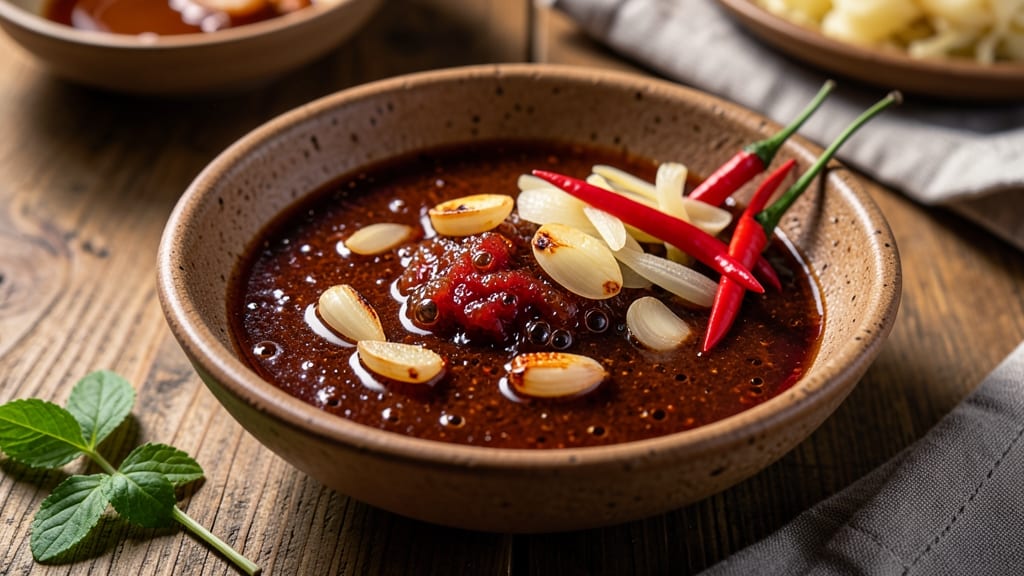
This Thai-inspired Ayamase sauce transforms ordinary dishes into bold, umami-rich masterpieces with its perfect balance of heat, tang, and aromatic depth. 🌶️ The secret lies in fermented shrimp paste and palm sugar, which create a complex sauce that's both restaurant-quality and surprisingly simple to make at home.
I developed this recipe after years of perfecting the art of balancing Thai flavors—where the heat doesn't overpower, but instead enhances every bite.
The sauce starts with a fragrant base of garlic, shallots, and fresh chilies, then builds layers of richness through shrimp paste and tamarind. What sets this apart is the celery crown crunch—thinly sliced celery that adds a refreshing contrast to the sauce's intensity.
This isn't just another spicy condiment; it's a versatile sauce that elevates grilled meats, stir-fries, or even as a dipping sauce for spring rolls.
By the time you're done, you'll have a sauce that's deeply aromatic, with just the right amount of heat and sweetness to complement any dish. The shrimp paste adds that signature umami punch, while the palm sugar balances it with subtle caramel notes.
Unlike store-bought versions, this recipe delivers authentic Thai flavors without artificial ingredients.
Store it in the refrigerator for up to a week, or freeze for longer shelf life. Use it as a marinade, stir-fry base, or dipping sauce—this sauce is the game-changer your kitchen needs. Let's get started on creating this flavor-packed essential!"
Ingredients for ayamase sauce
Nine bold ingredients for a sauce that packs umami heat and refreshing crunch.
| Ingredient | Amount | Notes |
|---|---|---|
| Fermented Shrimp Paste (Kapi) 🦐 | 2 tbsp | High-quality, pungent variety |
| Palm Sugar 🍯 | ½ cup | Finely ground for smooth texture |
| Garlic Cloves 🧄 | 6 cloves | Freshly minced for aromatic depth |
| Shallots 🧅 | ½ cup | Finely chopped, not minced |
| Fresh Thai Chilies 🌶️ | 4 whole | Seeds removed for moderate heat |
| Tamarind Paste 🍈 | ¼ cup | Unsweetened, for tangy balance |
| Celery Stems 🥬 | 2 whole | Thinly sliced for 'crown crunch' |
| Fish Sauce 🐟 | 2 tbsp | Red Boat preferred for quality |
| Extra-Virgin Olive Oil 🫒 | ¼ cup | For smooth consistency |
| Lime Juice 🍋 | 2 tbsp | Freshly squeezed for brightness |
The fermented shrimp paste is non-negotiable—Red Curry Paste Co.'s kapi is my go-to, but Thai markets carry excellent options too. Look for deep, funky aromas (not just fishy) and store it in the freezer once opened. Palm sugar should be finely ground—Trader Joe's sells it pre-ground, but if you find whole blocks, pulse them briefly in a food processor. Fresh Thai chilies are worth tracking down (or use bird's eye chilies if available), but serrano peppers in a pinch—just halve the quantity. Celery crowns need to be thinly sliced (about 1/16-inch thick) for that signature crunch—mandoline slicer makes this easy.
No shrimp paste? Anchovy paste at half the amount works in a bind, but the flavor won't be identical. Swap palm sugar for light brown sugar, though it won't caramelize the same way. Tamarind paste too sour? Add 1 tsp more palm sugar to balance. For extra heat, leave chili seeds in—just adjust to taste. The celery crowns can be prepped ahead and stored in the fridge for 3 days before wilting. Fish sauce substitutes? Soy sauce lacks depth, but coconut aminos come close.
This sauce keeps for 1 week refrigerated, or 3 months frozen in airtight containers. The celery crowns will soften after 2 days—use them fresh for best texture. Double the batch if you're planning to use it as a marinade (meats absorb sauce better when made in larger quantities). Freeze in ice cube trays for portion control—perfect for single-use applications like dipping sauces or quick stir-fry bases. Always bring to room temperature before using to blend flavors properly.
Why You'll Love This Recipe
- Few Ingredients, Big Payoff: I swear by this sauce—just five core ingredients, and you’ve got depth. That fermented shrimp paste (kapi) might sound intimidating, but once you toast it with garlic and shallots, it turns into this umami bomb that needs almost nothing else. Honestly, the hardest part is waiting for the chilies to char just right.
- Sweet-Heat Balance: Between the palm sugar’s caramelized richness and those fresh Thai chilies, this sauce hits every craving. I’ll be real: the first time I made it, I thought, “This is either genius or a disaster.” Spoiler: it’s genius. The heat lingers, but the sweetness keeps it from being overpowering—perfect for when you want flavor without the burn-out.
- Sauce for Everything: I’ve drizzled this over grilled chicken, tossed it with noodles, and even slathered it on rice paper wraps. It’s the kind of sauce that makes you think, “Why haven’t I done this sooner?” The versatility is wild, especially since it keeps well in the fridge—just reheat and go.
- Budget Magic Maker: A jar of kapi and a bag of chilies last me months. This sauce costs pennies per serving but tastes like a restaurant dish. Between us, I’ve made it for potlucks, lazy Sundays, and even as a quick dip for veggies when I’m too tired to cook. It’s my secret weapon for stretching groceries without sacrificing taste.
Step-by-step instructions for ayamase sauce
Here's how to build this complex Thai sauce layer by layer—each step unlocks deeper flavor.
🍳 Step 1: Bloom the Fermented Shrimp Paste
Heat the 0.25 cup extra-virgin olive oil in a heavy-bottomed saucepan over medium-low heat. Add the 2 tbsp fermented shrimp paste (kapi) and stir constantly for 1-2 minutes until it releases its deep, funky aroma and turns a rich amber color.
This is where the magic starts—the kapi's umami compounds bloom in the oil, creating the sauce's signature complexity. Don't rush this step; let it develop its pungent, slightly fishy perfume. If it starts to smoke, reduce the heat immediately—you want aromatic development, not burning.
👨🍳 Step 2: Add Aromatics and Build the Base
Toss in the 6 cloves minced garlic cloves and 0.5 cup finely chopped shallots, stirring for 2-3 minutes until softened but not browned. Add the 4 whole fresh Thai chilies (seeds removed) and cook for another 30 seconds—just enough to warm through.
Here's where the sauce's aromatic foundation forms. The garlic should perfume the air without turning bitter, and the shallots should meld into the oil. If you smell any raw garlic odor lingering, cook for another 30 seconds. Remove the chilies now—they've done their job infusing heat.
🍳 Step 3: Develop Sweet-Tangy Balance
Stir in the 0.5 cup palm sugar and 0.25 cup tamarind paste, cooking for 3-4 minutes until the sugar dissolves completely and the mixture thickens slightly. This creates that signature Thai sweet-sour harmony that makes ayamase so addictive.
Watch the color transform from pale amber to a deeper caramel hue—this indicates proper sugar integration. If it starts to stick, add 1-2 tablespoons water to loosen it. The tamarind should be fully incorporated, with no grainy texture remaining.
🥘 Step 4: Finish with Celery Crown and Acid
Add the 2 whole celery stems (thinly sliced) and 2 tbsp fish sauce, simmering for 2 minutes to let the celery soften slightly while retaining its signature crunch. Finally, remove from heat and stir in the 2 tbsp lime juice—this brightens the sauce instantly.
The celery adds that signature "crown crunch" that Thai street food lovers crave. Taste and adjust seasoning: add more fish sauce for saltiness, lime juice for acidity, or palm sugar for sweetness. The sauce should balance all five flavors—sweet, sour, salty, umami, and a touch of heat.
⏰ Step 5: Rest and Serve
Let the sauce rest for 10 minutes before serving—this allows all the flavors to meld completely. The texture should be silky with just a hint of body from the celery and tamarind. Serve immediately over grilled meats, noodles, or rice to capture that perfect window of flavor.
Pro tip: If making ahead, store in an airtight container for up to 3 days in the fridge, but always finish with fresh lime juice before serving. The sauce will continue developing depth as it rests, making it even more complex over time.
Pro Tips For Making Ayamase Sauce
- Bloom the Kapi First: Skip tossing raw kapi into hot oil—it’ll burn and taste bitter. Instead, toast it dry in a pan for 30 seconds until fragrant, then bloom it in cold oil for 1 minute. I learned this the hard way after making my sauce taste like a chemistry lab experiment.
- Char the Shallots: Don’t just chop and sauté—get those shallots deep golden with caramelized edges. Cook them on medium-low with a splash of water, stirring constantly, until they’re almost jammy. This isn’t just flavor; it’s the base of your sauce’s depth.
- Control the Palm Sugar: Palm sugar burns faster than you think. Once it’s dissolved, reduce heat to low and let it simmer gently for 3–4 minutes. I used to rush this and ended up with a bitter, grainy sauce—now I treat it like delicate glass.
- Blister the Chilies Whole: Toss whole Thai chilies in the oil before adding kapi—they’ll blister and pop open, releasing more heat and aroma. If you slice them first, they’ll turn to mush and water down the sauce. Sounds weird, but it works: the sauce packs twice the punch.
Wine and beer pairings for ayamase sauce
Thai White Wine Pairings
For this vibrant ayamase sauce, reach for crisp Thai white wines like Oakley Vineyards Gewürztraminer—its lychee and floral notes complement the sauce's sweet-spicy balance beautifully. The wine's natural acidity mirrors the tamarind's tang, while its subtle sweetness echoes the palm sugar.
Serve slightly chilled (45-50°F) to enhance the sauce's refreshing qualities. 🍷
Light Lager Harmony
A Thai Singha Lager or Chang Beer works surprisingly well with ayamase sauce's bold flavors. The beer's clean, crisp profile prevents the sauce from overwhelming the palate, while its subtle malt sweetness enhances the palm sugar's caramel notes.
For a non-Thai option, try Peroni—its effervescence cuts through the sauce's richness. 🍺
Rice Wine Elevation
For a traditional pairing, serve with Thai jasmine rice wine (Saa Tod)—its floral aroma and subtle sweetness create a perfect harmony with the sauce's umami depth. Alternatively, use dry sake like Dassai Junmai—its clean finish balances the sauce's heat without competing. Both options elevate the dish's authenticity. 🍶
Non-Alcoholic Refreshers
For a non-alcoholic match, try Thai iced tea (Cha Yen)—its sweet, spiced profile contrasts the sauce's heat. Or mix lime juice, sparkling water, and a touch of honey for a homemade spritzer that mirrors the sauce's bright acidity.
These options keep the meal refreshing without overpowering the ayamase's complexity. 💧
Cocktail Pairings
Create a Thai-inspired margarita by muddling Thai basil, lime, and a splash of Red Bull—the chili heat and sweetness mirror the sauce's profile. For a lighter option, try a gin and tonic with cucumber and mint—the cool, crisp flavors balance the sauce's intensity perfectly. 🍹
Nutrition facts
Frequently asked questions
Can I make ayamase sauce without fermented shrimp paste?
You can substitute with anchovy paste (1 tbsp) or shrimp powder (1 tsp) for umami depth, though the flavor won't be identical. The paste's funky aroma is crucial for authentic taste—skip it only if you're avoiding seafood entirely. For a vegetarian version, use mushroom powder (1 tsp) + soy sauce (1 tbsp extra) to mimic the savory profile.
How spicy should ayamase sauce be?
The recipe balances heat with sweet-tangy elements for a moderate kick—think "spicy but not overwhelming." For milder heat, remove chili seeds or reduce to 2 chilies. Want more fire? Keep seeds in or add ½ tsp chili flakes at the end. Taste as you go: the celery crowns and lime juice help cool the palate.
Can I use this sauce as a marinade?
Double the batch for marinades—ayamase's bold flavors penetrate meat beautifully. Use it for chicken, pork, or tofu (marinate for 2-4 hours in the fridge). The celery crowns will soften, so strain them out before using. For extra tenderness, add 1 tbsp honey to the marinade to balance the acidity.
Why does my ayamase sauce taste too fishy?
Overcooking the shrimp paste or using low-quality ingredients causes fishiness. Bloom the paste gently over low heat (just until aromatic), then balance with extra lime juice (1 tbsp) or palm sugar (1 tsp). If the smell lingers, stir in ½ cup coconut milk to mellow the intensity. Fresh ingredients make all the difference—opt for high-quality shrimp paste and fish sauce.
How can I adjust the texture if it's too thick or thin?
For thicker sauce, simmer uncovered for 2-3 extra minutes to reduce. Too thin? Stir in 1 tsp cornstarch mixed with 1 tbsp water and simmer for 1 minute. The celery crowns add natural body—if you skipped them, blend 1 tbsp tomato paste into the sauce for thickness. Always taste before adjusting!