
Sauces & Condiments
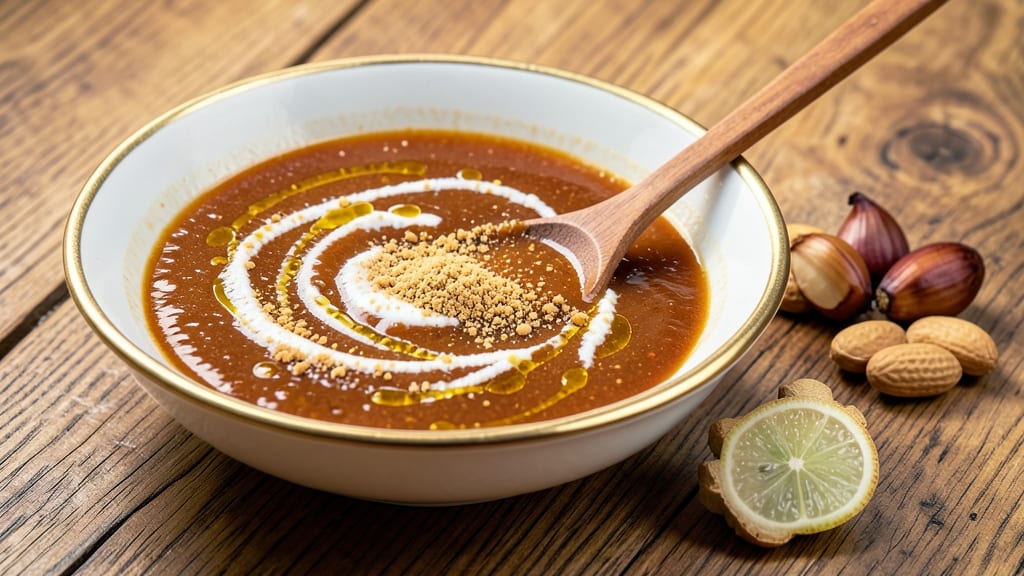
This authentic satay sauce recipe with coconut milk delivers the nutty-spiced perfection that transforms grilled meats into restaurant-quality masterpieces. The secret lies in balancing rich coconut milk with aromatic spices like turmeric and coriander, creating a sauce that's both vibrant and deeply flavorful.
I've refined this recipe over years of testing, ensuring every spoonful delivers that signature satay experience—creamy yet tangy, with just the right level of heat.
What sets this sauce apart is its traditional foundation built for modern kitchens. We start with a fragrant paste of garlic, shallots, and ginger, then combine it with coconut milk for natural creaminess.
The spices—turmeric for color, coriander for warmth—simmer until the sauce thickens just enough to cling beautifully to grilled chicken or beef. No artificial ingredients here, just pure, authentic flavor that comes together in under 30 minutes.
The result is a velvety sauce with a perfect balance of sweetness from the coconut milk and depth from the toasted spices. It's the kind of sauce that makes every bite of grilled satay skewers unforgettable, with that signature nutty aroma wafting through your kitchen.
The best part? This recipe scales effortlessly, whether you're serving a crowd or prepping for meal prep.
For an extra touch of authenticity, consider lightly toasting your peanuts before blending them into the sauce. This enhances their natural oils and creates that perfect crunchy texture that satay lovers crave.
The sauce keeps well in the fridge for up to a week, making it perfect for batch cooking and future grilling sessions. Let's create this flavorful masterpiece together.
Ingredients for authentic satay sauce recipe with coconut milk
These vibrant ingredients create the nutty-spiced satay perfection you crave for grilled dishes.
| Ingredient | Amount | Notes |
|---|---|---|
| Coconut Milk 🥥 | 1 ½ cups | Full-fat canned for creaminess |
| Peanuts 🥜 | ½ cup | Lightly toasted for crunch |
| Garlic Cloves 🧄 | 6 cloves | Peeled and minced finely |
| Shallots 🧅 | 3 whole | Minced for aromatic base |
| Fresh Ginger 🌿 | 2 tbsp | Grated, not powdered |
| Turmeric Powder 🌶️ | 1 tsp | For vibrant color |
| Ground Coriander 🌿 | 1 ½ tsp | Toasted for warmth |
| Cumin Seeds 🌶️ | 1 tsp | Toasted until fragrant |
| Soy Sauce 🍶 | 1 tbsp | Light or dark preferred |
| Lime Juice 🍋 | 1 tbsp | Freshly squeezed |
| Brown Sugar 🍚 | 1 tbsp | For subtle sweetness |
| Salt 🧂 | ½ tsp | Adjust to taste |
| Vegetable Oil 🫒 | 1 tbsp | For sautéing |
The coconut milk is non-negotiable here—full-fat canned gives that signature creaminess you can't replicate with lighter versions. Thai Kitchen brand is my go-to for authentic flavor, but any quality canned brand works. Toast your peanuts in a dry pan until golden (about 3-4 minutes)—this enhances their natural oils and gives that perfect crunch. The garlic, shallots, and ginger need to be minced finely for a smooth sauce, but don't stress about perfection; just make sure they're small enough to blend well. For the spices, Penzeys or Spicewalla have the best quality, but the grocery store stuff works fine if it's fresh. Quick test: if your spices smell like dust, toss them.
No peanuts? Cashews or almonds work in a pinch, but expect a different texture. Short on garlic? Garlic powder at half the amount gets you close, though fresh is ideal. The soy sauce can be swapped for tamari if gluten-free, and if you're avoiding sugar, maple syrup works beautifully. For an extra kick, add a pinch of cayenne (about 1/4 tsp). The lime juice is crucial—Mexican limes have more punch, but regular limes work too. If you're prepping ahead, make the spice paste (garlic, shallots, ginger, spices) separately and store it in the fridge for up to 3 days—it's a time-saver for busy grilling nights.
This sauce keeps beautifully in the fridge for up to 1 week, though it tastes best within the first 3 days. For longer storage, freeze it in ice cube trays—perfect portions for future grilling sessions. The peanuts will separate slightly, so give it a quick stir before using. If the sauce thickens too much, just add a splash of water or coconut milk to loosen it. The flavor actually improves overnight as everything melds together—make extra if you can. It's perfect for drizzling over satay skewers, grilled chicken, or even as a marinade for tofu.
Why You'll Love This Recipe
- No-Fuss Blender Magic: The moment I toss in the coconut milk, crushed peanuts, and minced garlic, it’s basically self-stirring—just pulse until smooth. No straining, no fuss, and that rich, nutty base builds itself while you chop shallots.
- Peanut-Ginger Wake-Up Call: Between us, the ginger and toasted peanuts hit different. The ginger’s sharp zing cuts through the coconut’s creaminess, while the peanuts add that addictive crunch—like a hug for your taste buds, but better.
- Weeknight to Party Hero: I keep a jar of this in the fridge because it’s that good. Slather it on grilled chicken for a quick weeknight dinner, or drizzle it over veggie skewers for a crowd. Same sauce, two totally different vibes.
- Budget-Friendly Batch Winner: A can of coconut milk and a bag of peanuts stretch this sauce across three meals—leftover satay, rice bowls, even stir-fries. Honestly, it’s the only recipe where I actually want to make extra.
Step-by-step instructions for authentic satay sauce
Here's how to create that rich, nutty-spiced satay sauce that'll elevate any grilled dish.
Toast the Spices and Aromatics
Heat the 1 tablespoon vegetable oil in a medium saucepan over medium heat. Add the 1 teaspoon cumin seeds and toast for 30 seconds until they release their deep, nutty aroma. Then add the 3 whole shallots and 6 cloves garlic cloves, cooking for 3-4 minutes until the shallots turn translucent and the garlic turns golden.
This step builds the aromatic foundation of your sauce. The cumin seeds should sizzle loudly at first, then settle into a gentle popping sound. If they start to darken too quickly, reduce the heat slightly. Stir occasionally to prevent burning, as charred aromatics will make the sauce bitter rather than flavorful.
Add Ginger and Toasted Spices
Stir in the 2 tablespoons fresh ginger and cook for 1 minute until fragrant. Add the 1 teaspoon turmeric powder and 1.5 teaspoons ground coriander, stirring constantly for 30 seconds to bloom their flavors. The mixture should smell earthy and warm—this is your cue that the spices are properly activated.
I like to press the ginger with the back of a spoon to break it down slightly before adding. This helps release more flavor into the oil. The turmeric will give your sauce that signature golden hue, while the coriander adds a citrusy brightness that balances the richness of the coconut milk.
Build the Sauce Base
Pour in the 1 tablespoon soy sauce and 1 tablespoon brown sugar, stirring to combine. Cook for 1 minute until the sugar begins to dissolve. Then add the 1.5 cups coconut milk all at once, stirring gently to avoid creating lumps. Bring to a gentle simmer over medium-low heat and let it cook for 5-7 minutes until slightly thickened.
Here's where the magic happens—the coconut milk will gradually thicken as it simmers, creating that velvety texture we love in satay sauce. If the sauce starts to curdle, reduce the heat slightly and stir more gently. The sauce should coat the back of a spoon but still be pourable—this consistency is perfect for dipping or basting.
Finish with Lime and Salt
Remove the pan from heat and stir in the 1 tablespoon lime juice and 0.5 teaspoon salt. Let the sauce sit for 2-3 minutes to allow the flavors to meld. The acidity from the lime will brighten the rich coconut and spice flavors, creating that perfect balance.
Taste and adjust the seasoning if needed—you might want a touch more salt or lime to suit your preference. The sauce should be tangy, slightly sweet, and deeply aromatic with notes of toasted spices. If you're using this for satay skewers, now is the perfect time to reduce the sauce slightly more by simmering for another 1-2 minutes to create a thicker consistency for dipping.
Incorporate Toasted Peanuts (Optional)
While the sauce cools slightly, toast the 0.5 cup peanuts in a dry skillet over medium heat for 3-4 minutes, stirring constantly, until they turn a rich golden brown and smell nutty. Let them cool for 1 minute, then roughly chop them.
Stir the toasted peanuts into the warm sauce just before serving. They add a delightful crunch and nutty depth that complements the smooth satay sauce perfectly. If you prefer a smoother sauce, you can omit this step or blend the peanuts into the sauce for a more integrated texture.
Pro Tips For Making Authentic Satay Sauce Recipe With Coconut Milk
- Simmer Low and Slow: I used to rush the coconut milk reduction like it was a race, and the sauce always ended up thin or curdled. Authentic satay sauce needs a gentle simmer—about 15-20 minutes on low heat—so the flavors meld without breaking the coconut. Stir occasionally, and if it starts to split, whisk in a splash of cold water and keep it moving.
- Blanch the Peanuts First: Raw peanuts in hot sauce? No thanks. Toss them in boiling water for 30 seconds, then drain and pat dry before blending. This softens them just enough to create a creamy texture without overpowering the sauce. (Yes, even if you’re impatient like me—trust the process.)
- Char the Aromatics: Skip the raw garlic and shallots—this sauce needs depth. Dry-fry the minced garlic, shallots, and ginger in oil until they’re golden brown (about 5 minutes). The caramelized bits add a smoky richness that store-bought paste can’t match. Just don’t walk away; burnt aromatics ruin everything.
- Strain for Smoothness: Blend everything, then strain the sauce through a fine-mesh sieve or cheesecloth. You’ll catch bits of skin and fiber that make the texture gritty. I learned this the hard way after serving a sauce that felt like eating sand. It’s extra work, but the result is velvety—worth it for special occasions.
Wine and beer pairings for these flavors
White Wine Pairings
A crisp, aromatic white wine like Thai-inspired Gewürztraminer cuts through the sauce's richness beautifully. Look for a slightly off-dry style from Germany or Alsace—its lychee and spice notes mirror the satay's tropical coconut and toasted spices.
I love Dr. Loosen Blue Slate Gewürztraminer for its vibrant acidity that refreshes your palate between bites of grilled chicken or beef. 🍷
Light Beer Options
For beer lovers, a Thai lager or Belgian witbier works wonderfully. Singha or Chang beers from Thailand complement the sauce's nutty and spiced profile without overpowering it. If you prefer craft options, a Belgian witbier like Stella Artois Wit (with its citrusy coriander notes) enhances the satay's aromatic complexity.
Serve slightly chilled to balance the sauce's warmth. 🍺
Red Wine Contrasts
While white wines dominate, a light-bodied red like Pinot Noir can work if you prefer red.
Choose a Thai or French Pinot Noir with bright acidity and red fruit notes—avoid heavy, tannic wines that clash with the sauce's creaminess. Decanter's Thai Pinot Noir is a fantastic choice, offering a smooth finish that pairs well with the dish's spiced depth.
Non-Alcoholic Pairings
Coconut milk-based Thai iced tea (from Thai Tea brand) is a perfect non-alcoholic match—its sweet, creamy notes echo the satay sauce's richness. For something lighter, try a sparkling lime soda (like San Pellegrino Aranciata) to cleanse your palate between bites.
The effervescence helps reset your taste buds after each savory spoonful. 🌿
Serving Temperature Tips
Serve your satay sauce at room temperature (around 70-75°F) to let the flavors fully develop. If using with chilled appetizers, keep the sauce slightly warmer to maintain its velvety texture.
For grilled dishes, warm the sauce gently before serving—just 10-15 seconds in the microwave or a quick stir in a warm pan suffices. Never boil the sauce after it's finished, as this can break down the delicate coconut flavors. ✨
Nutrition facts
Frequently asked questions
Can I use powdered coconut milk instead of canned?
While powdered coconut milk works in a pinch, it won't give you the same rich, creamy texture. The recipe calls for full-fat canned coconut milk because it contains more natural oils that create that signature velvety satay consistency. If you must substitute, use 1.5 cups liquid coconut milk (not the powdered version) and add 1 tablespoon coconut cream for better body. The flavor will be slightly lighter but still delicious.
How do I make this sauce spicier?
For extra heat, add 1/4 teaspoon cayenne pepper or 1/2 teaspoon chili flakes when you toast the spices. You can also stir in 1 teaspoon sambal oelek at the end for a smoky kick. Start with less—you can always add more to taste. The sauce's natural sweetness from the brown sugar balances the heat beautifully, so don't be afraid to experiment!
Can I make this sauce without peanuts?
If you have a nut allergy or simply prefer a nut-free version, omit the peanuts entirely. For texture, stir in 1 tablespoon toasted sesame seeds or 1/4 cup crushed cornflakes at the end. The sauce will still be rich and flavorful—just without the signature crunch. The coconut milk and spices carry all the essential satay flavors perfectly.
Why did my sauce separate?
Coconut milk separation usually happens from too much heat or rapid temperature changes. To fix it, whisk in 1 tablespoon coconut cream or 1 teaspoon cornstarch mixed with 1 tablespoon water while warming the sauce gently on low heat. Stir constantly until smooth. For prevention, always simmer the sauce gently over medium-low heat and avoid boiling. The sauce should never bubble vigorously.
How can I use this sauce beyond satay?
This versatile sauce works beautifully as a marinade for grilled chicken, beef, or tofu (marinate for 2-4 hours before cooking). Drizzle it over rice noodles or pad thai, use it as a dip for spring rolls, or even mix it into curries or soups. For extra richness, stir in 1 tablespoon peanut butter when serving. The possibilities are endless—just remember the sauce tastes best when used within 3 days of making it.