
Sauces & Condiments
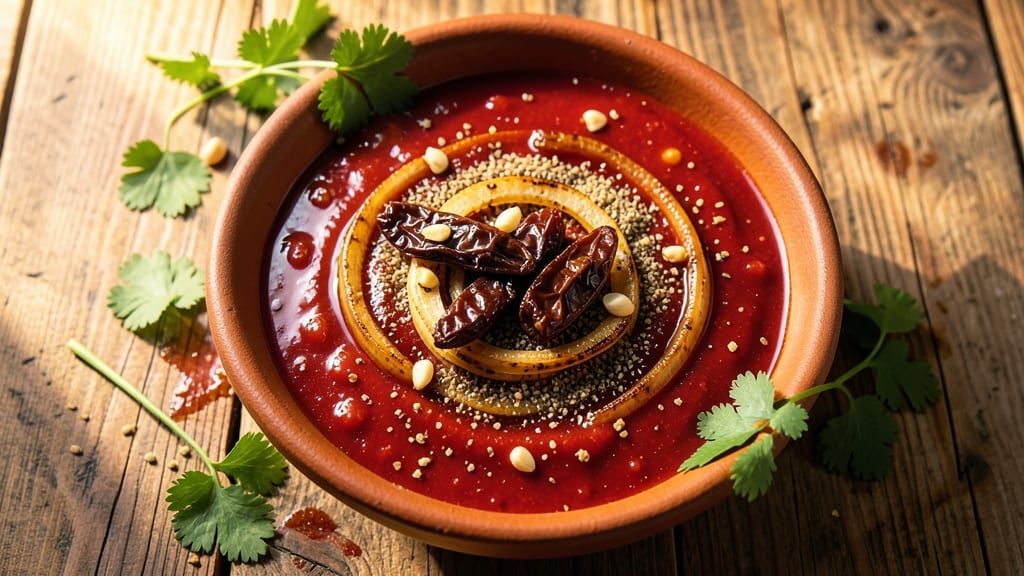
This authentic Mexican tomato sauce transforms simple ingredients into a smoky, complex base that elevates everything from tacos to grilled meats.
The secret lies in dried ancho chiles and guajillo peppers, which infuse deep, earthy heat while simmering with tomatoes, onions, and garlic until the flavors meld into a velvety, slightly thickened sauce.
Unlike store-bought versions, this recipe builds layers of flavor through traditional techniques—charred peppers, toasted spices, and a fresh cilantro finish that brightens every bite.
What sets this sauce apart is its balance: the smokiness from the chiles, the warmth of cumin and oregano, and the acidity of tomatoes create a harmonious foundation. The sauce reduces naturally while simmering, developing a rich, jammy texture that clings beautifully to proteins or absorbs perfectly into rice.
It’s designed to be made in batches—ideal for freezing and using throughout the week—so you always have that restaurant-quality depth on hand.
By the time you taste the first spoonful, you’ll understand why this sauce is a staple in Mexican kitchens. The blend of dried chiles and fresh herbs delivers a complexity that store-bought versions can’t match, while the simmering process ensures a smooth, cohesive finish.
Whether you’re drizzling it over carnitas, stirring it into beans, or using it as a marinade, this sauce turns simple dishes into something extraordinary.
The best part? It keeps well for up to 3 months in the freezer, so you can make a big batch and always have it ready. Here’s how to create it—step by step—with tips to perfect every batch.
Ingredients for authentic mexican tomato sauce
These 12 ingredients create a restaurant-quality Mexican sauce that transforms simple dishes into something extraordinary.
| Ingredient | Amount | Notes |
|---|---|---|
| Dried Ancho Chiles 🌶️ | 4 whole | Stems and seeds removed |
| Dried Guajillo Peppers 🌶️ | 4 whole | Stems and seeds removed |
| Roma Tomatoes 🍅 | 2 lb | Ripe, quartered for simmering |
| Yellow Onion 🧅 | 1 whole | Chopped into small dice |
| Garlic Cloves 🧄 | 6 cloves | Peeled, lightly toasted |
| Ground Cumin 🌿 | 1 tbsp | Toasted for deeper flavor |
| Dried Mexican Oregano 🍃 | 1 tbsp | Not regular oregano |
| Extra-Virgin Olive Oil 🫒 | ¼ cup | For charring peppers |
| Fresh Cilantro 🌿 | ¼ cup | Chopped, for finishing |
| Lime Juice 🍋 | 2 tbsp | Freshly squeezed |
| Salt 🧂 | 1 tsp | Diamond Crystal preferred |
| Black Pepper 🌶️ | ½ tsp | Freshly ground |
The ancho and guajillo chiles are the heart of this sauce—look for vibrant, slightly wrinkled pods at Latin markets or the international aisle of Whole Foods. If they're hard as rocks, soak them in hot water for 10 minutes to soften. The Roma tomatoes should be ripe but firm; Heirloom varieties add even more depth. Toasting the cumin and garlic in olive oil before adding them to the pot releases their essential oils, giving the sauce that professional, layered flavor. For the peppers, char them directly over a gas flame or under a broiler for 2-3 minutes per side—this smoky step is non-negotiable for authentic taste.
No ancho chiles? Pasilla peppers work in a pinch, but reduce the amount to 3 chiles total. Guajillo peppers unavailable? Arbol peppers at half the amount add heat, but you'll need to adjust the salt. Fresh cilantro wilting? Dried cilantro at one-quarter the amount is better than skipping it entirely. The lime juice can be swapped for lemon juice, but lime's brightness is ideal. For a smoother sauce, blend the finished mixture briefly—though purists prefer the rustic texture. And if your tomatoes are watery, roast them first to concentrate their flavor before adding to the pot.
This sauce tastes even better the next day as flavors meld. Store in a sealed glass jar in the fridge for up to 1 week, or freeze in ice cube trays for single-use portions that keep for 3 months. The texture thickens as it cools, so thin with a splash of water or broth if needed. For extra richness, stir in a spoonful of vegetable oil before serving. And if you make a big batch? Portion it into containers so you always have restaurant-quality sauce ready for tacos, beans, or grilled meats.
Why You'll Love This Recipe
- No Chopping Chaos: I’ll admit, the onions and garlic still make me cry—but only for a minute. The real magic? Those dried chiles just soak in hot water while you stir the tomatoes and onion on low. Five minutes of prep, 20 minutes of simmering, and you’re done. (Yes, even on a Tuesday night.)
- Deep Umami Magic: The ancho and guajillo peppers don’t just add heat—they bring this sauce a smoky, almost sweet depth that lingers. That crispy char from the dried peppers? It turns into a velvety richness that makes every spoonful feel like a little Mexican hug.
- Taco Night to Soup Bowl: This sauce isn’t just for tacos. Drizzle it over grilled chicken for a quick weeknight dinner, stir it into beans for a hearty pot, or even toss it with pasta when you’re craving something different. Honestly, I’ve used it in at least three ways this month alone.
- Pantry Goldmine: Between us, dried chiles and Roma tomatoes are some of the most budget-friendly flavor boosters out there. A single batch stretches into four meals—freeze half for when you’re too tired to cook. (And trust me, that’s a lifesaver.)
Step-by-step instructions for authentic Mexican tomato sauce
Transform simple ingredients into a rich, smoky sauce that captures the soul of Mexican cuisine.
Toast and Rehydrate the Dried Chiles
Begin by toasting the 4 whole dried ancho chiles and 4 whole dried guajillo peppers in a dry skillet over medium heat for 1-2 minutes per side, until they darken slightly and smell fragrant. This step deepens their natural flavors and removes any bitterness. Transfer them to a bowl and cover with hot water for 15 minutes to soften and rehydrate.
While they soak, toast the 1 tablespoon ground cumin in the same skillet for 30 seconds until aromatic. This enhances its earthy notes—don’t let it burn, or it’ll turn bitter. Set aside and let it cool slightly before adding to the sauce later.
Char and Simmer the Tomatoes and Onion
Heat ¼ cup extra-virgin olive oil in a large pot over medium-high heat. Add the 1 whole yellow onion, chopped into small dice, and cook for 5-6 minutes until soft and golden. Remove the chiles from their soaking water (reserve the liquid), drain well, and add them to the pot. Stir for 1 minute to warm through.
Add the 2 lb quartered Roma tomatoes, 6 peeled garlic cloves, 1 tablespoon dried Mexican oregano, 1 teaspoon salt, and ½ teaspoon black pepper. Pour in the reserved chile-soaking liquid (about 1 cup) and bring to a simmer. Reduce heat to low and cook uncovered for 20-25 minutes, stirring occasionally, until the tomatoes break down into a thick, glossy sauce.
Blend and Finish with Bright Flavors
Transfer the sauce to a blender or food processor and purée until completely smooth. Return it to the pot and keep it warm over low heat. Stir in 2 tablespoons freshly squeezed lime juice and ¼ cup chopped fresh cilantro, letting the mixture steep for 5 minutes to infuse the sauce with brightness. Taste and adjust seasoning—add more salt or lime if needed.
This is where the sauce comes alive. The lime cuts through the smokiness, while the cilantro adds a fresh, herbaceous finish. For the best texture, avoid over-blending—you want a velvety, not watery, consistency. Serve warm over tacos, enchiladas, or grilled meats for an authentic touch.
Pro Tips For Making Authentic Mexican Tomato Sauce
- REMOVE THE CHILE STEMS: I learned this the hard way—leaving stems in your dried chiles makes the sauce bitter. Once you’ve toasted the ancho and guajillo peppers, tear them open and scrape out the seeds and stems with your thumbnail or a spoon. It’s tedious, but it guarantees a smooth, balanced sauce instead of that weird astringent aftertaste.
- CHAR THE PEPPERS LOW: Sounds counterintuitive, but toast your dried peppers over low heat for 2–3 minutes per side. High heat burns them before they soften, turning them into ash. You want them fragrant and slightly wrinkled, not blackened—this keeps their smoky depth without bitterness.
- BLEND WITH LIQUID FIRST: Skip the dry blend—soak your toasted peppers in hot (not boiling) water for 10 minutes before adding tomatoes. Then blend everything with the soaking liquid first. This prevents a gritty texture and ensures the peppers dissolve into the sauce properly. (Yes, even if you’re impatient like me.)
- SAVE THE TOASTING WATER: After toasting your peppers, pour the water you used to soak them into your blender before adding the tomatoes. That liquid is packed with flavor—it’s basically pre-infused sauce. Ignore it, and you’re wasting the best part of the process. (Your future self will thank you.)
Troubleshooting this recipe
Sauce Too Thin?
If your sauce ends up too thin after simmering, it’s likely because the tomatoes released too much liquid. To fix this, simmer uncovered for an extra 10-15 minutes to evaporate excess moisture.
For a quicker fix, blend the sauce briefly to break down the tomatoes further, then return to the pot and simmer again. If needed, add 1 tablespoon of masa harina (corn flour) or ½ teaspoon of cornstarch mixed with 1 tablespoon cold water to thicken it gently.
Stir constantly over low heat until it reaches your desired consistency. 🔥
Sauce Too Thick?
A thick sauce can happen if you over-reduce it or use overly ripe tomatoes. Thin it out by adding 1-2 tablespoons of warm water or reserved chile-soaking liquid at a time, stirring constantly. For a smoother texture, blend briefly to incorporate the liquid evenly.
If the sauce is too pasty, stir in 1 teaspoon of extra-virgin olive oil to lighten it. Avoid adding too much liquid at once—build it gradually to maintain balance. 💫
Bitterness Overpowering?
Bitterness usually comes from under-toasted chiles or using old, dried-out peppers. Start by toasting your chiles longer next time—2-3 minutes per side—until they darken and smell fragrant. If bitterness persists, balance it with 1 extra tablespoon of lime juice or a pinch of sugar (just ½ teaspoon).
A splash of tomato paste can also help round out the flavors without adding bitterness. Taste as you go to adjust! 🌶️
Sauce Separating?
Separation happens when the sauce cools too quickly or sits too long. To fix it, gently reheat the sauce over low heat, stirring constantly with a wooden spoon or silicone spatula. If oil separates, stir vigorously to emulsify it back in.
For prevention, store the sauce in a sealed glass jar and reheat slowly on the stovetop—never microwave it directly, as rapid temperature changes cause separation. A splash of warm water or broth can also help reintegrate the ingredients. 💡
Lacking Depth of Flavor?
If your sauce tastes flat, it might need more time to develop or stronger spices. Boost the flavor by adding ½ teaspoon of smoked paprika or 1 extra toasted garlic clove during simmering. Let the sauce reduce longer—30-45 minutes—to concentrate the flavors.
For extra richness, stir in 1 tablespoon of chicken or vegetable broth at the end. And always use freshly toasted cumin and oregano—pre-toasting unlocks their full potential. ✨
Chiles Not Softening?
If your dried chiles aren’t softening after soaking, they’re likely too old or hard. Soak them in hot water for an extra 5-10 minutes, then check again. If they’re still stubborn, blend them with their soaking liquid first to break them down before adding to the pot.
For future batches, choose plump, slightly wrinkled chiles—avoid rock-hard or shriveled ones. If all else fails, swap them for fresh arbol or serrano peppers (adjust heat to taste). 🌿
Nutrition facts
Frequently asked questions
Can I substitute fresh chiles for the dried ones?
Yes, but you'll need to adjust the heat level. Replace the 4 ancho and 4 guajillo chiles with 2-3 fresh arbol or serrano peppers (remove seeds for milder heat). Toast them briefly over a flame first to develop their smoky flavor. Use 1 tablespoon lime juice extra to balance the freshness. The sauce will be brighter but less complex than the dried version.
How do I make this sauce spicier?
Add 1 extra dried chile (like arbol) or ½ teaspoon cayenne pepper during simmering. For a smoky kick, toast 1 chipotle pepper in adobo with the cumin. Always taste as you go—start with less, you can always add more! The sauce thickens as it cools, so spice levels may seem milder at first.
Can I make this sauce without a blender?
Skip blending and simply mash the softened chiles and tomatoes with a potato masher until smooth. The texture will be rustic but still flavorful. For extra thickness, let the sauce simmer 10 minutes longer uncovered. This method works well for traditional Mexican recipes where chunky textures are preferred.
What's the best way to store leftovers?
Cool the sauce completely, then store in an airtight glass jar in the fridge for up to 1 week. For longer storage, freeze in ice cube trays (thaw quickly in microwave) or silicone molds (use as needed). Label with dates—frozen sauce keeps for 3 months. Reheat gently on low heat, stirring constantly to prevent separation.
Why does my sauce taste different from restaurant versions?
Authentic Mexican tomato sauces vary by region—some use more garlic, others more chiles. The key differences come from: toasting time (longer = deeper flavor), chile selection (pasilla vs guajillo), and simmering duration (30+ minutes develops complexity). Try adding 1 toasted garlic clove or ½ teaspoon smoked paprika for that restaurant-quality depth.