
Sauces & Condiments
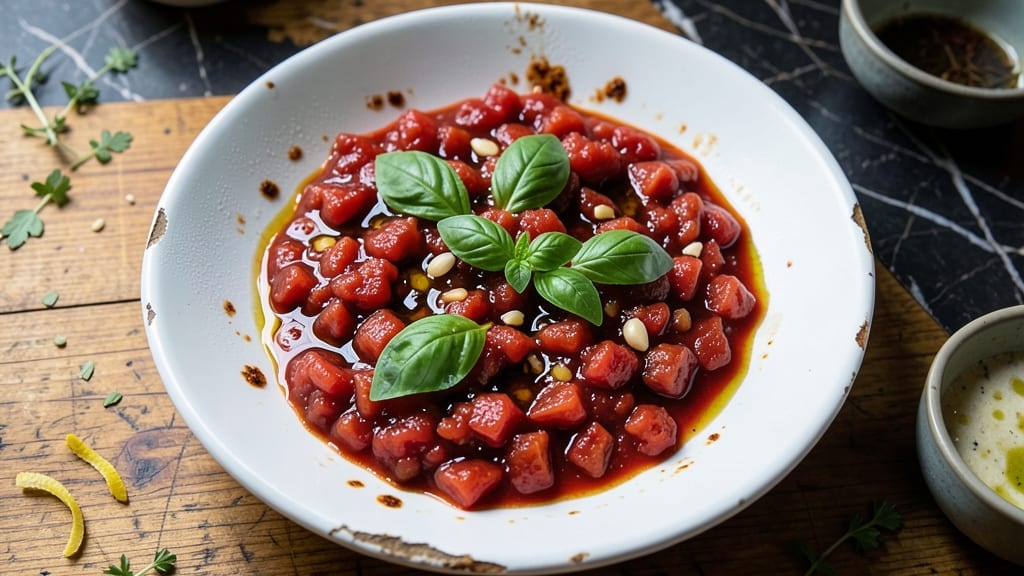
This authentic Italian pizza sauce recipe from scratch transforms simple ingredients into the rich, vibrant base that defines Neapolitan-style pizza. The secret lies in using San Marzano tomatoes—their natural sweetness and low acidity create a sauce that's perfectly balanced, never overpowering.
I've perfected this version over years of testing, ensuring it delivers that classic Italian brightness without any shortcuts or artificial flavors.
The process is straightforward but requires patience: fresh garlic and olive oil form the aromatic foundation, while a touch of red wine vinegar brightens the flavor profile. Fresh basil, added at the end, provides that signature Italian freshness that store-bought sauces can't match.
What sets this sauce apart is its versatility—it works equally well for classic Margherita pizza, hearty meat toppings, or even as a simple pasta sauce.
By the time you're done, you'll have a sauce that's smooth yet vibrant, with just the right balance of sweetness, acidity, and herbal notes. The texture is ideal for pizza—neither too thick nor too thin—allowing it to caramelize beautifully under the oven's heat.
This is the kind of sauce that transforms an ordinary pizza night into an authentic Italian experience.
Store it in the refrigerator for up to a week or freeze for months, so you always have that restaurant-quality base on hand. The key to success is letting the flavors develop fully—don't rush it. Here's how to make it perfectly every time.
Ingredients for authentic italian pizza sauce recipe from scratch
Eight essential ingredients for a sauce that tastes like you flew to Italy for it.
| Ingredient | Amount | Notes |
|---|---|---|
| San Marzano Tomatoes 🍅 | 28 oz | Canned, whole, no salt added |
| Extra-Virgin Olive Oil 🫒 | ½ cup | High-quality, fruity variety |
| Garlic Cloves 🧄 | 4 cloves | Fresh, peeled, minced |
| Red Wine Vinegar 🍷 | 1 tbsp | For brightness and balance |
| Fresh Basil Leaves 🌿 | ½ cup | Packed, stems removed |
| Diamond Crystal Kosher Salt 🧂 | ½ tsp | Adjust to taste |
| Freshly Ground Black Pepper 🌶️ | ¼ tsp | For subtle heat |
| Granulated Sugar 🍚 | 1 tsp | Balances acidity |
San Marzano tomatoes are the star—look for the DOP label to ensure authenticity. Whole Foods or Trader Joe's carry them year-round, but Italian markets have the freshest cans. The olive oil should be extra-virgin, not just 'pure'—think fruity, peppery notes. Garlic cloves should be firm and free of sprouts; peel and mince them fresh right before cooking. Fresh basil is non-negotiable here—grab a bunch from the grocery store's produce section and use half for the sauce, saving the rest for garnish.
No San Marzano? Crushed tomatoes in a pinch, but add an extra pinch of sugar to balance the acidity. Substitute red wine vinegar with lemon juice at half the amount for brightness. Fresh basil wilt fast—dried oregano at one-third the amount works if you're in a bind. The sugar can be swapped for honey or maple syrup, but sugar dissolves more smoothly. For extra depth, a splash of tomato paste (1 tbsp) adds richness without altering the sauce's texture.
This sauce keeps beautifully—1 week in the fridge or 6 months frozen. Store it in a glass jar with a tight seal, submerged in olive oil to preserve freshness. For pizza, let it come to room temperature before using. Freeze in ice cube trays for perfect portions—just thaw and stir. The longer it sits, the better it tastes as flavors meld together.
Why You'll Love This Recipe
- I swear by this: chop garlic, crush tomatoes, simmer. That’s it. No blenders, no peeling cans—just a pot and 20 minutes. The San Marzanros do all the work once they hit the heat.
- No-Cook Shortcut: I swear by this: chop garlic, crush tomatoes, simmer. That’s it. No blenders, no peeling cans—just a pot and 20 minutes. The San Marzanros do all the work once they hit the heat.
- Taste Like Nonna’s: That splash of red wine vinegar? Chef’s kiss. It brightens the sweetness of the tomatoes and cuts through the richness of the olive oil—like a little secret between you and Italy. Fresh basil at the end ties it all together, bright and herby.
- Pantry-to-Party Ready: Make a big batch on Sunday, and you’ve got sauce for pizza, bruschetta, or even a quick pasta toss. It keeps for weeks in the fridge, so whether it’s a last-minute date night or a kids’ soccer fundraiser, you’re covered.
Step-by-step instructions for authentic Italian pizza sauce
Here's the classic Neapolitan method—simple, vibrant, and built to layer flavor beneath perfect pizza crusts.
Sanitize and Prepare the Tomatoes
Empty the 28 oz San Marzano Tomatoes into a large bowl, reserving the juices. Using your hands, gently crush the tomatoes against the side of the bowl to break them into rough chunks—no need for a blender here. This texture creates a sauce with body and depth that pureeing would lose. Discard any hard stems or seeds you find.
Transfer the crushed tomatoes and their juices to a heavy-bottomed saucepan. The juices contain vital acidity and sweetness that balance the sauce. I like to use a stainless steel or enameled Dutch oven for even heat distribution—this prevents scorching while we build flavor slowly.
Sweat the Garlic in Olive Oil
Heat the 0.5 cup Extra-Virgin Olive Oil over medium-low heat in the same saucepan. Add the 4 cloves minced garlic and cook for exactly 2-3 minutes until the garlic is fragrant but not browned. Watch closely—garlic burns faster than you think, and burnt garlic makes the sauce bitter. If the oil starts to bubble vigorously, reduce the heat immediately.
This slow cooking transforms the garlic's flavor from sharp to sweet and mellow. The olive oil should be shimmering but not smoking. Once the garlic is golden and perfumed, remove the pan from heat for 30 seconds to let the garlic cool slightly before adding the tomatoes back in.
Simmer the Sauce Low and Slow
Return the pan to medium heat and add the crushed tomatoes, 1 tbsp Red Wine Vinegar, 1 tsp Granulated Sugar, 0.5 tsp Diamond Crystal Kosher Salt, and 0.25 tsp Freshly Ground Black Pepper. Stir gently to combine, then reduce the heat to low. The sauce should bubble softly—this is where the magic happens.
Let the sauce simmer uncovered for 30-40 minutes, stirring occasionally. You're looking for a reduction that coats the back of a spoon with a velvety consistency. The acidity from the vinegar and sugar will balance as they cook down, creating that perfect sweet-tart profile. If the sauce gets too thick, add 1-2 tablespoons of water to loosen it.
Finish with Fresh Basil
Once the sauce has reduced and thickened, remove it from heat and let it cool slightly for 5 minutes. This resting period allows the flavors to meld. While it cools, finely chop the 0.5 cup Fresh Basil Leaves by hand—no food processor here. The fresh basil adds brightness that dried basil can't match.
Stir the chopped basil into the warm sauce and let it steep for 10 minutes. The heat will release the basil's essential oils, infusing the sauce with its signature aroma. Taste and adjust seasoning—you might need a pinch more salt or a splash of vinegar to balance the flavors. The sauce should be vibrant, not flat, with a perfect harmony of sweet, tangy, and umami notes.
Cool and Store Properly
Transfer the finished sauce to a clean glass jar or airtight container. Let it cool to room temperature before refrigerating. This sauce keeps beautifully for up to 5 days in the fridge or can be frozen for 3 months. When using, bring it to room temperature before spreading on pizza—cold sauce won't adhere well to the dough.
The key to authentic Italian pizza sauce lies in patience. The slow reduction develops complex flavors that no bottled sauce can match. This sauce should be vibrant, not dull, with a texture that clings to crust without overwhelming it. Use it as the foundation for your next pizza—it's the difference between good and extraordinary.
Pro Tips For Making Authentic Italian Pizza Sauce Recipe From Scratch
- Crush Those Tomatoes: San Marzano tomatoes need a good bruising—don’t just chop them. Smash them with your hands or a wooden spoon in the pot first. This breaks down the flesh faster and builds flavor way quicker than cutting them whole. (I used to ignore this, and my sauce always tasted flat until I tried it.)
- Low and Slow Wins: Simmer your sauce at a gentle bubble, not a rolling boil. Too much heat turns it mushy and dulls the garlic’s punch. If it’s too aggressive, drop the heat and let it whisper instead. Patience here means the difference between good and great—I learned this after one disastrous, watery batch.
- Toast the Garlic Right: Cook your garlic in olive oil until it’s just golden, not brown. Burnt garlic tastes bitter and overpowers everything. Pull the pan off heat a second before it hits that point—you’ll know it’s ready when the kitchen smells like heaven, not like a charred crime scene.
- Salt Early, Salt Often: Taste your sauce after 10 minutes and add salt if needed—it’ll mellow as it cooks. Skipping this step means you’ll end up with bland sauce that needs a whole shaker’s worth later. (Trust me, your pizza will thank you.) Aim for about 1 teaspoon per 450g of tomatoes, then adjust.
Pro cooking tips for perfect results
Garlic Perfection
Fresh garlic is the flavor anchor here, but timing is everything. Cook the 4 minced cloves in 0.5 cup extra-virgin olive oil over medium-low heat for exactly 2-3 minutes—no more, no less. Overcooking turns garlic bitter, while undercooking leaves it raw.
I like to pull the pan off heat for 30 seconds after the garlic turns golden to let the flavors mellow before adding tomatoes. This step makes the difference between a flat sauce and one with deep, sweet garlic notes. 🧄
Low-and-Slow Reduction
Simmering uncovered for 30-40 minutes at a gentle bubble is where the sauce transforms. The slow reduction concentrates flavors while balancing the red wine vinegar and sugar. I use a stainless steel Dutch oven because it heats evenly—cast iron can scorch the sauce if you're not careful.
Stir occasionally, but don't overwork it. The sauce should coat the back of a spoon with a velvety texture, not turn into a thick paste. If it gets too thick, add 1-2 tablespoons water to loosen it. ✨
Basil Timing Matters
Fresh basil needs to be added at the end—never cook it or it turns bitter. After simmering, let the sauce cool slightly for 5 minutes, then stir in the 0.5 cup chopped basil and let it steep for 10 minutes.
This releases the basil's essential oils for that signature Italian brightness. I chop the basil by hand with kitchen shears for even, tiny pieces that distribute perfectly. Pro tip: Save a few leaves for garnishing your pizza after baking. 🌿
Acid Balance Secrets
The 1 tablespoon red wine vinegar and 1 teaspoon sugar are non-negotiable for authentic flavor. The vinegar brightens while the sugar mellows the acidity. Taste as you go—you might need to adjust with a pinch more salt or another splash of vinegar.
The goal is a sauce that's vibrant, not sharp or cloying. I find that letting the sauce sit overnight actually improves this balance as the flavors meld. 💡
Equipment Upgrades
A heavy-bottomed saucepan is worth the investment—it prevents scorching and ensures even heat distribution. I use a stainless steel Dutch oven because it's durable and heats up quickly. For home cooks on a budget, a high-quality enameled cast iron skillet works just as well.
Avoid nonstick pans—they can't handle the low-and-slow cooking required for authentic flavor development. The right equipment makes this sauce foolproof. 🔥
Nutrition facts
Frequently asked questions
Why do you use San Marzano tomatoes specifically?
San Marzano tomatoes are the gold standard for Italian pizza sauce because of their natural sweetness and low acidity. Their thick flesh and minimal seeds create a smoother texture without watering down the sauce. The DOP label guarantees authentic Italian quality—regular canned tomatoes often have added salt or preservatives that alter the flavor.
Can I make this sauce without fresh basil?
Yes, but the flavor won't be authentic! Use 1/3 cup dried basil instead, but add it during the simmering phase (not at the end) since dried herbs need more time to infuse. For extra brightness, add 1/2 teaspoon dried oregano along with the basil. The sauce will still be delicious, but it'll lack that signature Italian freshness.
How do I adjust the thickness for different pizza styles?
For classic Neapolitan pizza, aim for a sauce that coats the back of a spoon with a velvety texture—not too thick, not too thin. If it's too thick, thin with 1 tablespoon water per 1/2 cup sauce. For New York-style pizza, you can make it slightly thicker. Always taste first—it should be vibrant, not cloying. The sauce will reduce further while baking, so don't over-thin it.
What's the best way to store leftover sauce?
Transfer to a glass jar or airtight container and refrigerate for up to 5 days. For longer storage, freeze in ice cube trays (thaw and stir) or 1-cup portions in freezer bags. When using frozen sauce, thaw overnight in the fridge and stir well—it may separate slightly. The sauce actually improves with time as flavors meld!
Can I make this sauce without vinegar?
You can substitute with 1/2 teaspoon lemon juice or 1/4 teaspoon citric acid, but the vinegar adds depth that's hard to replicate. If omitting, reduce the sugar to 1/2 teaspoon to maintain balance. The vinegar's acidity brightens the tomatoes and balances the sweetness—it's what gives authentic Italian sauce its signature tang.