
Sauces & Condiments
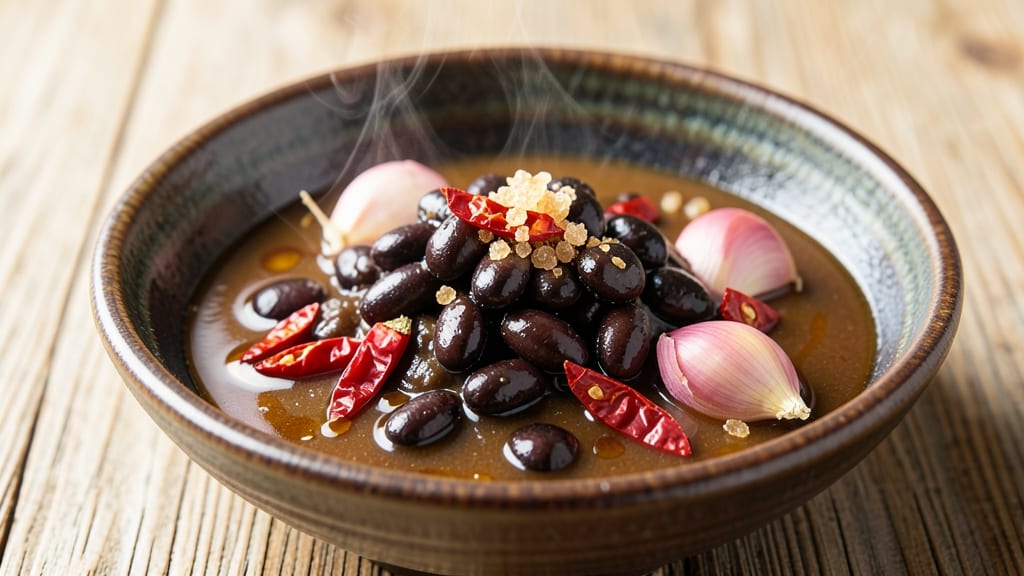
This authentic Chinese black bean sauce transforms ordinary stir-fries into restaurant-quality meals with its deep, fermented umami richness. The secret lies in fermented black beans—packed with salty, funky complexity—that form the sauce's soul, balanced by soy, garlic, and a touch of sweetness.
I've perfected this version after years of testing, ensuring every spoonful delivers that signature tangy, savory punch that Chinese home cooks rely on.
The beauty of this sauce is its versatility—it elevates mapo tofu, stir-fried noodles, and dumpling dipping sauce with equal brilliance. Unlike store-bought versions, this recipe builds flavor through fermentation, creating a paste that intensifies with time.
The process is straightforward: soak, simmer, and blend, then store in the fridge for up to 2 weeks or ferment longer for deeper flavor. It's the kind of condiment that turns simple dishes into standout meals.
What makes this sauce truly special is how it works in harmony with other ingredients. The fermented black beans provide a salty, slightly sour base, while garlic and chili add layers of heat and aroma.
The result is a sauce that's bold enough to stand alone but flexible enough to complement any dish. Whether you're cooking for family or hosting dinner guests, this sauce will be the star of the show.
Once you taste the difference between homemade and store-bought, you'll never go back. The texture is thick and spreadable, perfect for tossing with vegetables or drizzling over steaming rice. Let's create a sauce that brings authentic Chinese restaurant flavor to your kitchen—starting with this essential recipe.
Ingredients for authentic chinese black bean sauce
Eight essential ingredients for restaurant-style depth in every stir-fry.
| Ingredient | Amount | Notes |
|---|---|---|
| Fermented Black Beans 🫘 | ½ cup | Packed, rinsed well |
| Light Soy Sauce 🥢 | ¼ cup | Kikkoman preferred |
| Dark Soy Sauce 🥢 | 1 tbsp | For deeper color |
| Garlic Cloves 🧄 | 6 cloves | Peeled, roughly chopped |
| Dried Red Chilies 🌶️ | 2 pieces | Seeds removed for mild heat |
| Rock Sugar 🍯 | 1 tbsp | Or brown sugar substitute |
| Shaoxing Wine 🍷 | 2 tbsp | Or dry sherry substitute |
| Sesame Oil 🫒 | 1 tbsp | Toasted for aroma |
Fermented black beans are the heart of this sauce—look for them in Asian markets or online. The ones packed in brine work best; rinse them well before using to cut excess salt. Asian World Market or H Mart usually carry them, or order online if you can't find them locally. Freshness matters here: if the beans smell overly sour or have mold, skip them. For the chilies, dried red chilies from Mexico (like ancho) work perfectly—they add smoky depth. If you can't find them, a pinch of smoked paprika in a pinch will mimic the flavor, though it won't be the same.
No Shaoxing wine? Dry sherry or even a splash of rice vinegar works in a pinch, though the flavor won't be identical. Rock sugar is key for that authentic touch—brown sugar won't give the same caramelized depth, but it's better than nothing. For a quicker version, you can skip the fermentation step and simmer everything together, though the flavor won't develop as richly. The soy sauces are non-negotiable: light soy for saltiness, dark soy for color. If you only have one, use light soy and add a pinch of molasses for color. And trust me on the sesame oil—toast it first in a dry pan for 30 seconds to bring out its nutty aroma.
This sauce keeps beautifully—up to 2 weeks in the fridge if you store it in an airtight jar. The longer it sits, the more fermented and complex it becomes, so don't be afraid to make a big batch. If you want to extend its shelf life, add a layer of oil on top before sealing to prevent mold. Freezes well for up to 3 months, though the texture might get grainy after thawing. I like to portion it into small jars so I can grab just what I need for a quick stir-fry. And if you make extra? Gift it to your neighbors—everyone will want some.
Why You'll Love This Recipe
- Pantry Magic: I swear by this sauce because it’s made from ingredients I already have—no last-minute grocery runs. Just toss in fermented black beans (that funky, briny goodness), a splash of dark soy for color, and a few cloves of garlic, and you’ve got depth in minutes.
- Umami Bomb: Between the fermented black beans and dark soy, this sauce packs a punch that’s ridiculously satisfying. The dried chilies add heat without overpowering, and the light soy ties it all together—sweet, salty, and a little smoky. Honestly, it’s the kind of flavor that makes you pause mid-bite.
- Sauce for Everything: I use this on stir-fries, noodles, even as a dip for dumplings. It’s my go-to for weeknight dinners when I’m tired of the same old sauce. The best part? It doubles as a marinade or glaze—once you make it, you’ll wonder how you lived without it.
- Budget Game-Changer: Fermented black beans are cheap, and a little goes a long way. I make a big batch, store it in the fridge, and use it for weeks. No waste, no fuss—just pure, reliable flavor that costs next to nothing. (Yes, even on a Tuesday night.)
Step-by-step instructions for fermented black bean sauce
Here's how to make this umami-rich sauce that brings authentic Chinese depth to every dish.
Prepare the Fermented Black Beans
Start by thoroughly rinsing the 0.5 cup packed fermented black beans under cold water. This removes any excess saltiness while preserving their rich, funky flavor. Place them in a small saucepan and cover with 1 cup water. Bring to a gentle simmer over medium heat and cook for 10-12 minutes until the beans are tender but not falling apart.
Here's the thing—don't overcook them or they'll turn mushy. You're looking for beans that hold their shape but are easily mashed with a spoon. Once they reach this perfect texture, drain them well, reserving the cooking liquid for later use. This liquid is packed with flavor, so don't pour it down the drain just yet.
Toast the Aromatics
In a dry skillet over medium heat, add the 6 cloves roughly chopped garlic and 2 pieces seeded dried red chilies. Toast them for 1-2 minutes until the garlic turns golden and the chilies become fragrant. Be careful not to burn them—just until you can smell that deep, nutty aroma.
This toasting step is crucial for building layers of flavor. The garlic should be golden but not browned, and the chilies should be soft enough to crumble between your fingers. Transfer the toasted aromatics to a bowl and set aside. We'll incorporate them back in later, but first, we need to build the sauce base.
Build the Sauce Base
In the same skillet (no need to clean it—the fond adds flavor), add 1 tablespoon dark soy sauce and 1 tablespoon rock sugar. Cook over medium-low heat for 2-3 minutes until the sugar dissolves completely. This creates a glossy, slightly caramelized foundation for your sauce.
Real talk: don't rush this step. The sugar needs time to fully incorporate, and the dark soy sauce should coat the pan evenly. If it starts to smoke, reduce the heat slightly. You're aiming for a smooth, syrupy consistency that will form the backbone of your sauce.
Combine All Ingredients
Return the toasted garlic and chilies to the skillet along with the drained fermented black beans. Mash the beans slightly with a wooden spoon to release their flavor. Add 0.25 cup light soy sauce and 2 tablespoons Shaoxing wine, stirring constantly to combine everything into a thick paste.
Here's where it gets good—the sauce should start to thicken as the flavors meld together. If it's too thick, add 1-2 tablespoons of the reserved bean cooking liquid to loosen it. The consistency should be like thick gravy—cohesive enough to coat the back of a spoon but still pourable.
Finish with Sesame Oil
Remove the sauce from heat and let it cool slightly for 2 minutes. Then stir in 1 tablespoon toasted sesame oil. This final step adds that signature nutty aroma and rich depth that makes this sauce truly authentic. The oil should be fully incorporated, giving the sauce a glossy sheen.
Taste and adjust seasoning if needed. You might want to add a pinch more sugar to balance the saltiness or a splash more wine for acidity. This sauce is incredibly versatile—use it in stir-fries, braises, or even as a dipping sauce. Store any leftovers in an airtight container in the refrigerator for up to 2 weeks, or freeze for longer storage.
Pro Tips For Making Authentic Chinese Black Bean Sauce
- SOAK THE CHILIES: Fermented black beans carry enough funk—dried chilies need a quick 10-second rinse in hot water before crushing. This cuts the bitterness without drowning their heat in the sauce. (Yes, I’ve tasted the version where I skipped this, and it’s not the same.)
- CRUSH BEANS UNIFORMLY: Use the flat side of a cleaver or heavy pan to smash fermented black beans into rough chunks—no need for a food processor. Inconsistent texture means some pieces caramelize while others stay raw, and that’s the point. (I learned this after burning a batch trying to make them "perfectly" smooth.)
- SIMMER LOW AND SLOW: After adding soy sauces and garlic, drop the heat to the lowest setting that keeps a gentle bubble. Rushing this step turns the sauce into a murky glaze instead of letting the flavors meld into that deep, umami-rich consistency. (Your patience here makes all the difference.)
- SALT IN LAYERS: Add light soy sauce first, then dark soy sauce after the beans and chilies have cooked for 3-4 minutes. Dark soy sauce burns easily, and this way, it gets infused rather than scorched. (I used to add it all at once—now I don’t.)
Make-ahead tips for authentic chinese black bean sauce
Ferment for Depth
For the most authentic flavor, ferment your sauce for 2-3 days in the fridge before using. Transfer the cooled sauce to an airtight container and let it sit—this develops complex, funky notes that store-bought versions lack.
I like to taste it daily; after 48 hours, the umami will be noticeably deeper. If you're short on time, skip fermentation and simmer the sauce for an extra 10 minutes to concentrate flavors. 💫
Batch Prep Strategy
Make a double batch and freeze half for later use. Portion into 2-ounce silicone molds or small jars—they thaw perfectly for single stir-fry servings. Label with dates since fermented flavors peak at 2 weeks refrigerated or 3 months frozen.
I keep one batch in my fridge for quick weeknight meals and freeze extras for holiday cooking. This saves time and ensures you always have authentic flavor on hand.
Revive Stale Sauce
If your sauce thickens too much during storage, thin it with 1 teaspoon water or Shaoxing wine per tablespoon of sauce. For extra richness, add ½ teaspoon toasted sesame oil when reheating.
Never microwave directly—heat gently on the stovetop over low heat to preserve texture. A quick simmer for 2-3 minutes restores its perfect consistency. 🔥
Freezer-Friendly Tips
Use freezer-safe silicone molds or heavy-duty freezer bags for portion control. Leave ½ inch headspace to prevent expansion cracks. When ready to use, thaw overnight in the fridge—never at room temperature.
For frozen sauce, add 1 teaspoon water per tablespoon when reheating to prevent graininess. I find this method preserves texture better than traditional containers.
Sauce Flexibility
This versatile sauce doubles as a marinade—coat chicken or tofu for 1-2 hours before cooking. For dipping sauces, thin with 1 teaspoon water and add ½ teaspoon chili oil for extra kick.
The fermented depth works beautifully in braised dishes too—add 1 tablespoon to pork or beef stews during the last 10 minutes of cooking. 🌶️
Gift-Worthy Packaging
Transfer leftover sauce to small 4-ounce glass jars with tight lids for gifting. Add a handwritten note with serving suggestions like "Perfect for stir-fries" or "Enhances dumpling dipping sauce." The fermented aroma makes it irresistible—people will ask for your recipe!
I've given jars to neighbors and always get requests for more. Store-bought sauces can't compete with homemade authenticity. ✨
Nutrition facts
Frequently asked questions
Can I substitute fermented black beans with something else?
Fermented black beans are essential for authentic flavor, but in a pinch, you can use 1 cup well-salted black soybeans (soaked overnight) or ½ cup black bean paste from Asian markets. The fermented funk is impossible to replicate perfectly, though—store-bought substitutes will lack depth. For best results, track down the real thing at specialty grocers or online.
How spicy should this sauce be?
The recipe uses 2 dried red chilies for mild heat, but you can adjust to taste. For more kick, add 1 extra chili or ½ teaspoon chili flakes. Remove seeds completely for subtle heat, or leave them in for a noticeable burn. Remember: the sauce builds flavor over time, so fermenting longer will make the heat more pronounced.
What's the best way to use this sauce in cooking?
Start with 1 tablespoon per serving for stir-fries, tossing it with veggies at the end. For braised dishes, add 2 tablespoons during the last 10 minutes of cooking. As a dipping sauce, thin with 1 teaspoon water and add chili oil. The sauce works beautifully with tofu, noodles, or grilled meats—its umami depth elevates everything.
Why does my sauce smell funky?
That's normal! The fermented black beans develop a pungent aroma as they break down—this is actually a good sign. The smell mellows when cooked, leaving behind rich, savory notes. If the odor is overwhelming, reduce fermentation time to 1 day instead of 2-3. Always store the sauce in an airtight container to contain the aroma while developing flavor.
Can I make this sauce without Shaoxing wine?
Yes, but the flavor will differ slightly. Substitute with 2 tablespoons dry sherry or 1 tablespoon rice vinegar. For a non-alcoholic option, use 1 tablespoon apple cider vinegar plus 1 teaspoon sugar. The wine adds depth that's hard to replicate, but these alternatives will still create a delicious sauce—just with a different character profile.