
Sauces & Condiments
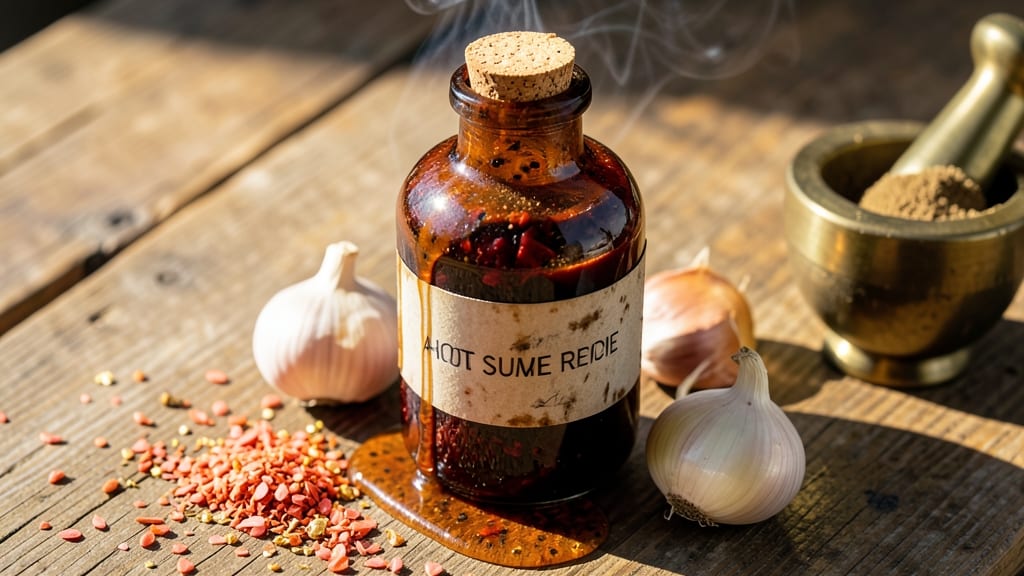
This atomic hot sauce recipe delivers a smoky chipotle kick with fermented complexity that transforms any dish. The secret lies in balancing heat with depth—dried chipotle peppers provide smoldering aroma, while vinegar and sugar create a smooth, shelf-stable sauce that builds intensity over time.
Unlike store-bought versions, this recipe lets you control the heat level and fermentation process for a sauce that develops richer flavors with each passing day.
What sets this sauce apart is the two-stage process: first, a quick ferment to soften the peppers and develop fermented notes, then a slow reduction that concentrates the smoky heat.
The result is a versatile condiment that works equally well on tacos, grilled meats, or even cocktails—without overpowering the dish. Safety is critical when handling capsaicin, so we'll cover proper techniques to avoid skin irritation while maximizing flavor extraction.
The final sauce will have a glossy, syrupy consistency with layers of smoky chipotle, bright acidity, and just enough sweetness to balance the heat. It keeps for months in the refrigerator, allowing the flavors to mature and intensify.
Whether you're a spice enthusiast or need a restaurant-quality sauce for your kitchen, this recipe delivers professional results with simple ingredients and precise technique.
Ready to elevate your dishes? This hot sauce isn't just about heat—it's about depth and complexity that transforms ordinary meals into memorable experiences. Let's get started with the ingredients and method that will give you that perfect balance of smoky, fermented heat.
Ingredients for atomic hot sauce
Nine ingredients transform into a smoky, fermented hot sauce with restaurant-quality depth and complexity.
| Ingredient | Amount | Notes |
|---|---|---|
| Dried Chipotle Peppers in Adobo 🌶️ | 4 whole | Seeds removed for milder heat |
| White Vinegar 💧 | 1 ½ cups | Distilled white preferred for clarity |
| Granulated Sugar 🍚 | ½ cup | Light brown sugar for caramel notes |
| Garlic Cloves 🧄 | 6 cloves | Peeled, smashed for infusion |
| Cayenne Pepper 🔥 | 1 tsp | Adjust for desired heat level |
| Ground Cumin 🌿 | 1 tsp | Toasted for deeper aroma |
| Smoked Paprika 🌶️ | 1 tbsp | For enhanced smokiness |
| Salt 🧂 | 1 tsp | Diamond Crystal preferred |
| Water 💧 | ½ cup | For fermentation balance |
| Xanthan Gum 🧪 | ¼ tsp | For viscosity stability |
The chipotle peppers are the foundation—choose adobo-packed for authentic flavor and proper preservation. Penzeys Spices or high-quality Latin markets carry excellent dried chipotles; avoid pre-powdered versions. For milder heat, remove seeds and membranes before fermenting. The white vinegar must be distilled—apple cider vinegar can introduce unwanted flavors. Toast your cumin seeds for 30 seconds in a dry pan before grinding to deepen their aroma, though pre-ground works in a pinch. Smoked paprika adds complexity without overpowering the chipotle's natural smokiness.
No chipotle peppers? Ancho chiles or guajillo chiles work as substitutes, though the flavor profile shifts slightly. Apple cider vinegar can replace white vinegar if you prefer fruitiness, but reduce by 10% to account for its lower acidity. For extra heat, add cayenne gradually—start with half the amount and adjust to taste. The xanthan gum is critical for shelf stability; omit only if you prefer a thinner consistency (though texture will degrade faster). Substitute guar gum at equal ratio if unavailable. All spices should be freshly ground for optimal flavor extraction—pre-ground spices lose potency quickly.
Fermented sauces develop best when stored in sterilized glass jars with airtight seals. The sauce will continue maturing for up to 6 months in the refrigerator, with flavors intensifying over time. For long-term storage, transfer to amber glass bottles to protect from light degradation. Label with date—flavors peak at 4-6 weeks but remain safe indefinitely. Use food-safe gloves when handling capsaicin to avoid skin irritation, and never touch your face during preparation. Portion into small containers for easy dipping—this sauce is addictive once you start using it regularly.
Why You'll Love This Recipe
- Pantry to Table: I swear by this sauce because it uses what I already have—no special trips to the store. The adobo sauce from those dried chipotles? That’s the secret weapon right there, cutting through the vinegar’s sharpness with its smoky depth.
- Smoky-Sweet Heat: Between us, the sugar isn’t just for balance—it caramelizes slightly when simmered, giving it this unexpected richness. Then the cayenne kicks in like a surprise guest, but the garlic ties it all together with a warm, savory hug.
- Game for Any Meal: I’ve drizzled this on everything from breakfast tacos to grilled chicken, and even stirred it into marinades. Honestly, it’s the one sauce that makes even plain rice feel like a celebration—no fuss, just flavor.
- Lasts for Weeks: One batch stretches forever in my fridge, and it only costs pennies to make. The vinegar keeps it shelf-stable for months, so I’m always covered—whether I’m prepping for game night or just need a quick zing for takeout leftovers.
Step-by-step instructions for fermented chipotle hot sauce
This method delivers a perfectly balanced sauce with smoky depth and controlled heat.
Prepare the Chipotle Peppers for Fermentation
Remove the 4 whole dried chipotle peppers from their adobo sauce and rinse them thoroughly under cold water. I like to use a colander for this to ensure no residual adobo clings to the peppers. Pat them completely dry with paper towels—any moisture will interfere with fermentation.
Using kitchen shears, snip off the stems and carefully remove the seeds from each pepper. This step controls the heat level—keeping seeds gives you more spiciness. Place the cleaned peppers in a clean quart-sized mason jar, standing them upright so they don't overlap. The jar should be at least 75% full after adding all ingredients.
Combine All Ingredients for Fermentation
In a separate bowl, combine the 1.5 cups white vinegar, 0.5 cup granulated sugar, 6 smashed garlic cloves, 1 teaspoon cayenne pepper, 1 teaspoon ground cumin, 1 tablespoon smoked paprika, and 1 teaspoon salt. Mix thoroughly until the sugar dissolves completely—this ensures even distribution of flavors throughout the sauce.
Pour this mixture over the chipotle peppers in the jar, filling it to within 1 inch of the rim. Add the 0.5 cup water and stir gently to ensure all ingredients are submerged. Leave a 1-inch headspace to allow for fermentation expansion. Seal the jar tightly with the lid.
Ferment for Optimal Flavor Development
Store the jar at room temperature, away from direct sunlight, for 7-10 days. I place mine in a dark cabinet where the temperature remains consistent at about 70°F. You'll know fermentation is working when you see tiny bubbles forming in the jar and a slight effervescence when you open it.
After 7 days, taste the mixture through the jar lid—it should be tangy and developing complexity. Continue fermenting for up to 3 more days if you prefer a more pronounced funky character. The longer it ferments, the deeper the flavors become, but don't exceed 14 days or the sauce may become too acidic.
Blend and Thicken the Sauce
After fermentation, remove the chipotle peppers from the jar and discard them. This step concentrates the flavors in the liquid. Pour the remaining mixture into a blender along with the 0.25 teaspoon xanthan gum. Blend on high speed until completely smooth—this ensures the sauce has a consistent texture.
For a smoother sauce, I recommend straining it through a fine-mesh sieve into a clean jar. The xanthan gum will begin thickening the sauce immediately, creating that signature atomic hot sauce viscosity. If the sauce is too thick after blending, add 1-2 tablespoons of the fermentation liquid to reach your desired consistency.
Pro Tips For Making Atomic Hot Sauce
- STRAIN TWICE: Chipotle peppers in adobo leave gunk in your sauce—even after the first strain. Use a fine-mesh sieve first, then fold in a clean cheesecloth for that final pass. I learned this the hard way after finding pepper specks in my third batch.
- SIMMER LOW AND SLOW: Skip the boil. A gentle simmer (just small bubbles, not rolling) for 20-30 minutes lets the flavors meld without burning the sugar or garlic. I used to rush it, and the sauce always tasted harsh and one-dimensional.
- TOAST THE PEPPERS: Dry-toast the chipotles in a skillet for 30 seconds before adding them to the vinegar. This deepens their smoky flavor and prevents clumping. Sounds weird, but it works—your sauce will taste more complex.
- USE RAW GARLIC: Mince the garlic fresh and add it at the very end. Cooking it too long turns it bitter, and you want that bright, fresh punch in atomic hot sauce. I skip the pre-cooked shortcut—your future self will notice the difference.
Troubleshooting your atomic hot sauce
Fermentation Gone Wrong
If your sauce develops an unpleasant, sour smell or mold appears within 7 days, the fermentation failed due to contamination.
This happens when jars aren't properly sterilized or ingredients contain hidden bacteria. Solution: Start fresh with sterilized equipment—boil your mason jar and lid in hot water for 10 minutes before use. Always work in a clean environment and use distilled vinegar to minimize risk. 🧼
Sauce Too Thin
A runny sauce usually means insufficient xanthan gum or over-fermentation. If this happens, simmer the sauce uncovered on low heat for 10-15 minutes to reduce liquid. For immediate thickening, mix ¼ teaspoon xanthan gum with 1 tablespoon cold water, stir into sauce, and let sit for 5 minutes.
Avoid adding more gum—it can create a gummy texture. 💧
Uneven Heat Distribution
If some batches taste significantly hotter than others, the issue likely stems from inconsistent pepper preparation. Always remove seeds and membranes uniformly—use a small spoon to scrape out seeds carefully. For milder heat, ferment with only 2 chipotles instead of 4.
If you prefer extra heat, add ½ teaspoon extra cayenne during blending. Taste frequently during fermentation to monitor spice development. 🌶️
Mold or Discoloration
Surface mold (white, green, or black spots) means your sauce spoiled—discard immediately. This occurs when oxygen reaches the liquid during fermentation. Prevention: Ensure the jar is completely submerged under liquid (use a fermentation weight if needed).
Store in a cool, dark place (ideal temp: 70°F). If mold appears, it's not safe to salvage—start over with fresh ingredients. ⚠️
Sauce Too Sweet
If the sugar dominates the flavor, reduce it by ¼ cup next time or extend fermentation to 10-14 days—the acidity will balance sweetness naturally. For immediate adjustment, add 1 tablespoon white vinegar and let sit overnight before blending.
If the sauce crystallizes, gently warm it on low heat while stirring until smooth. 🍯
Skin Irritation from Capsaicin
Capsaicin burns skin—wear nitrile gloves when handling peppers and avoid touching your face. If irritation occurs, wash hands with mild soap and cold water (hot water spreads capsaicin). For stubborn burns, rub yogurt or honey on the skin to neutralize the compound. Never use alcohol-based products—they worsen the burn. 🧤
Nutrition facts
Frequently asked questions
Why ferment hot sauce instead of cooking it immediately?
Fermentation develops complex, umami-rich flavors that simple cooking can't replicate. The 7-10 day process breaks down the chipotle peppers' cell walls, releasing deeper smoky notes and creating a more balanced sauce. Fermented hot sauces also have a longer shelf life and more vibrant color than their cooked counterparts.
Can I adjust the heat level after fermentation?
Yes, but with limitations. Since the peppers are removed before blending, you can only adjust heat during fermentation by using fewer peppers (2 instead of 4) or adding more cayenne (½ tsp extra) when blending. For milder heat, extend fermentation to 14 days—the acidity naturally mellows the spice.
How long will this hot sauce last, and how should I store it?
Properly stored, this sauce will keep for 6-12 months in the refrigerator. For longer storage, transfer to amber glass bottles and keep in a cool, dark pantry—it'll remain safe indefinitely. Always use sterilized equipment and airtight containers to prevent contamination. Label with dates to track flavor development!
What's the best way to use this hot sauce?
This versatile sauce works on everything from tacos to grilled meats, but it also shines in cocktails! Start with ¼ tsp per serving and adjust to taste. For maximum flavor, let it sit on dishes for 5-10 minutes before serving. The smoky depth pairs especially well with citrusy drinks or rich proteins like steak or pork.
Can I substitute fresh jalapeños for chipotles?
Not recommended for this recipe—the chipotle's smoky depth is unique. However, you could blend 3-4 fresh jalapeños with 1 tsp smoked paprika for a similar heat profile. For fermentation, use white vinegar and ½ tsp cumin to mimic the chipotle's complexity. The texture will be thinner without the pepper's natural thickening properties.