
Sauces & Condiments
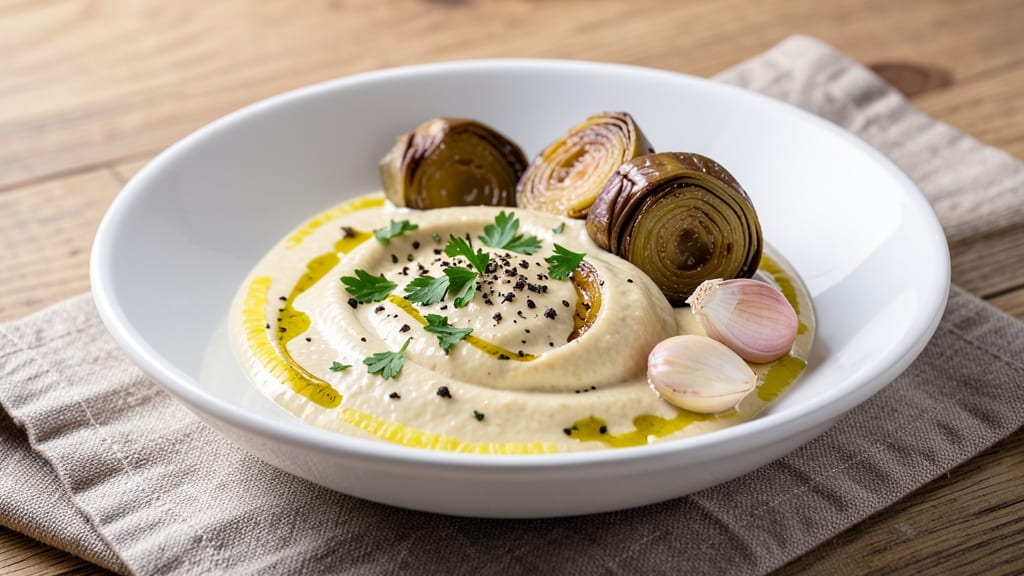
This artichoke aioli sauce recipe transforms simple ingredients into a velvety, herb-infused dip that’s impossible to resist. The secret lies in balancing garlic, lemon, and artichokes to create a smooth, clump-free emulsion that elevates everything from grilled shrimp to crispy fries.
I’ve perfected this version over years of testing—no lumps, no bitterness, just pure, bright flavor that stays stable for days.
The magic happens when you purée marinated artichoke hearts directly into the aioli base, infusing it with their tender, slightly tangy essence. A touch of Dijon mustard acts as an emulsifier, while fresh herbs like parsley and dill add freshness.
The sauce is rich enough to stand alone but bright enough to complement bold flavors, making it a versatile addition to any meal.
What sets this recipe apart is its foolproof technique—no blender required, just a food processor and a little patience. The result is a sauce with a silky texture, perfect for dipping, drizzling, or spreading.
It pairs beautifully with grilled meats, seafood, or even as a sandwich spread, delivering a burst of garlic-herb brightness in every bite.
Store leftovers in an airtight container in the fridge for up to 5 days, or freeze for longer shelf life. For extra richness, stir in a spoonful of crème fraîche before serving. Let’s make this sauce—your taste buds will thank you.
Ingredients for artichoke aioli sauce
Nine simple ingredients create the perfect velvety, herb-infused aioli with no lumps or bitterness.
| Ingredient | Amount | Notes |
|---|---|---|
| Marinated Artichoke Hearts 🍃 | 1 cup | Chopped, well-drained |
| Extra-Virgin Olive Oil 🫒 | 1 cup | High quality, fruity |
| Garlic Cloves 🧄 | 4 cloves | Peeled, roughly chopped |
| Fresh Lemon Juice 🍋 | 2 tbsp | From 1/2 lemon |
| Dijon Mustard 🌶️ | 1 tbsp | Mellow variety preferred |
| Fresh Flat-Leaf Parsley 🌿 | ¼ cup | Stems removed, chopped |
| Fresh Dill 🌿 | ⅛ cup | Stems removed, chopped |
| Salt 🧂 | ½ tsp | Diamond Crystal preferred |
| Black Pepper 🌶️ | ¼ tsp | Freshly ground |
| Crème Fraîche 🧀 | ¼ cup | Optional, for richness |
The artichoke hearts are the star—marinated hearts from a jar work perfectly, but if you can find fresh, they add an extra layer of brightness. Trader Joe's and Whole Foods carry the best quality, but any brand in water or oil will do. Fresh garlic is non-negotiable here; pre-minced garlic lacks the punch. The Dijon mustard is your emulsifier—Maille is my go-to, but any good-quality brand will work. For the herbs, fresh is best, but if you're in a pinch, dried parsley and dill at half the amount will get you close.
No crème fraîche? Full-fat sour cream works in a bind, though it's slightly tangier. Short on fresh herbs? Dried parsley at one-third the amount keeps the flavor profile intact. The olive oil matters—skip the cheap stuff. California avocado oil or Spanish extra-virgin both add depth. For extra richness, stir in 1/4 cup vegan mayo (like Hellmann's Vegan) if you're avoiding dairy. The sauce should be silky, not grainy—if it breaks, add a splash of warm water and pulse again.
This sauce keeps beautifully—5 days in the fridge, covered with a thin layer of olive oil to preserve freshness. For longer storage, freeze in ice cube trays, then transfer to a bag. Thaws perfectly and maintains its silky texture. If it thickens in the fridge, whisk in 1-2 tsp warm water to restore consistency. The crème fraîche, if used, should be added fresh before serving for that luscious finish.
Why You'll Love This Recipe
- Five-Ingredient Magic: I swear by this one—just blend marinated artichoke hearts, olive oil, garlic, lemon, and mustard. No peeling, no chopping, no fuss. The jarred hearts already do half the work for you.
- Bright & Bold: That zesty lemon cuts through the richness of the olive oil, while the Dijon mustard adds a tangy punch. Honestly, it’s the kind of sauce that makes you reach for seconds—even when you’re not supposed to.
- Game for Any Meal: Slather it on grilled fish, drizzle it over roasted potatoes, or use it as a dip for crusty bread. Between us, I’ve even used it as a pasta sauce in a pinch. It’s the ultimate flavor multitasker.
- Leftover Goldmine: This sauce keeps for days in the fridge, and it only gets better as the flavors meld. I make a big batch on Sundays, then use it all week—no waste, no stress. Budget-friendly and foolproof.
Step-by-step instructions for artichoke aioli sauce
Here's how to blend this vibrant, herb-forward dip without a single clump or grain.
Pulse Artichokes and Garlic to a Fine Paste
Add the 1 cup marinated artichoke hearts and 4 cloves garlic cloves to a food processor fitted with the metal blade. Pulse in 2-second bursts until you achieve a coarse paste—think chunky but not whole pieces. This texture ensures smoothness without over-processing into a paste.
I like to stop and scrape down the sides every 30 seconds to prevent any oil buildup from the marinated artichokes. The goal is a rough chop, not a puree—this prevents the sauce from becoming too thick when we add the olive oil later. You'll know you're on track when the mixture looks like wet sand with visible artichoke flecks.
Whisk in Olive Oil Gradually for Emulsion
With the processor running on low speed, slowly drizzle in the 1 cup extra-virgin olive oil over 2-3 minutes. This gradual addition is critical—it allows the oil to emulsify properly rather than separating. If you add it too quickly, you'll end up with a greasy, broken sauce.
Here's the thing—don't rush this step. The oil should incorporate smoothly, creating a thick, mayonnaise-like consistency. If it starts to look curdled or grainy, immediately add 1 teaspoon of Dijon mustard and pulse again. The mustard acts as an emulsifier, binding the oil and creating that signature silky texture.
Incorporate Acid and Herbs for Balance
Transfer the mixture to a mixing bowl and stir in the 2 tablespoons fresh lemon juice, 1 tablespoon Dijon mustard, 0.25 cup fresh flat-leaf parsley, 0.125 cup fresh dill, 0.5 teaspoon salt, and 0.25 teaspoon black pepper. The lemon juice cuts through the richness of the olive oil, brightening the entire sauce. The herbs add layers of flavor—parsley for freshness, dill for brightness.
Use a whisk or silicone spatula to fold everything together gently. You're looking for a smooth, cohesive texture without any streaks of oil. If the mixture feels too thick, add 1-2 teaspoons of water to loosen it. The sauce should coat the back of a spoon but still hold its shape when drizzled.
Finish with Crème Fraîche for Richness (Optional)
For that luxurious, velvety finish, fold in the 0.25 cup crème fraîche using a gentle folding motion. This step is optional but adds a subtle tang and creaminess that elevates the sauce. If you skip it, the aioli will still be delicious—just slightly lighter in texture.
Taste and adjust seasoning. You might need a pinch more salt or a splash of lemon juice to balance the flavors. The sauce should be bright, garlicky, and herbaceous with a clean finish. Cover and refrigerate for at least 30 minutes before serving—this allows the flavors to meld and the texture to thicken slightly, making it perfect for dipping or drizzling.
Pro Tips For Making Artichoke Aioli Sauce
- Drain and Pat Dry: Marinated artichoke hearts cling to their brine like a stubborn guest. Drain them well, then blot each heart with a paper towel—this keeps your aioli from turning into a watery mess. Trust me, you don’t want a sauce that’s more soup than spread.
- Roast the Garlic: Raw garlic in aioli can taste harsh, even with lemon. Wrap 2-3 cloves in foil, roast at 400°F (200°C) for 10 minutes until soft and mellow. The flavor mellows out perfectly, and your sauce won’t taste like a garlic punch to the face.
- Start with Cold Oil: Whisking mayo or aioli with warm oil kills the emulsion faster than you can say "sauce disaster." Keep your olive oil in the fridge for 10 minutes before using—cold oil blends smoother and keeps your sauce stable. No one wants to fix a broken emulsion mid-dip.
- Blend in Stages: Pulse the artichokes first in a food processor, then add oil and mustard in drizzles while blending. This prevents a clumpy, overworked mess. If you dump everything in at once, you’ll end up with a gloppy paste instead of a silky sauce—no one likes scraping that out of the bowl.
Storing and reheating this recipe
Fridge Storage Secrets
Transfer your artichoke aioli to an airtight glass container—I prefer Pyrex with a snap-on lid—and press plastic wrap directly onto the surface to prevent that dreaded olive oil layer from forming.
Store in the fridge for up to 5 days, but honestly? The flavors get even better after 24 hours as the herbs infuse deeper. 🌿
Pro tip: Keep a thin layer of extra-virgin olive oil (about ¼ inch) on top of the sauce before sealing. This creates a protective barrier that preserves freshness and prevents the herbs from drying out.
When ready to use, simply skim off the oil layer and whisk the sauce back to silky perfection.
Freezer-Friendly Packaging
For longer storage, portion the aioli into ice cube trays—this makes thawing a breeze. Once frozen solid, transfer the cubes to a freezer bag (I use Ziploc with the seal-as-you-go feature) and label with the date.
This sauce keeps for 3 months without texture loss, though I recommend using it within 2 months for peak flavor.
To thaw, pop a cube or two into a small bowl and let it sit at room temperature for 10-15 minutes. For a quick fix, microwave on low power (50%) for 20 seconds, then whisk vigorously to restore that velvety consistency.
The texture might thicken slightly after freezing—just add 1 teaspoon of warm water per cube to bring it back to perfection.
Reviving Leftover Sauce
If your aioli has thickened in the fridge, don’t toss it! Place the container in a bowl of warm water (like a double boiler) for 2-3 minutes to gently reheat.
Then whisk in 1-2 teaspoons of warm water until smooth. The heat helps break down any protein bonds that might have formed, restoring that signature silky texture. 💫
For extra richness after reheating, stir in 1 tablespoon of crème fraîche or a dollop of vegan mayo to compensate for any lost creaminess. The sauce should be vibrant, garlicky, and ready to elevate your next meal—whether it’s drizzled over grilled shrimp or spread on toasted baguette slices.
Nutrition facts
Frequently asked questions
Can I use fresh artichokes instead of marinated hearts?
Yes, but you'll need to steam or boil them first until tender (15-20 minutes), then chop the hearts finely. Fresh artichokes have a more delicate flavor, so you might want to add an extra 1/2 teaspoon salt to compensate. The texture will be slightly chunkier than jarred hearts, but it adds a lovely freshness to the sauce.
Why did my aioli turn grainy or separate?
This usually happens when oil is added too quickly or the emulsion breaks. To fix it, add 1 teaspoon of Dijon mustard and pulse in the food processor, then slowly drizzle in 1 tablespoon of warm water while processing. For future batches, always add oil very slowly on low speed and never rush the process. The mustard acts as a natural emulsifier that keeps everything smooth.
What's the best way to serve this artichoke aioli?
This versatile sauce works perfectly as a dip for grilled shrimp, crispy fries, or veggie sticks. Try it as a spread on toasted baguette slices with smoked salmon, or drizzle it over seared scallops or grilled chicken. For a Mediterranean twist, serve it with warm pita bread and olives. The bright flavors shine in warm weather or as a creamy contrast to bold flavors.
Can I make this aioli without a food processor?
Use a hand mixer or even a whisk in a bowl. Start by mashing the artichokes and garlic into a paste with a fork, then slowly drizzle in the olive oil while mixing continuously. It'll take more elbow grease, but you'll still get that creamy texture. The key is patience—add the oil drop by drop at first until it emulsifies, then increase the flow.
How can I make this vegan?
Swap the crème fraîche for vegan mayo (like Hellmann's Vegan) and use aquafaba (chickpea brine) as an emulsifier. Replace 1/4 cup crème fraîche with 2 tablespoons aquafaba and 1 tablespoon vegan mayo to help bind the oil. The result will be just as silky, though it may have a slightly lighter texture. The artichoke flavor remains the star!