
Sauces & Condiments
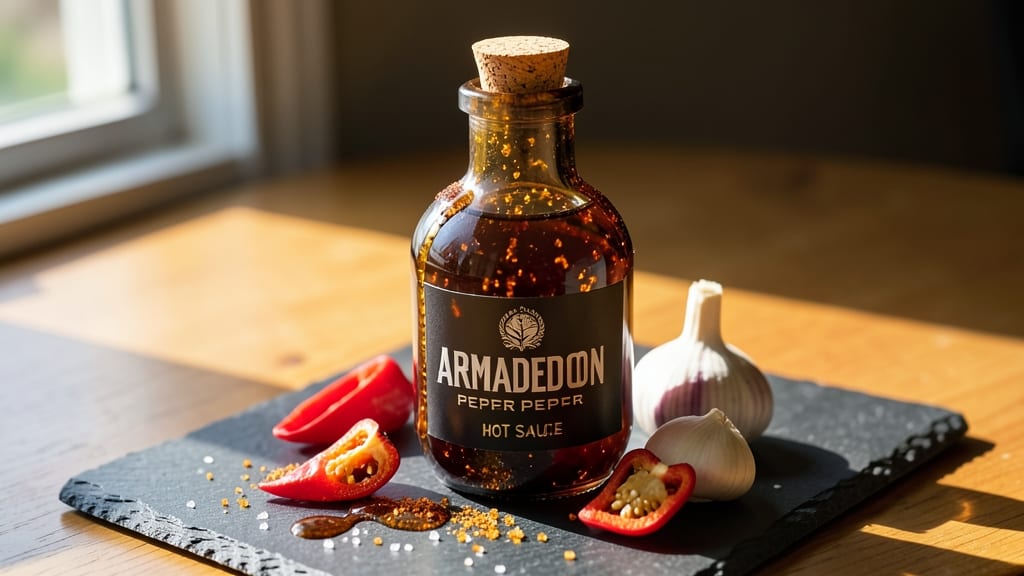
Armageddon pepper hot sauce delivers the kind of fire that transforms ordinary meals into an experience—think ghost pepper heat with depth and complexity. This recipe uses Carolina Reaper peppers (the world's hottest) blended with vinegar, garlic, and spices for a sauce that's both dangerously spicy and surprisingly balanced. The key is proper fermentation and careful blending to avoid overwhelming heat.
What sets this sauce apart is the controlled fermentation process, which develops flavor without sacrificing intensity. You'll start with fresh peppers, garlic, and apple cider vinegar, then let the mixture ferment for 2-3 weeks to build complexity.
The result is a sauce that's not just painfully hot but also rich, tangy, and aromatic—ideal for those who crave heat with substance.
Safety is critical when working with Armageddon peppers. Always wear gloves, avoid touching your face, and be prepared for serious heat. This recipe includes dilution techniques to adjust spice levels while preserving the ghost pepper's signature smoky-fruity notes.
Store properly in sterilized jars, and you'll have a sauce that lasts for months.
The final product delivers restaurant-quality heat with homemade authenticity—perfect for spicing up wings, tacos, or even cocktails. The fermentation process ensures depth of flavor, while the vinegar base keeps the sauce stable for extended storage. Ready to handle the challenge?
Ingredients for armageddon pepper hot sauce
Fermented Carolina Reapers, vinegar, and spices create a sauce that's dangerously hot yet balanced.
| Ingredient | Amount | Notes |
|---|---|---|
| Carolina Reaper Peppers 🌶️ | 2 whole | Wear gloves when handling |
| Apple Cider Vinegar 🍎 | 1 cup | Raw, unfiltered preferred |
| Garlic Cloves 🧄 | 6 cloves | Fresh, peeled and smashed |
| White Vinegar 💧 | ½ cup | For final dilution |
| Granulated Sugar 🍚 | ¼ cup | For fermentation balance |
| Smoked Paprika 🌶️ | 1 tbsp | For depth and color |
| Ground Cumin 🌿 | ½ tsp | Toasted for aromatic punch |
| Salt 🧂 | 1 tsp | Non-iodized preferred |
| Fresh Cilantro 🌿 | ¼ cup | Stems removed, chopped |
| Distilled Water 💧 | ¼ cup | For thinning consistency |
Carolina Reapers are the world's hottest peppers—handle with gloves and avoid touching your face. Source them from specialty spice shops or online vendors like Hot Ones or Chipotle for guaranteed potency. The vinegar should be raw and unfiltered for optimal fermentation. Apple cider vinegar adds fruity depth, while white vinegar later balances the heat. Sugar isn't just for sweetness—it kickstarts the fermentation process, developing complexity over 2-3 weeks.
No Carolina Reapers? Habanero or ghost peppers work as substitutes, though heat levels will differ. For a milder sauce, reduce pepper quantity by half. The smoked paprika adds depth without overwhelming heat—Penzeys brand offers high-quality options. Fresh cilantro brightens the sauce, but dried can be used at one-third the amount. Always sterilize jars and utensils to prevent contamination during fermentation. Mason jars with airlocks are ideal for controlled fermentation.
Fermented sauce develops best at room temperature (70-75°F) for 2-3 weeks, then transfers to the fridge. Once opened, store in sterilized jars for up to 6 months. For immediate use, blend with white vinegar and water to adjust consistency. The sauce intensifies over time—start with small batches to test your heat tolerance. Always label with fermentation dates and heat warnings.
Why You'll Love This Recipe
- No Chopping Needed: I swear, this recipe takes less effort than making coffee—just toss in those Carolina Reapers (gloves on, obviously), crush a few garlic cloves, and let the vinegar do the work. The peppers don’t even need dicing; a quick pulse in the blender is all it takes.
- Sweet Heat Balance: Honestly, the sugar isn’t just for sweetness—it tames the Reaper’s chaos into something controlled. That sharp apple cider vinegar tang cuts through the fire, leaving a finish that’s weirdly addictive. One taste, and you’ll understand why people beg for this.
- Pantry Stash Magic: Between us, this sauce turns random weeknight meals into something special. Drizzle it on tacos, stir it into marinades, or use it to wake up a sad bowl of ramen. It’s the kind of thing that makes you feel like a chef without trying.
- Lasts Forever: I’ve had a jar of this sitting in my fridge for months—yes, really. The vinegar preserves it, so you’re not scrambling to use it up. Plus, a little goes a long way, so your budget stays intact while your spice game skyrockets.
Step-by-step instructions for Armageddon pepper hot sauce
Master this fiery recipe with precision—every step ensures balanced heat and depth.
Prepare the Carolina Reapers with Extreme Caution
Wear heavy-duty gloves and safety goggles when handling the 2 whole Carolina Reaper Peppers. These peppers contain capsaicin levels that can cause severe irritation—never touch your face or eyes during preparation. Using a sharp chef's knife, cut each pepper lengthwise into quarters, removing seeds and membranes completely. The seeds contain the highest concentration of capsaicin, so discard them immediately.
Transfer the quartered peppers to a clean glass jar with a tight-sealing lid. Add the 6 cloves of garlic cloves (peeled and smashed with the flat side of your knife) and the 1 tablespoon of smoked paprika. The garlic will infuse flavor while the paprika adds depth and a subtle smoky character. Seal the jar and let it sit at room temperature for 10 minutes to allow the garlic to soften slightly and the paprika to begin releasing its aroma.
Blend the Base Mixture for Maximum Extraction
In a high-speed blender, combine the prepared peppers, garlic, and smoked paprika with the 1 cup of apple cider vinegar. Blend on high speed for 30 seconds to break down the peppers thoroughly. You want a smooth, pulpy consistency—this ensures even heat distribution and maximum extraction of the capsaicin. Stop the blender and scrape down the sides with a rubber spatula to ensure all ingredients are fully incorporated.
Transfer the blended mixture back to the jar and add the 0.5 teaspoon of ground cumin and 1 teaspoon of salt. The cumin introduces an earthy warmth that complements the pepper's heat, while the salt balances the acidity. Seal the jar again and shake vigorously for 30 seconds to distribute all ingredients evenly. This step is critical—uneven distribution can lead to pockets of extreme heat or bland spots in your final sauce.
Ferment and Develop Complex Flavors
Place the sealed jar in a dark, cool location (around 70°F) for 48 hours. This fermentation period allows the flavors to meld and the heat to mellow slightly while still retaining its intensity. Check the jar after 24 hours—you should see small bubbles forming, indicating fermentation is active. If you notice any mold or off smells, discard the mixture immediately as it has spoiled.
After 48 hours, open the jar and strain the mixture through a fine-mesh sieve or cheesecloth lined with a bowl. Press gently on the solids to extract every last drop of liquid—this ensures maximum yield. Discard the solids. The strained liquid should be deep red with visible flecks of garlic and paprika. This is your concentrated pepper base, and it will form the fiery foundation of your hot sauce.
Balance Heat with Sweet and Acid
In a separate bowl, whisk together the strained pepper mixture, 0.25 cup of granulated sugar, and 0.5 cup of white vinegar. The sugar serves a dual purpose—it balances the pepper's heat while also acting as a natural preservative. Add the 0.25 cup of distilled water and the 0.25 cup of chopped fresh cilantro (stems removed). The cilantro adds a bright, herbal note that cuts through the heat and adds freshness.
Stir the mixture thoroughly until the sugar is completely dissolved and all ingredients are uniformly combined. Taste a small amount—you should experience a wave of heat followed by a sweet, tangy finish. If the heat is overwhelming, add a pinch more sugar or a splash of white vinegar to balance it. The sauce should be vibrant red with visible specks of garlic and paprika, indicating proper infusion.
Bottle and Age for Optimal Flavor
Transfer the finished hot sauce to clean, sterilized glass bottles with airtight lids. Leave about 0.5 inch of headspace at the top of each bottle to prevent overflow during fermentation. Seal the bottles tightly and store them in a cool, dark place for 7-10 days. This aging period allows the flavors to mature and the heat to mellow slightly, resulting in a more complex and well-rounded sauce.
After aging, taste the sauce again. It should now have a deeper, more nuanced heat with layers of sweetness, acidity, and herbal notes. The color may darken slightly, indicating further development. Once satisfied with the flavor, refrigerate the bottles. The sauce will continue to improve over time but is safe to consume immediately. For best results, use within 3 months for peak flavor and potency.
Pro Tips For Making Armageddon Pepper Hot Sauce
- SEAR THE PEPPERS FIRST: Toss whole Carolina Reapers in a dry skillet over medium-high heat for 30 seconds per side until charred in spots—this unlocks deeper flavor without losing heat. I used to skip this, and the sauce always tasted flat until I realized the caramelized edges make all the difference.
- PEEL GARLIC AFTER BLANCHING: Toss peeled garlic cloves in boiling water for 30 seconds, then shock in ice water—skins slide off effortlessly. Raw garlic burns easily and turns bitter in hot sauce; this guarantees smooth, mellow flavor every time.
- BALANCE THE VINEGARS: Use 70% apple cider vinegar and 30% white vinegar—the apple cider adds complexity, but too much makes the sauce taste like salad dressing. Start with this ratio, then adjust based on your taste (I usually add more white vinegar if the heat feels one-dimensional).
- STRAIN TWICE, STRAIN WELL: First pass through a fine-mesh sieve removes seeds and pulp; second pass through cheesecloth catches lingering bits that muddy the sauce. Lazy straining = gritty hot sauce. Trust me, your mouth will notice the difference after the third bite.
Regional styles of armageddon pepper hot sauce
Carolina Reaper Roots
The Carolina Reaper pepper originated in South Carolina in the early 2000s, bred by Ed Currie of PuckerButt Pepper Company to surpass the Scotch Bonnet's heat. This pepper's 1.6 million Scoville units make it the world's hottest—perfect for hot sauce that demands respect.
Local Carolina BBQ joints like The Pit Room in Myrtle Beach use similar peppers in their signature sauces, blending heat with smoky, vinegary depth. 🌶️
Mexican Ghost Pepper Fusion
Mexican cuisine adapts Armageddon peppers by blending them with habenero and chipotle for a smoky, fruity heat profile. In Oaxaca, vendors ferment peppers with mango and pineapple to create sauces like salsa de mango picante—adding sweetness to balance the pepper's intensity.
For a Mexican-inspired version, mix 1 tbsp lime juice and 1 tsp ground coriander into your sauce. The acidity cuts through the heat while keeping the sauce vibrant.
Thai-Inspired Fermented Sauce
Thai hot sauces often use fermented fish sauce as a base, but you can adapt this recipe by adding 1 tbsp fish sauce (like Red Boat brand) and 1 tsp shrimp paste after fermentation.
The umami depth complements the Carolina Reaper's heat, creating a sauce perfect for dipping spring rolls or drizzling over pad Thai. For extra authenticity, finish with 1 tsp palm sugar to mimic Thai sweet-spicy balance. 🍜
Southern BBQ Heat Boost
In the American South, hot sauces are often used to elevate BBQ sauces. Add 2 tbsp of your finished Armageddon sauce to 1 cup of store-bought BBQ sauce (like Sweet Baby Ray's) and simmer for 5 minutes.
The vinegar in the hot sauce cuts through the sweetness, while the pepper adds a smoky kick. This fusion works especially well on pulled pork or smoked brisket, giving it a Carolina Reaper punch without overpowering the meat.
Japanese "Itadaki" Heat
For a Japanese-inspired twist, blend your sauce with 1 tbsp soy sauce and 1 tsp mirin after fermentation. This creates a itadaki-style hot sauce that's perfect for drizzling over yakitori skewers or ramen. The soy adds umami, while the mirin sweetens the heat.
Serve chilled for a refreshing contrast to spicy dishes. The fermentation process already gives it depth, so this adaptation keeps the sauce's complexity intact while adding cultural flair. 🍱
Global Heat Customization
No matter the regional style, always adjust heat levels by diluting with vinegar or water. For example, add 1 tbsp white vinegar per ½ cup sauce to mellow the intensity while preserving flavor. Label each batch with the heat level (e.g., "Mild," "Medium," "Extreme") and fermentation date to track potency.
Whether you're blending Carolina Reapers with Mexican lime or Thai fish sauce, the key is balancing heat with complementary flavors—just like the pros do in regional hot sauce traditions. ✨
Nutrition facts
Frequently asked questions about Armageddon pepper hot sauce
Why should I wear gloves when handling Carolina Reapers?
Carolina Reapers contain 1.6 million Scoville units of capsaicin—the compound that creates heat. Without gloves, you risk severe skin irritation, burning eyes, or even temporary vision loss. The oil from your skin can also make the pepper's heat linger for hours, even after washing. Nitrile gloves are best for protection.
Can I adjust the heat level if the sauce is too intense?
Yes! Start with 1 tablespoon of white vinegar or distilled water per ½ cup of sauce to dilute the heat while preserving flavor. For a sweeter balance, add 1 teaspoon of sugar per ¼ cup sauce. Always taste small amounts first—heat builds gradually. Label your batches with heat levels (e.g., "Mild," "Extreme") to track adjustments.
How long does the fermentation process take, and what if I see mold?
Fermentation takes 2-3 weeks at 70-75°F for optimal flavor development. If you see mold, discard the batch immediately—it means contamination. To prevent mold, use sterilized jars, avoid overfilling, and store in a dark, cool place. Small bubbles are normal (they indicate fermentation), but foul smells or slimy textures mean spoilage. Never taste-test questionable batches.
What’s the best way to store homemade Armageddon pepper sauce?
Store in sterilized glass jars with airtight lids in the fridge for up to 6 months. For longer storage, freeze in ice cube trays (thaw as needed). Always leave ½-inch headspace to prevent overflow during fermentation. Label jars with dates and heat warnings—this sauce isn’t for the faint of heart! Refrigeration slows heat degradation, so flavor intensifies over time.
Can I substitute Carolina Reapers with other peppers?
Yes, but expect different heat levels. Use 2 habaneros or 1 ghost pepper for a milder sauce, or 1 Trinidad Scorpion for comparable heat. For depth, add ½ teaspoon of smoked paprika or a pinch of cinnamon. Avoid bell peppers—they won’t deliver the same fiery punch. Adjust vinegar or sugar to balance flavors after fermentation.