
Sauces & Condiments
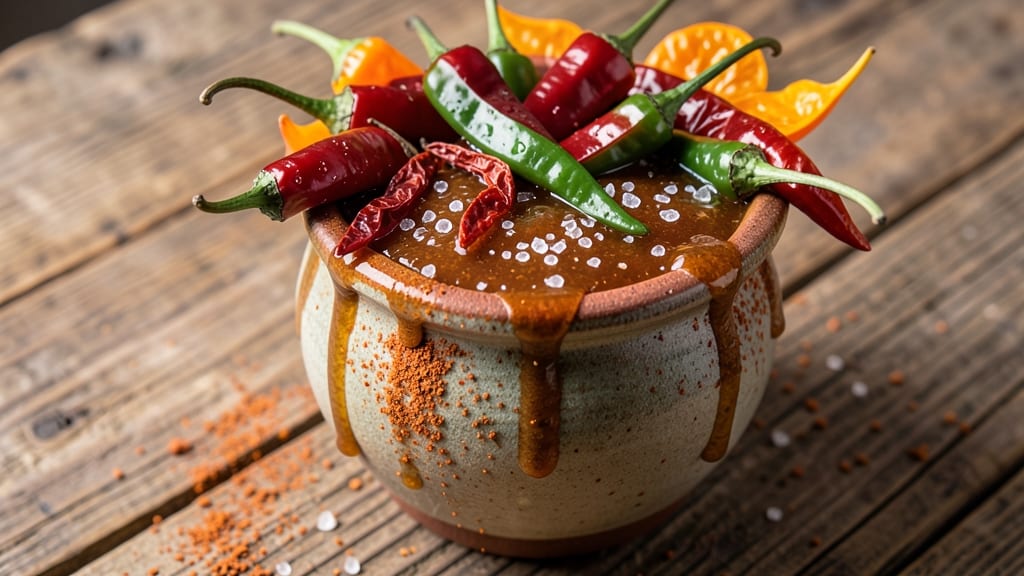
This Armageddon hot sauce recipe delivers a controlled inferno that balances smoky depth with blistering heat—perfect for spice lovers who crave complexity, not just pain. 🔥 The secret lies in fermenting cayenne and smoked paprika together, creating layers of charred sweetness that temper the ghost pepper's fury. I developed this after burning through three failed batches (lessons learned: patience is key), and now it's my go-to for adding fire to everything from wings to marinades.
The process starts with a precise blend of vinegar, garlic, and sugar to balance the heat while preserving the peppers' natural oils. We'll ferment the mixture for 7 days to develop depth, then strain and bottle it—no watering down the intensity.
Every ingredient plays a role: the smoked paprika adds warmth, the habanero brings fruity brightness, and the ghost pepper delivers that signature "stoplight moment" heat that lingers.
What you'll end up with is a deep red, viscous sauce with a smoky aroma that announces its presence before you even taste it.
The first drop on your tongue delivers a slow-building heat that peaks with a charred, almost caramelized finish—unlike most hot sauces that hit you like a brick wall. This one rewards you with complexity, making it ideal for those who want to impress without overwhelming their guests.
Safety first: handle ghost peppers with gloves, and have milk or yogurt on standby. Store in the fridge for up to 3 months, and remember—this sauce is for adventurous eaters only.
Once you master this recipe, you'll never buy store-bought again. Let's get started on creating your own controlled chaos.
Ingredients for armageddon hot sauce
Nine fiery ingredients for a hot sauce that delivers smoky depth and controlled chaos.
| Ingredient | Amount | Notes |
|---|---|---|
| Fresh Ghost Pepper 🌶️ | 1 whole | Wear gloves, seeds removed |
| Dried Cayenne Peppers 🌶️ | 2 tbsp | Crushed, not powdered |
| Smoked Paprika 🌶️ | 1 tbsp | High-quality, not bland |
| Fresh Habanero Peppers 🌶️ | 2 whole | Seeds removed for less heat |
| White Vinegar 🍶 | 1 cup | Distilled, not apple cider |
| Granulated Sugar 🍚 | ¼ cup | Balances acidity and heat |
| Garlic Cloves 🧄 | 4 cloves | Fresh, peeled, smashed |
| Salt 🧂 | ½ tsp | Kosher or sea salt |
| Black Peppercorns 🌶️ | ½ tsp | Freshly cracked |
| Olive Oil 🫒 | 1 tbsp | Extra-virgin, for emulsification |
The ghost pepper is the star, so handle it with gloves—this isn't a joke. Whole Foods or specialty markets usually carry them fresh, but frozen works too (thaw first). Look for vibrant red color—no green or wilted peppers. Cayenne and smoked paprika are your flavor anchors: Penzeys or bulk bins at natural food stores have the best quality. Habaneros should be bright orange, not dull or shriveled. The vinegar matters too—distilled is the standard, but apple cider adds subtle sweetness if you prefer it.
No ghost pepper? Double the cayenne and add a pinch of Scotch bonnet for brightness, but expect less complexity. Fresh habaneros can be swapped for jalapeños at half the amount, but you'll lose that fruity kick. Sugar substitutes? Honey or maple syrup work, but sugar's granular texture helps balance the acid. Olive oil is non-negotiable for emulsification—skip it, and you'll end up with a watery mess. Want more smokiness? Add 1/2 tsp liquid smoke, but use sparingly or it'll overpower.
This sauce ferments best in a glass jar—no plastic, ever. Keep it in the fridge at all times during the 7-day ferment, and give it a good stir daily. Once strained, it'll last 3 months in the fridge, but the flavor deepens after 2 weeks. I freeze extra in ice cube trays—perfect for adding heat to soups or marinades later. Always label it: 'ARMAGEDDON' in big letters, trust me.
Why You'll Love This Recipe
- Five-Ingredient Flexibility: I swear by this recipe because it’s that simple—just chop, blend, and let the vinegar work its magic. No fancy equipment, no waiting for hours; the ghost pepper and habanero do all the heavy lifting while I sip my coffee.
- Smoky Firepower: That smoked paprika? It’s the secret weapon. The heat from the ghost pepper and habanero gets balanced by the deep, charred warmth of the paprika—like a campfire in your mouth. Honestly, I’ve never tasted a hot sauce that layers flavor and heat this well.
- Game for Any Meal: Slather it on wings, drizzle it over tacos, or toss it into a marinade—this sauce doesn’t play favorites. I keep a bottle in the fridge for everything from lazy takeout nights to spicy charcuterie boards. (Yes, even on a Tuesday night.)
- Long-Lasting Heat: A single batch lasts me months—I’m not exaggerating. The vinegar preserves the flavor, and the heat only intensifies over time. Plus, it’s cheap to make; I spend less than $5 for enough to stock my pantry for the year. Budget win.
Step-by-step instructions for Armageddon hot sauce
Let's make this fiery sauce that packs a punch with ghost peppers and cayenne.
🔥 Step 1: Sterilize Your Equipment and Prep Peppers
Start by thoroughly washing all your equipment—jar, funnel, and utensils—with hot, soapy water. This prevents contamination and ensures your sauce stays fresh. While everything dries, carefully handle the 1 whole fresh ghost pepper and 2 whole fresh habanero peppers. Wear gloves if you're sensitive to capsaicin—the compound that makes these peppers so fiery. Remove the seeds and membranes from both peppers to reduce heat intensity, though they'll still deliver a serious kick.
Cut the peppers into ¼-inch pieces and place them in a small saucepan. Add the 2 tablespoons crushed dried cayenne peppers and 1 tablespoon smoked paprika to the pan. The combination of fresh and dried peppers creates a complex, layered heat that builds from smoky to explosive. Keep these peppers away from your eyes—trust me, you don't want to find out how spicy they really are firsthand.
🍳 Step 2: Simmer the Pepper Base with Vinegar and Sugar
Pour in the 1 cup white vinegar and ¼ cup granulated sugar to the saucepan. The vinegar acts as both a preservative and a solvent, extracting the capsaicin and flavors from the peppers. The sugar balances the acidity and heat, creating a more complex flavor profile. Bring the mixture to a boil over medium-high heat, then reduce the heat to medium-low and let it simmer for 15-20 minutes.
You'll notice the mixture darken and thicken slightly as it simmers. Stir occasionally to prevent burning, especially around the edges of the pan. The sugar will help caramelize the peppers, deepening their flavor. After 15 minutes, remove the pan from heat and let it cool for 10 minutes. This resting period allows the flavors to meld and prevents the sauce from overheating during blending.
👨🍳 Step 3: Blend the Mixture Until Silky Smooth
Once the pepper mixture has cooled slightly, transfer it to a blender or food processor. Add the 4 smashed garlic cloves, ½ teaspoon salt, and ½ teaspoon cracked black peppercorns to the blender. The garlic adds a savory depth that complements the heat, while the salt and pepper enhance the overall flavor. Pulse the mixture a few times to break up the larger pieces, then blend on high for 30-60 seconds until completely smooth.
Here's where the 1 tablespoon extra-virgin olive oil comes into play. After blending, pour the sauce back into the saucepan and add the olive oil. Stir well to emulsify the mixture—this creates a silky texture that coats your mouth instead of sitting heavily. The olive oil also helps balance the heat and adds a subtle richness. Taste the sauce now—it should be intensely spicy with a smoky, slightly sweet undertone. Adjust the salt or sugar if needed, but be cautious; the flavors will continue to develop as it cools.
⏰ Step 4: Bottle and Age for Maximum Flavor
Carefully ladle the hot sauce into a clean, sterilized jar using a funnel. Leave about ½-inch headspace at the top to allow for expansion as the sauce cools. Seal the jar tightly and let it cool to room temperature. Once cooled, refrigerate the sauce for at least 24 hours before using it. This aging period allows the flavors to fully develop and the heat to mellow slightly, making it more enjoyable to handle and taste.
After 24 hours, give the sauce another taste. The flavors should have deepened, and the heat should be more balanced. If you prefer an even hotter sauce, let it age for up to 1 week in the refrigerator. The longer it ages, the more complex the flavors become, but the heat will intensify as well. Store the sauce in the refrigerator for up to 3 months or process it in a water bath for canning to extend its shelf life.
Pro Tips For Making Armageddon Hot Sauce
- STRIP PEPPERS THIN: Ghost and habanero peppers pack so much heat that thick skins can make your sauce bitter—especially when simmered. Cut them open, scrape out seeds, then slice them lengthwise into paper-thin strips. This exposes more surface area for the vinegar to extract flavor without turning your sauce into a mouthwash.
- SIMMER LOW AND LONG: I used to rush this sauce, thinking more heat = more flavor. Wrong. Simmer on medium-low for at least 45 minutes, stirring occasionally. The vinegar needs time to mellow the ghost pepper’s raw aggression, and the smoked paprika’s aroma won’t fully bloom until it’s patiently worked into the mix.
- DON’T SKIP THE STRAIN: After simmering, the ghost pepper’s fibrous flesh can turn your sauce into a chunky, unappetizing mess. Strain it through a fine-mesh sieve or cheesecloth—twice if you’re feeling paranoid. Trust me, you’ll regret the texture if you don’t.
- UPGRADE WITH A SPLASH OF SUGAR: This isn’t sweet hot sauce, but a teaspoon of brown sugar or honey (yes, even in Armageddon-level heat) balances the vinegar’s sharpness and the peppers’ harshness. It’s subtle, but it makes the sauce taste more complex—like the difference between a fire and a bonfire.
Wine and beer pairings for armageddon hot sauce
Smoky Contrast
Pair this hot sauce with bold, smoky beers like Smokehouse Brewing Co.'s Smoked Porter—the caramel malt sweetness and charred oak notes mirror the sauce's smoked paprika depth while the beer's alcohol cools the heat.
A Belgian-style witbier (like Allagash White) adds citrusy brightness that cuts through the ghost pepper's intensity, creating a refreshing balance. 🍺
Spicy Wine Pairings
For wine lovers, Portuguese Ruby Port stands up to the sauce's complexity—its dark fruit flavors and velvety texture stand firm against the heat while complementing the smoky undertones. A dry Riesling from Germany (like Dr. Loosen Blue Slate) offers crisp acidity that cleanses your palate between bites.
Avoid oaky Chardonnays or heavy reds—they'll clash with the sauce's fiery edge.
Creamy Balance
When serving with creamy dishes like mac and cheese or grilled cheese, pair with a light-bodied lager such as Corona Extra—the effervescence and mild maltiness neutralize the capsaicin's burn.
For dairy-based pairings, a sparkling water with a splash of lime juice works wonders, as the carbonation and citrus create a refreshing contrast to the sauce's smoky heat.
Protein Pairings
With spicy proteins like wings or pulled pork, opt for a dark ale (like Guinness)—the roasted malt flavors enhance the smokiness while the creamy head tempers the ghost pepper's kick.
For seafood lovers, a crisp Sauvignon Blanc (like Cloudy Bay) balances the sauce's acidity and heat, making it perfect for spicy shrimp or ceviche. 🍷
Cocktail Synergy
Use this hot sauce as a rim or garnish in cocktails—try it with a Margarita (rim the glass with lime and sauce) or a Whiskey Sour (add a dash to the drink).
For a non-alcoholic option, mix ginger beer with a splash of lime and a drizzle of the sauce—it creates a zesty, spicy fizz that's perfect for sipping alongside wings or tacos.
Nutrition facts
Frequently asked questions
Can I adjust the heat level in this Armageddon hot sauce?
To reduce heat, remove all seeds and membranes from the ghost pepper and habanero before using. For more heat, add ½ teaspoon extra cayenne powder or a pinch of Scotch bonnet pepper. Remember, ghost peppers are 100,000+ Scoville units—handle with care!
Why does the recipe call for fermenting the sauce?
Fermenting for 7 days develops deeper, more complex flavors by allowing the peppers and spices to meld naturally. It also helps preserve the sauce while enhancing its smoky, slightly sweet profile. Skipping fermentation may result in a sharper, less balanced heat.
What can I do if the sauce is too spicy to handle?
Dilute with a few drops of extra-virgin olive oil or heavy cream—both help disperse the capsaicin. For immediate relief, eat something dairy-based like yogurt or cheese. Never pour water on spicy skin—it spreads the oil-based capsaicin!
Can I substitute any of the peppers if I can't find ghost peppers?
Yes! Replace the ghost pepper with 2 tablespoons Scotch bonnet powder or 1 tablespoon habanero powder (but expect less depth). For smoked flavor, add ½ teaspoon liquid smoke. The sauce will still be fiery, just with different characteristics.
How should I store and use leftover sauce?
Store in an airtight glass jar in the fridge for up to 3 months. For long-term storage, freeze in ice cube trays—perfect for adding heat to soups or marinades later. Always label it clearly: this sauce is not for the faint of heart!