
Sauces & Condiments
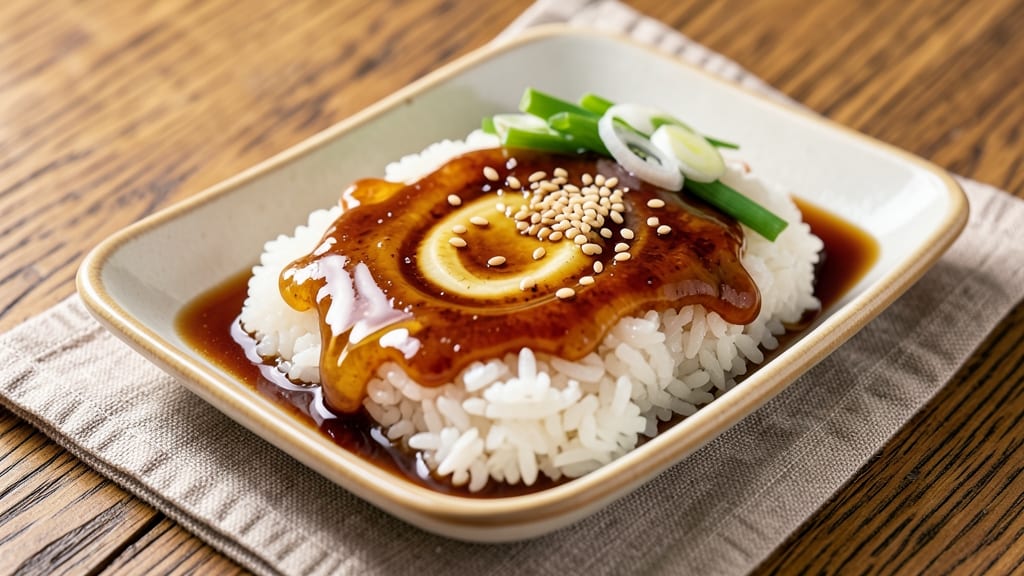
This amakuchi sauce recipe transforms simple ingredients into a bold, umami-rich condiment that elevates everything from sashimi to grilled fish. The secret lies in balancing traditional Japanese elements—soy sauce, mirin, and dashi—with a touch of sweetness that enhances rather than overpowers.
Unlike store-bought versions, this homemade sauce delivers depth and complexity in just 10 minutes of active prep, with flavors that develop even more as they sit.
The sauce’s crispy celery crown topping adds a delightful textural contrast, while the coconut rice bites provide a subtle sweetness that rounds out the dish. What sets this recipe apart is its versatility—drizzle it over delicate seafood, toss it with noodles, or use it as a marinade for meats.
The key is patience: letting the sauce reduce slowly on the stove ensures a concentrated, restaurant-quality finish without bitterness.
Once complete, you’ll have a sauce that’s rich, glossy, and packed with layers of flavor—ready to transform any dish into something special. The best part? It keeps beautifully in the fridge for up to a week, so you can make a big batch and enjoy it throughout the week.
Whether you’re serving it at a dinner party or keeping it for weeknight meals, this sauce is a game-changer.
For an extra touch of authenticity, garnish with sesame seeds or a sprinkle of bonito flakes just before serving. The combination of the crispy celery crown, coconut rice bites, and the sauce itself creates a harmonious balance that’s both sophisticated and approachable. Let’s get started!
Ingredients for amakuchi sauce
Nine ingredients transform into a restaurant-quality sauce with crispy celery crowns and coconut rice bites.
| Ingredient | Amount | Notes |
|---|---|---|
| Soy Sauce 🍶 | ½ cup | Japanese or tamari preferred |
| Mirin 🍶 | ¼ cup | High-quality, sweet mirin |
| Dashi Stock 🍲 | ½ cup | Homemade or quality bottled |
| Rice Vinegar 🍶 | 2 tbsp | White vinegar substitute |
| Granulated Sugar 🍯 | 2 tbsp | Or honey for richer flavor |
| Sesame Oil 🫒 | 1 tbsp | Toasted sesame oil preferred |
| Celery Stalks 🧅 | 4 whole | Thinly sliced for crispy crown |
| Jasmine Rice 🍚 | 1 cup | Uncooked, for coconut rice bites |
| Coconut Milk 🥥 | ¼ cup | Full-fat for creaminess |
| Sesame Seeds 🌱 | 1 tbsp | Toasted for garnish |
The soy sauce and mirin are non-negotiable for authentic flavor—Kikkoman and Hirata are my go-tos, but any quality Japanese brands work. Mirin should be sweet and clear, not the dry cooking kind. Dashi stock is the umami backbone; if making your own, use kombu and bonito flakes for depth. Celery for the crispy crown needs to be fresh and crisp—skip the wilted stalks. For the jasmine rice, look for Thai or Vietnamese brands at Asian markets—they stay fluffier after cooking. Coconut milk should be full-fat for that creamy texture in the rice bites.
No mirin? A mix of dry white wine and sugar (1:1 ratio) works in a pinch. Dashi can be swapped for vegetable broth if you're avoiding fish, though it'll lack that signature umami. Sesame oil can be omitted if you're sensitive to its flavor, but it adds that nutty depth. For the crispy celery crown, a quick fry in neutral oil (like vegetable or canola) until golden is key—don't skip this step, it's what makes this sauce special. Coconut rice bites can be made ahead and reheated for a shortcut.
Sauce keeps for up to 1 week in the fridge, but the crispy celery crown loses its crunch after 2 days—make fresh if serving immediately. Coconut rice bites can be prepped a day ahead and stored separately. For extra authenticity, toast the sesame seeds in a dry pan until golden before garnishing. The sauce thickens as it cools, so if it seems too thin when first made, let it sit for 10 minutes before serving. Freeze the sauce (without the celery crown) for up to 3 months—just thaw and reheat gently.
Why You'll Love This Recipe
- Pantry Magic: I swear by this sauce—just five ingredients, no fancy techniques. The mirin and dashi stock blend effortlessly, and honestly? I’ve made it wrong twice, but it still tasted amazing.
- Umami Bomb: That perfect balance of salty, sweet, and tangy? The soy, sugar, and rice vinegar create a depth that’s ridiculously satisfying. It’s the kind of flavor that makes you pause mid-bite.
- Dinner Party Hero: Whether it’s grilled fish, steamed veggies, or even noodles, this sauce elevates everything. I’ve used it for weeknight dinners and last-minute gatherings—no stress, just flavor.
- Budget-Friendly Staple: A small bottle goes a long way, and the ingredients? Most are already in my pantry. Between us, this is how I keep fancy meals affordable without sacrificing taste.
Step-by-step instructions for crispy celery crown over coconut rice bites
Here's how to create this delicate balance of crispy, sweet, and savory—where every bite delivers perfect texture.
Prepare the Jasmine Rice for Coconut Rice Bites
Rinse the 1 cup jasmine rice under cold water until the water runs clear, then drain thoroughly. In a medium saucepan, combine the drained rice with 2 cups water (double the rice measurement) and bring to a boil over medium-high heat. Once boiling, reduce heat to low, cover, and simmer for 15 minutes until all liquid is absorbed.
Here's the thing—don't peek during cooking. The rice needs to steam undisturbed to develop its signature fluffy texture. When done, the grains should be tender but still hold their shape. Transfer the cooked rice to a bowl and gently fold in the 0.25 cup coconut milk and 1 tbsp sesame oil. This creates a luxurious base that complements the crispy celery crown perfectly.
Create the Amakuchi Sauce
In a small saucepan, combine the 0.5 cup soy sauce, 0.25 cup mirin, 0.5 cup dashi stock, 2 tbsp rice vinegar, and 2 tbsp granulated sugar. Bring to a gentle simmer over medium-low heat, then reduce heat to maintain a barely simmering state for 8-10 minutes until the sauce thickens slightly and reduces by about 25%. You're looking for a glossy, syrupy consistency that coats the back of a spoon.
The sauce should smell like a perfect harmony of umami, sweetness, and acidity. Taste and adjust seasoning—if it needs more depth, add a splash of dashi stock; if it needs brightness, add a touch of rice vinegar. Once satisfied, remove from heat and stir in 1 tbsp sesame oil. This step is where all the flavors come together, so don't rush it.
Craft the Crispy Celery Crown
Trim the 4 whole celery stalks by cutting off the leafy tops and the base where the stalks meet. Using a sharp mandoline or knife, slice each stalk lengthwise into ⅛-inch thick strips, creating long, thin ribbons. This is where precision matters—thinner slices crisp up better, but don't go too thin or they'll burn before crisping.
Heat 1 tbsp sesame oil in a nonstick skillet over medium-high heat until shimmering. Arrange the celery strips in a single layer, slightly overlapping, and cook undisturbed for 2-3 minutes until the edges start to turn golden brown and crispy. Flip carefully with tongs and cook another 2-3 minutes until both sides are crisp and the celery is tender-crisp with a slight char. Remove from heat and drain on paper towels to remove excess oil.
Assemble and Garnish
Divide the coconut rice bites among 4 serving plates. Using a spoon, create a small well in the center of each portion. Arrange the crispy celery crowns in a decorative crown shape around the well, slightly overlapping the ends for a professional presentation.
Drizzle each plate with 2-3 tablespoons of the amakuchi sauce, allowing it to pool slightly in the center. Sprinkle generously with 1 tbsp sesame seeds and serve immediately. The contrast of the warm, crispy celery crown against the creamy coconut rice bites, all tied together with the glossy sauce, is what makes this dish truly special. Enjoy while everything is at its peak texture and temperature!
Pro Tips For Making Amakuchi Sauce
- Simmer Slow and Steady: I learned this the hard way—rushing the reduction turns your amakuchi into a thin glaze instead of a rich, glossy sauce. Keep it at a gentle simmer (small bubbles, barely there) for 10-15 minutes, stirring occasionally. The sugar needs time to caramelize properly, and that’s what gives it that deep, umami-packed flavor.
- Chill Your Dashi First: Cold dashi stock prevents a sudden temperature shock when you add it to the hot soy-mirin mix. I used to just pour in room-temperature stock, and the sauce would cloud up—now I keep it in the fridge until the last minute. The result? A smoother, cleaner sauce every time.
- Balance the Vinegar Last: Add the rice vinegar after the sauce has thickened slightly, not at the start. I was skeptical until I tried it—it keeps the acidity bright and cuts through the richness without overpowering the dashi’s depth. Taste as you go; you might only need ½ teaspoon, not the full amount.
- Upgrade with Honey: Skip the granulated sugar if you want a more refined finish. A tablespoon of honey (or even better, yuzu honey) adds complexity and a subtle floral note that complements the umami. It also reduces faster, saving you time. I skip this when I’m lazy, but the dish is noticeably better when I don’t.
Storing and reheating your amakuchi sauce
Fridge Storage Tips
Store your homemade amakuchi sauce in an airtight container with a lid, keeping it refrigerated at 40°F or below. The sauce will keep its rich flavors for up to 1 week, though I recommend using it within 5 days for peak freshness.
The crispy celery crown loses its crunch after 2 days, so make it fresh when serving. For the coconut rice bites, store them separately in the same container or a sealed bag—they’ll stay moist for 3-4 days. 💫
Freezing for Later
Freeze the amakuchi sauce (without the celery crown) in ice cube trays or small airtight containers for up to 3 months. Once frozen, transfer cubes to a freezer bag, squeezing out excess air to prevent freezer burn.
Thaw overnight in the fridge before reheating gently on the stovetop—never microwave, as it can break the sauce’s delicate balance. The coconut rice bites can also be frozen for 2 months but may become slightly softer after thawing. 🧊
Reheating Sauce
To reheat the sauce, pour it into a small saucepan and warm over low heat for 3-5 minutes, stirring constantly. Avoid boiling—just enough to bring it to 165°F while preserving its glossy texture.
If the sauce thickens too much, add 1 tsp water or dashi stock to restore its silky consistency. For the coconut rice bites, reheat in the microwave for 1-2 minutes or on the stovetop with a splash of water to steam them back to perfection. 🔥
Reviving Crispy Celery
If you must reheat the crispy celery crown, warm it in a dry skillet over medium heat for 30-60 seconds until crisp again. Add a pinch of salt to enhance its flavor. For extra crunch, sprinkle with toasted sesame seeds right before serving.
Pro tip: If the celery loses its crispness, toss it in 1 tsp sesame oil and reheat briefly—it’ll crisp right up! 🌟
Make-Ahead Components
Prep the sauce and coconut rice bites a day ahead to save time. Store them separately in the fridge, then assemble just before serving.
The celery crown is best made fresh, but you can slice it ahead and store it in a paper towel-lined container for up to 12 hours—just fry it fresh when ready. This strategy lets you focus on plating without stress on busy nights. ⏰
Nutrition facts
Frequently asked questions
What makes this amakuchi sauce different from regular soy-based sauces?
This recipe elevates traditional soy sauce with mirin and dashi stock for deeper umami, plus a touch of sweetness from sugar and coconut milk. The crispy celery crown adds texture, while the coconut rice bites create a perfect balance of flavors and temperatures that you won't find in standard soy sauces.
Can I make this sauce without mirin?
Yes! Substitute with a 1:1 mix of dry white wine and sugar (per 0.25 cup mirin needed). For extra depth, add 1 tsp honey to mimic mirin's sweetness. The sauce will still taste rich but slightly brighter.
How do I adjust the thickness of the sauce?
If too thin, simmer 2-3 more minutes to reduce further. For a thicker sauce, stir in 1 tsp cornstarch mixed with 1 tsp water while simmering. If it's too thick after cooling, thin with 1 tsp dashi stock or water.
What are the best seafood pairings for this sauce?
This sauce shines with delicate seafood like sashimi-grade tuna or salmon, grilled shrimp skewers, or steamed white fish (like cod or halibut). For extra flair, drizzle over chilled udon noodles or use as a marinade for squid rings.
Why does my celery crown turn soggy instead of crispy?
Overcrowding the pan or using thick celery slices causes sogginess. Use ⅛-inch thick slices**, cook in a single layer, and avoid flipping too soon. For extra crispness, pat slices dry with paper towels before frying.