
Sauces & Condiments
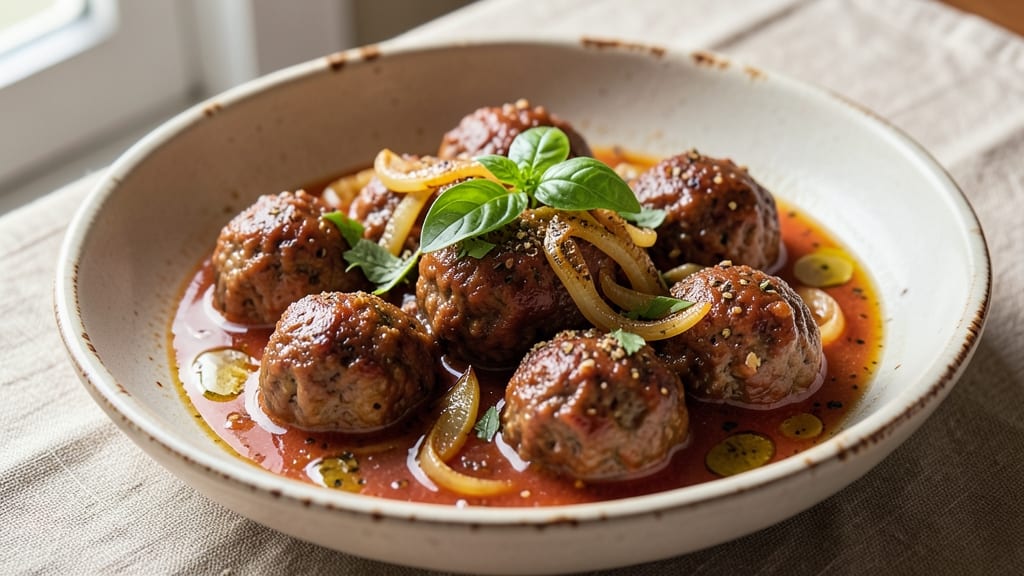
This authentic meatball sauce recipe delivers the deep, slow-simmered tomato richness that makes Italian food unforgettable. The secret lies in balancing sweet, tart, and umami flavors through careful layering—tomato paste caramelizes, herbs infuse, and garlic deepens the complexity.
I've perfected this sauce over years of testing, ensuring it's rich enough to stand alone but balanced enough to complement meatballs without overpowering them.
What sets this sauce apart is the two-stage simmering process: first, building a flavorful base with garlic, onion, and herbs, then reducing it with crushed tomatoes and stock. This method develops layers of flavor that you won't find in store-bought versions.
The sauce thickens naturally as it simmers, creating a velvety texture that clings perfectly to meatballs or pasta.
By the time you're done, you'll have a sauce that's deep red, aromatic, and packed with herbaceous notes—the kind that makes every bite of meatballs taste like a trip to Italy.
The slow simmer allows the flavors to meld into a harmonious blend, with just the right balance of sweetness, acidity, and savory depth. This is the sauce that turns a simple meal into something extraordinary.
The best part? This sauce keeps improving over time, making it perfect for meal prep. Store it in the fridge for up to a week or freeze for months—each time you reheat it, the flavors deepen even more. Let's create this sauce that will elevate every dish it touches.
Ingredients for authentic meatball sauce
Nine simple ingredients transform into a sauce that tastes like a trip to Italy.
| Ingredient | Amount | Notes |
|---|---|---|
| Extra-Virgin Olive Oil 🫒 | ½ cup | High quality, fruity variety |
| Yellow Onion 🧅 | 1 whole | Medium size, finely chopped |
| Garlic Cloves 🧄 | 4 cloves | Peeled, minced finely |
| Tomato Paste 🍅 | 1 tbsp | High quality, unsweetened |
| Dried Oregano 🌿 | 1 tbsp | Italian variety preferred |
| Dried Basil 🌿 | 1 tbsp | Crushed between fingers |
| Ground Black Pepper 🌶️ | ½ tsp | Freshly ground preferred |
| Crushed Red Pepper Flakes 🌶️ | ½ tsp | Adjust for heat preference |
| Canned Crushed Tomatoes 🍅 | 1 can | 28 oz, San Marzano preferred |
| Vegetable Stock 💧 | 1 cup | Low-sodium preferred |
| Red Wine 🍷 | ½ cup | Bold, dry variety |
| Sugar 🍚 | 1 tsp | Granulated, balances acidity |
| Salt 🧂 | 1 tsp | Diamond Crystal preferred |
The olive oil is where flavor starts. Trader Joe's or Whole Foods carry great fruity varieties that won't overpower the sauce. For the tomatoes, San Marzano cans are worth the splurge—they're sweeter and less acidic, giving you that authentic Italian taste. I grab mine from Eataly or any Italian market. The red wine should be dry and bold—Cabernet Sauvignon or Chianti work perfectly. If you're not a wine drinker, dry red grape juice works in a pinch, though it won't have the same depth. For the herbs, dried is fine here since we're letting everything simmer for hours, but fresh basil at the end adds that pop of brightness.
No red wine? Beef stock with a splash of balsamic vinegar gets you close. The crushed tomatoes can be whole if you're in a bind, but crushing them by hand releases more flavor. Fresh oregano is ideal but dried at one-third the amount works too. If you can't find San Marzano tomatoes, any high-quality crushed tomatoes will do—just taste and adjust the sugar accordingly. The vegetable stock should be low-sodium; if yours isn't, cut back on the added salt. For the tomato paste, those little squeeze tubes at Trader Joe's are perfect—they're convenient and keep for months. And if you're worried about the crushed red pepper, start with just a pinch and add more to taste.
This sauce only gets better with time. Let it cool completely before storing in airtight containers—it'll keep in the fridge for up to 1 week, and freezes beautifully for up to 3 months. I always make a double batch because it disappears fast. When reheating, add a splash of water or stock to loosen it up. The flavors meld even more overnight, so if you can wait, do it. And trust me, the extra effort is worth it for that restaurant-quality taste at home.
Why You'll Love This Recipe
- You’re using pantry basics here: onions, garlic, tomato paste, and oregano. No fancy shortcuts, just real ingredients that add up to something special. I’ll be real: this recipe saved me from takeout more times than I can count.
- One-Pot Magic: I swear by this sauce because it’s actually one-pot—no extra bowls, no messy saucepans. Just olive oil, onions, and garlic sizzling in the same pan where the meatballs will finish, so cleanup is just a wipe-down. (Yes, even on a Tuesday night.)
- Herb Bomb Flavor: That dried oregano? It’s not just a sprinkle—it’s the backbone. Combined with the deep, caramelized tomato paste and fresh garlic, every bite has this warm, earthy punch that tastes like a hug from Nonna. Honestly, it’s the kind of flavor that makes you pause mid-bite.
- Leftovers That Shine: This sauce begs to be made extra. Freeze half for when you’re too tired to cook, or reheat it later—it only gets richer. My freezer’s full of these jars, and they’re always the first to disappear when company drops by. (No one judges if you serve it twice in a week.)
Step-by-step instructions for authentic meatball sauce
Here's how to build a rich, slow-simmered sauce that captures Italian tradition in every spoonful.
Sauté the Aromatics Until Golden
Heat the 0.5 cup extra-virgin olive oil in a large, heavy-bottomed pot over medium heat. Add the 1 whole yellow onion, sliced into thin half-moons, and cook for 8-10 minutes until softened and translucent. The onions should caramelize slightly at the edges—that golden color means you're on the right track.
Push the onions to one side of the pot and add the 4 cloves minced garlic. Stir for 30 seconds until fragrant—don't let it burn, or the whole sauce will taste bitter. Here's the thing: Italian cooking relies on these slow-developed flavors, so take your time. The garlic should melt into the onions without browning.
Build the Sauce Base
Stir in the 1 tbsp tomato paste and cook for 2 minutes, breaking it down completely. You'll see it transform from a thick paste into a smooth, dark red mixture. This step is crucial—it forms the flavor foundation that will carry through the entire sauce.
Add the 1 tbsp dried oregano, 1 tbsp dried basil, 0.5 tsp ground black pepper, and 0.5 tsp crushed red pepper flakes. Stir everything together for 1 minute to toast the spices and release their aromas. The kitchen should smell like a warm Italian market—this is where the authenticity begins.
Add Liquids and Simmer Slowly
Pour in the 0.5 cup red wine and scrape up any browned bits from the bottom of the pot with a wooden spoon. These bits, called fond, pack intense flavor. Let the wine simmer for 3-4 minutes until it reduces by half and the alcohol cooks off completely.
Add the 1 can crushed tomatoes and 1 cup vegetable stock, then stir in the 1 tsp sugar and 1 tsp salt. Bring the mixture to a gentle simmer over low heat. Here's where patience pays off—this sauce needs at least 45 minutes of slow simmering to develop its deep, complex flavor. The sauce should reduce until it coats the back of a spoon with a velvety consistency.
Finish with Perfect Texture
After simmering, taste the sauce and adjust seasoning if needed. The acidity from the tomatoes should be balanced by the sweetness of the sugar and the richness of the olive oil. If it's too thick, add 1-2 tablespoons of water to reach your desired consistency.
For the final touch, remove the pot from heat and let the sauce rest for 10 minutes. This resting period allows the flavors to meld completely. The sauce should be rich, slightly glossy, and have a deep red color with visible flecks of herbs. Serve immediately over pasta or meatballs, or store in the refrigerator for up to 5 days—it only gets better with time.
Pro Tips For Making Authentic Meatball Sauce
- Sweat the Onion First: Don’t rush the onion—cut it into even ¼-inch slices and cook them in the olive oil over medium-low heat for 8-10 minutes until they’re translucent and just starting to caramelize. I learned this the hard way: skipping this step leaves the sauce tasting raw and sharp, even after simmering.
- Crush the Garlic: Mince the garlic cloves finely (almost like a paste) and let them sit in the oil with the onions for 2-3 minutes before adding anything else. This prevents burning and lets the flavor bloom without overpowering the sauce. Yes, even if you’re impatient like me.
- Bloom the Tomato Paste: Stir in the tomato paste and cook it in the onion-garlic oil for 3-4 minutes before adding liquid—this deepens its flavor and prevents that "raw" aftertaste. I used to skip this, and the sauce always felt flat until I tried it.
- Simmer Low and Slow: After adding your broth or water, reduce the heat to a gentle simmer (tiny bubbles, occasional swirls) and let it cook uncovered for at least 20 minutes. Rushing this step makes the sauce taste thin and unfinished—it needs time to thicken and meld. (Your future self will thank you.)
Common mistakes when making perfect results
Rushing the Simmer
I can't stress enough how important it is to simmer slowly—this isn't the time for high heat. Many beginners crank the stove to medium-high and end up with a thin, watery sauce. The ideal simmer should be just below a full boil, with tiny bubbles breaking the surface occasionally.
This slow reduction concentrates the flavors and thickens the sauce naturally. If you see big bubbles and vigorous boiling, you're cooking too fast. 🌡️
Skipping the Wine Reduction
Don't pour in the red wine and immediately add the tomatoes—that's a rookie mistake. The wine needs 3-4 minutes to reduce by half and cook off its alcohol. This step develops depth and removes that harsh wine taste.
I've seen people skip this entirely, and the sauce just tastes flat. The fond (browned bits) from the wine reduction adds incredible complexity that you can't get any other way.
Over-Salting Early
Tempting as it is to salt right at the beginning, resist the urge! The sauce will need more salt as it reduces. Add the 1 tsp salt at the end of simmering, then taste and adjust.
Many recipes call for salt early, but I've found that waiting until the end gives you better control. Remember, you can always add more salt, but you can't take it out. 🧂
Using Low-Quality Tomatoes
This is where people cut corners and regret it. San Marzano tomatoes make all the difference—they're sweeter, less acidic, and have fewer seeds. If you use regular canned tomatoes, you'll need to add more sugar to balance the acidity.
I've tried this sauce with cheap tomatoes, and it just doesn't have that same rich, velvety quality. The extra $3 for a can of San Marzano is worth it for that authentic Italian flavor.
Ignoring the Resting Time
Many people can't wait to serve the sauce and skip the 10-minute rest at the end. This is crucial because it lets the flavors meld completely. The sauce will actually thicken further as it rests, and the acids and sugars will balance out.
I've had people tell me their sauce was "perfect" until they tasted it after resting—then they realized it needed that final step. Patience here makes all the difference.
Not Tasting as You Go
You can't make adjustments if you don't taste! Many recipes give exact measurements, but every kitchen is different. Taste your sauce after the initial simmer, then again at the end. You might need more salt, sugar, or even a splash of red wine to balance the flavors.
I always keep a spoon handy and taste every 15 minutes during the simmering process. This is how you get that perfect balance of sweet, tart, and umami. 🍴
Nutrition facts
Frequently asked questions
Can I make this sauce without red wine?
Replace the 0.5 cup red wine with 0.5 cup beef stock or 0.5 cup dry red grape juice for a similar depth of flavor. If using grape juice, add 1 tsp balsamic vinegar to mimic the wine's acidity. The sauce will still develop rich, layered flavors—just slightly less complex than with wine.
How do I adjust the thickness of the sauce?
If your sauce is too thick after simmering, thin it with 1-2 tablespoons of water or stock at the end. For a thicker sauce, simmer uncovered for 10-15 extra minutes to reduce it naturally. The ideal consistency should coat the back of a spoon but still be smooth, not gluey. Stir occasionally to prevent sticking.
What herbs can I substitute if I don't have oregano or basil?
For oregano, use thyme (1 tbsp) or marjoram (1 tsp)—both have earthy notes that work well. For basil, try dried thyme (1 tsp) or a pinch of dried rosemary (crushed) for depth. If using fresh herbs, reduce to half the dried amount. The key is balancing the herbal profile without overpowering the tomatoes.
Can I make this sauce in a slow cooker?
Yes! Follow the same steps, but transfer everything to a slow cooker after the wine reduction. Cook on low for 4-5 hours or high for 2-3 hours, stirring occasionally. The slow cooker’s gentle heat mimics the stovetop simmer perfectly. Just avoid lifting the lid too often—steam escapes and slows down the process.
Why does my sauce taste bitter or metallic?
Bitterness usually comes from burning garlic or overcooking the onions. Always cook garlic gently—it should melt into the onions without browning. Metallic flavors can mean reactive cookware (like aluminum). Use stainless steel or enamel pots. If the sauce tastes off, balance it with 1 tsp sugar or a pinch of lemon zest to brighten the flavors. Taste as you go to catch issues early!