
Sauces & Condiments
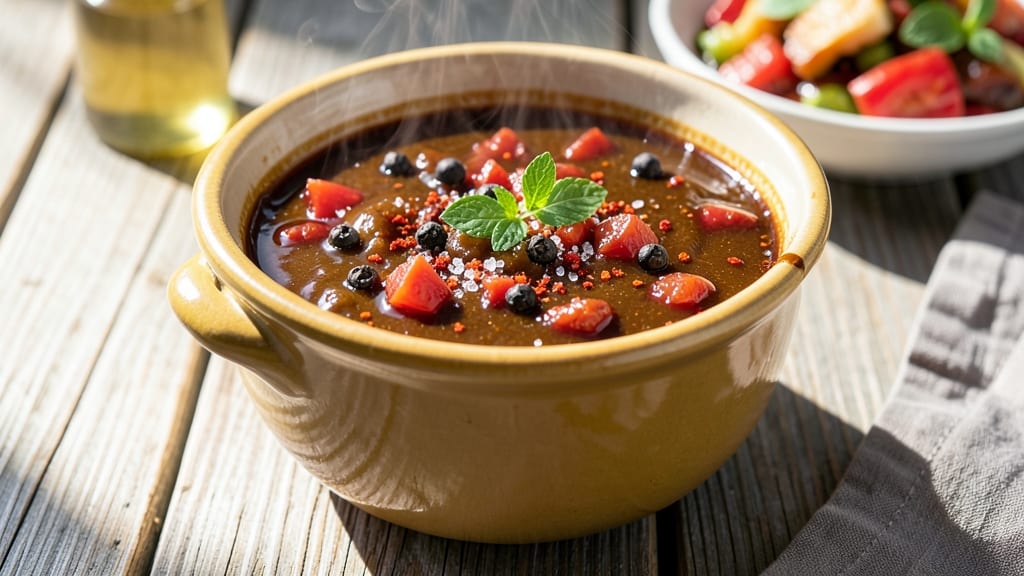
This Arkansas barbecue sauce recipe delivers the signature tangy-sweet heat that defines the Natural State's BBQ tradition. 🔥 The key lies in balancing vinegar's sharp bite with molasses' deep caramel notes, creating a sauce that clings to pulled pork like a second skin. I developed this after years of studying regional variations—where the perfect ratio of sweet to tang can make or break a plate of ribs.
The foundation is simple: crushed tomatoes, apple cider vinegar, and a blend of spices that sing with heat. What sets this apart is the slow reduction process, where flavors meld into a glossy, medium-bodied sauce with just enough thickness to coat without overwhelming.
The molasses adds that signature Arkansas sweetness, while black pepper and cayenne bring the heat that lingers.
What you'll end up with is a sauce that's versatile enough for ribs, pulled pork, or even as a marinade, but always carries that unmistakable Arkansas fingerprint.
The tangy-sweet balance cuts through rich meats while enhancing their natural flavors. This isn't just a condiment—it's the soul of Arkansas BBQ in a bottle.
Make a double batch—this sauce tastes even better the next day as the flavors deepen. Store it in the fridge for up to two weeks or preserve it for months. Here's how to capture that perfect Arkansas BBQ essence in your kitchen.
Ingredients for arkansas barbecue sauce
Nine simple ingredients transform into Arkansas BBQ's signature tangy-sweet sauce.
| Ingredient | Amount | Notes |
|---|---|---|
| Crushed Tomatoes (28 oz can) 🍅 | 1 can | San Marzano preferred for sweetness |
| Apple Cider Vinegar 🍏 | ½ cup | Bragg preferred for authentic tang |
| Unsulphured Molasses 🍯 | ¼ cup | Dark molasses for rich flavor |
| Granulated Sugar 🍚 | ¼ cup | White sugar for balance |
| Black Peppercorns 🌶️ | 1 tbsp | Freshly cracked for depth |
| Cayenne Pepper 🔥 | 1 tsp | Adjust for preferred heat |
| Smoked Paprika 🌶️ | 1 tbsp | For signature Arkansas smokiness |
| Garlic Powder 🧄 | 1 tsp | Freshly ground preferred |
| Onion Powder 🧅 | 1 tsp | For aromatic depth |
| Salt 🧂 | 1 ½ tsp | Diamond Crystal preferred |
The tomatoes are non-negotiable—San Marzano gives you that natural sweetness without watering it down. Bragg apple cider vinegar is my go-to for that sharp Arkansas bite, but any good-quality vinegar works. Molasses is where the sauce gets its soul—unsulphured keeps it from tasting bitter. I grab mine from the baking aisle at Walmart or Kroger, usually in the 15-oz bottle. For the smoked paprika, Penzeys has the best Arkansas-style blend, but any smoked paprika will do. The key is balancing sweet, tang, and heat—start with these amounts, then taste as you go.
No San Marzano tomatoes? Any good-quality crushed tomatoes will work—just taste first. Short on vinegar? Substitute with lemon juice at half the amount, but you'll lose that authentic Arkansas depth. Molasses too expensive? Brown sugar at half the quantity gives you some sweetness, though it won't be identical. Cayenne too spicy? Reduce to 0.5 tsp or use red pepper flakes instead. Need more smokiness? Add a pinch of liquid smoke (just a dash—it's potent!). The garlic and onion powders are easy swaps: fresh minced garlic and onion at double the amount if you prefer that brightness. Just remember, Arkansas BBQ sauce is all about that tangy-sweet balance—don't go overboard on the sugar.
This sauce gets better with time—24 hours in the fridge lets the flavors meld perfectly. Store it in a clean glass jar with a tight seal. Keeps for 2 weeks in the fridge or 6 months in the freezer. Double the batch—you'll want it on everything. I like to keep a jar in the fridge for quick slathering on ribs or pulled pork, and freeze extra portions in ice cube trays for easy single-use amounts. The sauce thickens as it cools, so give it a quick stir before using if it's been sitting awhile.
Why You'll Love This Recipe
- Here’s what sold me: the molasses and sugar team up to caramelize just enough, while the vinegar keeps it bright. Black peppercorns add a subtle bite that wakes up every bite—like a hug for your taste buds, but with more tang.
- Pantry Magic: I swear by this one—just tomatoes, vinegar, molasses, and sugar. No fancy ingredients, no last-minute grocery runs. The crushed tomatoes do all the heavy lifting, and the molasses gives it that signature deep, smoky-sweet backbone without any fuss.
- Sweet-Savory Balance: Here’s what sold me: the molasses and sugar team up to caramelize just enough, while the vinegar keeps it bright. Black peppercorns add a subtle bite that wakes up every bite—like a hug for your taste buds, but with more tang.
- Weeknight Workhorse: Between us, I’ve used this on pulled pork, grilled chicken, even as a marinade for steak. It’s my go-to for game days, potlucks, or when I’m too tired to think. Honestly, the sauce tastes better the second day, so I always make extra.
Step-by-step instructions for Arkansas-style vinegar barbecue sauce
This smoky, tangy sauce delivers authentic Arkansas heat with just a few simple steps.
🍳 Step 1: Combine Tomatoes, Vinegar, and Molasses
In a large, heavy-bottomed saucepan, pour in the 1 can crushed tomatoes (San Marzano if available) and the 0.5 cup apple cider vinegar. Stir in the 0.25 cup unsulphured molasses and 0.25 cup granulated sugar until completely dissolved. The molasses will darken the sauce and add that signature Arkansas depth, while the vinegar cuts through the sweetness for balance.
Bring the mixture to a gentle boil over medium-high heat, then immediately reduce to medium-low heat. Let it simmer uncovered for 10 minutes, stirring occasionally. You'll notice the sauce starting to thicken slightly and the aroma becoming more complex—this is when the flavors begin to meld. Don't walk away; you want to keep an eye on the sauce to prevent it from boiling over.
🔥 Step 2: Add Dry Seasonings and Simmer
In a small bowl, combine the 1 tbsp black peppercorns, 1 tsp cayenne pepper, 1 tbsp smoked paprika, 1 tsp garlic powder, 1 tsp onion powder, and 1.5 tsp salt. Sprinkle this spice blend evenly over the simmering tomato mixture. Stir well to distribute the spices throughout—this ensures every bite gets that full Arkansas flavor profile.
Let the sauce continue simmering for another 15-20 minutes, stirring occasionally. You're looking for the sauce to thicken noticeably and reduce by about one-third. The black peppercorns will infuse their bold flavor, while the smoked paprika adds that characteristic Arkansas smokiness. If the sauce starts to get too thick before the 20 minutes are up, add 1-2 tablespoons of water to loosen it slightly.
⏰ Step 3: Cool and Adjust Consistency
Once the sauce has reached your desired thickness (it should coat the back of a spoon but still be pourable), remove it from the heat. Let it cool for 10 minutes at room temperature. This cooling period allows the flavors to settle and the sauce to thicken further as it comes down from the simmering temperature.
While the sauce cools, give it a taste and adjust the seasoning if needed. If it needs more heat, add a pinch more cayenne pepper. For more sweetness, add a little more molasses or sugar. If it's too tangy, a touch more sugar will help balance it. The sauce should have a perfect balance of sweet, tangy, and smoky flavors with a nice kick of heat.
🍽️ Step 4: Strain and Store for Maximum Flavor
For a smoother sauce, strain it through a fine-mesh sieve into a clean bowl or jar, pressing gently on the solids with a wooden spoon to extract all the flavor. This step removes any large peppercorns or tomato seeds, giving you a silky texture. If you prefer a rustic texture with some texture, you can skip this step entirely.
Let the sauce cool completely before transferring it to clean, airtight containers. This sauce will keep in the refrigerator for up to 2 weeks or can be frozen for up to 6 months. The flavors actually improve with time, so making a big batch is worth it. Use it to glaze ribs, drizzle over pulled pork, or serve as a dip for fries—it's incredibly versatile and packed with that authentic Arkansas taste.
Pro Tips For Making Arkansas Barbecue Sauce
- Simmer Slow and Low: I used to rush this sauce, thinking more heat meant faster flavor—but Arkansas-style sauce needs time to meld, not burn. Keep it at a gentle bubble (15-20 minutes) after everything’s combined, or you’ll end up with a bitter, vinegary mess instead of that deep, caramelized richness.
- Crush Those Peppercorns: Whole peppercorns? Skip it. I learned the hard way—grinding them fresh right into the sauce releases their oils and heat evenly, while whole ones just sit there like decorative rocks. A quick pulse in a spice grinder or mortar and pestle makes all the difference.
- Balance the Vinegar First: Taste before you commit. Arkansas sauce needs vinegar’s tang, but too much upfront will overwhelm the molasses and tomatoes. Start with ¼ cup, simmer, then adjust—adding vinegar later lets you fine-tune the sharpness without drowning the sweetness.
- Skip the Sugar Rush: Adding all the sugar at once turns your sauce into syrup. Instead, sprinkle it in gradually while stirring—let it dissolve and caramelize bit by bit. This keeps the texture smooth and the molasses from clumping into a gloopy nightmare. (Yes, I’ve seen it happen.)
Best sauces and condiments for these flavors
Classic Pairings
This Arkansas sauce shines brightest with slow-smoked pulled pork—the tangy-sweet balance cuts through the rich, fatty meat like a knife. I like to serve it with crispy smoked pork ribs where the sauce clings to every bone.
The secret? Apply sauce after the ribs come off the smoker while they're still warm. 🔥
Unexpected Uses
Don't limit this sauce to meats! It's fantastic on grilled vegetables like eggplant or zucchini—just brush on lightly and grill until charred. I also use it as a marinade for chicken thighs (30 minutes before grilling) or as a dipping sauce for fried green tomatoes.
The vinegar's acidity makes it perfect for balancing rich, creamy dishes.
Sweet vs. Tangy Balance
If your sauce tastes too sweet, add 1 extra tablespoon of Bragg apple cider vinegar and simmer for 5 minutes to let the acidity mellow. Too tangy? Stir in 1 teaspoon of molasses and ½ teaspoon of sugar to round it out.
For extra depth, I sometimes add ½ teaspoon of liquid smoke (just a drop!) for that authentic Arkansas smokiness without overpowering the flavor.
Sauce Thickness Tips
For a glossy finish, reduce the sauce uncovered until it coats the back of a spoon. Need it thicker? Simmer longer or add 1 tablespoon of cornstarch mixed with water as a slurry.
Too thick? Thin with 1 tablespoon of water or apple cider vinegar while hot. Remember, Arkansas sauce should be coatable but pourable—not syrupy like Kansas City sauce.
Regional Variations
In northern Arkansas, sauces lean tangier with more vinegar, while southern Arkansas versions are sweeter with extra molasses. Some pitmasters add a pinch of cinnamon for warmth, while others use hot sauce instead of cayenne.
Experiment! The beauty of Arkansas BBQ is its adaptability—just keep that vinegar base for authenticity. 🌶️
Nutrition facts
Frequently asked questions
Why does Arkansas barbecue sauce use vinegar instead of tomato paste?
The vinegar creates that signature tangy bite that defines Arkansas BBQ. Unlike sweeter tomato-based sauces, this sharp acidity cuts through rich meats like pulled pork, balancing the natural fats. The vinegar also helps preserve the sauce longer, which was practical for early Arkansas pitmasters who cooked in large batches.
Can I make this sauce without molasses?
Yes, but you'll lose that deep caramel richness. Substitute with brown sugar at half the amount, though it won't be identical. For a closer match, try date syrup or even a splash of maple syrup (just 1 tablespoon max). The molasses is key for that authentic Arkansas sweetness that pairs perfectly with vinegar's tang.
How do I know when the sauce is done reducing?
Your sauce is ready when it coats the back of a spoon but still flows smoothly. It should reduce by about one-third from its original volume. Test by spooning some onto a cold plate—it should leave a glossy, slightly thick layer. If it's too thin, simmer uncovered 5 more minutes. Too thick? Add 1 tablespoon water or vinegar while hot.
What's the best way to store leftover sauce?
Transfer cooled sauce to airtight glass jars. It keeps in the fridge for 2 weeks (flavors deepen over time!) or freezes for 6 months. For single-use portions, freeze in ice cube trays, then transfer cubes to a bag. Thaw overnight in the fridge—never microwave, as it can alter the delicate balance of flavors.
Can I use this sauce on chicken or just pork?
While it's perfect for pork, the tangy-sweet profile works beautifully on grilled chicken thighs or even fried fish. For chicken, brush on after cooking or use as a marinade (30 minutes max). The vinegar's acidity tenderizes the meat while the smokiness adds depth. Just avoid delicate white meats like breast—stick to dark meat for best results.